



Vintage Captain Dining Chair
A vintage captain dining chair brings sturdy timber and generous seating to the table, combining nineteenth-century vernacular forms with enduring comfort.
Vintage Captain Dining Chair
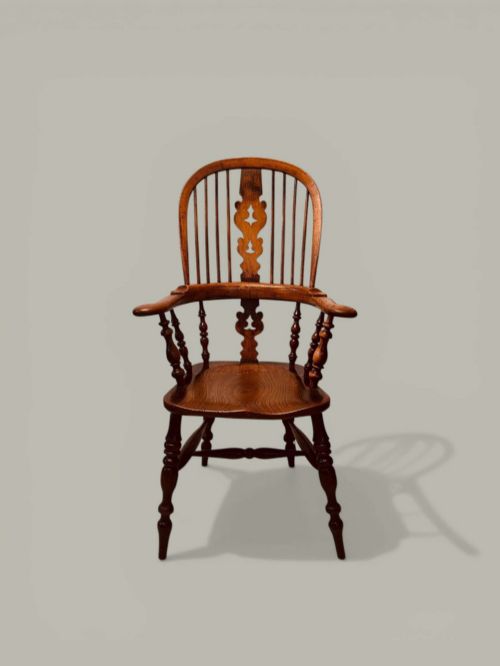
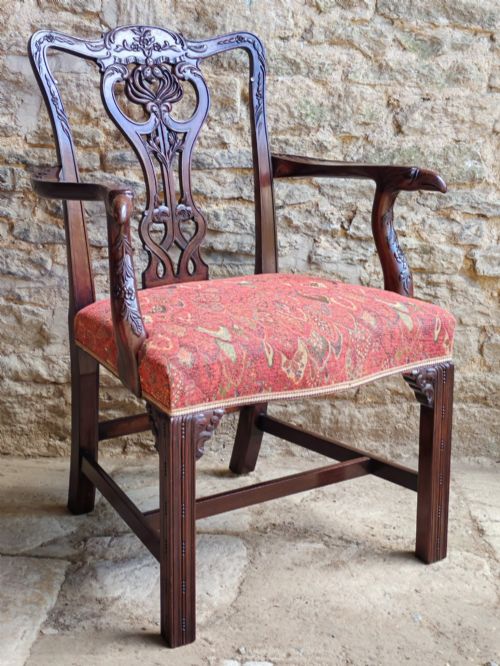
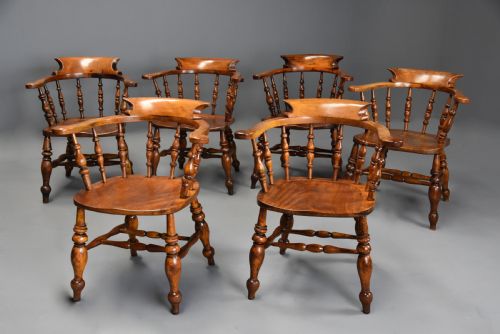
A vintage captain dining chair is typically encountered as a robust Windsor, a scroll-armed mahogany carver, or a sturdy oak desk chair designed for extended sitting. These pieces serve primarily as seating at the head of a dining table or as standalone desk chairs in a study.
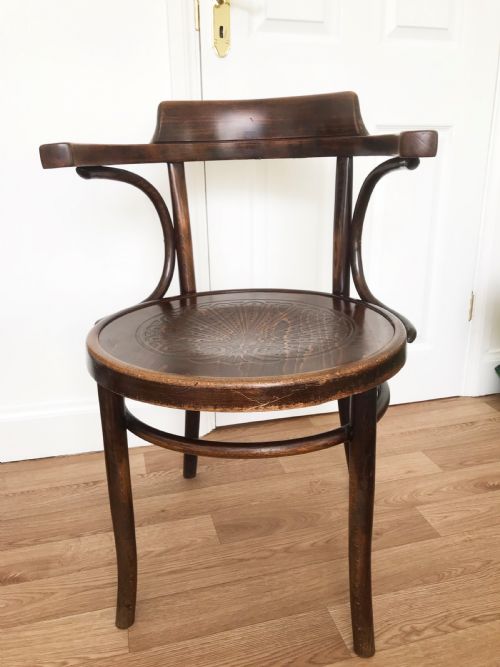
The selection ranges from nineteenth-century elm and fruitwood farmhouse armchairs to Regency and Edwardian mahogany carvers upholstered in leather. Buyers will also find sturdy beech and ash regional variants alongside bentwood bistro carvers from the early twentieth century.
Object types span carver chairs, dining armchairs, and desk chairs that share a common heritage of supportive armrests and substantial timber construction.
Distinctions in quality and execution
Superior examples exhibit tighter grain matching in timber selections, such as figured mahogany or deeply grained elm, alongside more confident hand-carved details on scroll arms and splats. Joinery remains rigid and precise, reflecting the skill of the original workshop.
Lesser pieces show generic timber selection and simpler turned spindles with less attention to ergonomic shaping in the seat and backrest.
Vintage Captain Dining Chair Retail Price Guide 2026
Typical asking prices for vintage captain dining chair among the pieces listed under this phrase on Sellingantiques today, from the lower quarter to the upper quarter. They describe what is for sale here now, not the wider market.
The current selection spans multiple periods, ranging from Regency and Victorian eras through to Edwardian and 1920s examples.
Howard and Sons·Fred Walker Rockley·Thomas Chippendale
The Vintage Captain Dining Chair Glossary
- Carver chair
- An armchair designed to match a set of dining chairs, traditionally placed at the head of the table. These seats offer supportive armrests for added comfort during long meals.
- Windsor
- A traditional wooden chair construction where the legs and back spindles are wedged directly into a solid, sculpted wooden seat. This method creates an exceptionally sturdy and enduring frame.
- Scroll arm
- An armrest carved into an inward-curling spiral shape, commonly seen on nineteenth-century mahogany and upholstered carvers. It provides a decorative finish to structural support.
- Bentwood
- Wood softened through steam and pressed into curved shapes, frequently utilised in early twentieth-century bistro and desk chairs. This technique produces lightweight yet resilient frames.
- Fruitwood
- A dense timber harvested from fruit trees such as apple, pear, or cherry, prized by country makers for its warm tone and fine grain. It appears frequently in nineteenth-century vernacular seating.
Vintage Captain Dining Chair: Frequently Asked Questions
What defines a captain chair?
A captain chair is a sturdy wooden armchair, traditionally featuring a low, rounded back and supportive armrests designed for comfortable seating at a desk or dining table.
These chairs evolved from Windsor and vernacular seating traditions to provide robust support during long periods of work or dining.
How do I care for leather upholstery?
Leather upholstery requires regular dusting and occasional treatment with suitable leather conditioners to maintain suppleness and prevent the hide from drying out over time.
Keep these chairs away from direct heat sources and strong sunlight to preserve the natural tone of the material.
Can I mix these with modern tables?
These wooden carvers complement modern dining tables by introducing textural warmth and traditional craftsmanship to contemporary interior schemes.
The diverse mix of oak, mahogany, and fruitwood allows them to sit comfortably alongside minimalist or industrial dining settings.
How do I distinguish regional Windsor styles?
Regional Windsor chairs often reveal their origins through timber choices, such as elm seats paired with ash spindles, and the specific turning patterns of the legs.
Country workshops utilised locally available hardwoods, resulting in distinct local variations in back height and arm curvature.