






Regency Period Accent Table
A regency period accent table brings compact elegance to a room, offering functional surfaces fashioned from rich timbers during a transformative era of design.
Regency Period Accent Table
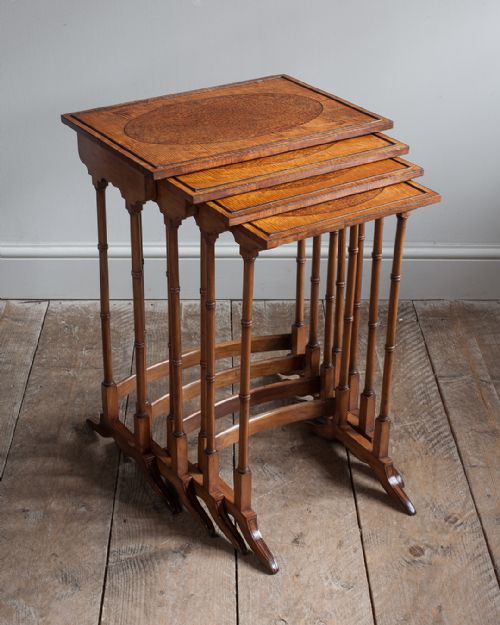
When you search for a regency period accent table, you are looking at small-scale furniture designed for specific domestic tasks during the early nineteenth century. These forms include side tables, occasional tables, pembroke tables, nests of tables, writing tables, work tables, lamp tables, and multi-tiered whatnots. They span the Georgian, Regency, and William IV periods, alongside French Restoration and Chinese Export examples.
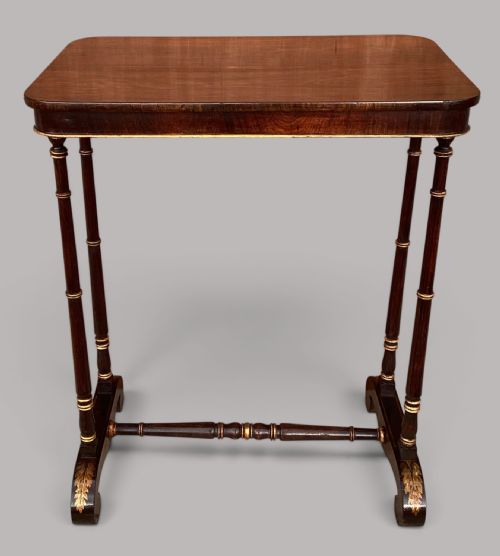
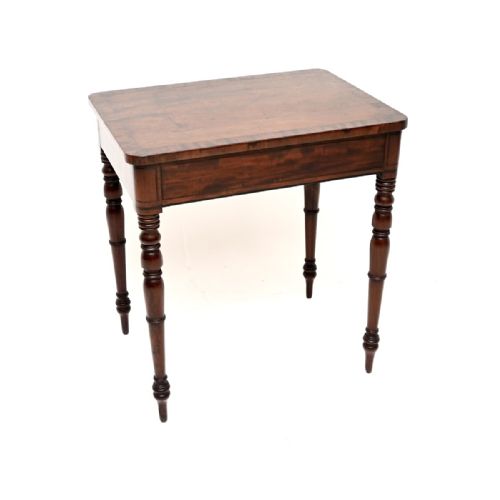
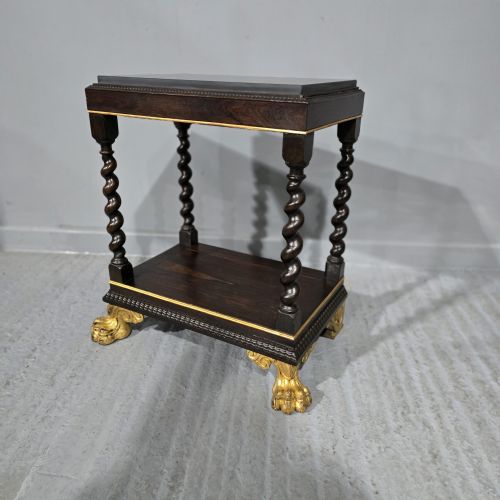
The version you are most likely to meet on this page is a mahogany side table or pembroke table from the Regency era. Many pieces date from around eighteen hundred to eighteen thirty, displaying the characteristic restraint and clean lines of the period. Alongside straightforward timber designs, you will encounter painted faux bamboo, brass inlaid palisander, and black and gilt lacquer work.
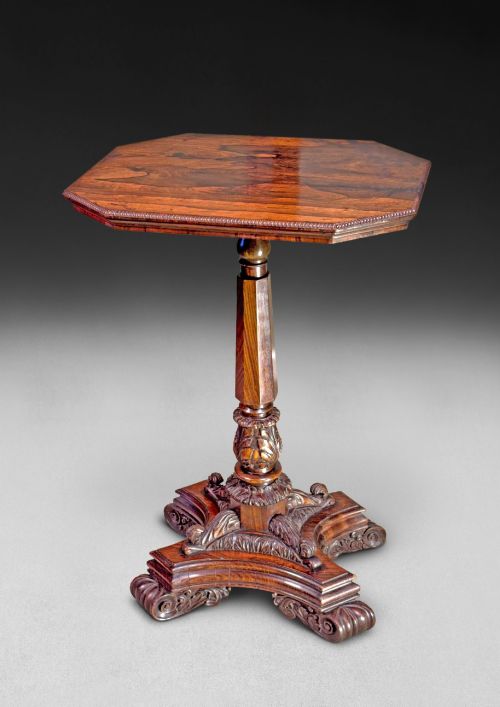
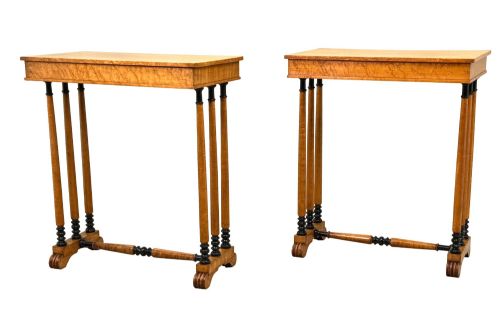
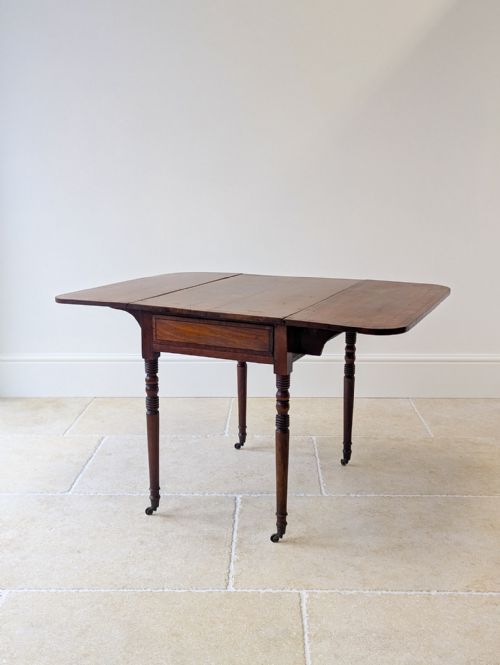
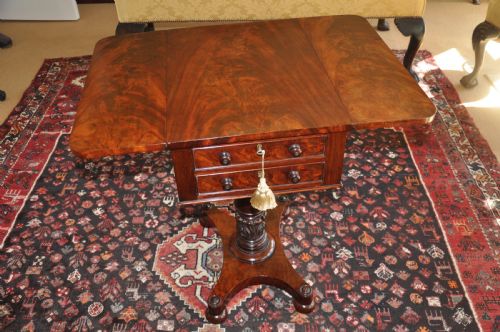
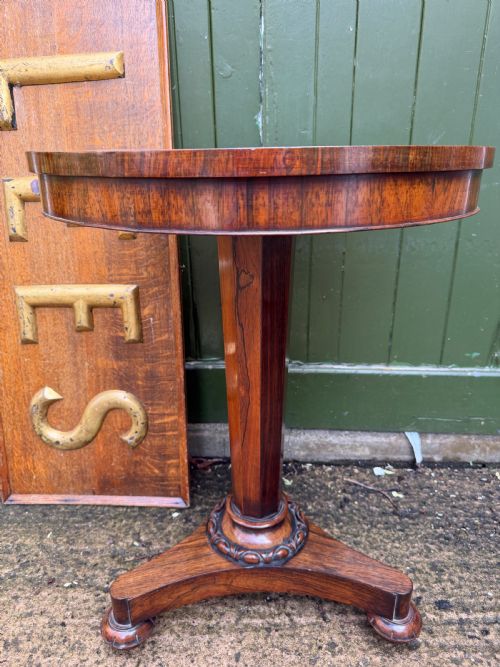
These tables were intended for versatile use beside seating or against walls in parlours and drawing rooms. The selection includes drop-flap pembroke tables, nesting sets, pedestal designs, and tiered etageres. Their forms reflect the changing social habits of the period, where movable, adaptable furniture became essential for daily comfort.
How they were made
Makers of the period relied heavily on dense hardwoods such as mahogany and rosewood, often selecting figured veneers like birdseye maple, pollard oak, and burr oak. Timber selection defined the visual character of the top surface, where grain patterns provided the primary decorative effect without excessive carving.
Metalwork played a crucial structural and decorative role, particularly through the integration of brass inlay, stringing, and mounts. Painted finishes also appear, notably on faux bamboo frames and black and gilt lacquer surfaces imported from China or produced in imitation of eastern styles.
Regency Period Accent Table Retail Price Guide 2026
Typical asking prices for regency period accent table among the pieces listed under this phrase on Sellingantiques today, from the lower quarter to the upper quarter. They describe what is for sale here now, not the wider market.
What varies in quality
Quality in these tables is rooted in the choice of cabinet timbers and the precision of their construction. Finer examples utilise superior veneers with striking grain, matched carefully across table tops and drop leaves, while simpler pieces employ plain softwood carcases or basic mahogany.
The refinement of decorative details separates standard pieces from exceptional ones. Subtle touches like precise brass inlay, delicate turning on pedestal columns, and sophisticated painted faux bamboo finishes indicate skilled workshop production rather than mass output.
Gillows
The Regency Period Accent Table Glossary
- Pembroke table
- A small, versatile table with two hinged drop leaves on opposite sides. It was designed to stand against a wall and be pulled out when needed for writing or tea.
- Occasional table
- A small, movable table intended for intermittent use around a room. These pieces served varied domestic purposes before being designated for lamps or decorative objects.
- Whatnot
- A set of open shelves supported by slender pillars, used for displaying ornaments or holding books. The form emerged strongly in the nineteenth century as a practical tiered étagère.
- Palisander
- A dense, dark timber resembling rosewood, prized for its rich colour and distinct grain. It was frequently used for high-status cabinet work during the Regency era.
- Faux bamboo
- Wood turned and painted to imitate natural bamboo canes. This decorative technique reflected a widespread nineteenth-century fascination with oriental design aesthetics.
Regency Period Accent Table: Frequently Asked Questions
What is a pembroke table?
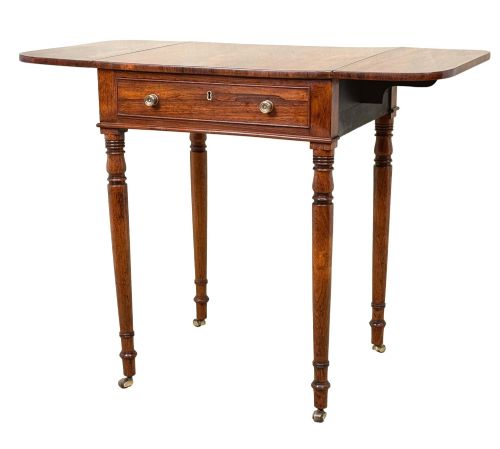
A pembroke table is a small, rectangular occasional table featuring two hinged drop leaves on opposite sides. It typically includes a small drawer and stands on four legs.
These tables were designed for versatility, easily moved around a room and expanded when extra surface area was required for writing or taking tea.
How do I identify a regency table?
Regency tables generally display classical restraint, clean architectural lines, and a focus on figured timber grains rather than heavy carving. Look for pedestal bases, brass stringing, and tapered legs.
Pieces from this era often date between eighteen hundred and eighteen thirty, bridging the late Georgian and early Victorian periods.
Where were these tables used?
These accent tables were used primarily in drawing rooms, parlours, and libraries as movable surfaces for lamps, writing materials, or sewing work. Nests of tables and small side tables offered flexible placement beside seating.
Whatnots were positioned against walls to display ceramics, books, and decorative objects.
What is a whatnot table?
A whatnot is an open-shelved piece of furniture featuring three or more tiers supported by slender vertical columns. It functioned primarily as a display stand for ornaments and small household items.
Also known as an etagere, it became a popular domestic form during the early nineteenth century for organising and displaying collections.