
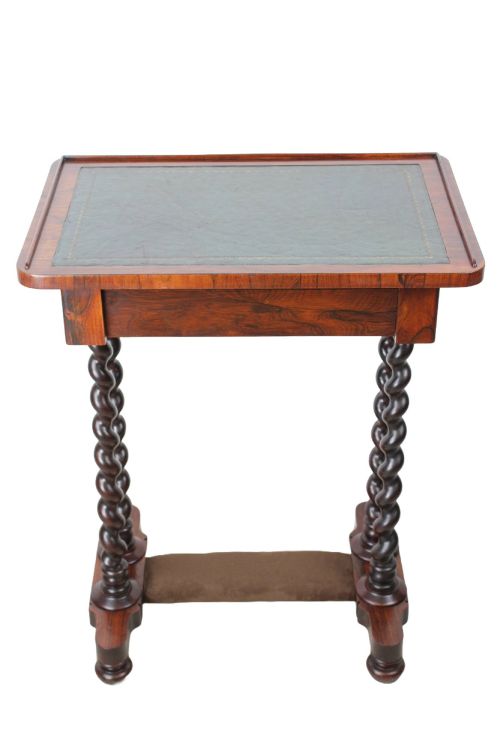
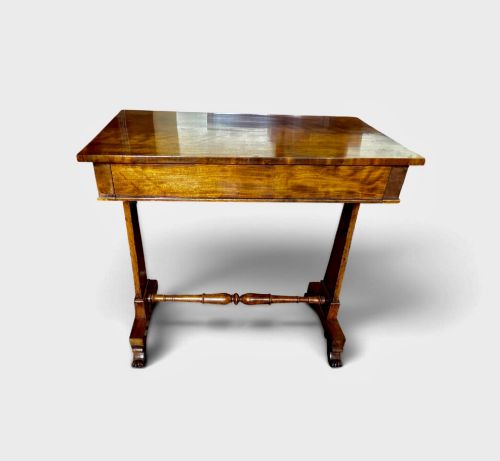
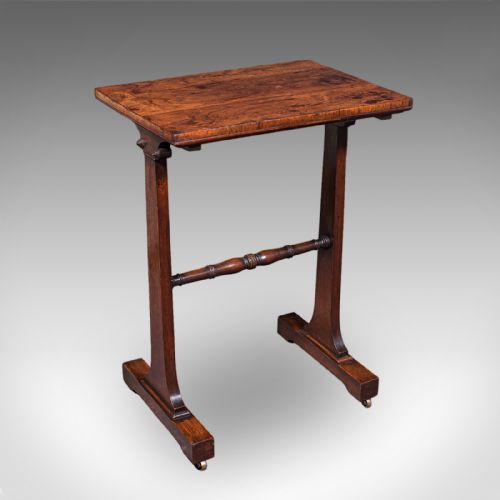
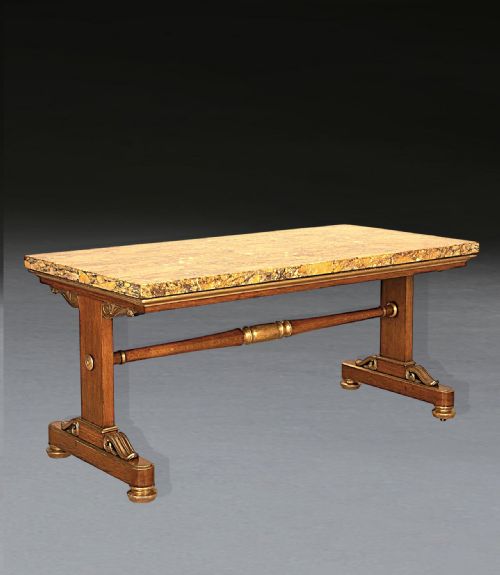


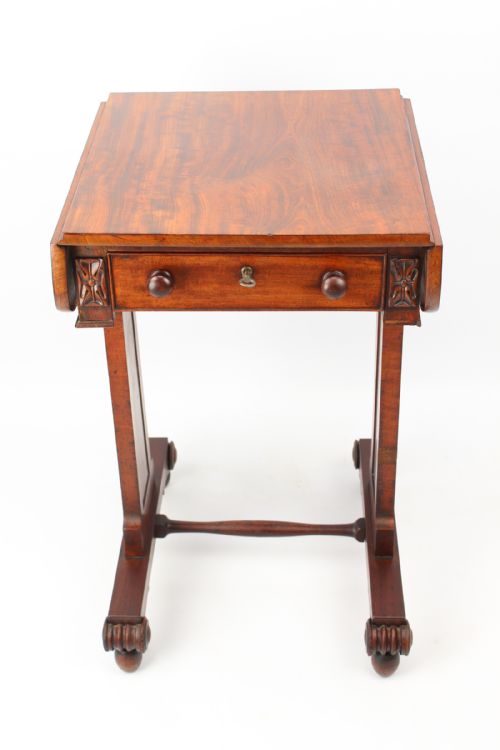

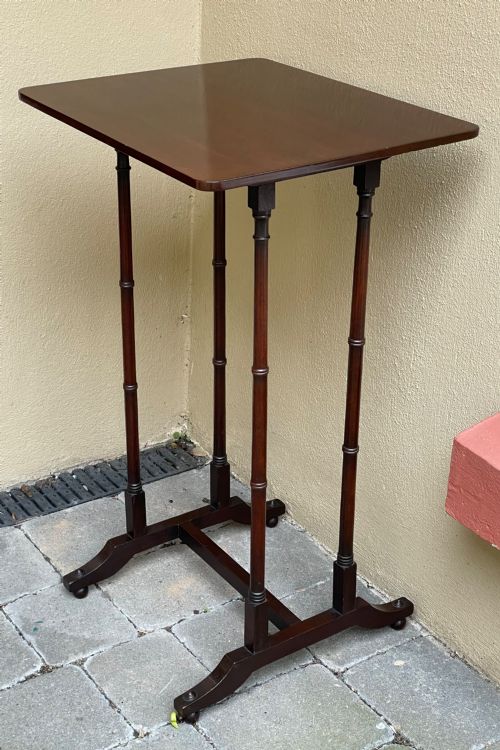


Regency Trestle Side Table
These regency trestle side table forms bring refined proportion and rich timber figure to a room, offering adaptable surfaces for writing, reading or display.
Regency Trestle Side Table
A regency trestle side table sits within a tradition of formal domestic furniture spanning the Regency, Georgian and Victorian periods. The pieces appearing here encompass compact lamp tables, sofa tables, writing tables and nesting sets alongside occasional pieces.
Makers of the era designed these tables for specific rooms, including morning rooms, libraries and lounges. Mahogany and rosewood dominate the forms, frequently enriched by pollard oak, brass inlay and Siena marble.
The version most commonly met on this page is the rosewood or mahogany side table resting upon distinct upright supports or pillar ends. Such pieces balance utility with decorative presence, functioning equally as writing surfaces or lamp stands.
Materials and construction
Cabinetmakers utilised solid timbers alongside finely cut veneers, selecting mahogany, rosewood and pollard oak for their dense grain and warm tones. These woods were often polished to a high lustre to highlight natural figure.
Metal accents played a functional and decorative role, with brass inlay and mounts integrated into the timber surfaces. Specialised tables incorporated leather writing inserts and marble tops, particularly on centre and library pieces.
Some nests of tables slide together so snugly they appear as a single solid block of rosewood until separated.
Separating the grades
Quality rests upon the selection of timber figure, such as well-figured rosewood or flame mahogany, and the precision of the underlying construction. Superior examples demonstrate harmonious proportions and restrained application of brass or marquetry details.
The sophistication of the joinery and the integrity of the original polish distinguish workshop production from standard commercial output. Pieces retaining their structural balance and uncompromised timber surfaces command greater appreciation.
Gillows·Gillingtons Dublin·W&C Wilkinson London
The Regency Trestle Side Table Glossary
- Trestle support
- A structural framework comprising upright pillars connected to feet, commonly used to hold up side and library tables. This configuration provides sturdy support without bulky legs.
- Siena marble
- A distinctive yellow Italian marble marked with dark veins and patches, utilised for the tops of grand centre tables. It adds considerable weight and classical dignity to the piece.
- Quartetto tables
- A set of four graduated occasional tables designed to slide neatly beneath one another. They gained popularity during the Regency period for entertaining.
- Pollard oak
- Timber taken from trees pollarded to produce a dense, clustered grain pattern full of small knots. Cabinetmakers valued this wood for contrasting panels on writing tables.
- Palisander
- A dense tropical timber related to rosewood, frequently utilised during the nineteenth century for dark, heavily grained veneer work. It takes a brilliant finish.
Regency Trestle Side Table: Frequently Asked Questions
Where should I place a side table?
These tables suit hallways, morning rooms or beside seating in a lounge where a compact surface is required.
Their narrow proportions allow them to sit flat against walls or function as freestanding lamp and reading stands.
How do I identify a Regency piece?
Look for classical restraint, clean lines, and the use of dense timbers such as rosewood and mahogany.
Details like brass inlay and distinct pillar supports help separate this period from later Victorian revivals.
What is a quartetto table set?
A quartetto set consists of four tables of descending size that nest together when not in use.
They served practical purposes during the nineteenth century for tea or writing.
Can these tables be used for writing?
Many examples on this page are designated as writing or library tables equipped with fitted drawers.
Their height and surface area make them suitable for correspondence and desk work.