



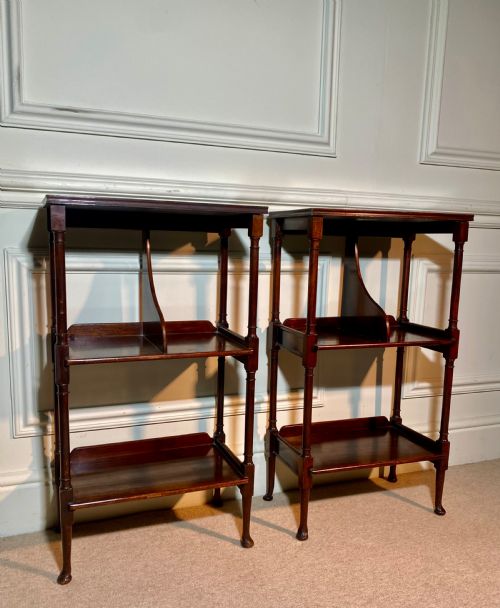


Small Mahogany Etagere
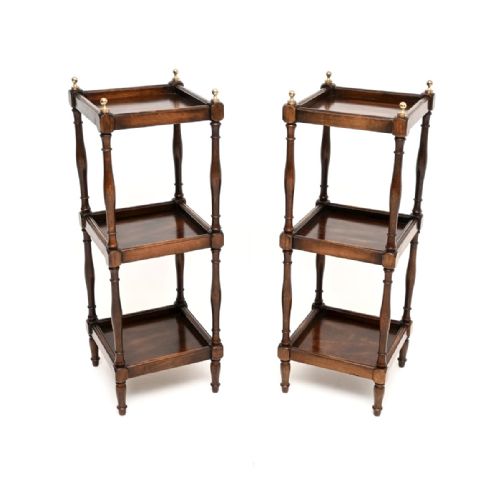
These small mahogany etagere pieces are tiered display stands that solve corner clutter with distinct elegance.
Small Mahogany Etagere
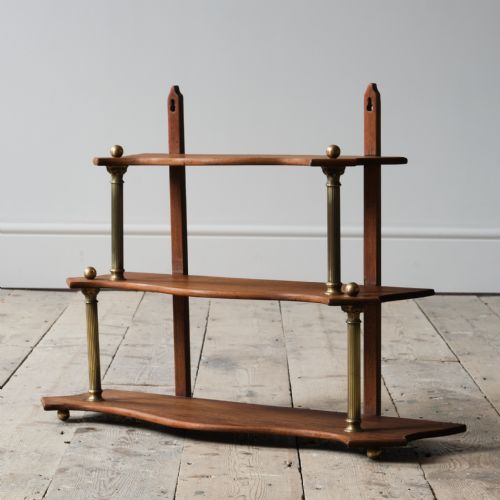
A small mahogany etagere provides tiered shelving for display and storage in compact domestic spaces. These pieces appear across several periods including Regency, Victorian, and Edwardian eras, taking the form of whatnots, wall hanging shelves, and two-tier occasional tables.
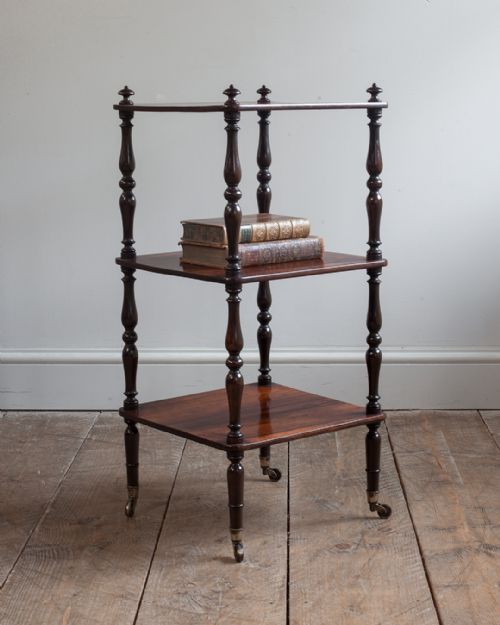
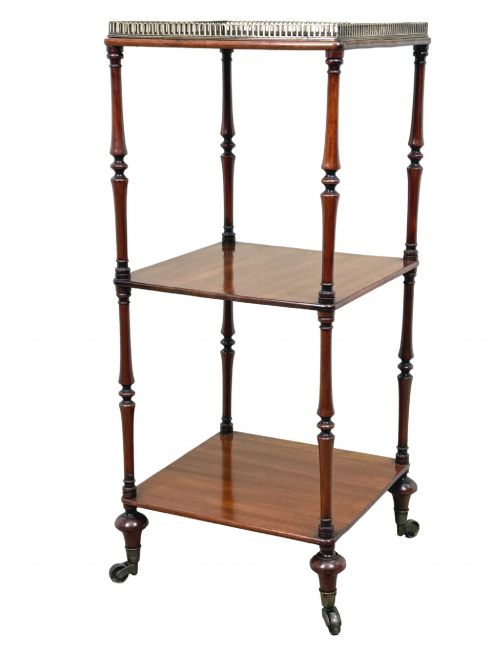
The versions most commonly met on this page are multi-tiered structures in mahogany, often featuring turned supports and brass details. They function effectively as bedside tables, end tables, or open bookcases whilst maintaining a slender footprint.
Originating as fashionable display furniture, these items bridge the gap between practical storage and decorative exhibition. Makers from the Georgian period onward adapted the form to suit changing domestic requirements for portable and freestanding shelving.
Distinctions in quality
Quality in these pieces rests upon the selection of timber grain, the crispness of turned supports, and the integration of brass mounts. Superior examples display thoughtful proportions where each tier balances harmoniously without structural heaviness.
The refinement of the joinery and the depth of the mahogany finish separate standard utility pieces from workshop productions attributed to notable makers. Subtle details like fine inlay work and stable tiered construction indicate higher craftsmanship.
Small Mahogany Etagere Retail Price Guide 2026
Typical asking prices for small mahogany etagere among the pieces listed under this phrase on Sellingantiques today, from the lower quarter to the upper quarter. They describe what is for sale here now, not the wider market.
Some portable bookshelves retain their tiny original casters, ready to roll across the floor at a moment's notice.
W. Turner Lord & Co·Gillows
The Small Mahogany Etagere Glossary
- Etagere
- A piece of furniture consisting of a set of open shelves for displaying small objects or ornaments. It develops from French cabinet making traditions.
- Whatnot
- A multi-tiered shelving unit used for books or ornaments in nineteenth-century interiors. This term frequently interchanges with etagere in period listings.
- Regency
- An English design style spanning the early nineteenth century defined by classical restraint and mahogany surfaces. Pieces from this period often incorporate brass gallery rails.
- Veneer
- A thin layer of superior wood applied to a base of common timber to provide decorative grain patterns. Mahogany veneer appears frequently on tiered tables.
- Inlay wood
- Contrasting timber inserted into the primary wood surface to create geometric or floral patterns. This technique decorates Victorian display tables.
Small Mahogany Etagere: Frequently Asked Questions
What is a small mahogany etagere used for?
These tiered stands serve to hold books, display small ornaments, or function as bedside night stands in limited spaces.
Their multiple levels allow owners to maximise vertical surface area without occupying excessive floor space in a room.
How do I date a small mahogany etagere?
Dating relies on identifying stylistic markers associated with periods like the Regency, Victorian, or Edwardian eras. Turned supports, brass details, and timber choice provide key evidence for the decade of manufacture.
Construction methods and joinery styles also help distinguish early nineteenth-century pieces from later twentieth-century interpretations.
Where should I place an etagere at home?
These pieces fit naturally beside a sofa as an end table, or against a wall as an open bookcase or display shelf. Their compact proportions make them suitable for hallways, bedrooms, or smaller reception rooms.
Wall hanging variants require secure mounting to support books or display items safely at eye level.
Are etageres and whatnots the same thing?
The terms describe similar multi-tiered shelving furniture and often interchange across antique listings. Both forms provide stacked surfaces for display and storage.
Regional preferences and period terminology typically determined whether a maker called a piece an etagere or a whatnot.