

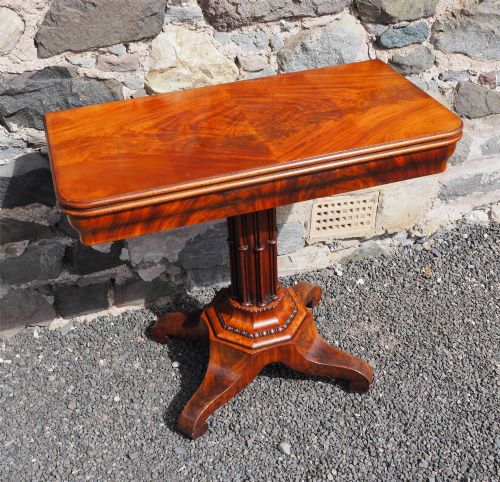
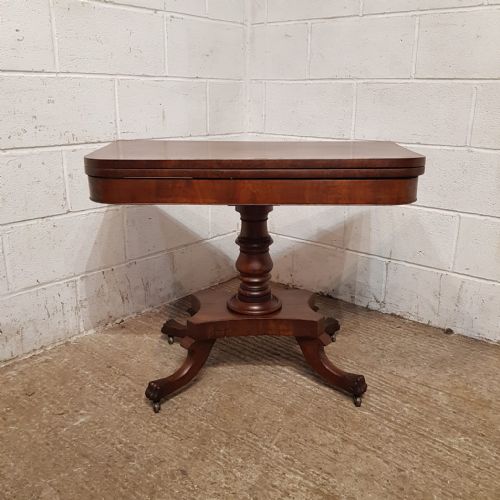
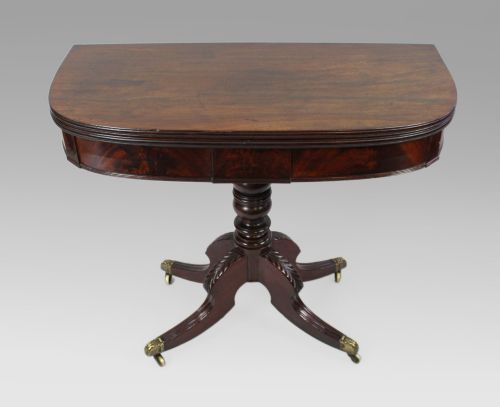
Regency Pedestal Console Table
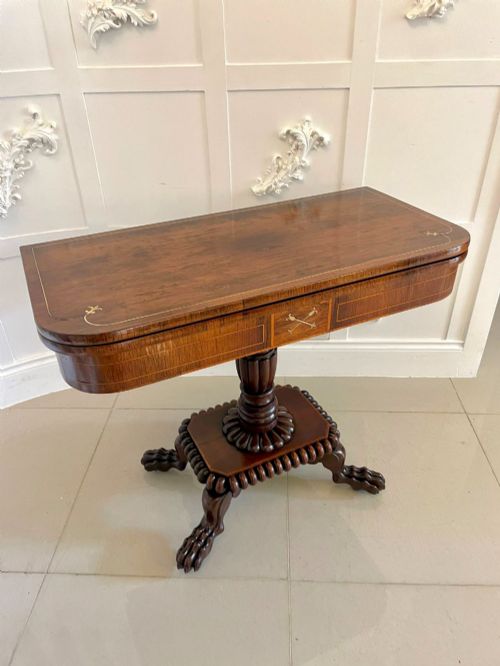
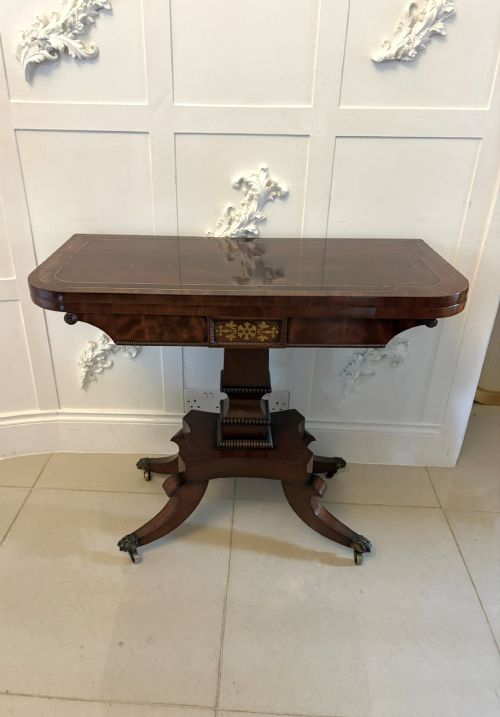
A regency pedestal console table brings architectural confidence into a room, offering a sturdy central column that supports rich timbers and intricate brass work.
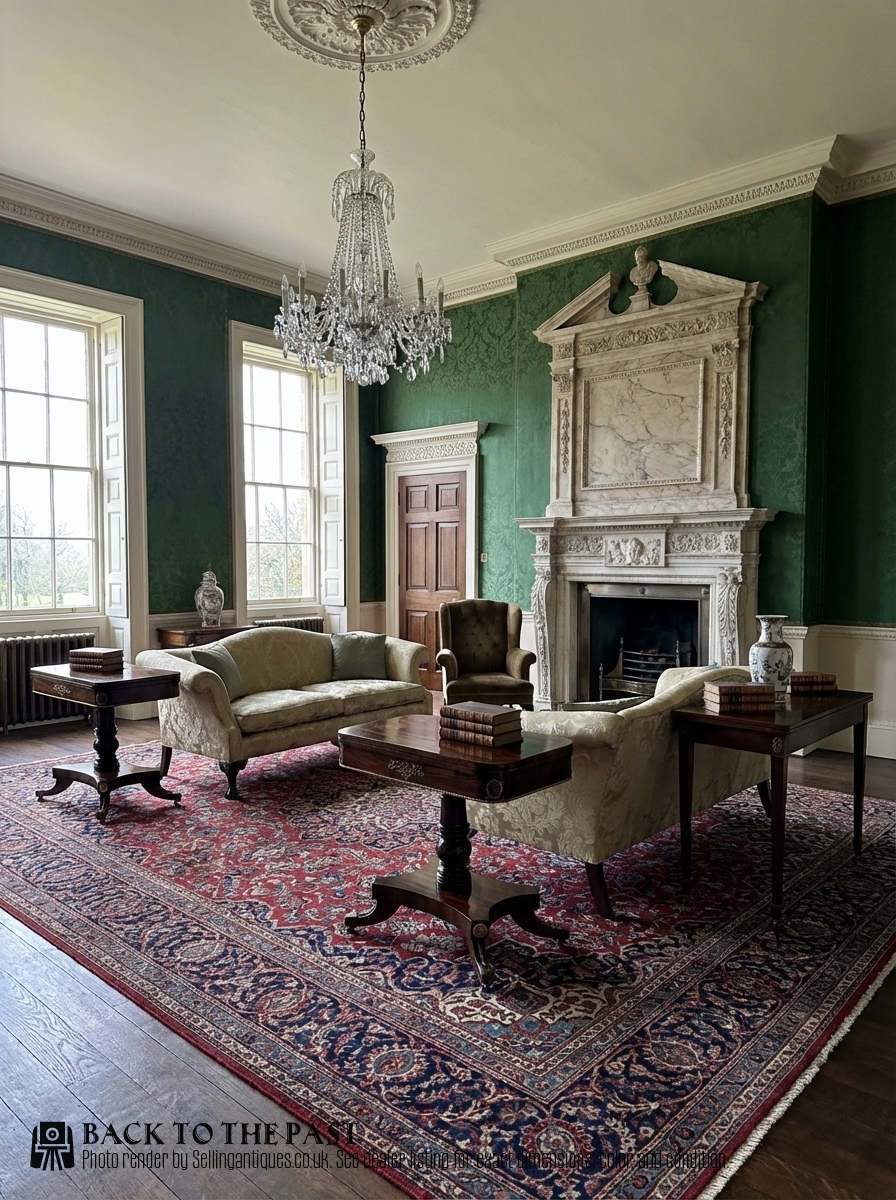
Regency Pedestal Console Table
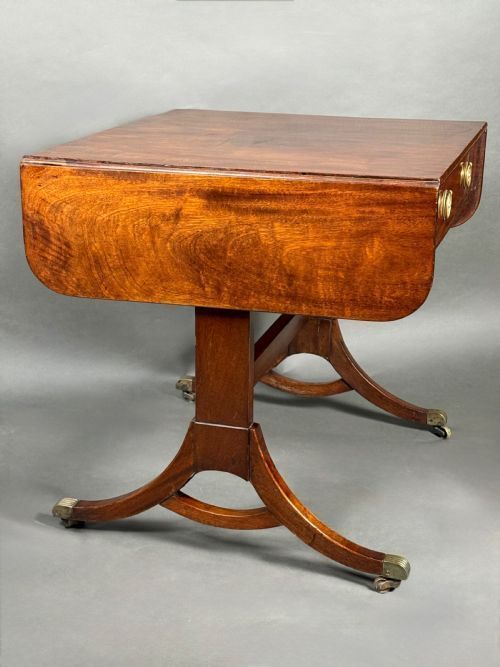
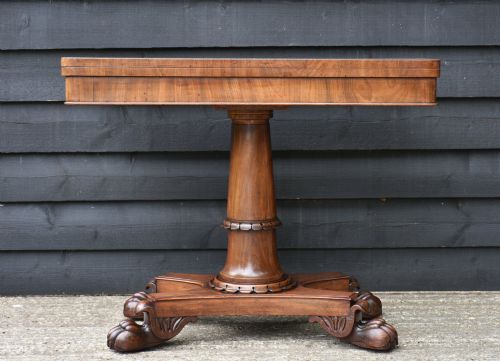
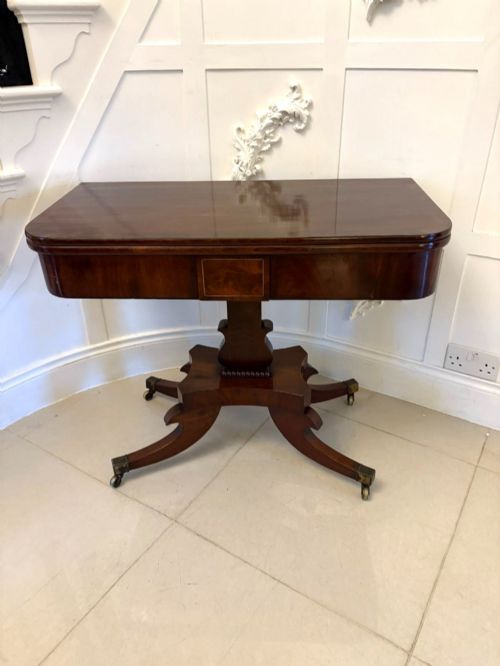
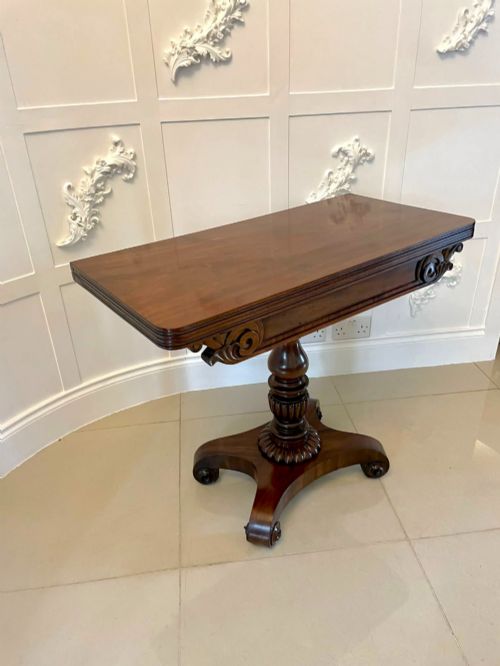
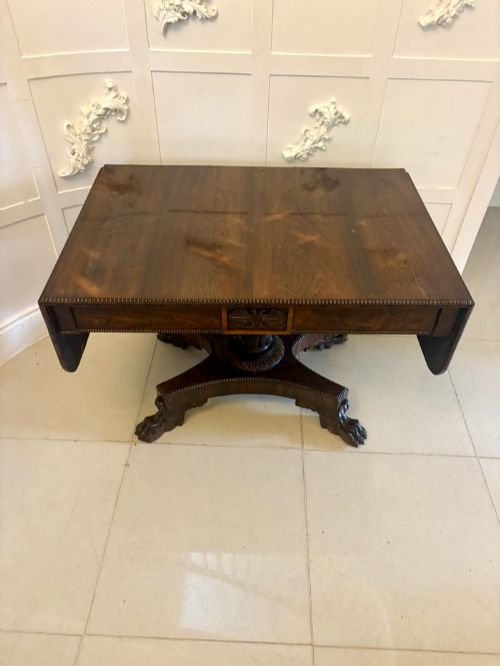
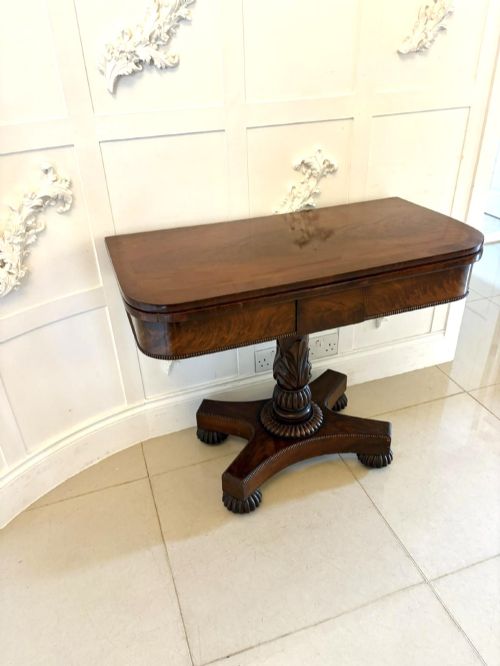
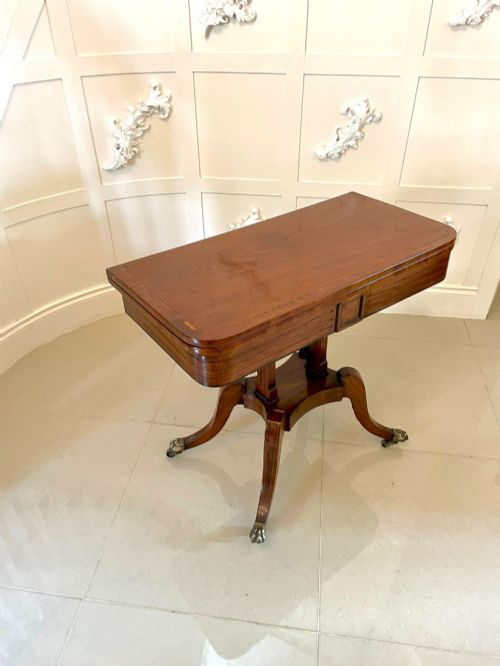
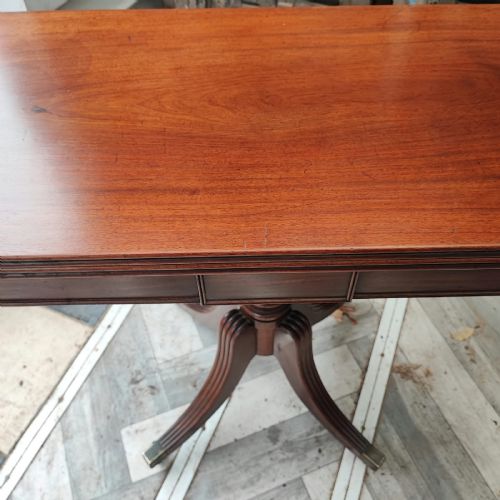
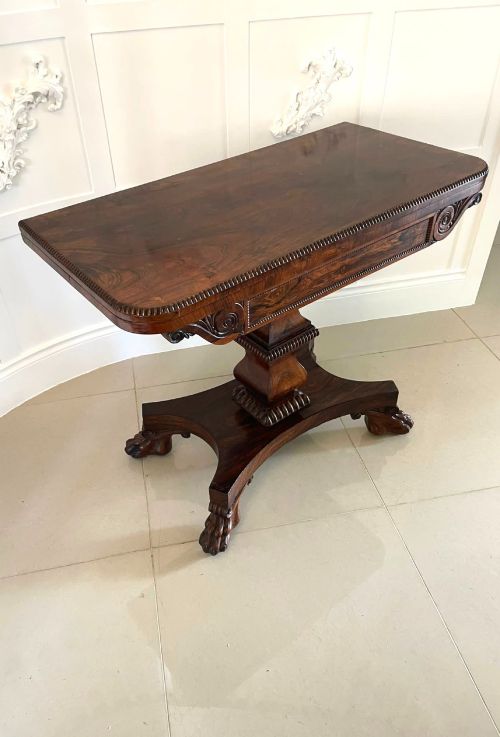
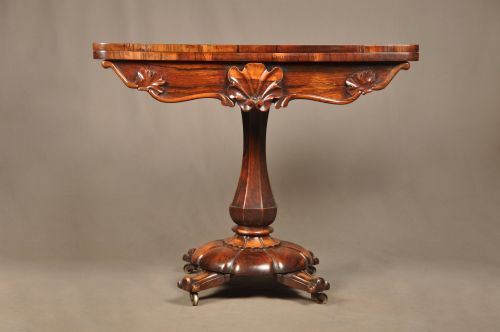
When you search for a regency pedestal console table, you encounter formal tables designed for nineteenth-century interiors, often serving multiple functions as card tables, tea tables, and side tables. The pieces on this page span the Regency, George IV, and William IV periods, reflecting the shifting tastes of the early eighteen hundreds.
Mahogany and rosewood dominate the selection, frequently paired with flame mahogany veneer, satinwood, and boxwood inlay. The structural support typically relies on a central pedestal base, sometimes featuring carved paws, dolphins, or lyre shapes, rather than four corner legs.
Materials and construction methods
Cabinet makers utilised dense hardwoods like mahogany and rosewood as primary structural timbers, often applying flame veneer to create striking grain patterns across the top surfaces. Satinwood and boxwood provided contrasting stringing and geometric inlay details.
Brass inlay work formed intricate linear motifs across rosewood surfaces, while heavy central pedestals incorporated internal wooden bracing to support folding leaves and marble tops safely.
Materials recorded across the inventory include mahogany, rosewood, satinwood, boxwood, and brass.
Distinguishing quality in pedestal tables
The standard of timber selection separates simpler items from superior examples, with highly figured flame mahogany and rich grain rosewood commanding greater visual depth. The precision of brass inlay and the crispness of hand-carved pedestal details, such as paw feet or scroll bases, indicate the skill of the original workshop.
Structural integrity depends on how well the central pedestal joins the platform base and the tabletop, ensuring the fold-over mechanisms operate smoothly without dropping at the corners.
George Bullock·Gillows
The Regency Pedestal Console Table Glossary
- Console table
- A table designed to stand against a wall, frequently anchored or supported by a central pedestal rather than standard legs. These pieces often feature fold-over tops that double their surface area.
- Flame mahogany veneer
- A thin slice of mahogany timber cut from the fork of the tree where branches meet, creating a distinctive flickering flame pattern. Cabinet makers applied this veneer to enhance the visual appeal of table tops.
- Brass inlay
- The technique of embedding thin strips or geometric brass motifs into the wooden surface of rosewood or mahogany furniture. This method was characteristic of high-status Regency cabinet making.
- Pedestal base
- A single central column supporting the weight of the tabletop, often resting on a platform with carved feet or scroll supports. It replaced traditional four-legged designs to provide more legroom.
Regency Pedestal Console Table: Frequently Asked Questions
How do I use a console table?
These tables function well in hallways or reception rooms against a wall, often serving as a surface for lamps or decorative objects. Many examples feature fold-over tops that open out to provide space for cards or tea.
When opened, the hinged leaf requires support from the pivoting base framework, making them adaptable for entertaining guests in smaller sitting areas.
What is the difference between Regency and William IV?
Regency pieces generally reflect the lighter, classical influences of the early nineteenth century, incorporating refined brass inlay and slender pedestals. William IV furniture, dating from the 1830s, tends to be heavier with bolder carved details and robust proportions.
Both styles utilise similar primary timbers like mahogany and rosewood, but William IV designs often showcase more exuberant pedestal carving.
How do I care for rosewood surfaces?
Rosewood benefits from minimal intervention, requiring only a soft dry cloth to remove dust and maintain the natural sheen of the timber. Avoid placing these tables in direct sunlight or near heat sources to prevent the wood from drying out.
Occasional application of appropriate wax feeds the grain without building up a heavy, cloudy film on the polished surface.
Are these tables solid wood?
Most surviving examples combine solid structural frames with decorative veneers applied to secondary woods like pine or mahogany underneath. This technique prevented warping on wide surfaces while allowing cabinet makers to display figured mahogany and satinwood grains.
Solid timbers typically appear in structural elements like pedestals, columns, and edge mouldings.