



Pair Rosewood Card Tables
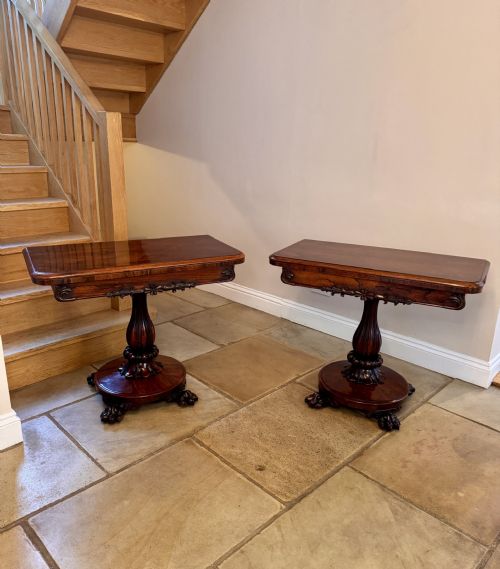
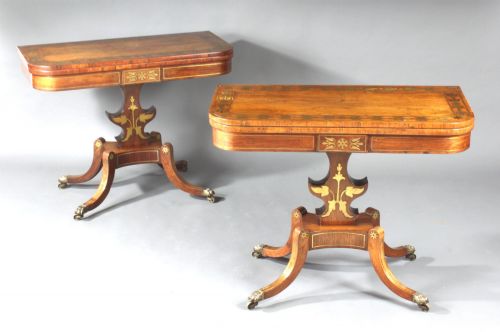
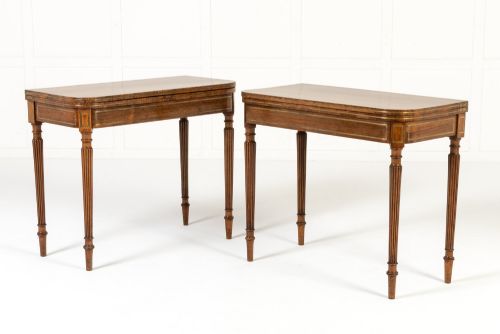
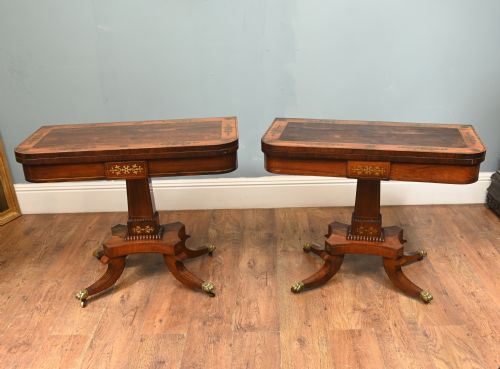
These pair rosewood card tables are dual-purpose fold-over furniture pieces that bring symmetrical elegance to a drawing room.
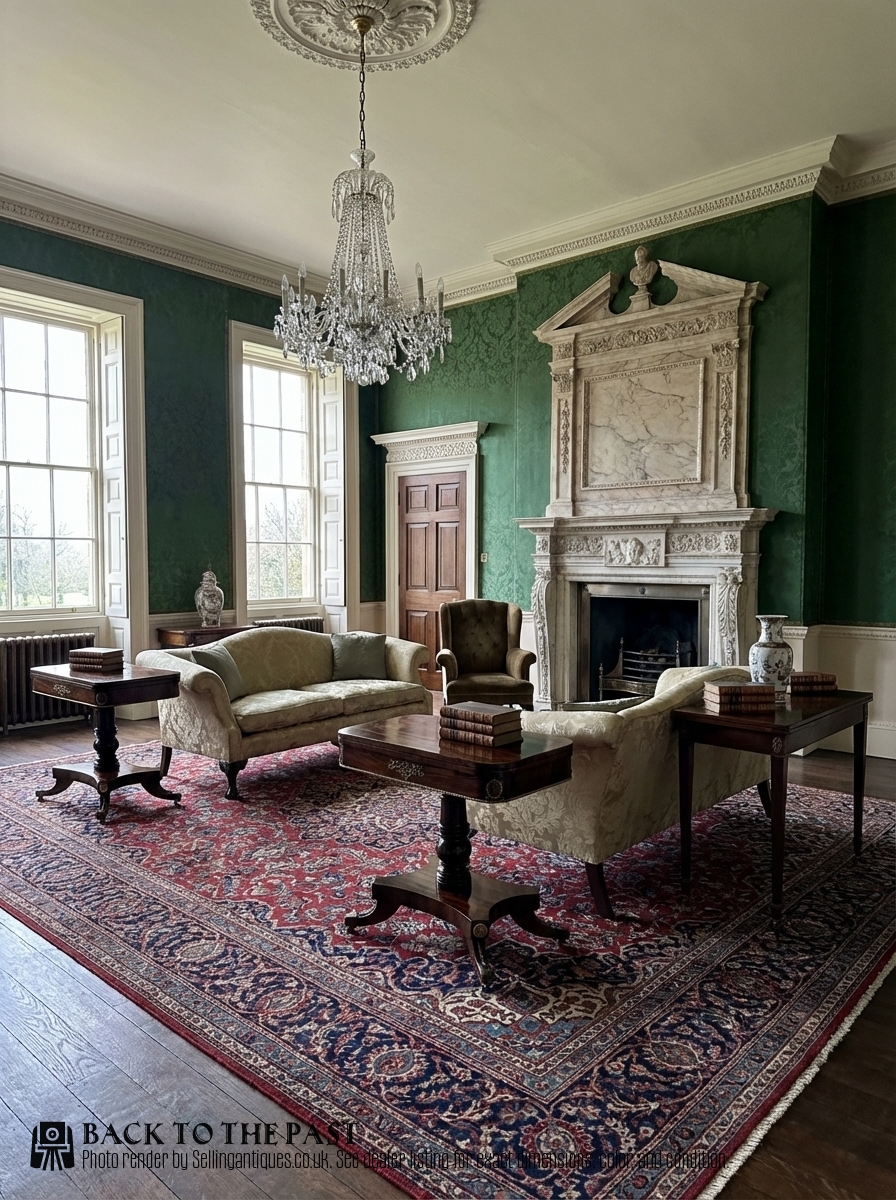
Pair Rosewood Card Tables
When searching for pair rosewood card tables, collectors look at matched sets of dual-surface furniture designed for entertaining and games. These pieces primarily date from the Regency and 19th Century periods, incorporating styles such as Grand Regency alongside George III, George IV, William IV, and Early Victorian eras.
How they were made
Cabinet makers utilised dense rosewood timber, often selecting highly figured veneers to cover structural carcases of mahogany or secondary woods. These surfaces were meticulously polished to highlight the rich grain patterns.
Brass inlay and brass mounts frequently decorate the friezes and tops, requiring precise channel cutting and metal fitting. Additional decorative elements incorporate contrasting stringing lines of satinwood and boxwood.
Pair Rosewood Card Tables Retail Price Guide 2026
Typical asking prices for pair rosewood card tables among the pieces listed under this phrase on Sellingantiques today, from the lower quarter to the upper quarter. They describe what is for sale here now, not the wider market.
Listings feature rosewood, mahogany, satinwood, and boxwood materials across Regency, George III, George IV, and Early Victorian periods.
What varies in quality
The sophistication of the brass inlay work and the symmetry of the figured rosewood veneers set finer examples apart. Superior items display crisp brass detailing and carefully matched timber grain across both folding leaves.
The execution of the pivot and folding mechanisms determines mechanical longevity, alongside the architectural integrity of the pedestal bases and carved supports. Attribution to notable cabinet makers or specific regional workshops further elevates the standing of an individual pair.
George Oakley·Gillows of Lancaster
The Pair Rosewood Card Tables Glossary
- Rosewood
- A heavy, durable timber prized for its dark grain and reddish-brown colour. It forms the primary visual surface of these tables.
- Regency
- A design period spanning the early 19th century, characterised by classical restraint and neoclassical motifs. It is the dominant style seen in these listings.
- Fold-over
- A table top construction featuring two hinged leaves that rotate and fold flat against a base when closed. This design conceals the playing surface until needed.
- Inlay
- A decorative technique where contrasting materials like brass, satinwood, or boxwood are embedded into the wood surface. It creates geometric or floral patterns.
- Frieze
- The broad horizontal band situated beneath the top of the table. Cabinet makers frequently decorate this area with brass inlay or figured veneer.
Pair Rosewood Card Tables: Frequently Asked Questions
What were pair rosewood card tables used for?
These tables served primarily for card games and social gatherings in polite society during the 19th century. Positioned against drawing room walls when closed, they opened up to reveal a baize-lined playing surface.
They also functioned as console tables or tea tables during daytime routines. Owning them in pairs provided symmetrical balance to large formal interiors.
How do I identify a Regency card table?
Regency card tables typically display classical architectural lines, pillar supports, and sabre legs often terminating in brass castors. They frequently utilise dark rosewood veneers accented with precise brass stringing or marquetry.
Looking underneath reveals traditional joinery methods and secondary timbers like mahogany consistent with early 19th-century workshop practices.
Are all pair rosewood card tables identical?
While manufactured as matching pairs to flank a fireplace or window, minor variations in wood grain and hand-carved details often occur. Cabinet makers matched timber veneers as closely as possible, but natural variations in rosewood remain visible upon close inspection.
Construction techniques across the two pieces should align, though individual workshop hands often left subtle personal marks.
How should I care for rosewood furniture?
Rosewood surfaces respond best to consistent indoor humidity levels and protection from direct sunlight to prevent fading. Regular dusting with a soft, dry cloth maintains the polish without chemical buildup.
Avoid placing hot items or liquids directly onto the polished wooden top or the interior playing surface.