

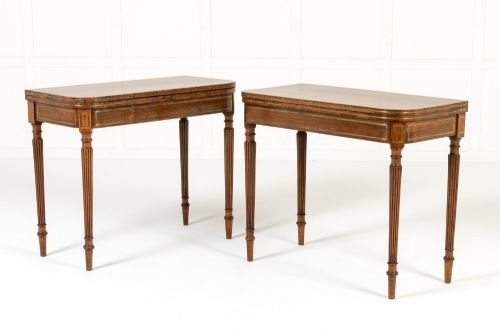
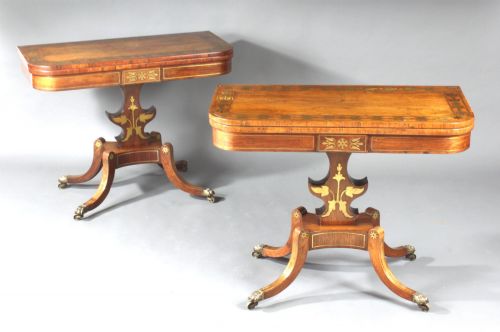
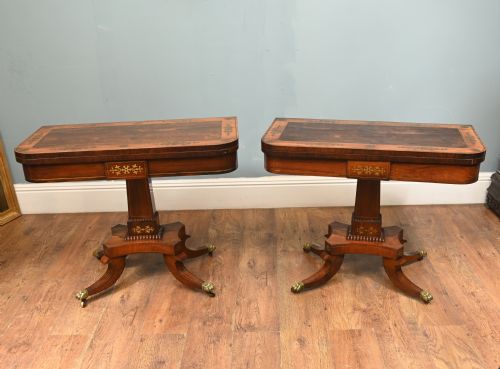
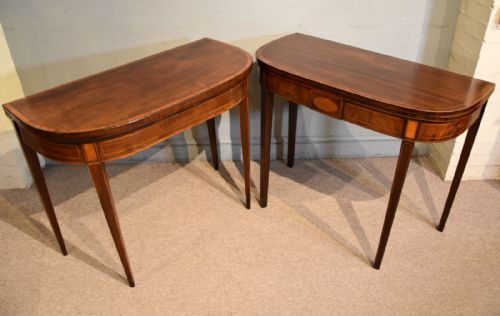

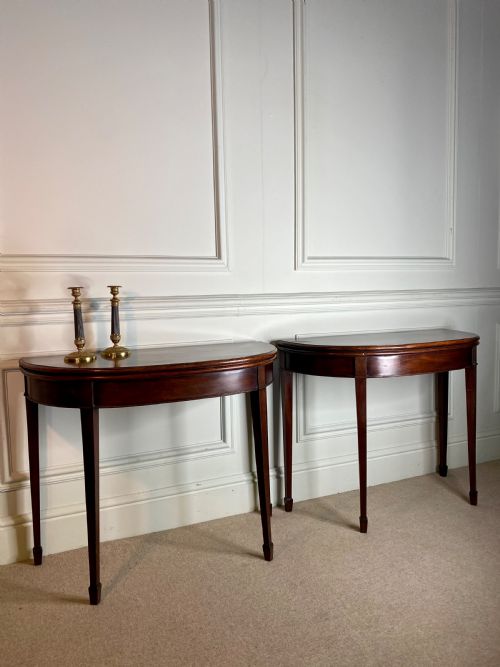


Antique Games Table Pair
An antique games table pair brings symmetry and clever folding surfaces to a room, most often appearing as matching card or tea tables from the Georgian and Regency periods.
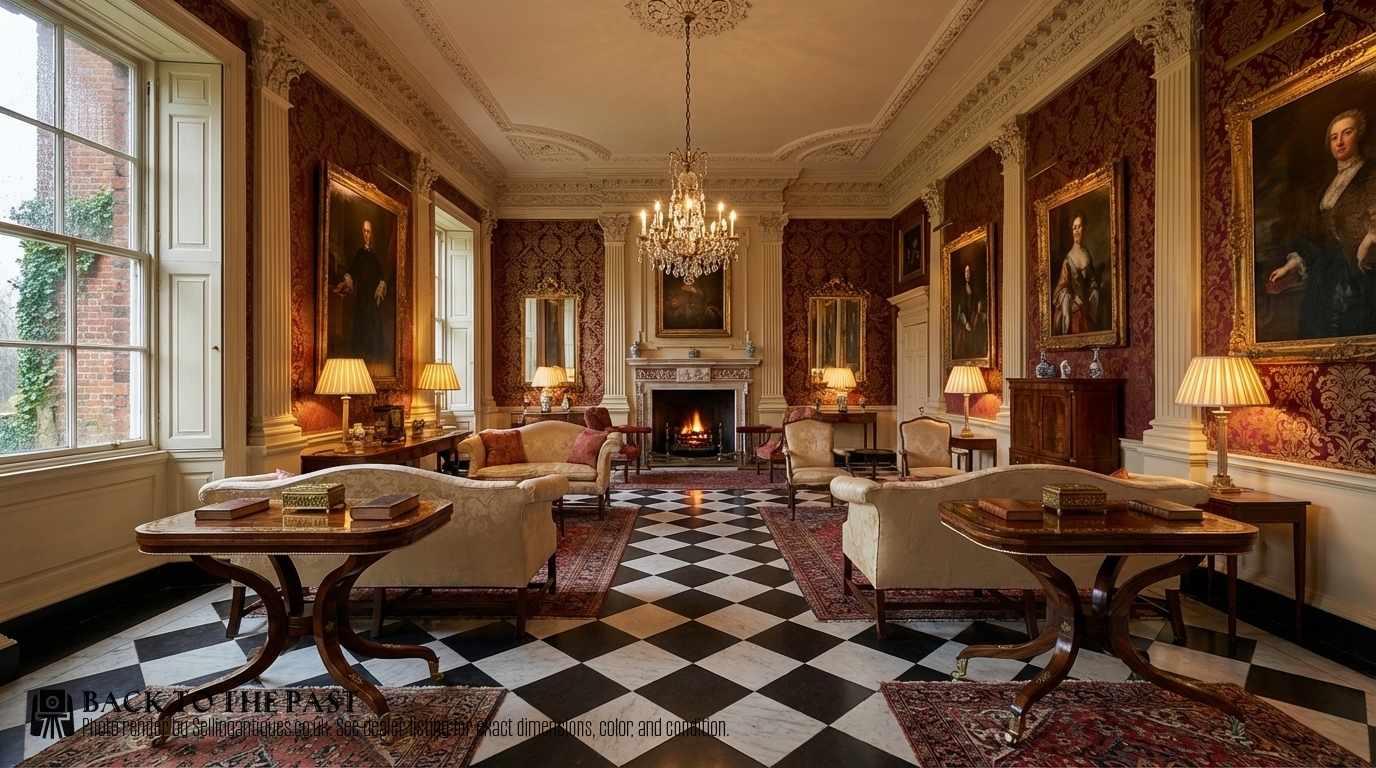
Antique Games Table Pair
Buyers encountering this phrase most commonly meet mahogany, rosewood, and satinwood examples from the Regency and George III periods, often featuring brass inlay. Makers and workshops of these eras paired folding tops with polished timbers to serve both domestic display and evening entertainment.
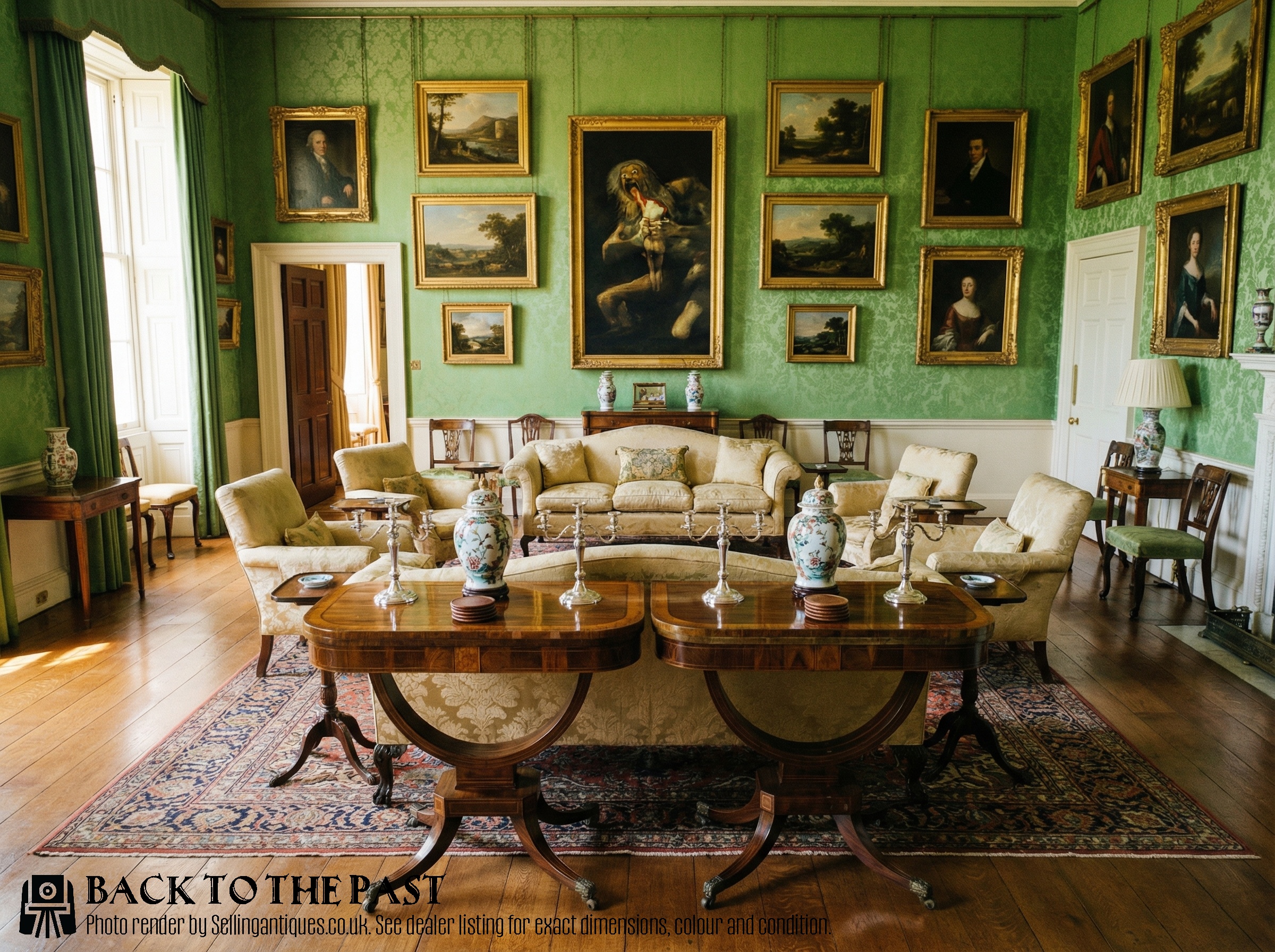
Assessing craftsmanship and finish
The refinement of the timber figure and the precision of the brass inlay distinguish finer examples from standard production. Superior execution shows seamless matching of veneers across the foldover leaves and crisp carving on the pedestal supports or legs.
Structural integrity in the pivoting or folding mechanism determines everyday reliability, separating master carpentry from simpler joinery. Original surfaces with deep, mellow patina carry more integrity than heavily restored finishes.
Antique Games Table Pair Retail Price Guide 2026
Typical asking prices for games table pair among the pieces listed under this phrase on Sellingantiques today, from the lower quarter to the upper quarter. They describe what is for sale here now, not the wider market.
Listings demonstrate that mahogany and rosewood dominate the material record for these items, supplemented by satinwood and burr walnut.
George Oakley
The Antique Games Table Pair Glossary
- Card table
- A specialist table featuring a hinged top that opens to reveal a baize-lined surface for card games. These typically fold flat against a wall when not in use.
- Demi-lune
- A half-moon shape popular for console and card tables during the late 18th century. This silhouette allows the piece to sit flush against a wall before opening into a full circle.
- Foldover
- A tabletop construction where the upper leaf hinges open and rotates to rest upon an expanded frame or pivoting leg. This mechanism doubles the surface area.
- Boulle
- An intricate marquetry technique combining tortoiseshell and brass inlay, seen on French examples. It provides a striking contrast of metallic lustre against dark ground materials.
- Figured rosewood
- A dense, heavily grained exotic timber prized during the Regency period for its rich colour variation. Cabinetmakers selected the most striking planks for visible table tops.
Antique Games Table Pair: Frequently Asked Questions
How were these tables used originally?
These tables served as dual-purpose furniture for the home, remaining closed against a wall as side or console tables during the day. In the evening, the hinged leaves opened to provide a stable surface for card games or tea.
Pairs allowed hosts to balance a room symmetrically or place two tables together for larger gatherings. The design accommodated the social customs of the Georgian and Regency periods without dominating the floor space permanently.
How do I date a Regency card table?
Regency pieces typically display distinct architectural motifs such as brass inlay, rosewood veneers, and sabre legs reflecting the early 19th-century classical revival. Examination of the secondary timbers underneath often confirms the period.
Proportions during this era leaned towards bold grain patterns and restrained mounts rather than heavy carving. Comparing the construction methods of the hinge mechanisms with dated examples helps verify the decade of manufacture.
What timber was most commonly used?
Mahogany dominated British workshops throughout the 18th and early 19th centuries due to its strength and rich reddish-brown tone. Rosewood and satinwood gained favour during the Regency period for their striking grain contrasts.
Cabinetmakers utilised these durable woods to withstand the constant movement of folding tops and pivoting legs. Burr walnut also appears on later Victorian iterations, offering distinctive swirling patterns.
Are matched pairs harder to find?
Finding two tables that originated together is less common than discovering single pieces, as many were separated over centuries of changing ownership. Dealers sometimes assemble matched pairs later based on identical dimensions, timber, and style.
Evaluating the consistency of the wear, patina, and internal construction helps determine whether a pair started life together in the same drawing-room.