




Sabre Leg Card Table
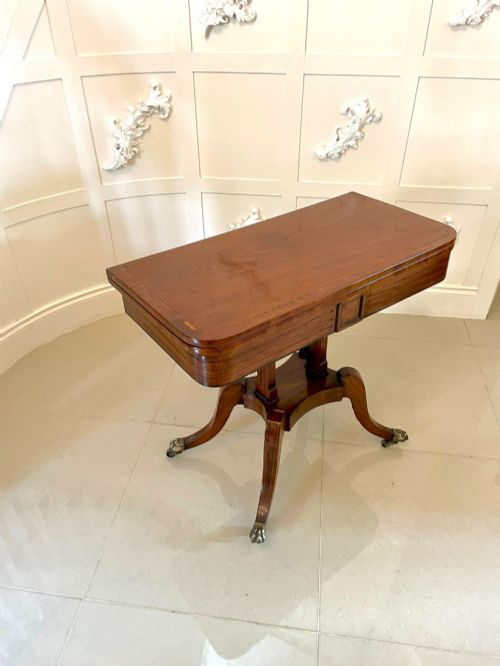
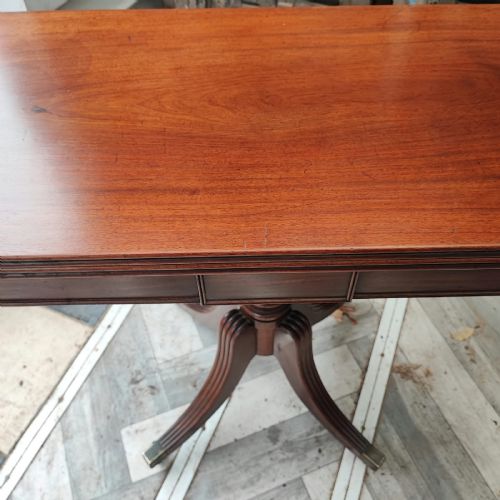
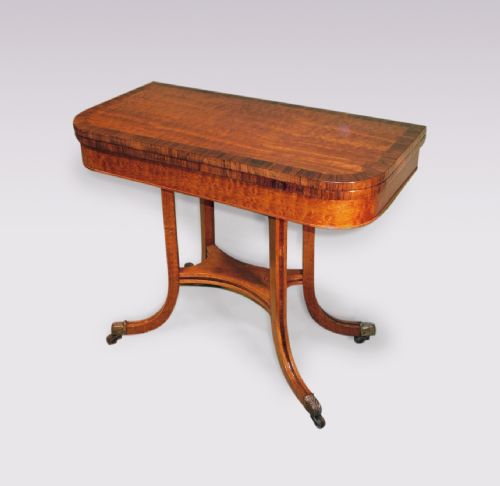
These sabre leg card table examples are Regency fold-over gaming and card pieces defined by curved supports.
What a sabre leg card table is
A sabre leg card table is a Regency period piece designed for gaming and card play, appearing in forms such as fold-over card tables, games tables, and card and games tables. These tables originate from the early nineteenth century, specifically around eighteen twenty, embodying the distinct stylistic traits of the Regency and Grand Regency eras.
The version most commonly met on this page is constructed from rosewood or mahogany, often enhanced with brass inlay, ebony, or timber inlay. Such pieces typically feature a fold-over top designed to conceal a green baize or playing surface when closed against the wall.
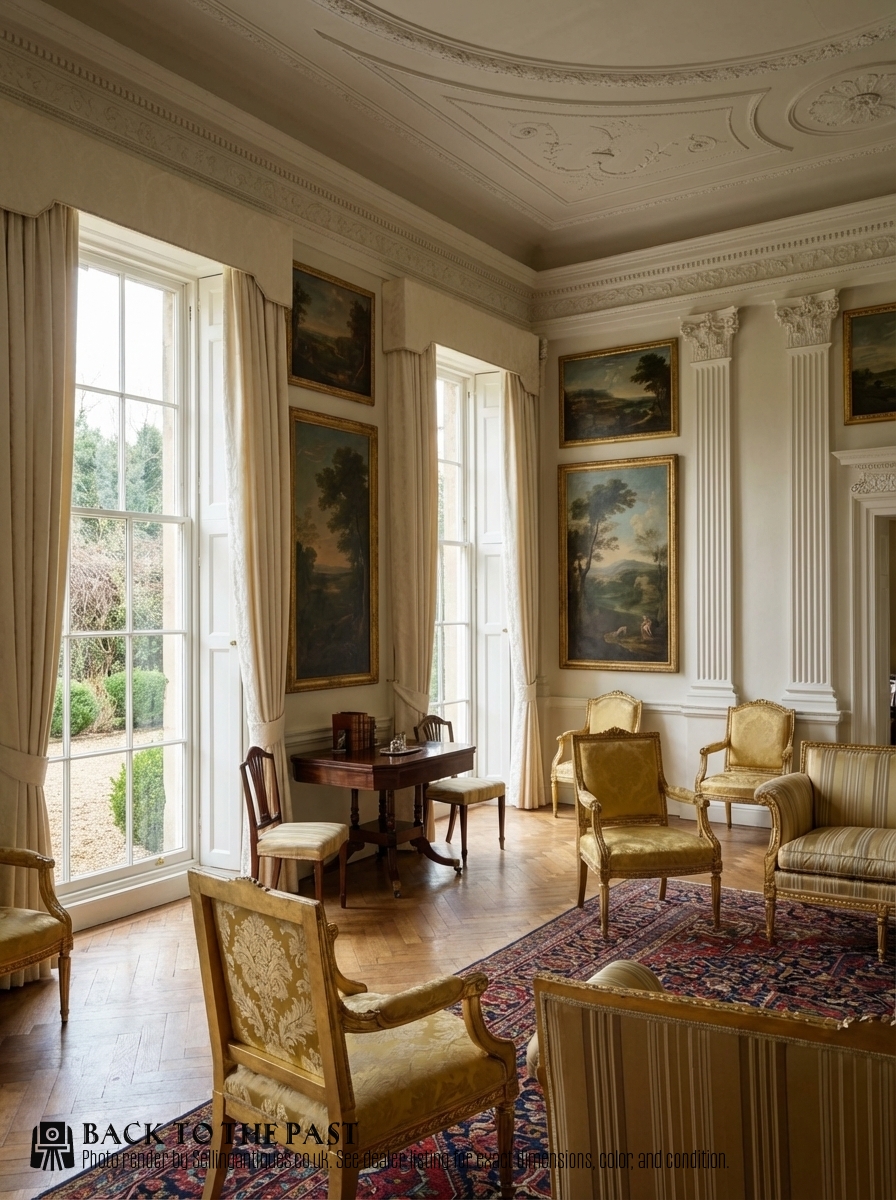
Makers and workshops of the period, including attributed makers like George Oakley, produced these items to serve the social requirements of Regency drawing rooms. The enduring appeal lies in the combination of architectural restraint and refined cabinet-making.
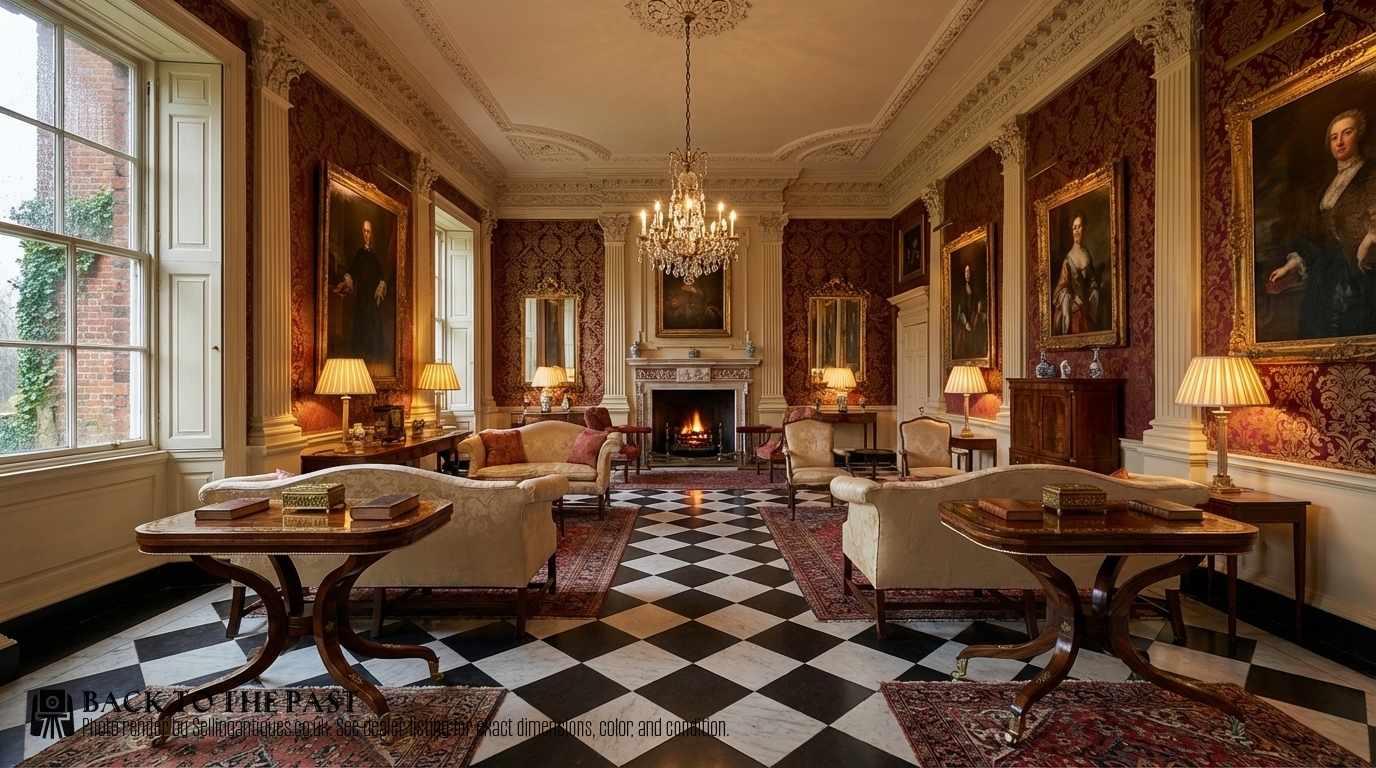
How they were made
Makers constructed these tables primarily using solid timbers and fine veneers of rosewood and mahogany, frequently incorporating contrasting elements of ebony and walnut cross-banding. The primary woods were selected for grain pattern and stability, particularly for the folding top mechanisms.
Brass inlay was meticulously routed and set into the timber surfaces to create geometric or classical motifs characteristic of the Grand Regency style. Sabre legs were shaped from timber stocks to curve outward gracefully from the base, supporting the weight of the pivoting top without bulky underframes.
Retail Price Guide 2026
Typical UK retail prices for sabre leg card table, calculated from the Sellingantiques database of over a million retail prices indexed since 2003. This retail price guide relies exclusively on Sellingantiques data; no external sources or auction records are used, so the figures do not describe the wider market.
What varies in quality
The distinction between standard examples and the finest pieces rests upon the precision of the timber selection and the complexity of the brass inlay work. Superior items exhibit continuous, well-figured grain across the fold-over top and finely cast or hand-cut brass details.
Structural refinement in the pivot and folding mechanisms separates the work of premier cabinet-makers from provincial production. Pieces attributed to workshops like George Oakley demonstrate superior joinery in the execution of the curved sabre leg supports and stability in the hinge action.
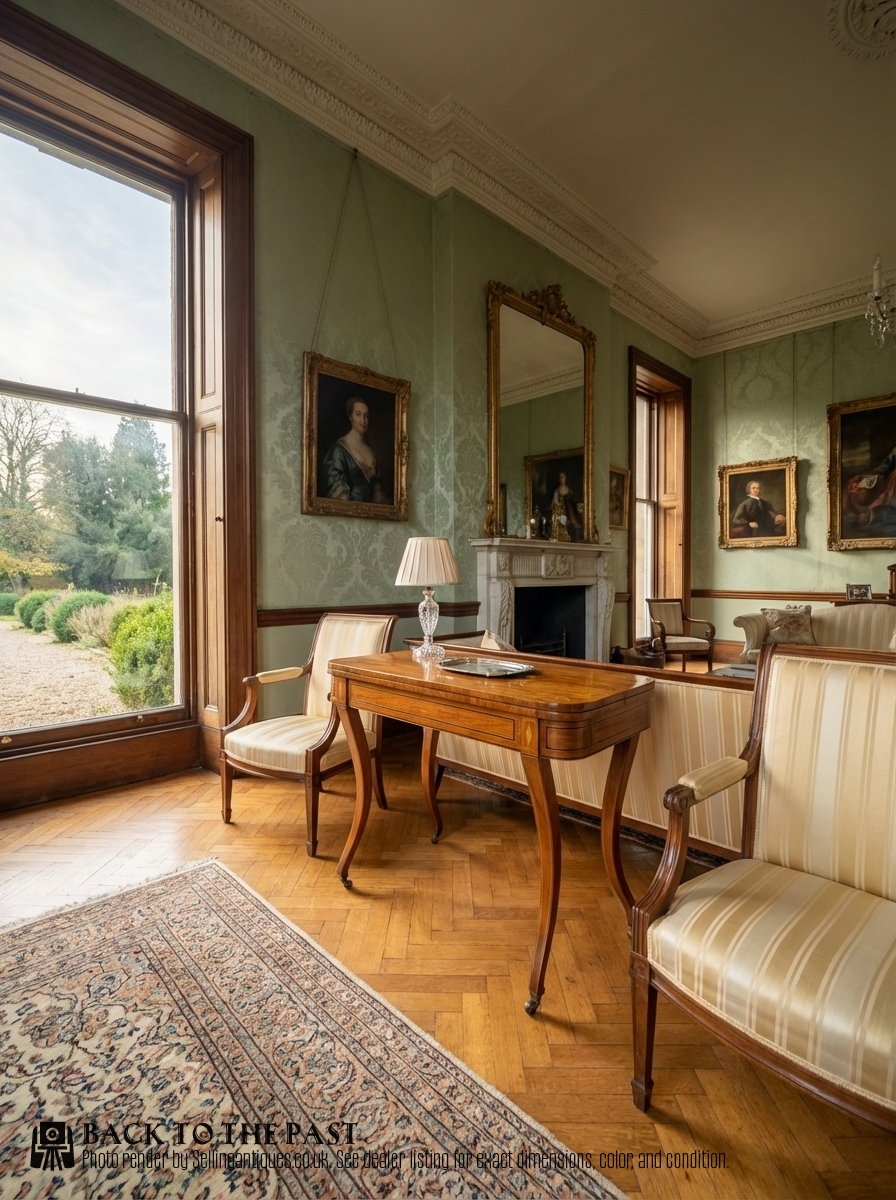
George Oakley
The Sabre Leg Card Table Glossary
- Sabre leg
- A curving support that tapers as it sweeps outward from the base, typical of Regency seating and small tables. This form mimics the curve of a cavalry sabre.
- Fold-over top
- A hinged wooden surface that doubles the table area when opened for play. It rests flat against a frieze or rotates on a pivot mechanism.
- Brass inlay
- Technique of recessing thin strips of brass into carved channels in the wood surface. It creates sharp contrast against dark woods like rosewood and mahogany.
- Cross-banding
- A border of veneer laid around the perimeter of a table top with the grain running perpendicular to the centre. This frames the primary wood panel.
- Reeded
- A series of parallel convex moulding strips carved directly into the timber legs or frame. It adds linear texture to Regency furniture.
Frequently Asked Questions
What is a sabre leg card table?
A sabre leg card table is a Regency period folding table designed for card games and social gatherings. These pieces feature distinct curved legs sweeping outward from the base.
They date from the early nineteenth century and utilise woods such as rosewood and mahogany, often embellished with brass inlay.
How were these tables used originally?
These tables served primarily as game and card tables in Regency drawing rooms, remaining folded against a wall when not in use. Opening the hinged top revealed a baize-lined surface suitable for card playing.
They also functioned as general pier or side tables when closed, combining decorative presence with practical utility.
How do I identify a Regency period piece?
Regency pieces are identified through specific stylistic markers such as sabre legs, brass inlay, and dark exotic veneers like rosewood. Construction methods from around eighteen twenty also point to this specific era.
Attributions to makers like George Oakley further help contextualize the origin and quality of individual pieces.
How do I care for rosewood and mahogany?
Rosewood and mahogany surfaces require protection from direct sunlight and dramatic changes in humidity to prevent timber splitting or veneer lifting. Regular dusting with a dry, soft cloth maintains the finish.
Application of traditional wax polish occasionally nourishes the wood without building up heavy residue.