

Regency Pedestal Card Table
A regency pedestal card table is a versatile folding piece designed for gaming and display, built on a central pillar.

Regency Pedestal Card Table
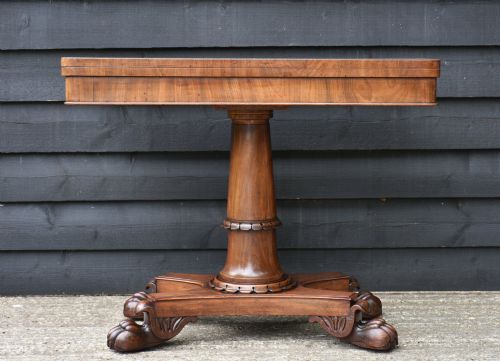
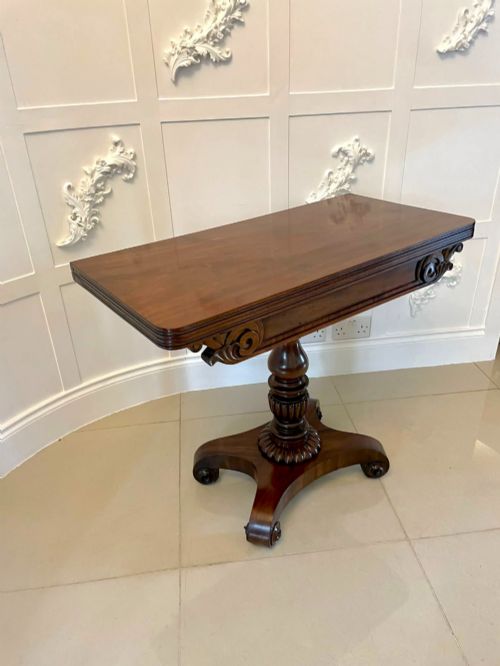
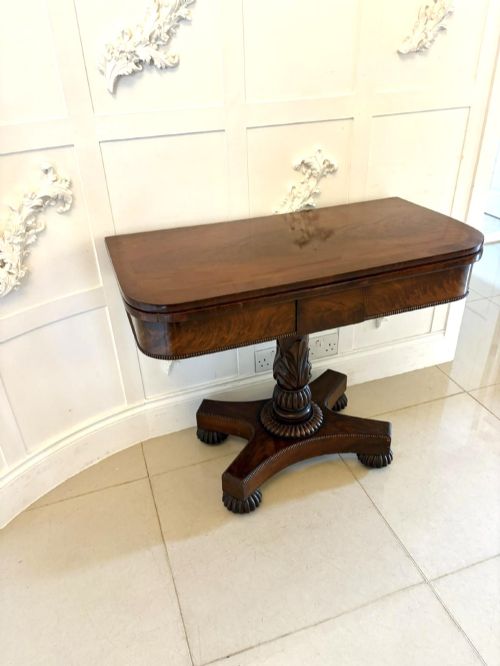
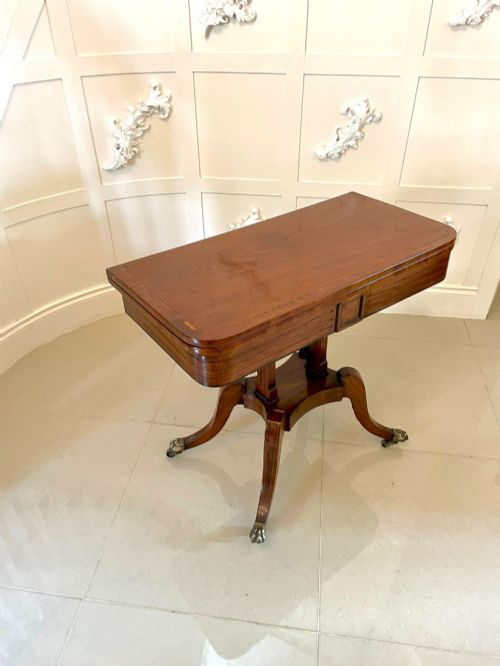
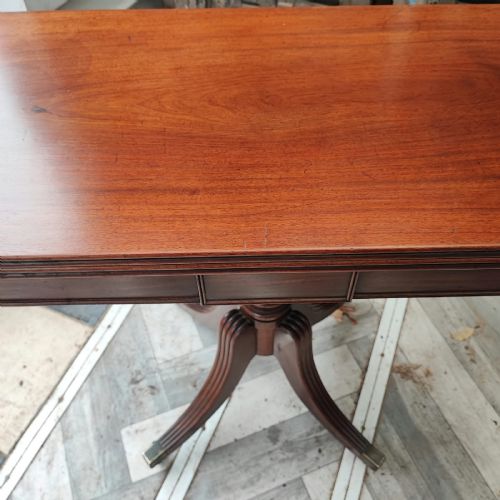
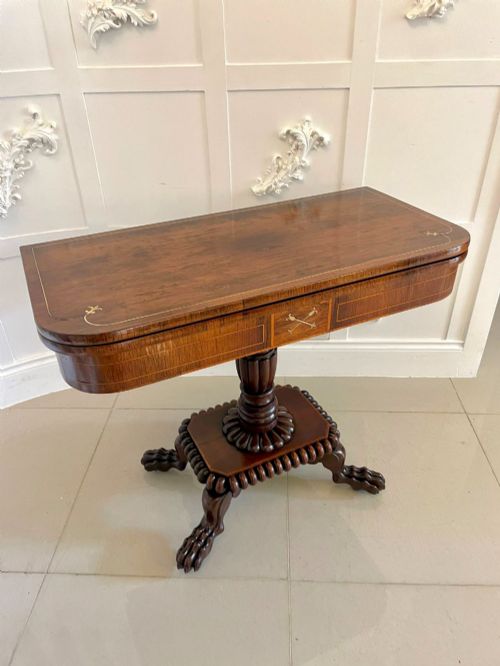
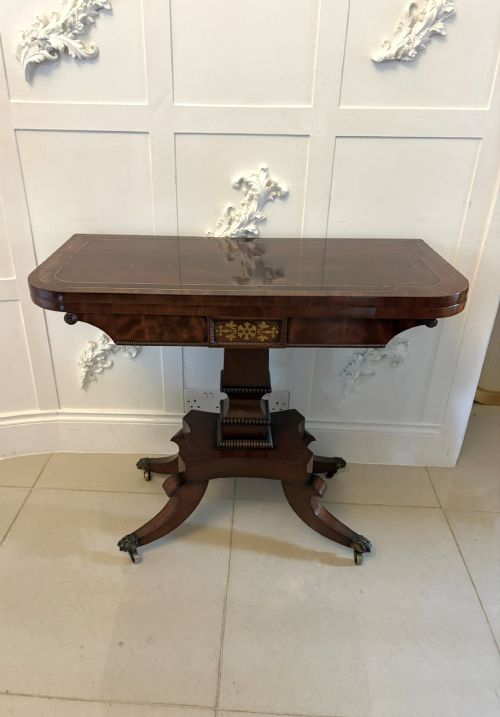
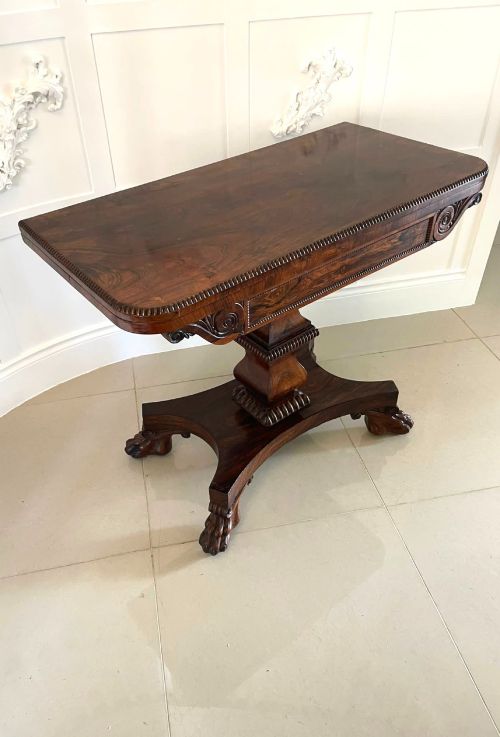
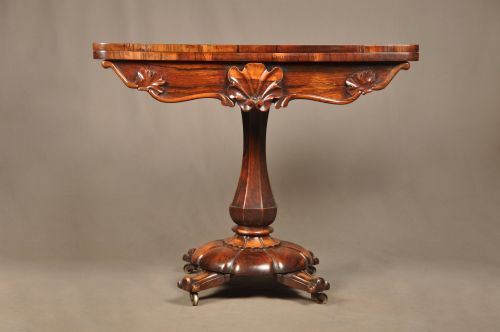
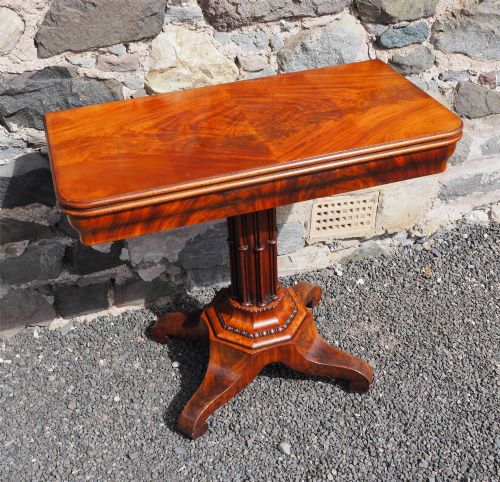
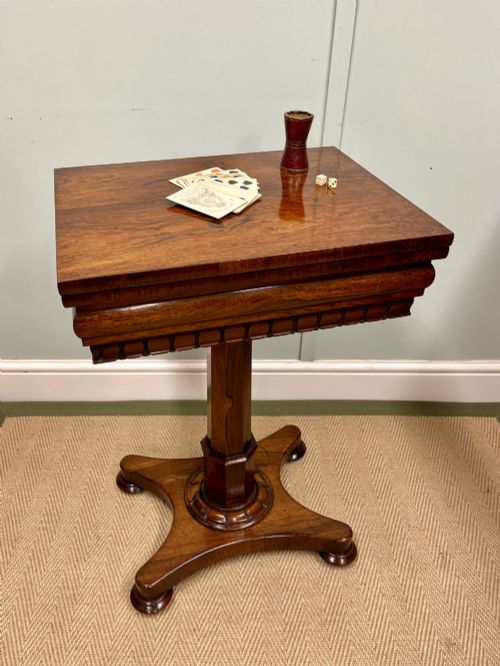
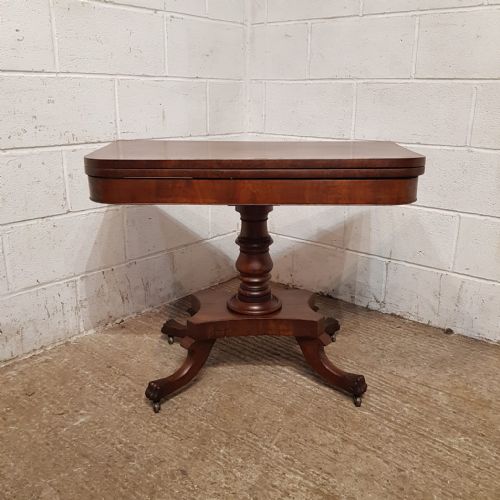
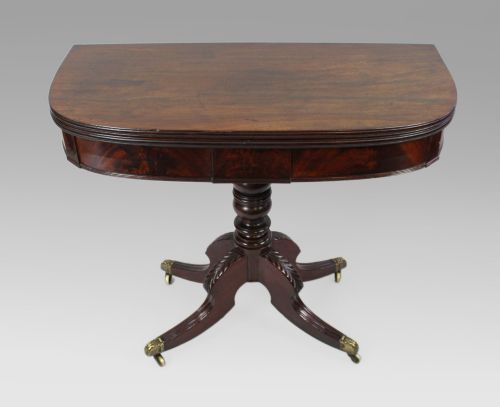
A regency pedestal card table stands on a central column base, usually rising from a platform with four splayed legs or carved feet. These items emerge primarily from the Regency and William IV periods, alongside related late Georgian examples.
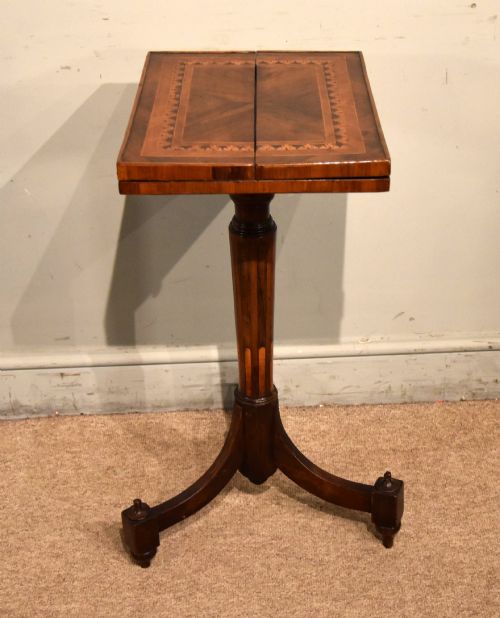
The form functions primarily as a console or side table when folded shut against a wall, revealing a baize-lined playing surface when the top is swung and unfolded. Mahogany and rosewood form the vast majority of these pieces, often enriched with satinwood, brass inlay, or decorative banding.
Most pieces seen here date from the early nineteenth century, reflecting the classic pedestal proportions favoured by cabinet makers of that era. Variations include examples with lyre supports, carved dolphins, or scroll pedestals alongside standard pillar configurations.
How They Were Made
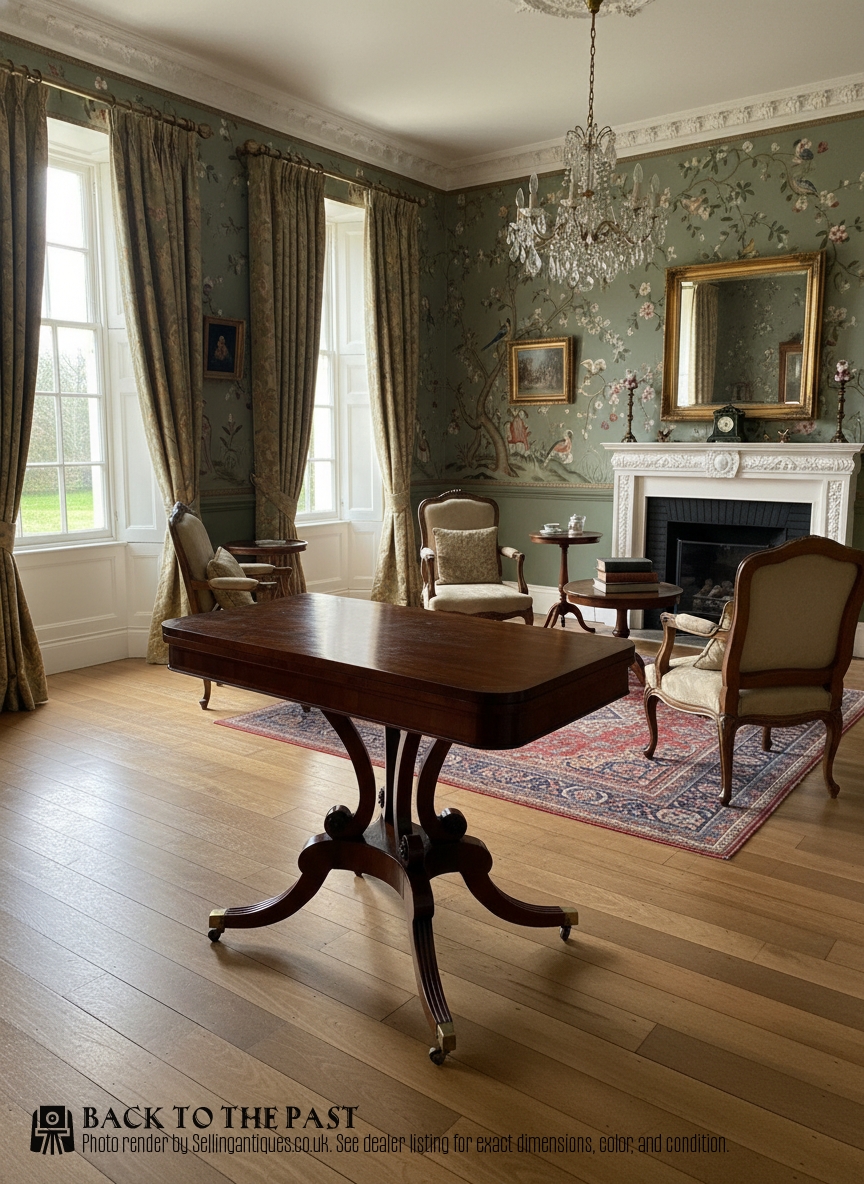
Cabinet makers utilised dense timbers like mahogany and rosewood, frequently applying finely figured veneers over secondary woods to create rich surface patterns. Brass stringing and delicate inlay work in boxwood or satinwood punctuate the primary dark grain.
The central pedestal construction requires robust internal framing to support the swivelling folding top without destabilising the column. Carved elements such as paw feet, scrolls, and lotus motifs appear on the bases of finer examples, shaped from solid wood blocks.
Regency Pedestal Card Table Retail Price Guide 2026
Typical asking prices for regency pedestal card table among the pieces listed under this phrase on Sellingantiques today, from the lower quarter to the upper quarter. They describe what is for sale here now, not the wider market.
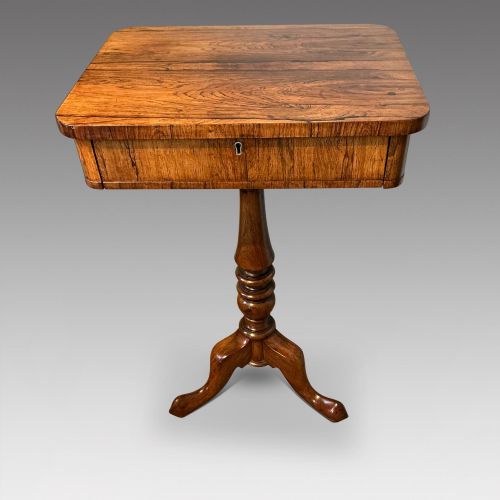
Listings feature rosewood, mahogany, satinwood, and maple timbers across nineteenth-century pedestal card tables.
What Varies in Quality
The choice of timber grain fundamentally alters the visual presence of a regency pedestal card table, with flame mahogany and heavily figured rosewood sitting at the upper end. Finely executed brass inlay and crispness in carved wooden details distinguish workshop output.
Structural integrity in the pivoting mechanism and the alignment of the fold-over top demonstrate the precision of the original joinery. The weight and stability of the central column and its supporting platform indicate how well the piece was engineered.
George Bullock·Gillows
The Regency Pedestal Card Table Glossary
- Baize
- A coarse woollen fabric used to line the playing surface of games tables. It provides a flat, tactile texture suitable for card games.
- Fold-over top
- A hinged table surface that doubles in area when opened out. This design allows the furniture to function as a compact console.
- Pedestal base
- A central vertical column supporting the table top, typically resting on a platform with feet. This style freed leg space around the perimeter.
- Brass inlay
- Metal strips or motifs embedded flush into the wooden surface. This decorative technique creates sharp contrast against dark tropical veneers.
- Satinwood
- A durable, light-yellow timber used for contrasting bands and decorative details. It appears frequently in Regency and Georgian marquetry.
Regency Pedestal Card Table: Frequently Asked Questions
How do I use a card table today?
These tables function well as console or side furniture against a wall when folded shut, saving space in a living area. Opening the top reveals a generous surface suitable for board games, writing, or display.
Positioning the piece away from direct sunlight and extreme temperature changes helps protect the polished wood veneer and the fabric interior from fading or warping.
How can I tell a Regency table from a William IV table?
Regency pieces often display restrained classical proportions with delicate brass inlay, sabre legs, or slender pedestal supports. William IV examples tend to be heavier in build, featuring bolder carved details like paw feet and robust scrolled pedestals.
Both styles utilise similar primary timbers such as mahogany and rosewood, but the overall mass and carving vocabulary help separate the earlier refined aesthetic from the later robust interpretations.
Did all these tables have baize inside?
Most surviving examples retain a woollen baize lining designed to provide a soft, non-slip surface for playing cards. Some variants incorporated leather or simply polished wood interiors depending on the intended use.
Replacement of the interior fabric is common during conservation, though original textiles remain valued when preserved in good condition.