



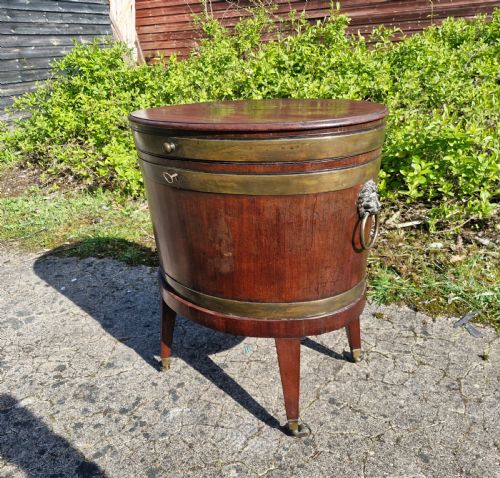


Regency Mahogany Sarcophagus
Regency mahogany sarcophagus pieces are classical storage forms designed for wine and valuables, combining architectural authority with rich timbers.
Regency Mahogany Sarcophagus
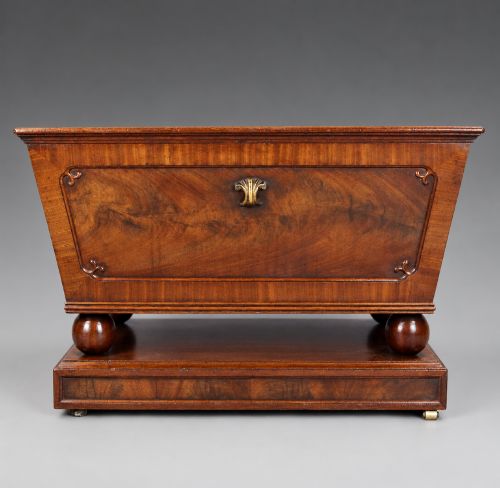
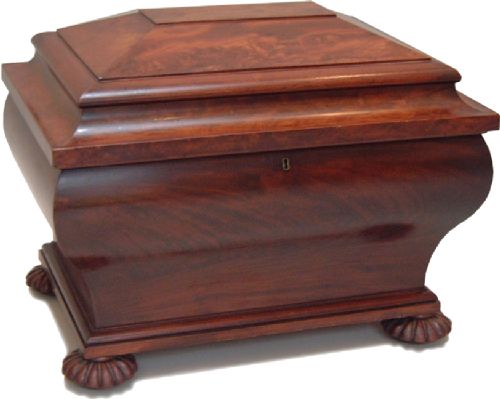
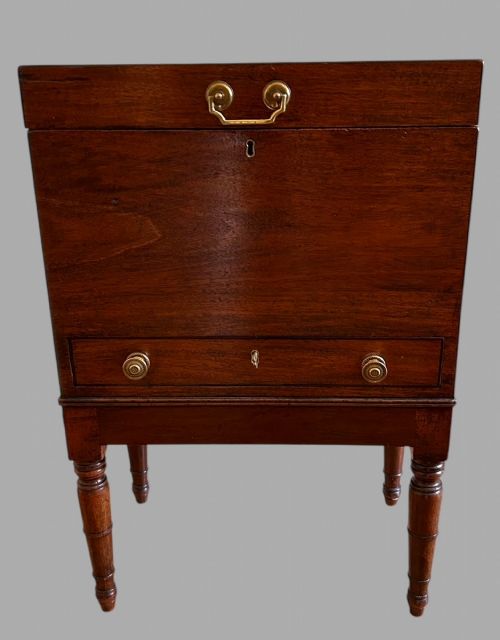
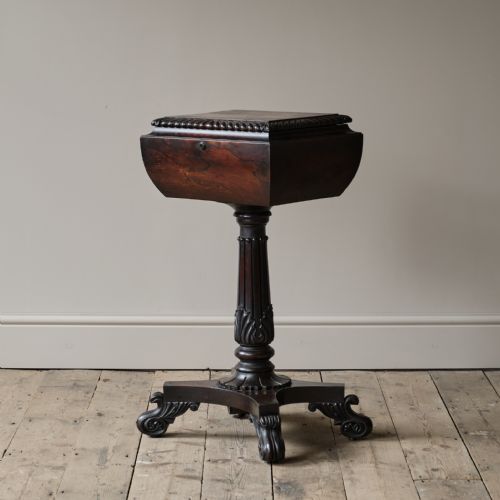
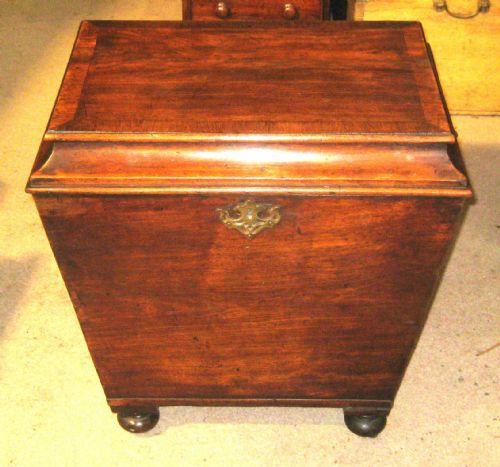
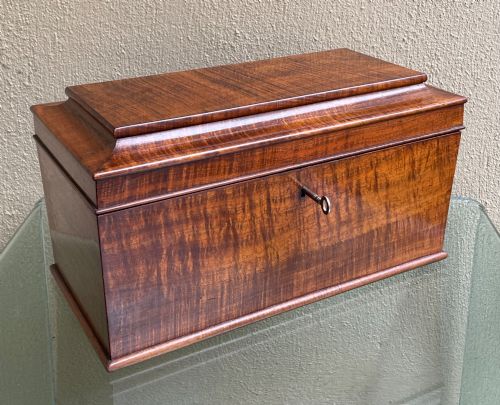
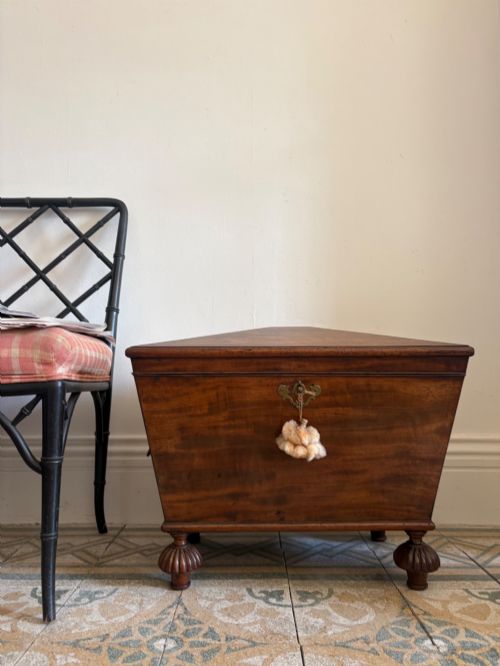
A regency mahogany sarcophagus takes the form of a classical funerary chest, adapted during the early nineteenth century to serve as a wine cooler, cellarette, or tea caddy. These pieces range from grand freestanding wine coolers intended for the dining room to smaller tabletop caddies and teapoys meant for the drawing room.
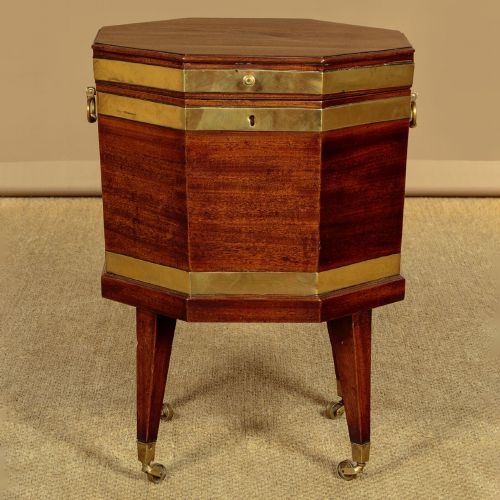
The version most commonly encountered on this page is the large cellarette or wine cooler dating from the Regency and Georgian periods. These vessels frequently retain their original lead liners or compartments, reflecting their primary historical function of chilling wine or storing precious tea leaves.
How they were made
Cabinet makers utilised dense mahogany and striking flame mahogany veneers over sturdy structural timbers to achieve the characteristic rich surface movement. Selected examples incorporate contrasting stringing or banding in ebony to define the architectural profiles of the classical form.
Metal components played a structural and decorative role, with cast brass mounts, handles, and occasional ormolu detailing accentuating the heavy lids and corners. Original lead linings were soldered directly into wine coolers to hold ice and bottles safely without damaging the surrounding wood.
One exceptional tea caddy arrived complete with its original cut glass bowl for rinsing spoons.
What varies in quality
The standard of a regency mahogany sarcophagus rests primarily upon the choice of timber figure and the crispness of its classical carving. Pieces displaying intense flame mahogany or finely figured grain command attention, whereas plain timber surfaces yield a more muted presence.
Construction details such as dovetailed joints, substantial brass hardware, and intact original lead interiors or glass mixing bowls elevate an example above standard production. The overall architectural proportion and adherence to the manner of designers like Thomas Hope further separate masterwork pieces from simpler utilitarian boxes.
Wilkinson London·Thomas Hope
The Regency Mahogany Sarcophagus Glossary
- Cellarette
- A lockable cabinet or chest designed to hold bottles of wine and spirits in a dining room. They often sat on the floor beneath a sideboard and contained lead-lined compartments.
- Teapoy
- A small stand or box on a pillar or feet, used to hold various kinds of tea. Sarcophagus-shaped examples feature lidded internal canisters for black and green teas alongside a central glass bowl.
- Flame mahogany
- A decorative wood veneer showing a characteristic flamed or feathered pattern resembling flickering fire. Cabinet makers prized this figure for the principal surfaces of high-status furniture.
- Lead liner
- A fitted metal insert placed inside wine coolers to hold ice and wet bottles. Surviving original liners remain an important indicator of a piece retaining its functional integrity.
- Ormolu
- Gilt bronze mounted onto furniture as an ornamental detail. It appears on select classical pieces to highlight corners, handles, and feet.
Regency Mahogany Sarcophagus: Frequently Asked Questions
What is a sarcophagus wine cooler?
A sarcophagus wine cooler is a heavy timber storage chest styled after ancient Roman stone coffins, constructed to keep wine bottles cool during formal meals.
Cabinet makers of the Regency period adopted this classical silhouette because its flared sides and domed lids offered both generous internal volume and severe architectural dignity.
How were tea caddies used?
Tea caddies were kept locked in the drawing room to protect expensive black and green teas from household servants and guests alike.
The host or hostess would measure out the leaves using small internal compartments before the tea was brewed.
Did these pieces always have lead liners?
Wine coolers and cellarettes frequently featured soldered lead linings to contain ice and melting water without rotting the mahogany framework.
Tabletop tea caddies and work boxes omitted lead entirely, relying instead on wood partitions or velvet-lined storage wells.
How do I date a Regency piece?
Dating relies on observing the combination of mahogany veneers, brass mount styles, and structural proportions typical of the early nineteenth century.
Pieces bearing crisp classical carving and ormolu mounts usually align with the height of the Regency and George IV periods.