
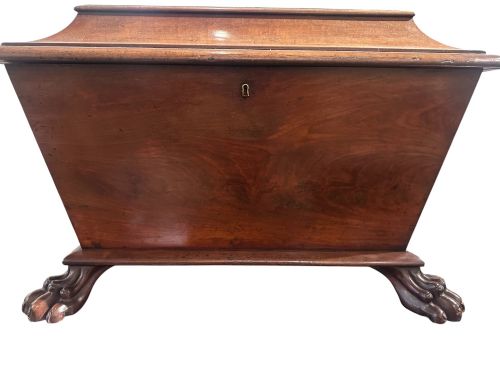


Antique Wine Coffer
An antique wine coffer, or cellarette, is a robust timber storage chest designed to keep bottles secure and cool near the dining table.

What an antique wine coffer is
An antique wine coffer serves as a dedicated vessel for holding bottled wine close at hand during formal dining. These pieces primarily date from the Georgian, Regency, and William IV periods, appearing in solid timber and veneered finishes.
Buyers frequently encounter sarcophagus shaped cellarettes and rectangular variations on this page. Makers constructed these items to sit beneath sideboards or beside dining tables, fulfilling a practical domestic need in grand houses.

How they were made
Cabinet makers utilised dense hardwoods such as mahogany and burr elm to build these heavy storage vessels. Many examples feature flame mahogany veneer applied over a sturdy timber carcase to create striking figured surfaces.
Workshops incorporated cast brass handles, feet, and sometimes lined interiors to complete the construction. Carved wooden details occasionally appear on William IV pieces, demonstrating the decorative ambition of the period.
Retail Price Guide 2026
Typical UK retail prices for wine coffer, calculated from the Sellingantiques database of over a million retail prices indexed since 2003. This retail price guide relies exclusively on Sellingantiques data; no external sources or auction records are used, so the figures do not describe the wider market.
Every listed piece utilises timber construction, featuring mahogany, burr elm, and flame mahogany veneer across Georgian, Regency, and William IV styles.
What varies in quality
The choice of timber grain fundamentally dictates the visual impact of each piece. Finely figured flame mahogany veneer and carefully selected burr elm separate superior examples from plain timber construction.
The sophistication of the silhouette and the crispness of any carved enrichment distinguish standard domestic items from grander commission work. Proportion, weight, and the quality of the brass fittings further define the upper tier of the range.
The Antique Wine Coffer Glossary
- Cellarette
- A lockable container or chest designed to hold bottles of wine near the dining table. They often feature partitioned interiors and heavy handles for transport.
- Sarcophagus
- A monumental chest form with a domed lid and tapered sides, popular during the Regency and William IV periods. This classical shape mimics ancient stone coffins.
- Veneer
- A thin layer of finely figured wood, such as flame mahogany or burr elm, applied over a stable secondary timber carcase. This technique allows cabinet makers to display dramatic grain patterns.
- Flame mahogany
- A distinctive wood figure resembling flickering flames, created by cutting across the branch junction of the tree. It was highly prized by Georgian and Regency furniture makers.
Frequently Asked Questions
What is an antique wine coffer?
An antique wine coffer is a lidded timber chest built to store wine bottles securely in the dining room. These pieces date from the Georgian era through to the William IV period.
Cabinet makers designed them to hold bottles upright or on their sides within partitioned interiors. They often feature substantial brass handles so servants could move them around the room.
How do I date a wine coffer?
Dating relies upon observing the primary timber, the overall silhouette, and decorative details like carving or brasswork. Georgian pieces often display simpler rectangular forms, while Regency and William IV examples frequently adopt sarcophagus shapes.
The presence of flame mahogany veneer or burr elm also helps align a piece with specific nineteenth century stylistic preferences. Comparing the construction methods inside the chest provides further chronological clues.
How were wine coffers used?
Dining rooms during the eighteenth and nineteenth centuries required a secure method for storing wine near the table before service. Servants kept bottles inside the coffer, sometimes utilising lined interiors.
The heavy timber construction helped maintain cooler temperatures for the wine prior to drinking. Their presence underscored the formality of wealthy dining customs.
Where should I place a wine coffer?
These substantial timber chests work effectively as statement pieces in a dining room or hallway. Their flat lids provide a stable surface for displaying decorative objects when not in use.
Keep them away from direct heat sources and strong sunlight to protect the mahogany or burr elm veneer from drying out. Positioning them on level floors ensures the heavy lids close properly.