


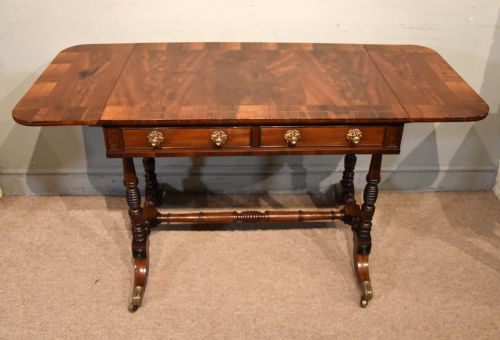
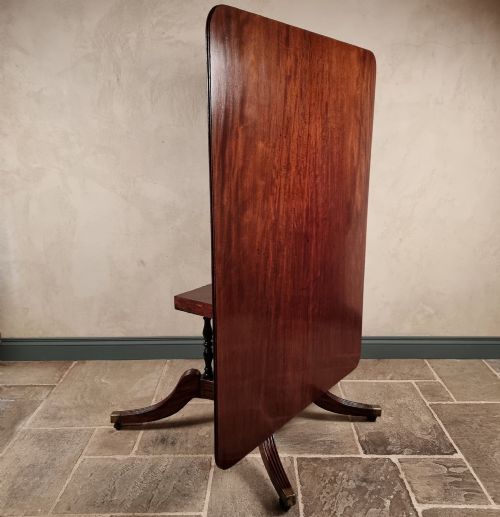
Regency Mahogany Drop Leaf
A regency mahogany drop leaf table offers versatile surfaces and rich grain figures, combining compact folding flaps with handsome timber.
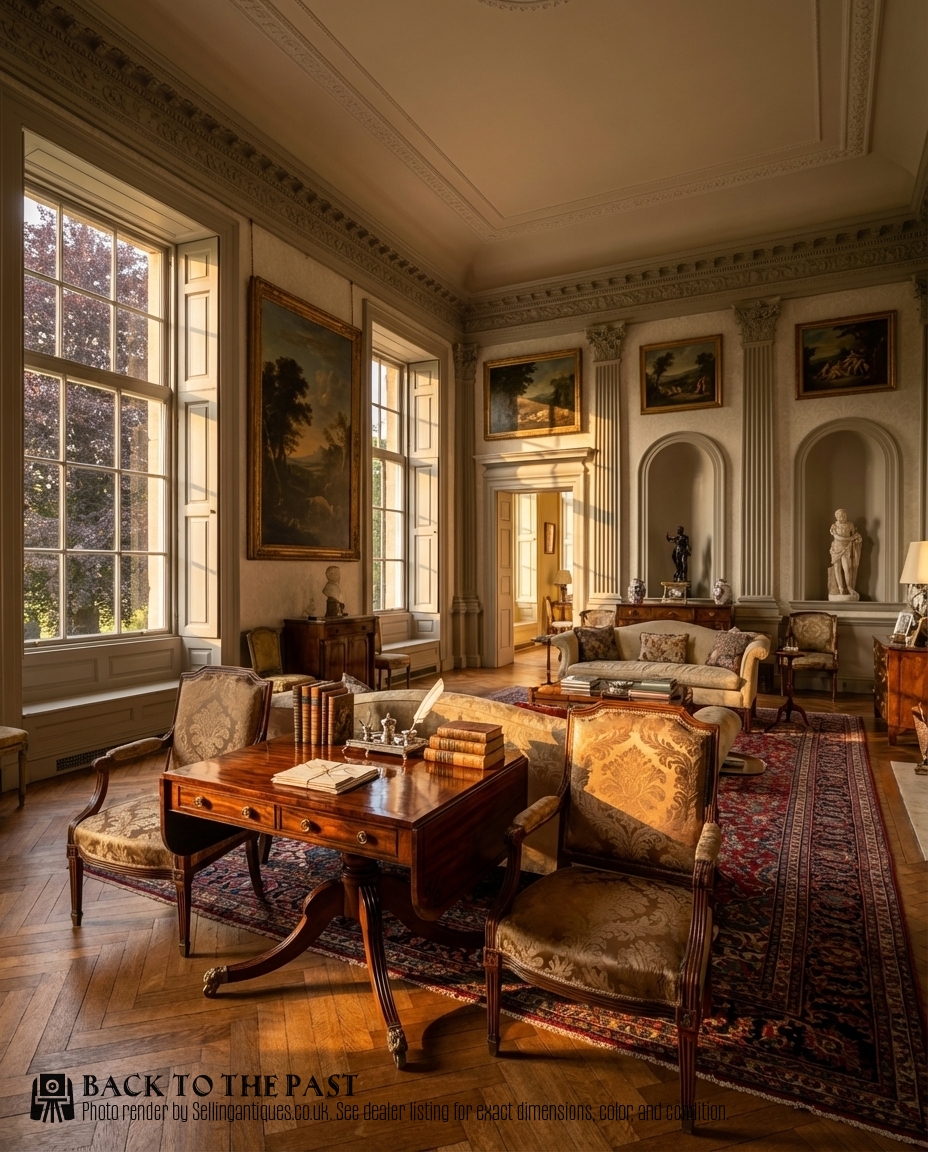
Regency Mahogany Drop Leaf
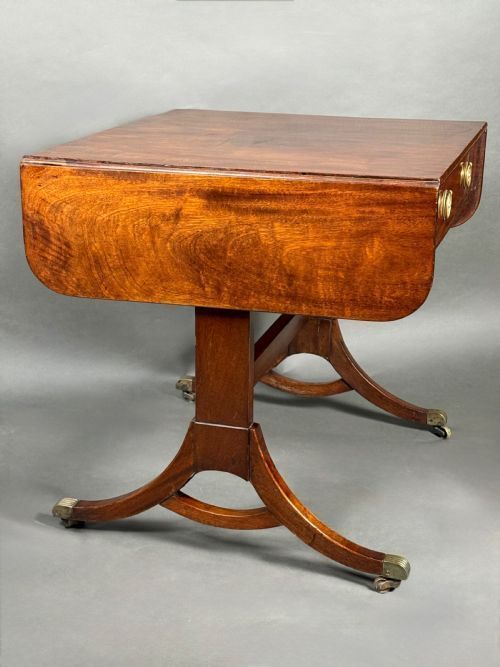
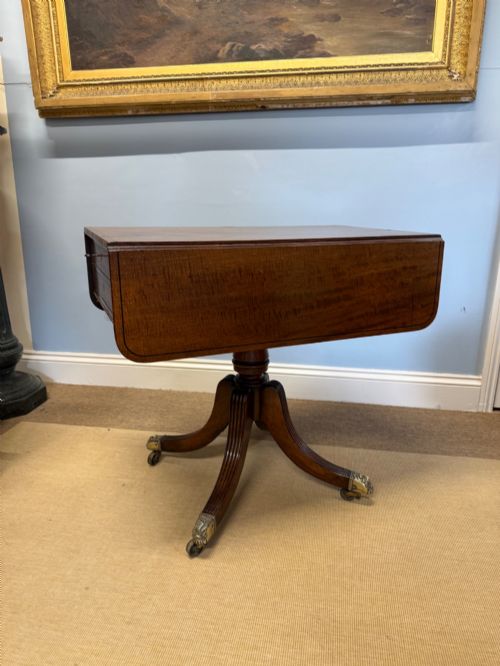
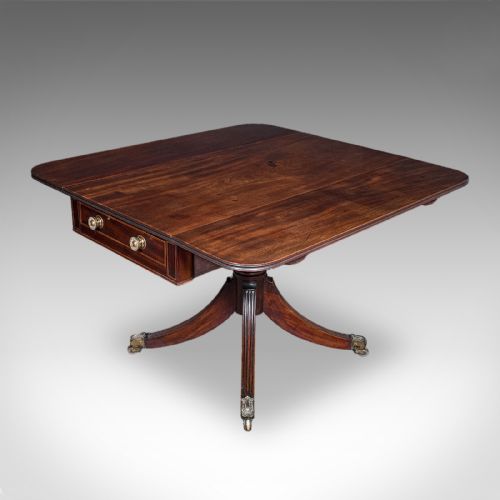
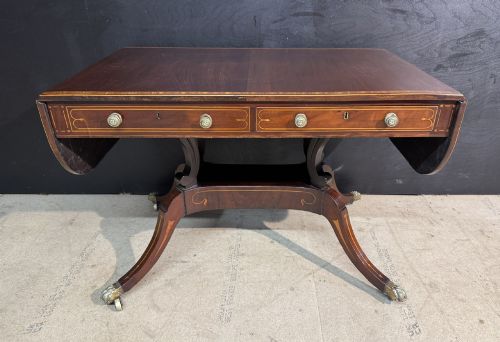
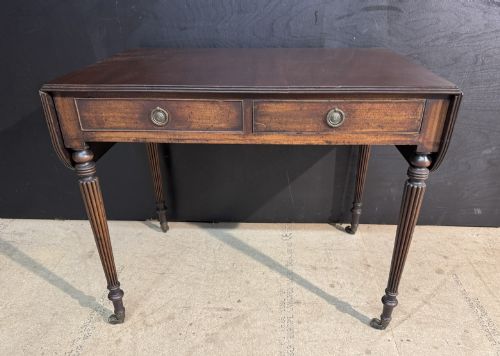
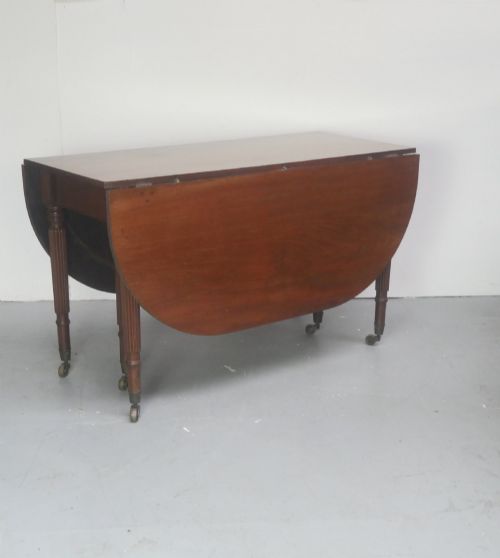
A regency mahogany drop leaf piece provides a flexible surface through hinged flaps that lower when space is tight and rise to create a larger table. The evidence shows these pieces appearing primarily as dining tables, sofa tables, Pembroke tables, and work tables.
The versions met most frequently on this page date from the Regency and Georgian periods, alongside 19th-century interpretations. Makers built them to adapt to changing room layouts by expanding from modest side dimensions to accommodate meals or tasks.
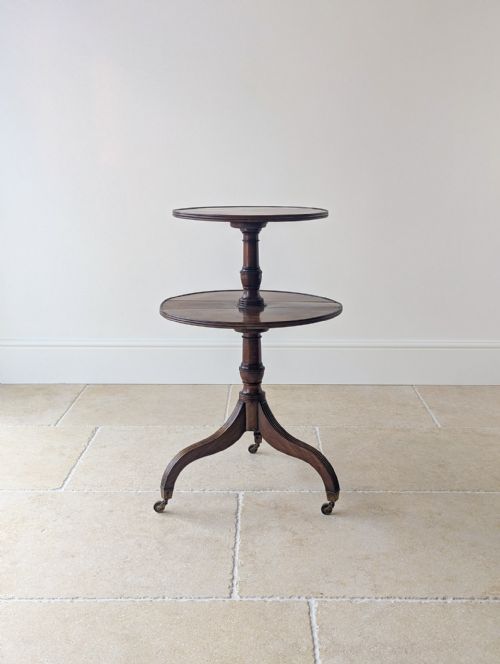
Forms range from small lamp and sewing tables to large dining tables seating multiple people. Their adaptable design made them practical additions to period interiors, balancing rigid structure with moveable flaps.
Materials and Construction
Cabinet makers utilised solid mahogany and veneers such as flame mahogany, plum pudding mahogany, and rosewood over a sturdy wood carcass. These polished timbers display deep red-brown tones and complex grain patterns.
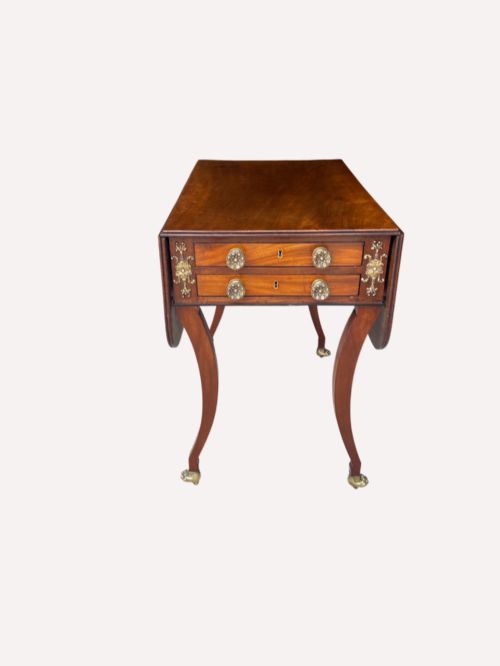
Inlay and contrast came from boxwood, satinwood, and brass details embedded into the primary wood structure. Metal fittings like castors, hinges, and drawer pulls provided mobility and operational strength to the folding leaves.
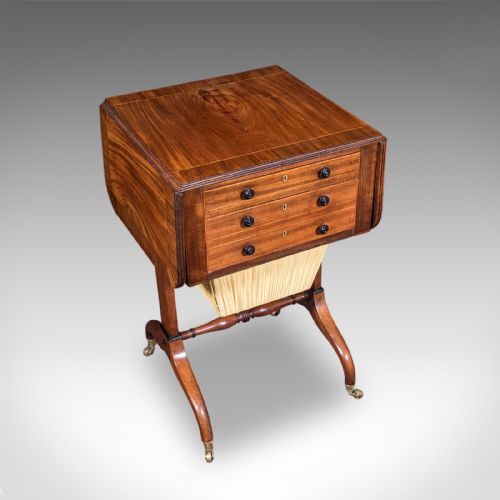
Some tables double as sewing and writing stations, hiding compartments for thread and quills beneath the folding leaves.
Quality and Detail
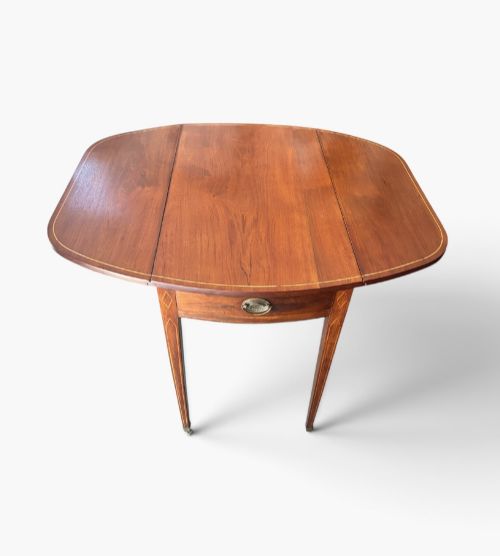
The selection of timber dictates much of the visual merit, with highly figured flame mahogany or plum pudding grain standing apart from plain stock. Subtle wood inlay like boxwood lines and careful crossbanding elevate the decorative ambition of individual examples.
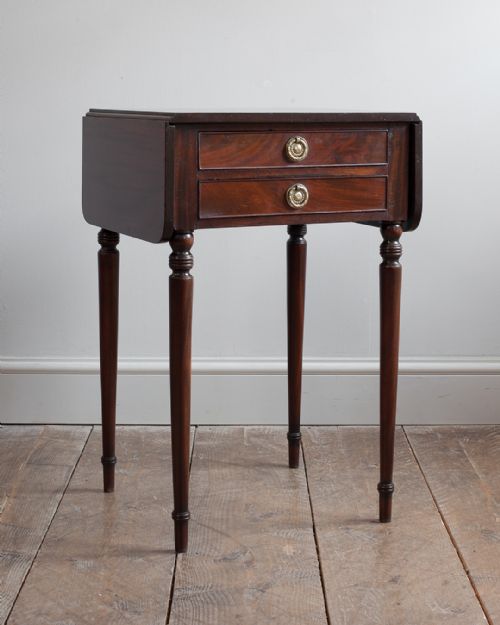
Construction choices such as free-standing pedestals, lyre ends, and clever internal arrangements for drawers or writing spaces separate standard utility items from finer workshop output. The crispness of turning on legs and the seamless drop of the leaves reflect maker skill.
Gillows·James Mein·Jean-Joseph Chapuis
The Regency Mahogany Drop Leaf Glossary
- Drop leaf
- A table or furniture piece equipped with hinged flaps on one or both sides that fold down to save space or lift to extend the surface area.
- Pembroke table
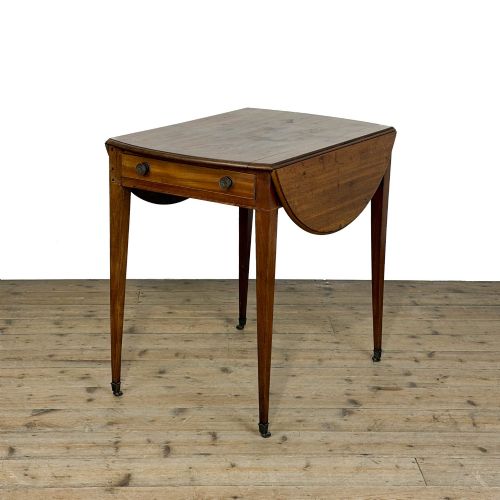
- A small rectangular table featuring two hinged drop leaves on opposing sides, often containing a single drawer and standing on slender legs.
- Sofa table
- A long, narrow table designed originally to stand in front of a sofa, frequently fitted with drop leaves and twin pillar supports.
- Crossbanding
- A decorative border technique where veneer is applied so that the grain runs at right angles to the main surface.
- Flame mahogany
- A highly figured veneer cut from the fork of a mahogany tree, creating a distinctive rippling flame pattern.
Regency Mahogany Drop Leaf: Frequently Asked Questions
How do I use a drop leaf table daily?
Keep the flaps folded down against the base to save floor space in smaller rooms. Raise the leaves when you need an extended surface for dining or working.
Support the extended flaps securely using the pivoting wooden brackets or swing legs provided beneath them.
What is a Pembroke table used for?
These compact tables served historically as versatile writing desks, breakfast tables, or side stands. Their small footprint made them easy to move around drawing rooms and chambers.
Many examples include a small drawer for storing sewing tools, letters, or small accessories.
How do I spot a Regency period piece?
Look for architectural lines, classical proportions, and dark polished mahogany timber surfaces. Details like brass paw feet, reeded legs, and lyre supports often point to the Regency era.
Construction methods inside drawers and beneath the leaves should match early nineteenth-century cabinet making practices.
Will a sofa table fit behind my sofa?
Sofa tables were originally built to stand directly behind a sofa or in open room spaces. Their narrow proportions allow them to sit neatly against the back of seating furniture.
Drop the leaves on one or both sides if the table extends too far into your walkway.