

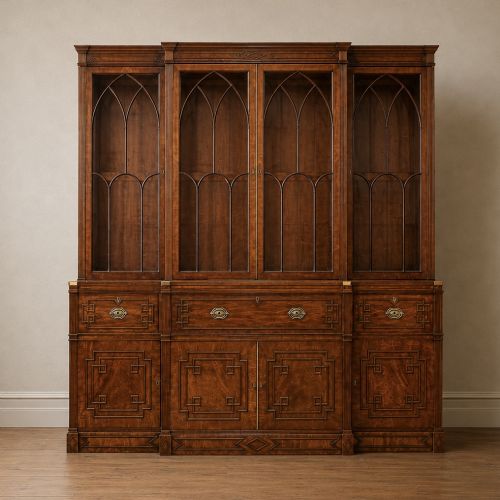
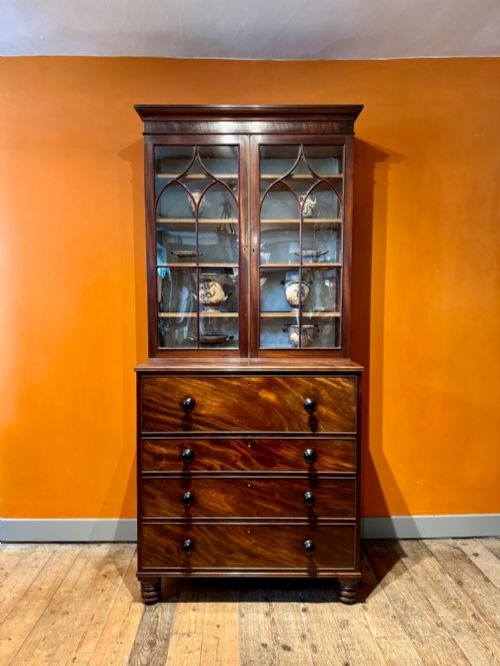


Regency Gothic Bookcase
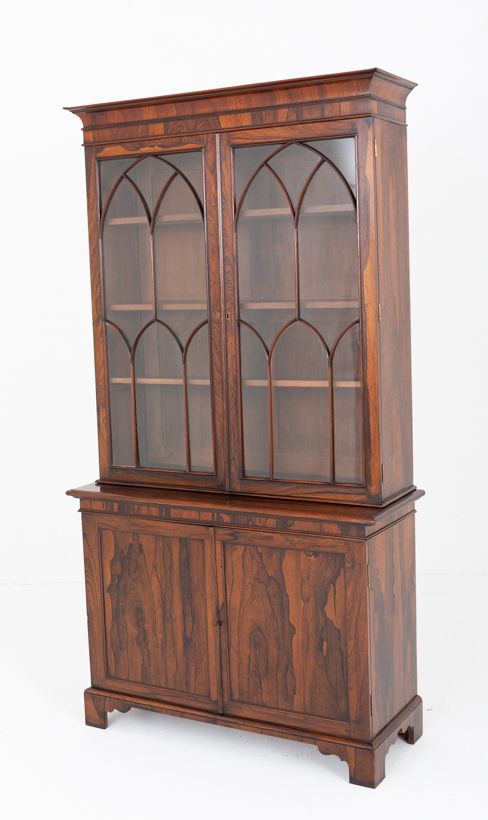
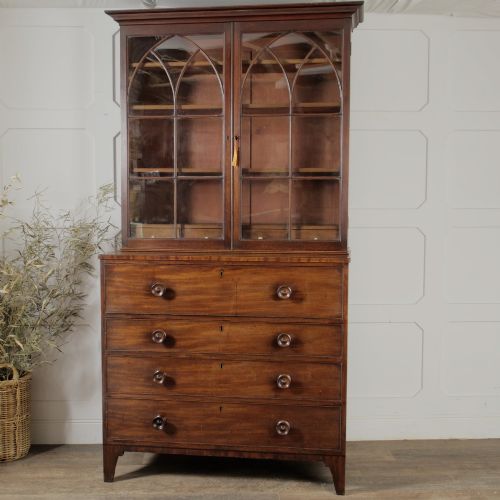
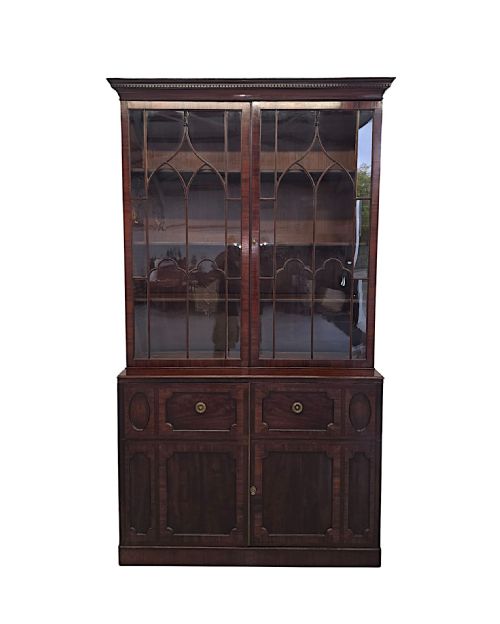
A regency gothic bookcase brings architectural drama into a room, combining substantial nineteenth-century storage with pointed arches and panelled doors.
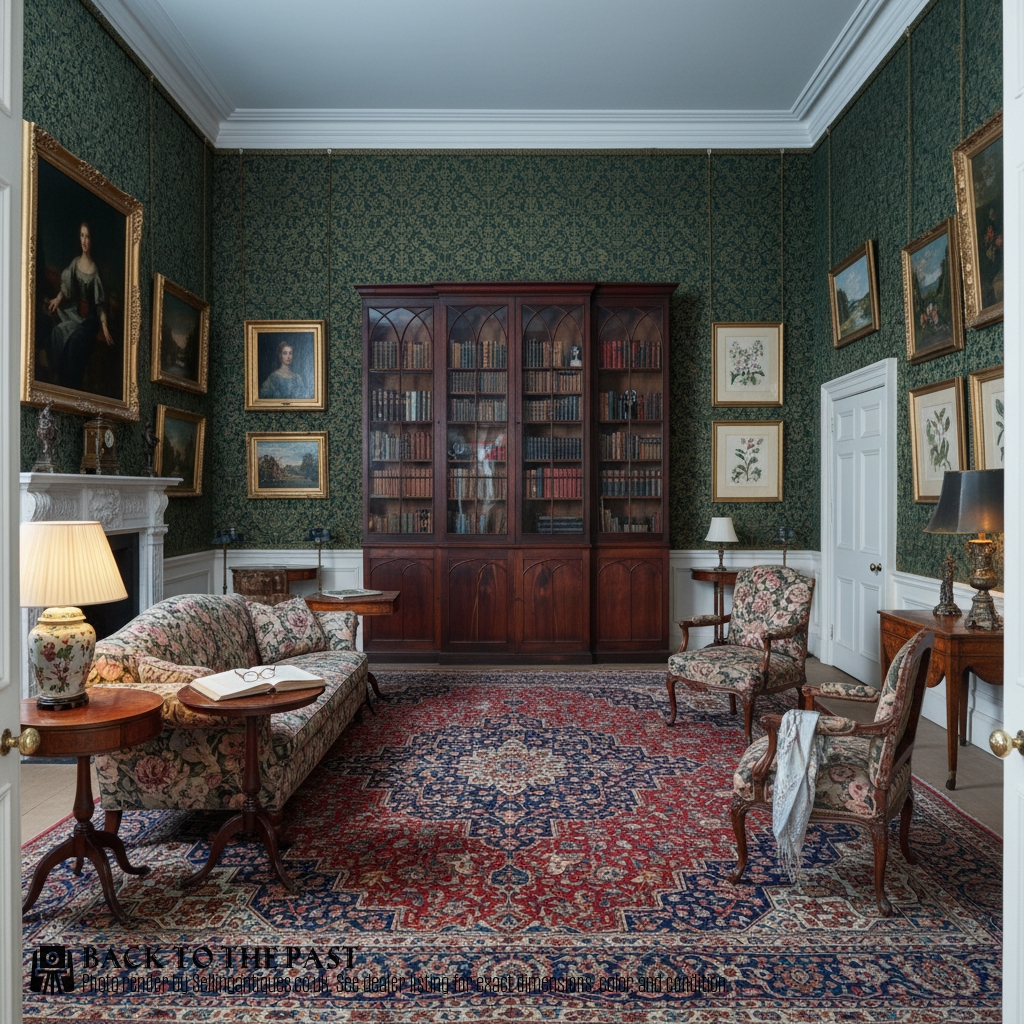
Regency Gothic Bookcase
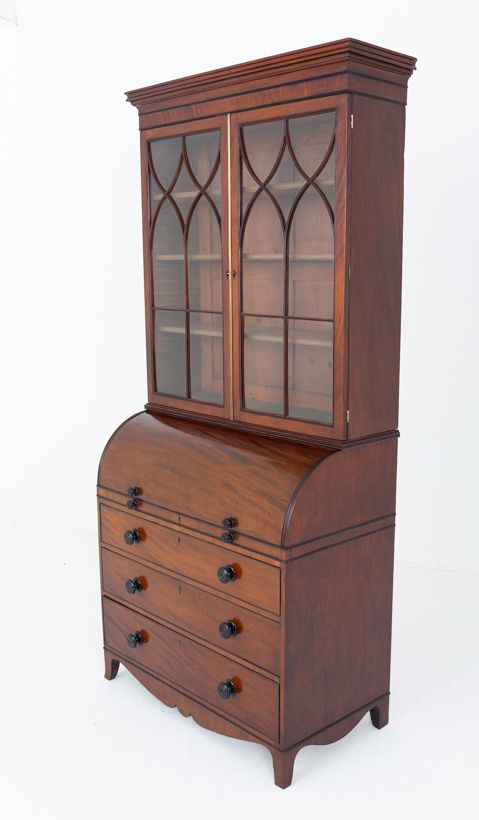
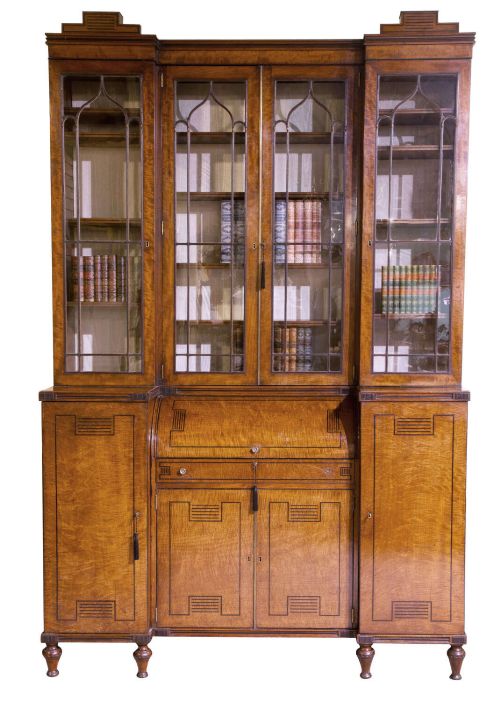
A regency gothic bookcase is a substantial piece of nineteenth-century furniture designed to house libraries while incorporating the distinct pointed arches and architectural motifs of the Gothic Revival.
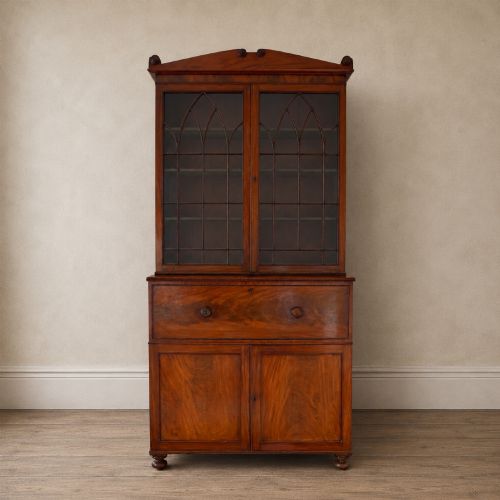
The versions met on this page include tall breakfront library pieces, secretaire bookcases with fitted writing drawers, and glazed cabinets dating from the Georgian, Regency, William IV, and Victorian periods.
Many examples emerge in rich timbers, with some pieces showing specific regional craftsmanship such as nineteenth-century Irish or Channel Island origins.
How they were made
Cabinet makers utilised dense native and imported timbers, frequently selecting figured mahogany, flame mahogany veneer, and solid rosewood to build these large carcasses.
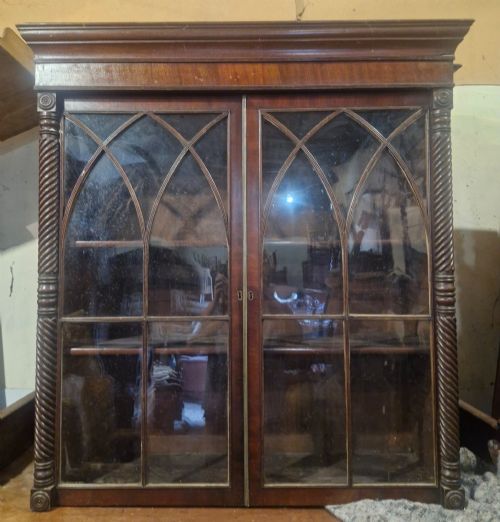
Glazing bars formed intricate Gothic tracery over glass panels, while brass hardware and fabric backing provided functional and decorative interior details.
Regency Gothic Bookcase Retail Price Guide 2026
Typical asking prices for regency gothic bookcase among the pieces listed under this phrase on Sellingantiques today, from the lower quarter to the upper quarter. They describe what is for sale here now, not the wider market.
What varies in quality
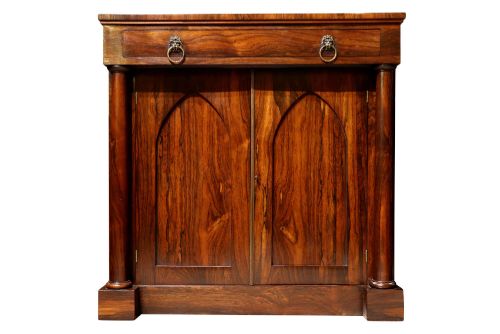
The choice and application of timber set the standard, with striking flame mahogany veneers and solid rosewood distinguishing the finest workshops from simpler constructions.
The precision of the Gothic detailing, from the joinery of the arched glazed doors to the carving of the cornices, marks the distinction between standard production and master craftsmanship.
Proportion and scale dictate the success of the piece, with grand breakfront library bookcases representing the ambitious end of the maker's art.
James Winter & Sons
The Regency Gothic Bookcase Glossary
- Breakfront
- A cabinet design where the central section projects forward from the flanking wings. This format creates a dramatic architectural silhouette in large libraries.
- Secretaire
- A desk component disguised as a drawer, featuring a drop-front that reveals small drawers and pigeonholes inside. It adds a practical writing surface to a tall bookcase.
- Crenelated
- A battlemented architectural moulding used along the top cornice. It reinforces the medieval Gothic aesthetic of the piece.
- Tracery
- The stonework-inspired decorative stonelike intersecting ribs used within the glazed doors. In timber cabinetry, thin glazing bars replicate this stone Gothic window pattern.
- Chiffonier
- A low sideboard or cabinet featuring shelves or enclosed cupboards below. These pieces share the rosewood and Gothic panel characteristics of taller bookcases.
Regency Gothic Bookcase: Frequently Asked Questions
How do I date a regency gothic bookcase?
Dating relies on timber selection, structural proportions, and stylistic markers recorded across the nineteenth century. Pieces shift from Georgian restraint through Regency grandeur to later Victorian Gothic Revival interpretations.
Hardware, secondary woods inside drawers, and the complexity of the Gothic tracery offer further clues to the decade of manufacture.
What is a secretaire bookcase?
A secretaire bookcase incorporates a pull-down drawer front that conceals a fitted writing interior with small compartments and pigeonholes. This combines a working desk with upper bookshelf storage.
These hybrids were popular in country houses and town residences for managing correspondence without taking up extra floor space.
How do I care for rosewood and mahogany?
Timbers like rosewood and flame mahogany require stable indoor humidity away from direct sunlight and heat sources. Consistent conditions prevent the wood and veneers from drying out or splitting.
Regular dusting with a dry, soft cloth maintains the finish without the need for heavy modern polishes.
Are these bookcases suitable for modern rooms?
Their architectural presence makes them focal points in a study, drawing room, or hallway. The deep timber tones and glass doors anchor contemporary spaces while providing practical display room.
Ceiling height and floor space remain the primary considerations when placing a large breakfront or library piece.