




Regency Giltwood Convex Mirror
A regency giltwood convex mirror bends light across a round room, offering a distinct ornamental focus shaped in the early nineteenth century.
Regency Giltwood Convex Mirror
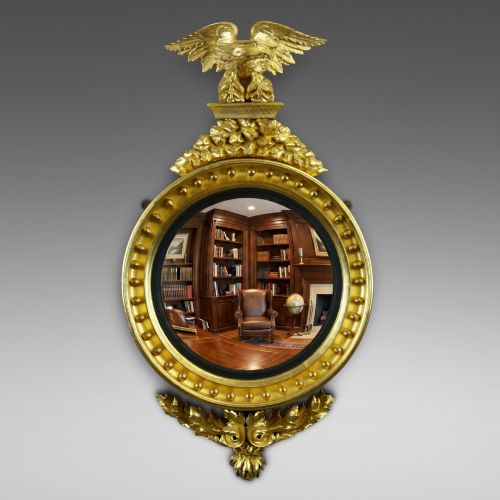
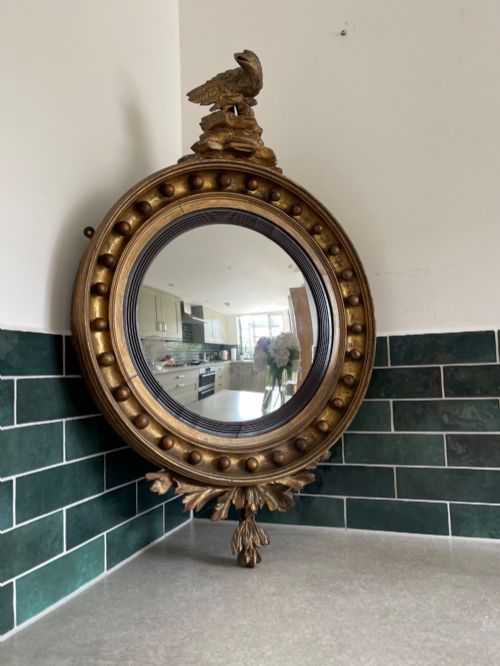
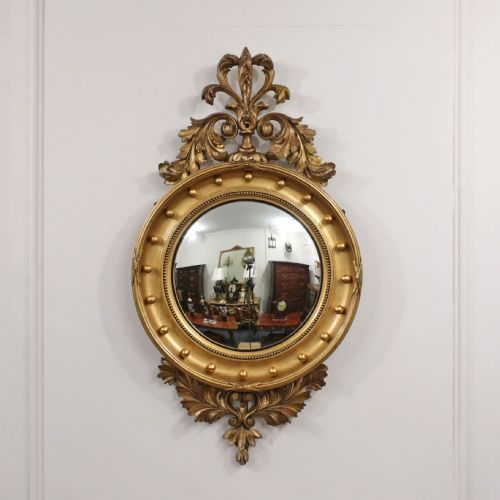
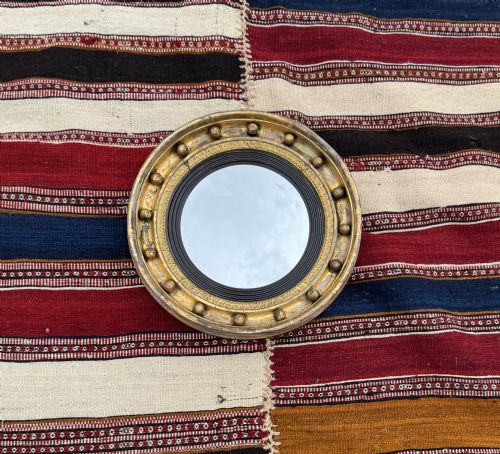
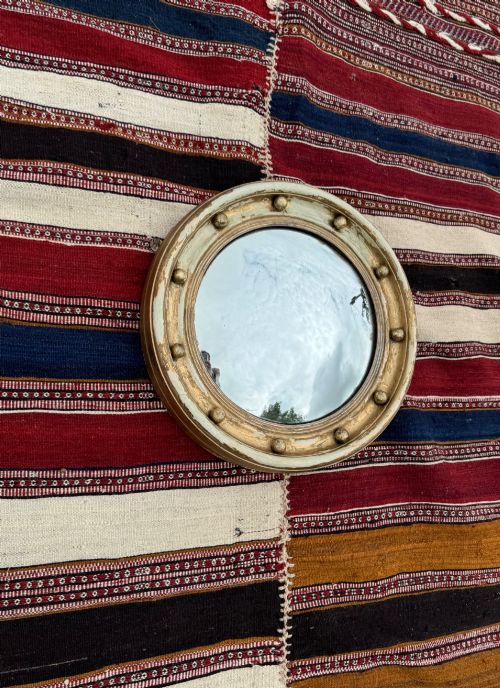
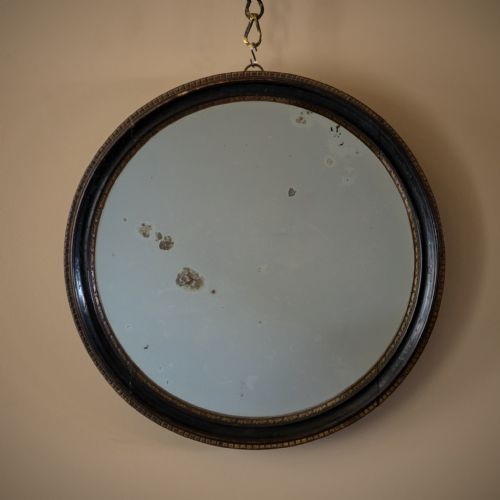
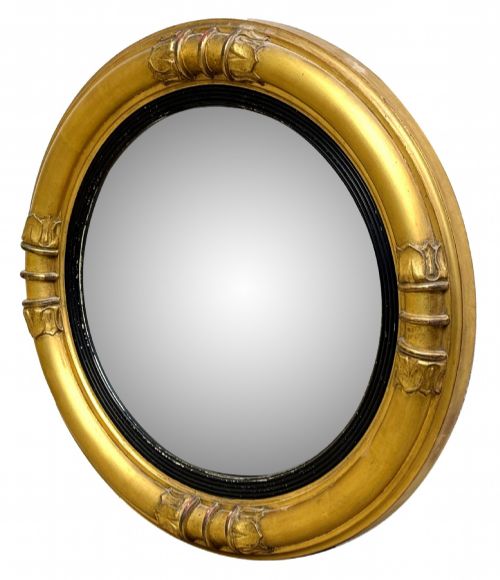
A regency giltwood convex mirror is a circular wall glass designed to capture a wide-angle reflection of an interior space. These pieces most frequently emerge from the Regency and nineteenth-century periods, alongside later revivals from the Victorian era up to the 1930s.
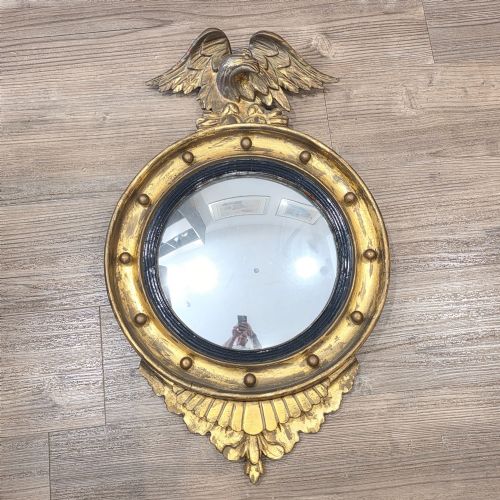
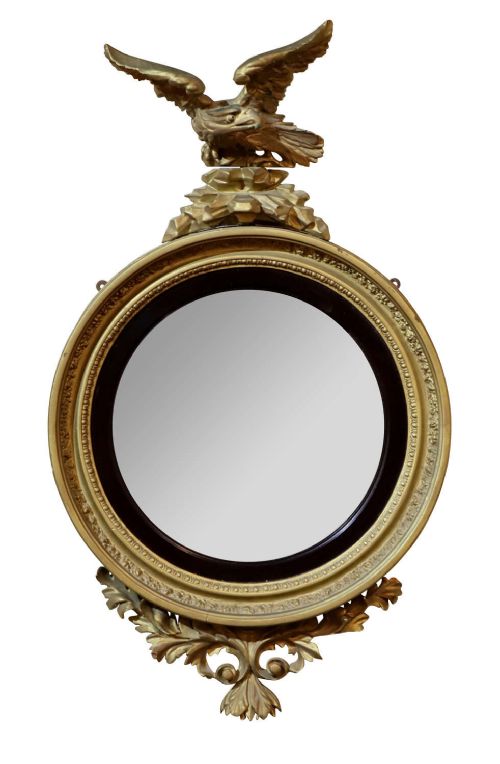
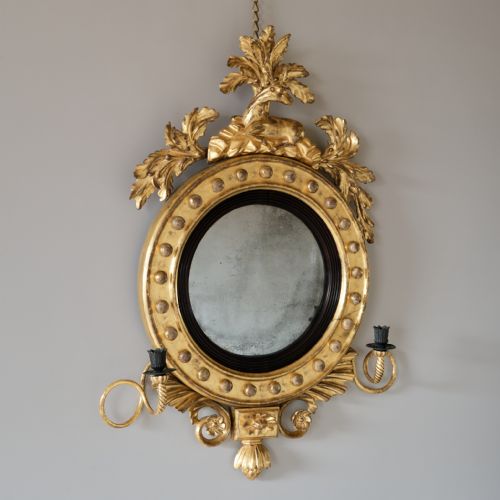
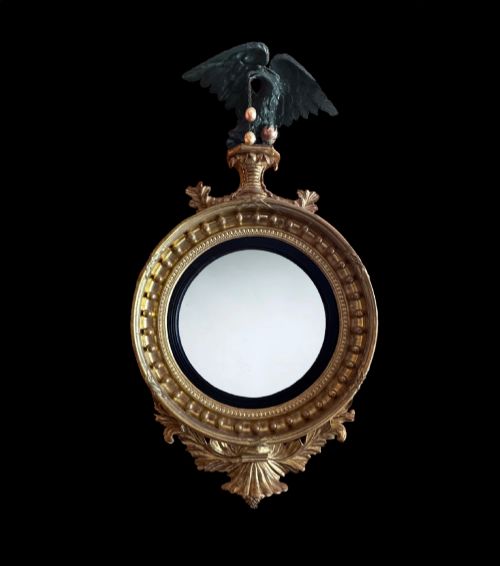
Most examples take a circular form framed in wood and gesso, often topped with carved creatures such as eagles, deer, or dragons. Buyers frequently encounter standard wall mirrors as well as girandole variants fitted with candle arms.
How they were made
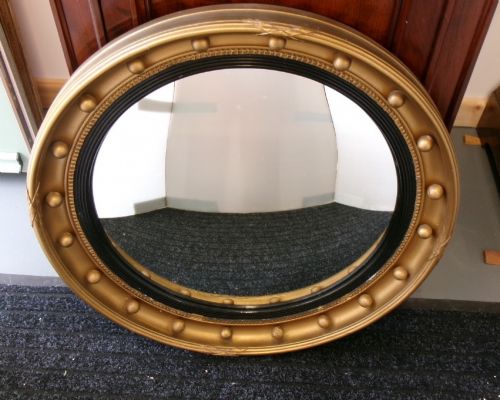
Makers shaped these frames from timber and built up ornamental detail using gesso before applying a fine layer of gold leaf. The curved mirror glass itself sits within an ebonised slip that creates a dark visual boundary between the reflective surface and the gilt frame.
Brass fittings frequently support the girandole arms and structural joints on the reverse of the mirror frame. Carved wooden crests and mounts are pinned or joined directly to the main circular body.
Listings for a regency giltwood convex mirror span the Regency, Georgian, and Victorian periods, alongside twentieth-century revivals.
What varies in quality
The crispness of the gesso carving and the depth of the gilding set individual pieces apart. Stronger examples display sharply defined foliage, animals, and reeded bezels that retain their original physical integrity.
Proportions also dictate the character of the object, with larger scale formats and detailed figural surmounts holding a stronger visual presence than smaller, plainer alternatives.
The Regency Giltwood Convex Mirror Glossary
- Convex mirror
- A curved circular glass that reflects a wide, distortion-rich view of the entire room. This form was popular for monitoring activity in dining rooms and parlours.
- Giltwood
- Timber coated with a thin layer of gold leaf over a prepared ground. It provides the bright metallic finish typical of these frames.
- Ebonised slip
- A dark inner moulding placed between the convex glass and the outer gilt frame. This dark accent contrasts with the bright gold leaf surrounding it.
- Girandole
- A wall mirror equipped with attached candle sconces or arms. These arms allow the reflective glass to multiply candlelight across an evening interior.
- Surmount
- The decorative carved ornament placed at the very top of the frame. Eagles, deer, and dragons are common motifs found in this position.
Regency Giltwood Convex Mirror: Frequently Asked Questions
What rooms suit a convex mirror?
These pieces function well in reception rooms, halls, and dining spaces where their wide-angle reflection can capture the breadth of the interior. Their circular shape acts as a strong focal point above a fireplace or side table.
Because they bend light outwards, they also help brighten darker corners by distributing available illumination across the walls.
How do I spot a period piece?
Examining the construction methods on the reverse and the application of the gesso helps determine the age of the frame. Period examples often show traditional joinery, hand-carved details, and aged patination on the gold leaf.
Later revival pieces from the Victorian era and the twentieth century display different handling of the wood and surface finishes.
What is an ebonised slip?
The ebonised slip is the dark, narrow moulding that sits directly next to the glass inside the main frame. It creates a visual border that separates the reflective surface from the bright giltwood exterior.
This dark band is a standard feature on many nineteenth-century convex designs.
Why do some mirrors have animals on top?
Carved creatures such as eagles, deer, or dragons were popular decorative additions during the Regency period. These sculptural surmounts added height and symbolic weight to the wall hanging.
The choice of animal often varied according to the workshop and the scale of the mirror.