

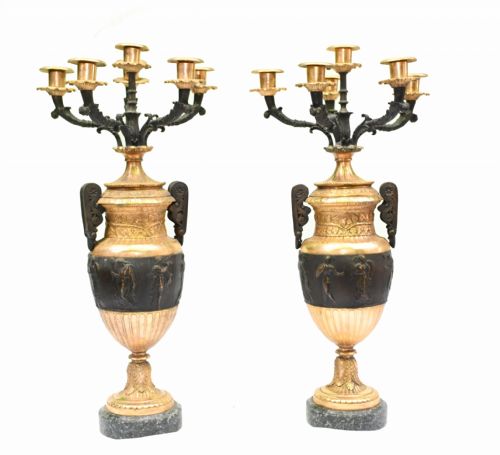


Regency Gilt Candle Holders
Regency gilt candle holders are striking lighting pieces that bring period elegance and polished metallic warmth to a room.
Regency Gilt Candle Holders
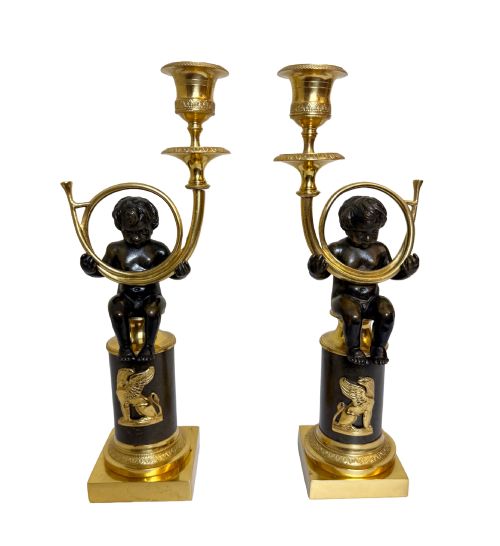
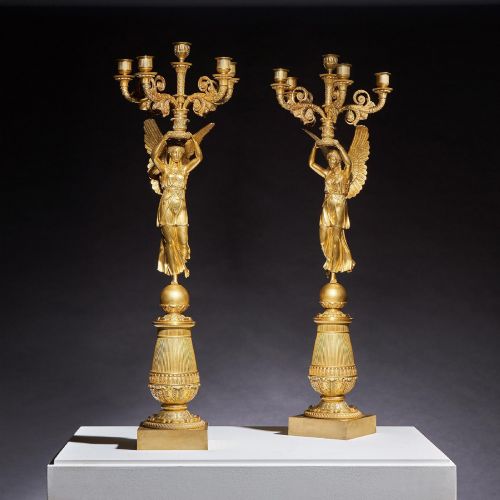
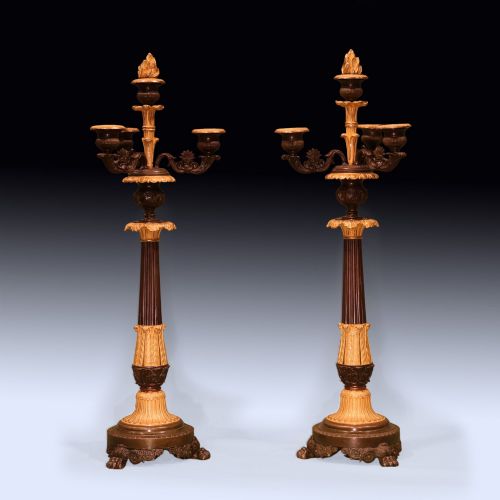
When you search for regency gilt candle holders, you encounter items designed to illuminate interiors through the nineteenth century, drawing heavily on Regency, Georgian, and French Empire aesthetics. These pieces typically take the form of candlesticks, multi-arm candelabra, and table lustres that combine functional lighting with sculptural presence.
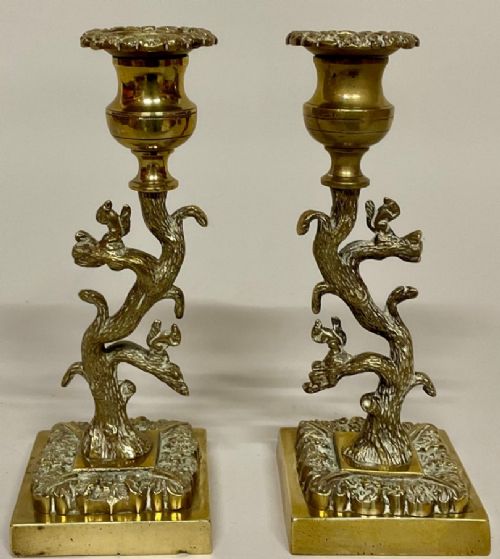
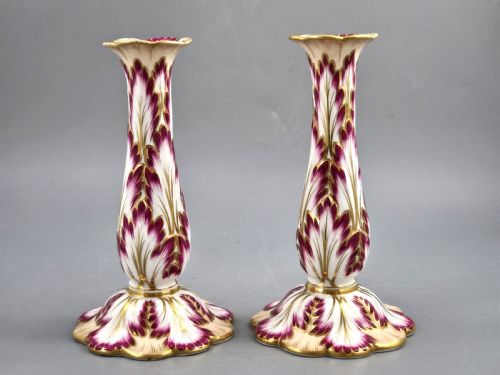
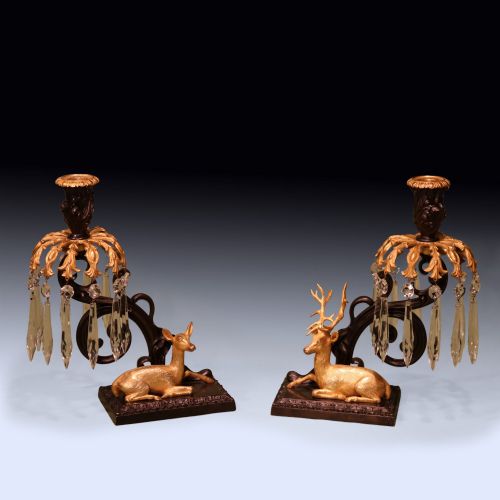
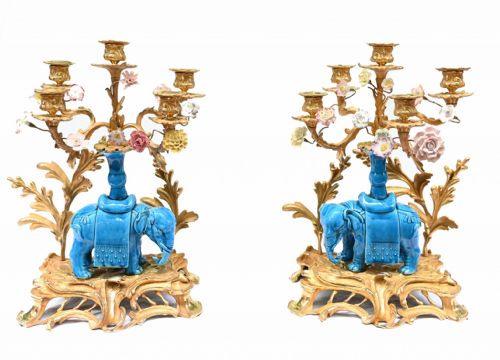
The variants most frequently met on this page pair gilt bronze or ormolu with patinated bronze, often incorporating marble bases, cut glass drops, and porcelain elements. Workshops produced figures ranging from classical griffins, dolphins, and cherubs to naturalistic trees and animals.
Origins span English Regency production alongside continental European centres such as France and Sweden, reflecting diverse interpretations of classical motifs during the early eighteen-hundreds and subsequent revival periods.
Materials and Technique
Maker workshops relied heavily on metal casting, using bronze as a structural base for fire-gilding to create ormolu surfaces alongside dark patinated bronze contrasts. This dual metal technique required skilled foundry work to ensure crisp detail on figural and foliate elements.
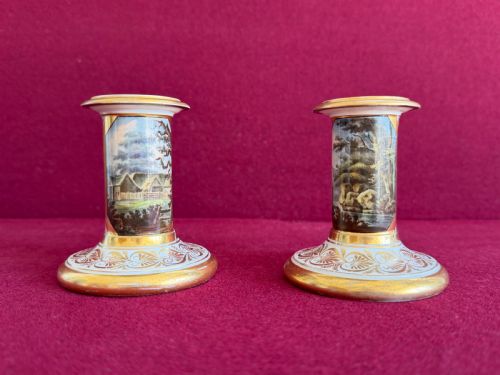
Additional components involve turned white marble plinths, hand-cut glass lustre drops suspended from bungs, and painted porcelain sections sourced from factories like Worcester and Mason's.
Assembly methods combined threaded pins and pegs to secure cast sconces, drip pans, and branches onto main columns and square or circular bases.
Listings feature materials including ormolu, patinated bronze, marble, cut glass, enamel, and treen across the nineteenth century.
Quality and Craftsmanship
Material integration also dictates the standard of the object, where solid marble plinths and heavy cast bronze components outperform lighter brass and hollow construction. Well-preserved fire-gilt surfaces retain a warm, rich lustre rather than a flat, painted finish.
Pierre Philippe Thomire·Barr Flight And Barr·Thomas Hope·Ridgway
The Regency Gilt Candle Holders Glossary
- Ormolu
- Finely chopped gold amalgamated with mercury and applied to bronze through heat gilding. This toxic eighteenth and nineteenth-century process produced a durable, deep golden finish.
- Patinated bronze
- Bronze treated with chemical solutions to darken the surface to a rich brown or black tone. It creates a striking visual contrast against bright ormolu mountings.
- Lustre
- A candlestick or candelabrum fitted with hanging glass cut pendants known as prisms. These crystal drops caught and refracted candlelight across dining tables and mantelpieces.
- Campana
- A vase-shaped candle sconce resembling an inverted bell. This classical form frequently topped nineteenth-century bronze columns.
- Chamber stick
- A low, portable candlestick featuring a flat saucer base and a loop handle. It allowed occupants to carry light through bedrooms and hallways.
Regency Gilt Candle Holders: Frequently Asked Questions
How were these metal holders cleaned originally?
Servants maintained metalwork using mild soap and soft cloths to preserve the delicate gold layer. Abrasive powders were avoided because they wore away the thin gold coating.
Glass lustres were washed separately in warm water and polished with linen to maximise sparkle.
Where were these placed in a period room?
Homeowners positioned them on mantelpieces above fireplaces, often flanked by mirrors to amplify the flickering light. They also stood on sideboard tables and pier tables in formal dining rooms and drawing rooms.
Smaller chamber sticks stayed in bedrooms for evening illumination before retiring.
How do you distinguish Regency pieces from later revivals?
Original pieces from the early nineteenth century display specific casting weights, hand-chased surface details, and construction methods consistent with Georgian and Regency workshops. Ormolu surfaces on authentic items show specific wear patterns and mercury gilding characteristics.
Revival pieces made later in the nineteenth century often employ brighter modern brass alloys and machine-tooled fittings.