



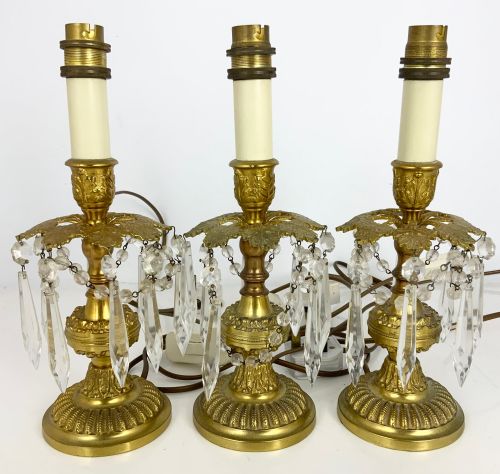


Pair of Mantel Lustres
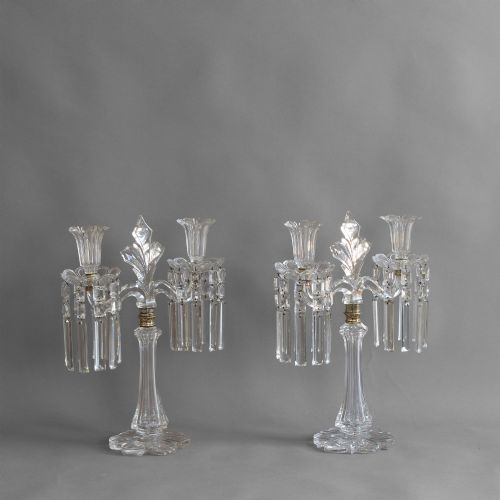
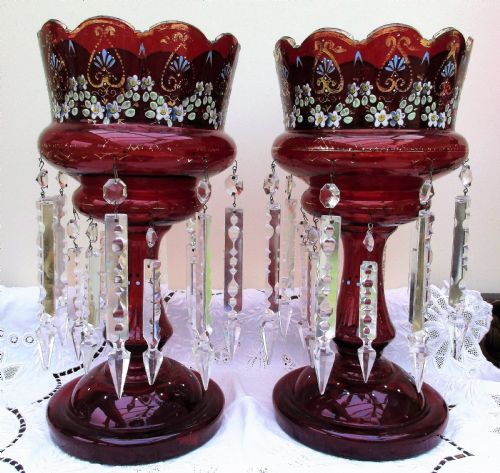
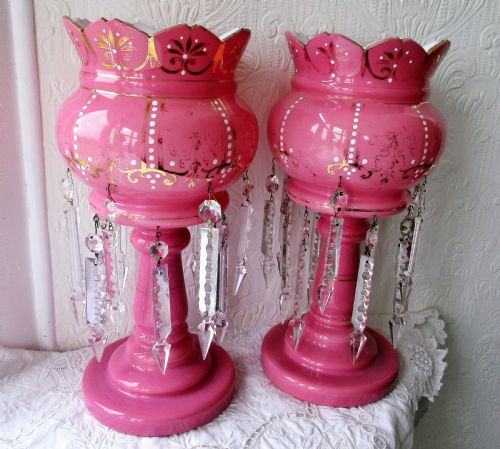
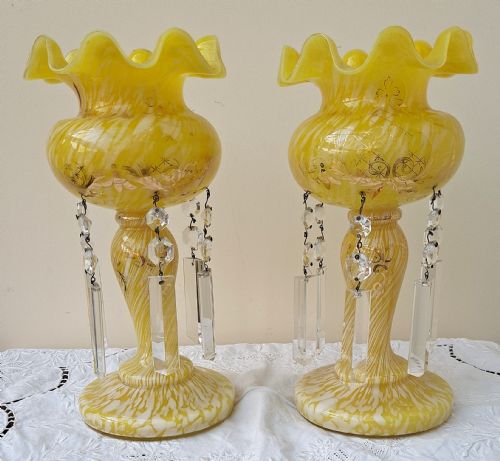
These pair of mantel lustres are decorative glass and ceramic showpieces designed to catch the candlelight on a Victorian fireplace.
Pair of Mantel Lustres
When you search for pair of mantel lustres, you encounter decorative two-part vessels designed to adorn a fireplace during the nineteenth century. These objects function primarily as visual ornaments rather than sheer illumination, bringing colour and reflective glass to a room.
The pieces on this page span several decades, featuring table lustres, candelabras, and even earthenware figures decorated with metallic glazes. Victorian examples dominate the selection, often rendered in saturated shades of ruby, green, pink, and yellow glass.
Makers produced these items to sit symmetrically upon a mantelpiece, usually accompanied by hanging crystal drops that catch and refract the light. Alongside standard glass vessels, you also discover ceramic figurines and earthenware dogs finished with copper lustre.
How they were made
Craftsmen utilised blown and cut glass, applying techniques such as overlay and flash glass to build layers of rich colour. Workers then cut facets into the outer layer to expose the clear glass beneath, creating contrast when lit.
Ceramic variations involved earthenware bodies finished with metallic copper glazes, alongside gilt metal mounts and applied gold leaf. Glass makers suspended crystal drops from the rims using metal pins threaded through drilled apertures.
Listings feature items spanning the eighteenth century through to the Art Deco period, with Victorian pieces forming the majority of available glass and ceramic options.
What varies in quality
Quality rests upon the depth of the glass colour, the precision of the cutting, and the retention of the original hanging crystal drops. Rich ruby and layered bohemian overlay glass denote higher manufacturing ambition than plain moulded alternatives.
The crispness of the gilding and the preservation of hand-painted enamel details separate standard production from superior pieces. Intact crystal lustres without replacement drops command greater attention from collectors.
Charlotte Rhead
The Pair of Mantel Lustres Glossary
- Lustre
- A decorative glass or ceramic vase fitted with hanging crystal prisms designed to catch the light. These objects originated to provide ambient reflection near candles.
- Flash glass
- A thin layer of coloured glass fused over a colourless glass body before being cut away to reveal patterns. This technique creates high contrast between the clear and coloured sections.
- Overlay glass
- Multiple layers of different coloured glass fused together and cut through to show contrasting strata. Bohemian makers utilised this method extensively.
- Copper lustre
- A metallic pottery glaze imparting a coppery, reflective sheen onto earthenware bodies. Staffordshire potters applied this finish to animal figures and vessels.
- Cranbury glass
- A translucent pinkish-red glass created using gold chloride in the batch. The resulting hue resembles the tint found in specific nineteenth-century tableware.
Pair of Mantel Lustres: Frequently Asked Questions
What are mantel lustres used for?
Mantel lustres served as ornamental fireplace focal points during the nineteenth century, placed symmetrically on either side of a clock or mirror.
Their hanging crystal prisms caught the flickering light of candles or lamps, brightening dim Victorian parlours.
How do I clean antique glass lustres?
Wash the glass gently in warm soapy water using a soft cloth, taking care around painted enamel and gilt highlights.
Remove the hanging crystal drops individually to clean them safely away from the main body.
Are all lustres made of glass?
While most examples consist of coloured or cut glass, certain pieces take the form of earthenware ceramic figures.
Potteries produced Staffordshire dogs and vases finished with metallic copper lustre glazes alongside traditional glass vessels.
How do I date a pair of lustres?
Examine the manufacturing technique, colour palette, and style indicators such as Victorian proportions or Regency gilt mounts.
Ruby, green, and opaline glass pieces point predominantly to the mid-to-late nineteenth century.