



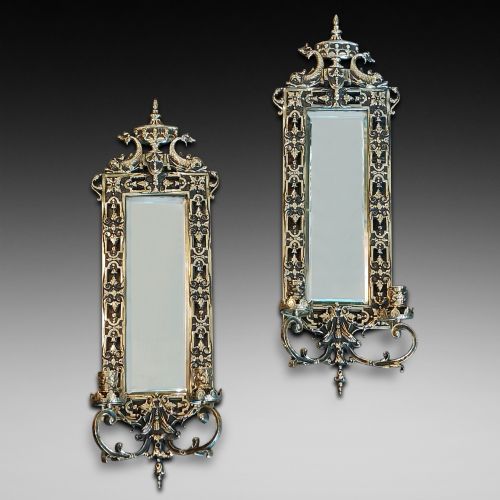


Gold Glass Candle Holders
Gold glass candle holders bring shimmering reflection to a room, uniting clear or coloured glass with rich gilt mounts.
Gold Glass Candle Holders
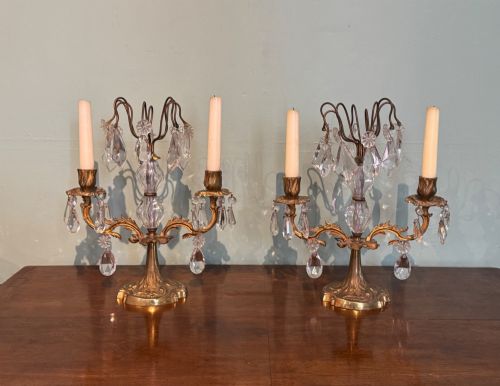
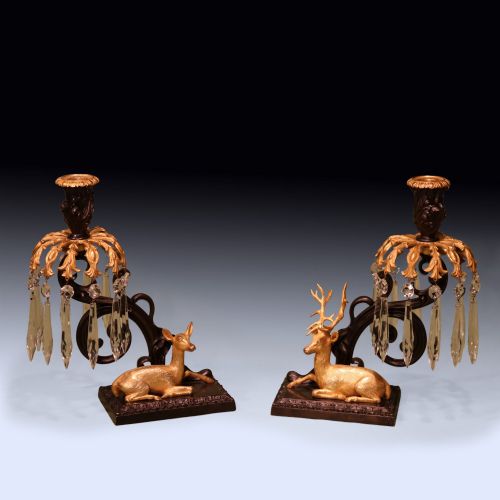
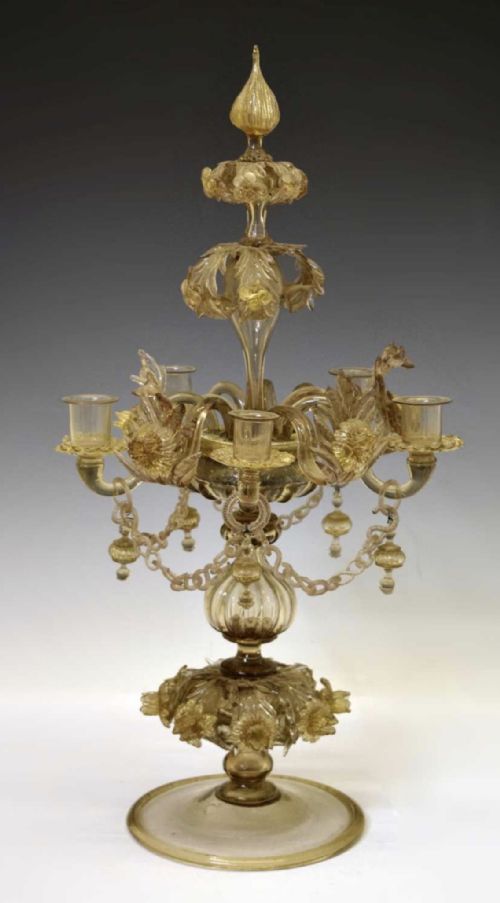
Gold glass candle holders encompass elaborate table candelabras, mantel lustres, and wall-mounted girandoles designed to amplify candlelight through polished metal and glass. When searching for gold glass candle holders, buyers typically encounter Victorian and nineteenth-century examples pairing gilt brass, bronze, or ormolu with crystal, cut glass, ruby glass, or Murano glass.
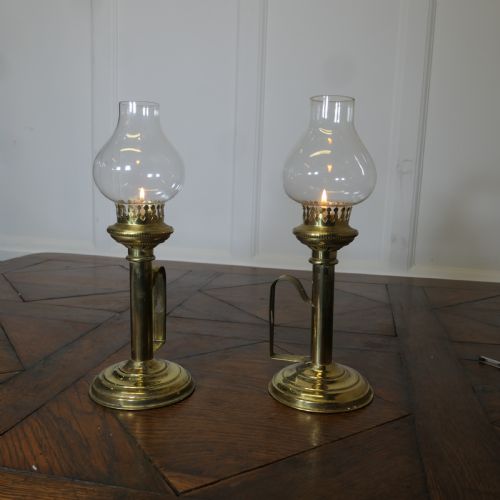
The selection ranges from simple brass candlesticks fitted with glass chimneys to grand multi-branched French candelabras and table lustres hung with glass drops. Many pieces integrate mirrors or reflective backplates to bounce flickering light around the interior space.
How they were made
Maker construction combines heavy cast brass, ormolu, or gilt bronze frameworks with hand-blown, cut, or moulded glass components. Lustres and candelabras often feature suspended crystal or glass drop prisms secured by wire loops to central metal stems.
Gilding techniques applied to bronze and brass provide the characteristic golden sheen, while specialist glass production yields ruby hues and textured Murano or cut crystal bodies.
Gold Glass Candle Holders Retail Price Guide 2026
Typical asking prices for gold glass candle holders among the pieces listed under this phrase on Sellingantiques today, from the lower quarter to the upper quarter. They describe what is for sale here now, not the wider market.
Listings feature items spanning the Regency period, the Victorian era, and the early twentieth century, utilising brass, crystal, ormolu, and Murano glass.
What varies in quality
Quality depends upon the crispness of the metal casting and the depth of the gilding on bronze and brass mounts. Superior pieces display finely detailed chasing, substantial weight, and intact glass prisms without replacement drops.
The clarity and hand-cut facets of the crystal or glass elements also distinguish finer examples, alongside the structural integration of glass chimneys and storm shades.
The Gold Glass Candle Holders Glossary
- Lustre
- A decorative tabletop piece featuring hanging glass prisms or drops designed to reflect candlelight. These are often found in pairs on mantelpieces.
- Ormolu
- Finely ground high-carat gold applied to a bronze base using a mercury amalgamation technique. This finish creates a rich golden glow on nineteenth-century mounts.
- Girandole
- An ornamental wall mirror with attached candle sconces. The reflective glass plate doubles the illumination in the room.
- Candelabra
- A multi-branched candlestick holder designed to hold several candles simultaneously. Examples often incorporate central stems with radiating arms.
- Chimney
- A cylindrical glass shade placed over a candle to steady the flame and protect against drafts. These are frequently paired with brass bases.
Gold Glass Candle Holders: Frequently Asked Questions
What is a lustre?
A lustre is an ornamental candlestick or vase fitted with hanging glass prisms. These drops catch and multiply the light from burning candles.
They sat proudly on nineteenth-century mantelpieces, combining gilt metal bases with coloured or cut glass bodies.
How do I clean them?
Clean gilt bronze and brass gently with a dry microfibre cloth to preserve the metallic finish. Avoid harsh chemical polishes that strip thin gilding.
Wash glass drops and chimneys separately in lukewarm soapy water, ensuring every piece is completely dry before reassembly.
Where were they placed?
These pieces traditionally adorned dining tables, mantelpieces, and pier tables between windows. Wall-mounted girandoles hung directly above furniture to maximise available light.
Their reflective glass and gilded surfaces brightened dimly lit Victorian and Regency interiors.
What distinguishes Regency styles?
Regency designs lean towards classical restraint, often featuring clean lines, gilt and glass drop details, and balanced proportions. They reflect the neoclassical tastes popular in the early nineteenth century.
Later Victorian interpretations embrace heavier ornamentation, vibrant ruby glass, and elaborate revival motifs.