


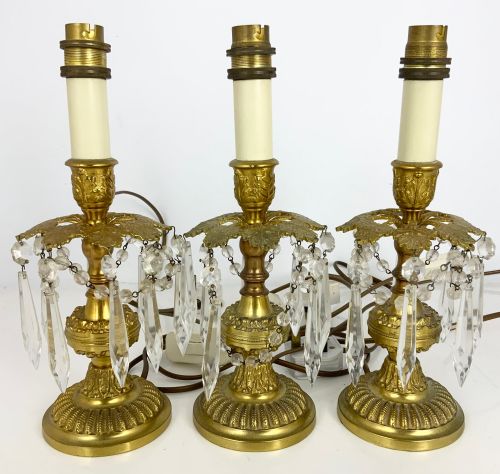


Cut Glass Prism Candlesticks
Cut glass prism candlesticks catch the flickering light of a room, bringing the brilliant sparkle of cut glass prism candlesticks to a mantel or table.
Cut Glass Prism Candlesticks
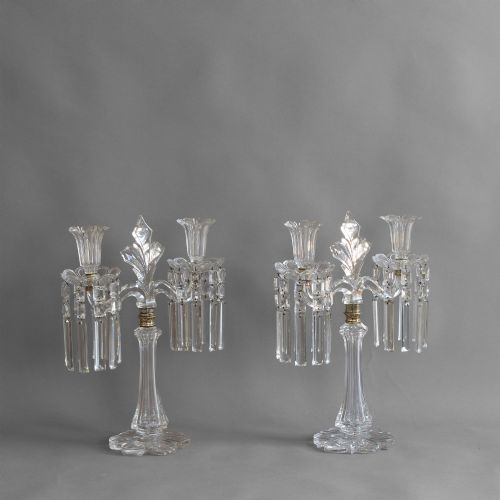
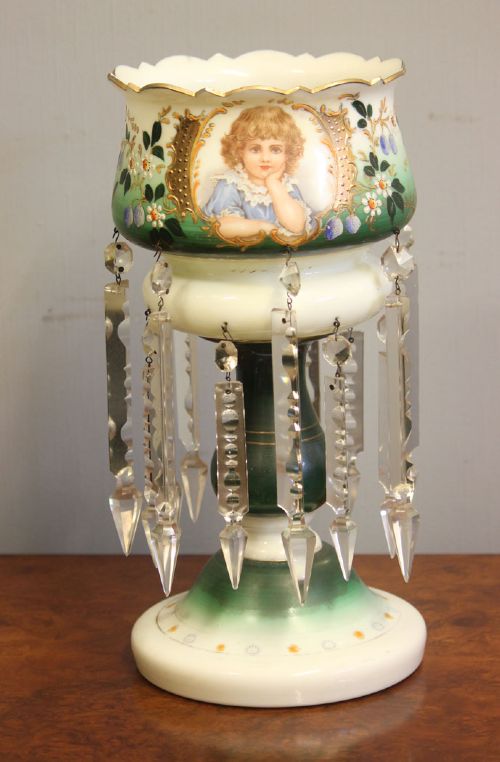
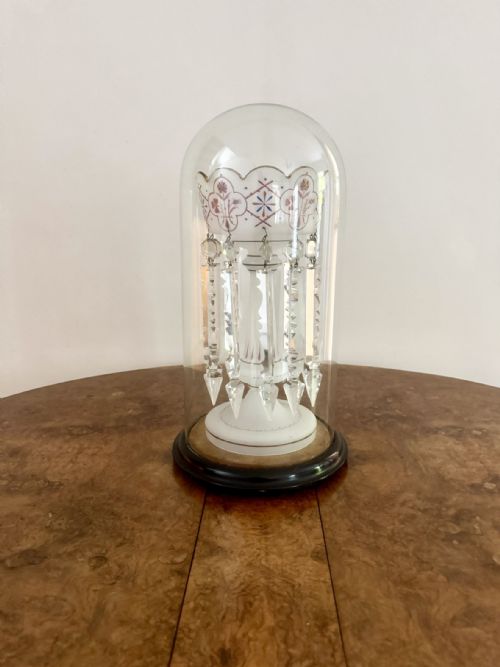
Cut glass prism candlesticks encompass brilliant table lamps, mantel lustres, and candelabras designed to hold candles while suspending glass drops. The examples gathered here span the Regency, Victorian, and Edwardian eras, alongside pieces dated through the late nineteenth and early twentieth centuries.
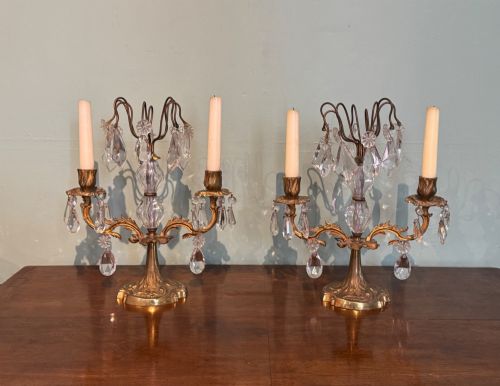
Most items appearing on this page take the form of pairs designed for mantelpieces, sideboards, or dining tables. They range from simple brass and glass combinations to elaborate French Rococo Revival and Empire models hung with numerous pendants.
How they were made
The manufacture relies on heavy mould-blown or free-blown glass that receives deep hand-cut facets to refract candlelight. Artisans faceted the bowls, stems, and drip pans to maximise the play of light through the clear, ruby, or cranberry material.
Metal components such as brass, gilt metal, or ormolu provide structural support and decorative mounts. Prisms and spear-point drops hang from the upper rims by wire loops, swinging freely to chime softly when air moves through the room.
Listings feature items spanning the Regency, Victorian, and Edwardian periods, utilising ruby glass, cranberry glass, brass, and gilt metal.
What varies in quality
Quality rests primarily on the depth and crispness of the glass cutting, where sharper facets create brighter refraction. The weight of the metal base and the clarity of the crystal glass distinguish finer workshop output from simpler domestic wares.
The completeness and matching nature of the hanging prisms determine desirability, as replacement drops alter the uniformity of the piece. Heavier cast brass mounts and fire-gilded ormolu show a higher grade of manufacture than lightweight stamped metal.
The Cut Glass Prism Candlesticks Glossary
- Lustre
- A candlestick or candelabra fitted with hanging glass pendants designed to reflect candle flame. These decorative fixtures were popular centrepieces on Victorian and Regency mantelpieces.
- Prism
- A cut glass pendant hung from the rim of a lustre to refract light. They take various shapes, including spear points, spear drops, and triangular facets.
- Ormolu
- Gilt bronze created by applying a mercury and gold amalgam to a bronze base. This technique produces a rich golden surface found on finer French and English frames.
- Candelabra
- A branched candlestick holding multiple candles simultaneously. They often incorporate central shafts surrounded by removable arms and cascading glass drops.
- Rococo Revival
- A nineteenth-century design style marked by asymmetrical scrollwork, naturalistic shell motifs, and curving organic forms. This aesthetic heavily influenced mid-Victorian decorative metalwork.
Cut Glass Prism Candlesticks: Frequently Asked Questions
What is a mantel lustre?
A mantel lustre is a decorative candle holder designed specifically to sit on a fireplace mantelpiece.
These pieces feature hanging glass prisms that catch and multiply the light from the flames.
How do I clean the prisms?
Prisms should be removed individually and washed by hand in warm soapy water.
Dry each glass drop thoroughly with a soft cloth before rehanging them with fresh wire.
Were these electrified later?
Some pieces on the market have been converted into table lamps with internal wiring.
Original examples retain their sockets for wax candles rather than light bulbs.
How do I date these pieces?
Dating relies on the style of the metal mountings, the depth of the glass cutting, and the shape of the prisms.
Regency examples show classical restraint, while Victorian and Edwardian pieces often display heavier ornamentation.