



Antique Crystal Lustres
Antique crystal lustres bring together cut glass prisms and coloured glass bodies to catch the light on a mantelpiece or table.
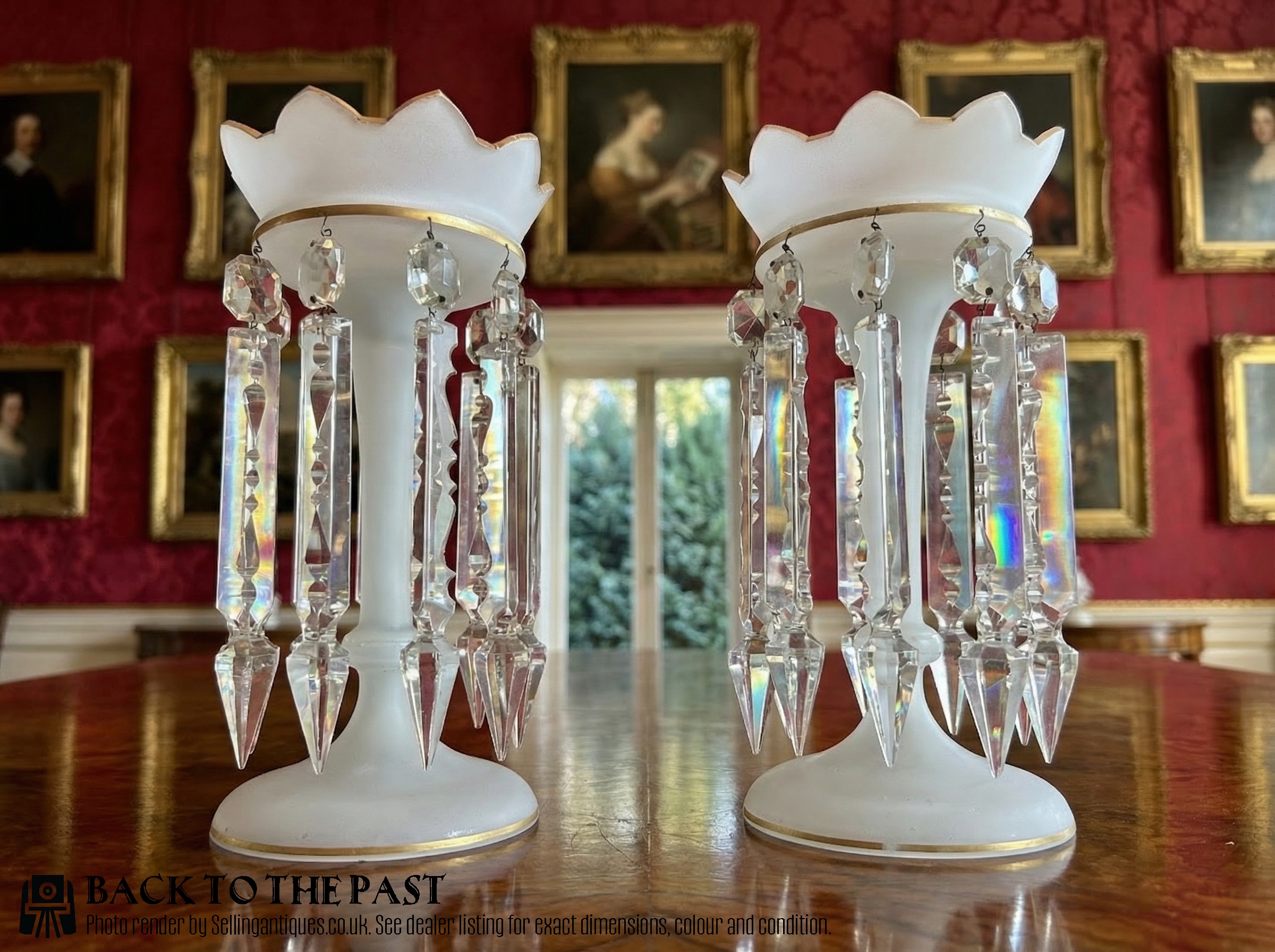
Antique Crystal Lustres
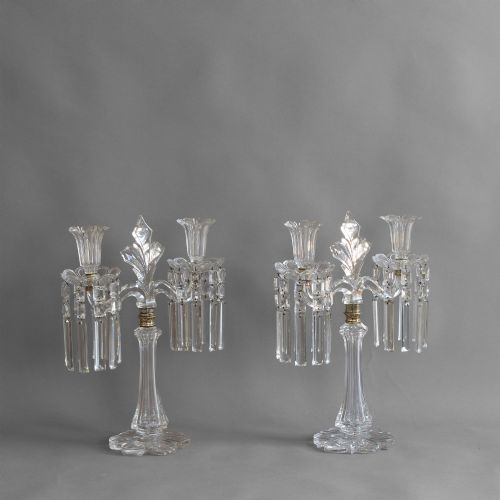
When you search for antique crystal lustres, you encounter ornamental mantel lustres, table lustres, and candelabras designed to hold candles or burn oil while reflecting light through hanging glass drops. These pieces appear frequently in pairs intended for display on either side of a clock or centrepiece.
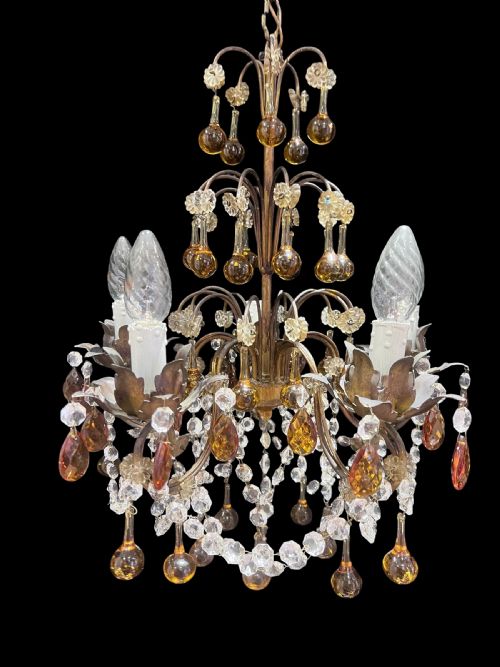
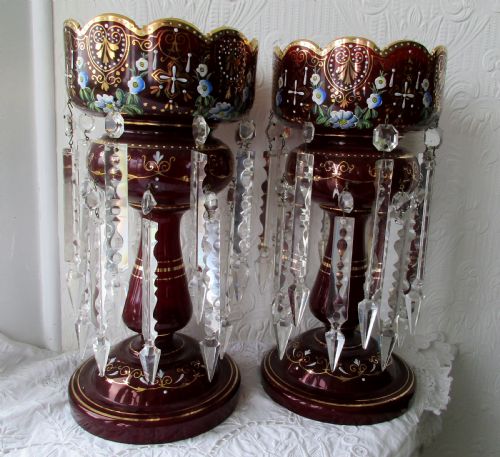
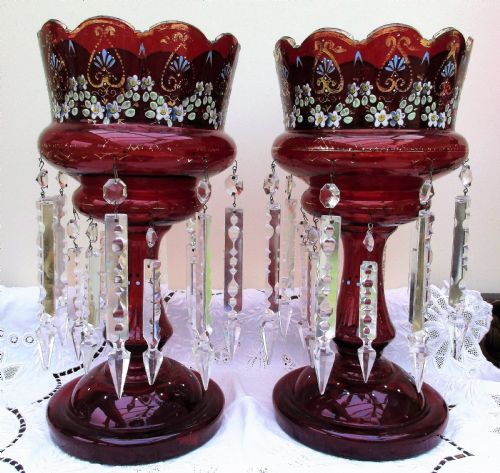
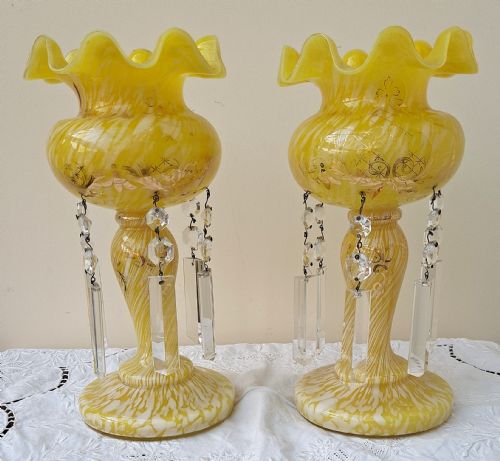
The selections span the nineteenth century through the Edwardian period, incorporating Victorian ruby glass, green glass, yellow glass, and opal glass alongside Bohemian overlay glass and French gilt-bronze mounts. Most specimens you meet are paired table or mantel objects hung with faceted crystal prisms.
How they were made
Maker workshops combined blown or cased coloured glass bodies with hand-cut crystal drops suspended from brass, bronze, or ormolu collars. Glass was often flashed or layered, then wheel-cut to reveal contrasting colours underneath.
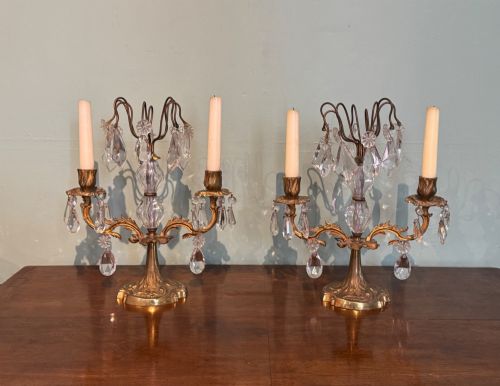
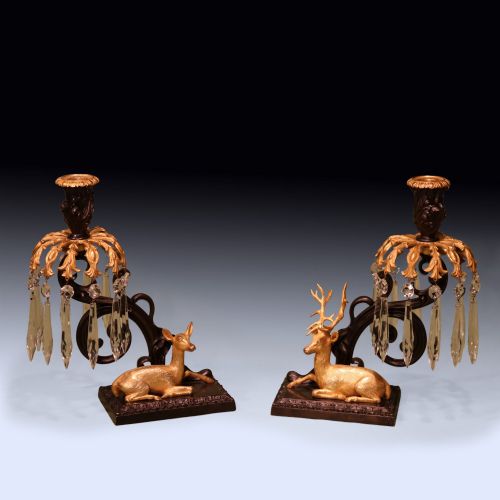
Metal components such as gilt bronze, brass, and ormolu were cast and chased in French and English foundries, sometimes incorporating figures like stags, does, or cherubs to support the central candle sockets.
Several Victorian lustres share their mantel space with cast bronze stags, does, and cherubs holding up the candles.
What varies in quality
The distinction between ordinary and superior examples lies in the depth of the glass colour, the precision of the wheel-cut facets on the hanging prisms, and the crispness of the cast metal mounts. Heavy, saturated flash glass and deeply cut crystal drops indicate a higher standard of manufacture.
Proportion and matching also determine quality, particularly in pairs where the height, thickness of the glass, and completeness of the original crystal drops must align precisely.
The Antique Crystal Lustres Glossary
- Lustre
- A decorative table or mantel vase fitted with a ring of hanging glass prisms designed to catch and refract candlelight.
- Drop
- A faceted piece of crystal or glass suspended from the rim of a lustre to enhance light reflection.
- Flash glass
- Glass formed of a thin layer of coloured glass applied over a colourless or contrasting base layer, often cut through to reveal the underlayer.
- Ormolu
- Gilt bronze achieved through the application of a mercury and gold amalgam to a bronze base, common in nineteenth-century mounts.
- Candelabra
- A branched candlestick holder that in these listings is frequently hung with crystal drops and referred to as a lustre.
Antique Crystal Lustres: Frequently Asked Questions
What is an antique crystal lustre?
An antique crystal lustre is a decorative glass vase or candlestick fitted with hanging glass prisms. These pieces were designed to sit on mantelpieces and tables, where they used candlelight to illuminate rooms.
The glass bodies are often coloured in shades of ruby, green, or white, and are paired with cut crystal drops that refract the light.
How were crystal lustres used?
These pieces functioned primarily as ornamental items on mantelpieces, often arranged in pairs flanking a clock or mirror. They also held candles to provide secondary illumination in nineteenth-century drawing rooms.
Many examples combine the function of a vase with that of a candlestick, allowing owners to burn candles while displaying cut glass drops.
How do I identify Victorian glass lustres?
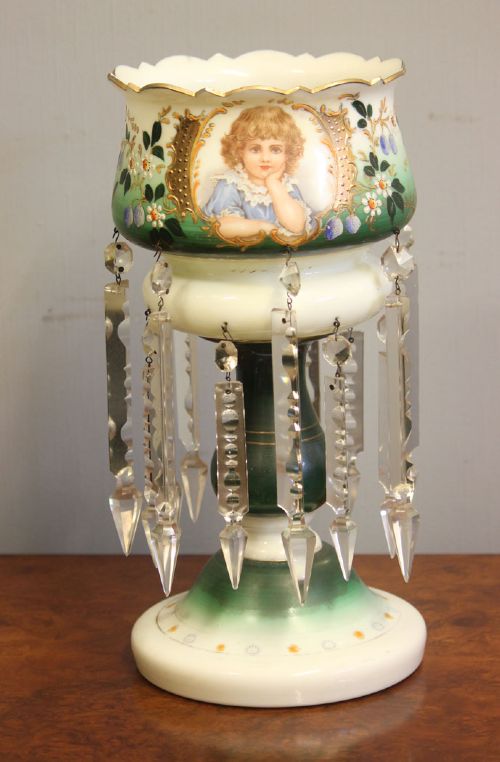
Victorian glass lustres typically feature heavy cased or flashed glass bodies in vibrant colours like ruby red, green, or opaque milk glass. They often rest on shaped circular bases and incorporate hand-cut crystal prisms hung from brass or gilt metal rims.
Looking closely at the cut facets of the drops and the weight of the glass helps confirm the nineteenth-century origin.
Where were antique lustres made?
Antique lustres in these listings originate primarily from English, French, and Bohemian workshops active during the nineteenth and early twentieth centuries. French makers often integrated gilt bronze and ormolu mounts, while Bohemian factories specialised in overlay and flash glass.
English makers produced substantial ruby and coloured glass examples that matched the domestic interior styles of the Victorian era.