

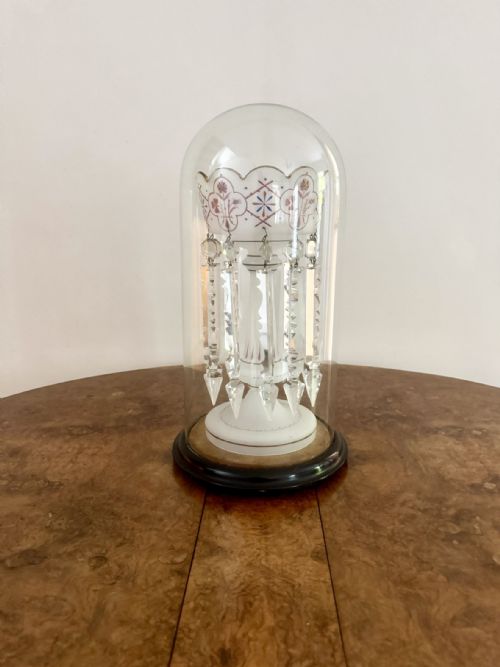


Crystal Drop Lustres
Crystal drop lustres are decorative glass mantel ornaments and lighting fixtures that catch the light to brighten a room.
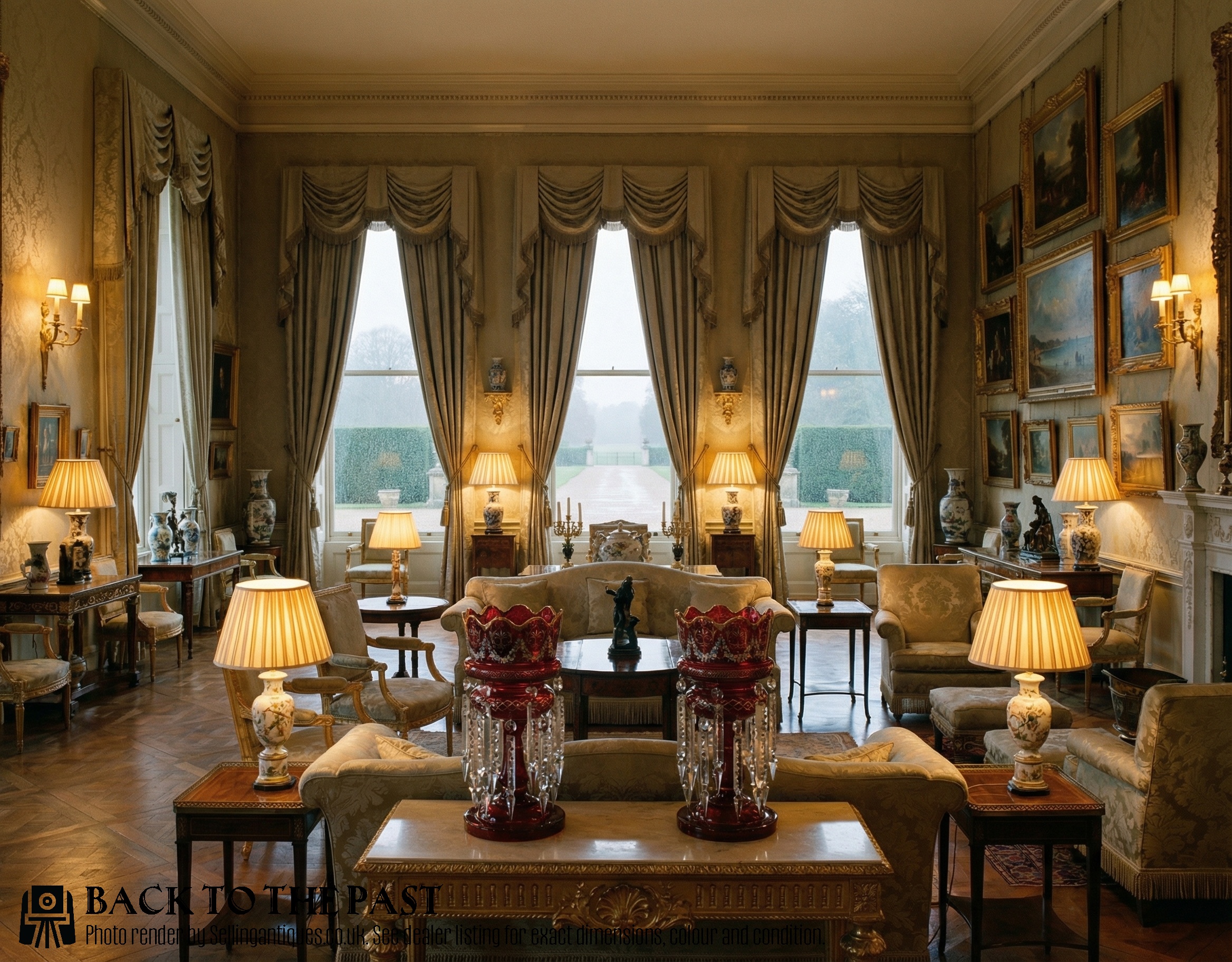
Crystal Drop Lustres
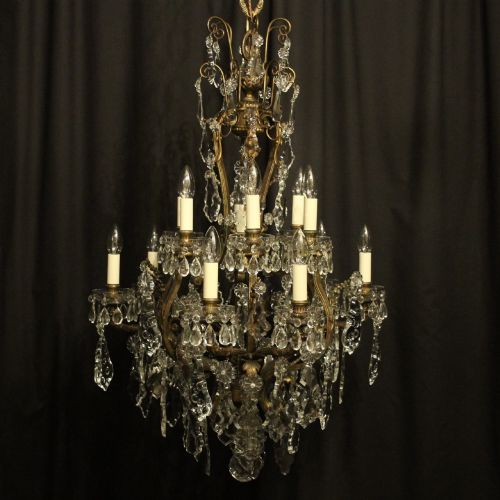
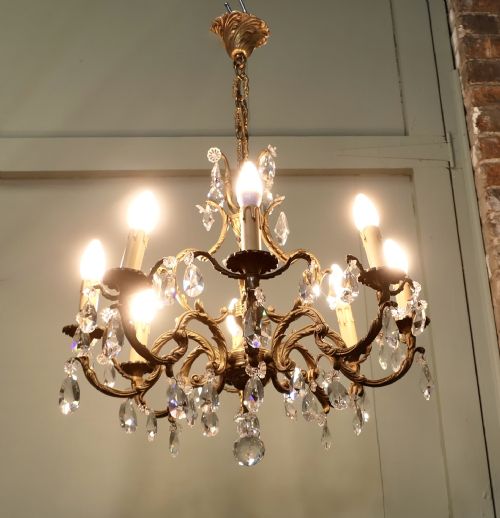
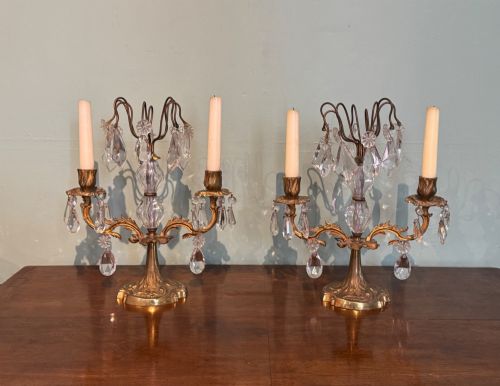
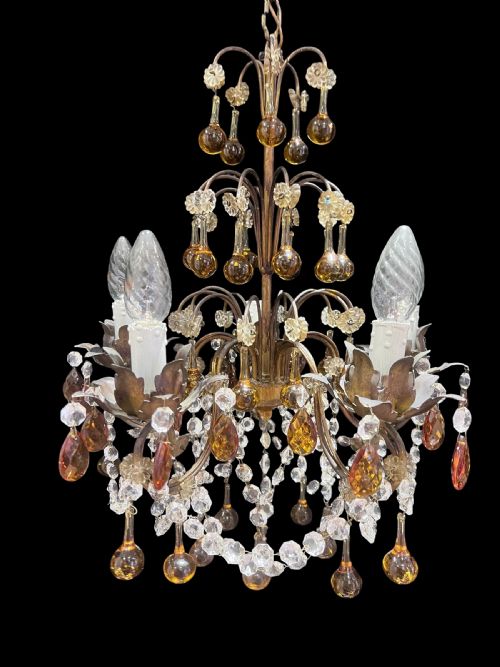
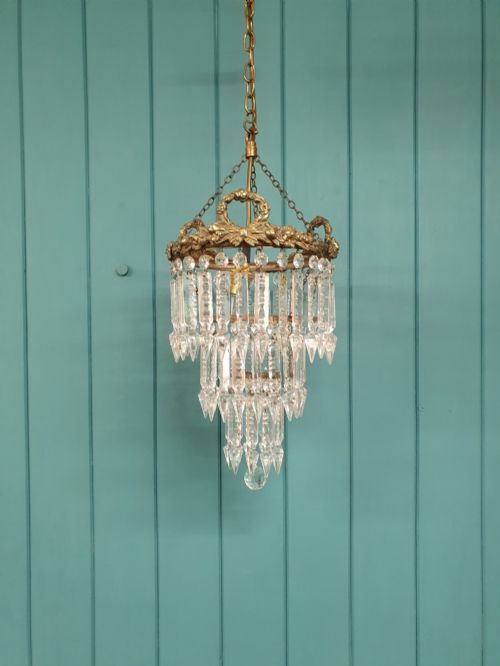
Crystal drop lustres comprise mantel ornaments, candelabras, and chandeliers designed to hold candles or illuminate rooms. When buyers search for crystal drop lustres, they encounter Victorian table mantel pieces and hanging chandeliers adorned with glass prisms.
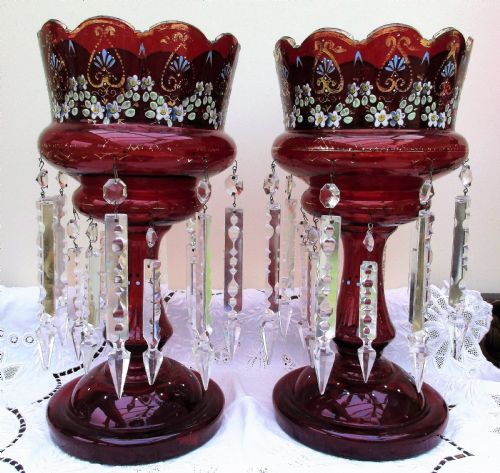
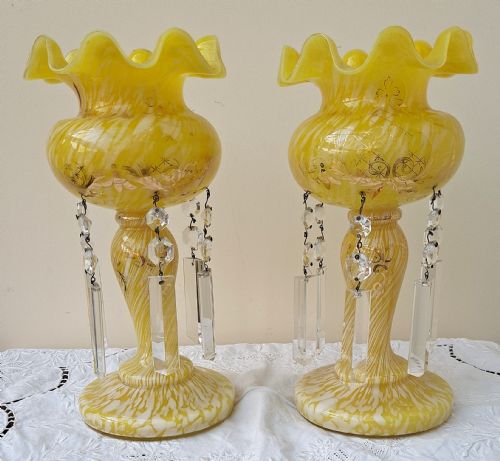
The items span periods from the Regency era through the Victorian epoch into the early twentieth century. Victorian ruby, green, yellow, and cranberry glass pairs appear frequently alongside French and Italian chandeliers.
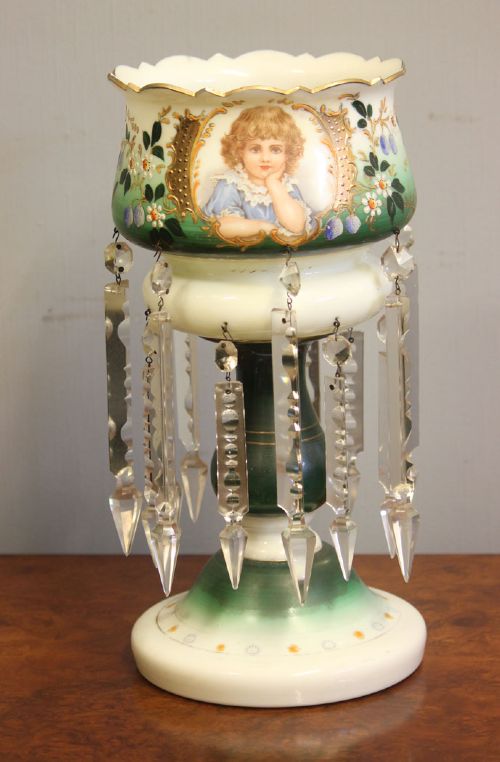
Mantel lustres sit upon fireplaces or side tables, functioning as decorative vessels hung with cut glass drops. Larger forms include multi-light brass and gilt bronze chandeliers draped with crystal prisms.
How they were made
Makers utilised glass and crystal, shaping pieces into flash glass vases and cut-glass bodies. Coloured glass varieties such as ruby, cranberry, green, and yellow required specific mineral oxides added during the blowing process.
Support structures combine cast brass, gilt metal, bronze, and ormolu. Prism drops were hand-cut and faceted to refract light, then suspended from the main body using wire loops or metal pins.
Victorian households loved ruby glass because it made the dimmest candle flame look like a roaring hearth.
What varies in quality
The depth of colour in the glass and the precision of the hand-cutting on the crystal drops determine standard. Superior pieces display crisp facets that catch illumination sharply, while simpler examples feature softer edges.
Proportion and metalwork finish separate ordinary items from finer ones. Gilt bronze and ormolu mounts with detailed chasing distinguish high-grade French chandeliers and candelabras from basic brass designs.
The Crystal Drop Lustres Glossary
- Lustre
- A decorative mantel ornament fitted with hanging glass prisms. These objects originated in the eighteenth century and gained immense popularity during the Victorian period.
- Flash glass
- Glass composed of a thin layer of coloured glass applied over a colourless or contrasting base layer. Cutting through the top layer reveals the contrasting glass beneath.
- Ormolu
- Finely ground high-carat gold applied to a bronze base using a mercury amalgam technique. This treatment creates a durable metallic finish found on nineteenth-century French pieces.
- Candelabra
- A branched candlestick holder designed for multiple candles. Many examples incorporate hanging crystal drops around the central stem.
- Prism
- A cut glass pendant suspended from the rim of a lustre or the arms of a chandelier. Prisms disperse light into spectral colours when illuminated.
Crystal Drop Lustres: Frequently Asked Questions
Where do people place crystal drop lustres?
Mantel lustres sit traditionally on fireplace mantelpieces, flanked by mirrors or clocks to multiply the reflected light in a room. They also function effectively on sideboards, console tables, and chests of drawers.
Chandeliers hang from ceiling centerpieces in principal rooms and hallways. Smaller table versions suit smaller surfaces where ambient lighting is desired.
How do I clean crystal drop lustres?
Cleaning requires removing the glass drops individually to wash them in warm soapy water with a soft cloth. Dry each drop thoroughly before reattaching it to the metal frame.
The main body of the lustre or chandelier wipes clean with a dry or slightly damp cloth, avoiding harsh chemicals that might damage gilt or brass surfaces.
Were crystal drop lustres used for lighting?
Mantel lustres served primarily as decorative ornaments rather than practical light sources, though some held candles on their central sockets. Their main purpose was to catch daylight from windows or lamplight at dusk.
Chandeliers and candelabras provided functional illumination for rooms before the widespread adoption of electricity.
How do I identify a Victorian lustre?
Victorian lustres often feature vibrant coloured glass bodies, including ruby, cranberry, green, or yellow hues, paired with hand-cut crystal prisms. Their proportions tend to be substantial, with heavy moulded bases.
Dating relies on the form of the cutting, the weight of the glass, and the construction of the metal fittings joining the components.