

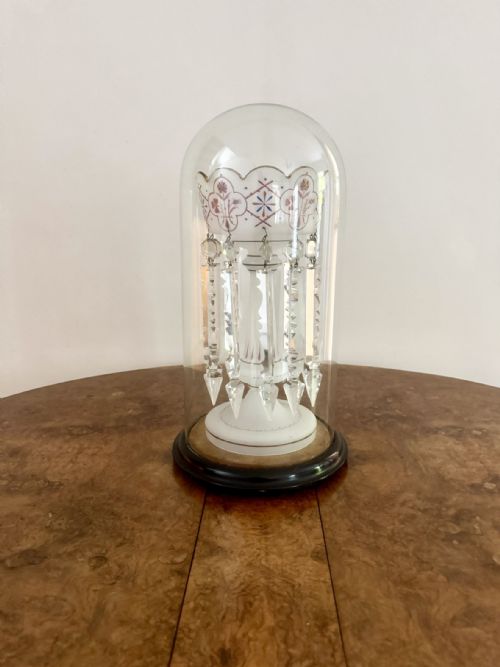
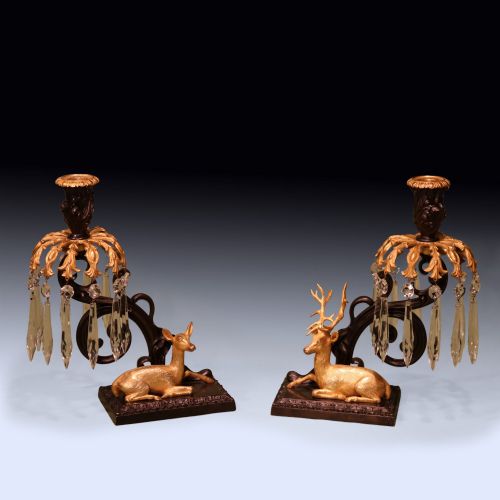

Antique Glass Lustres
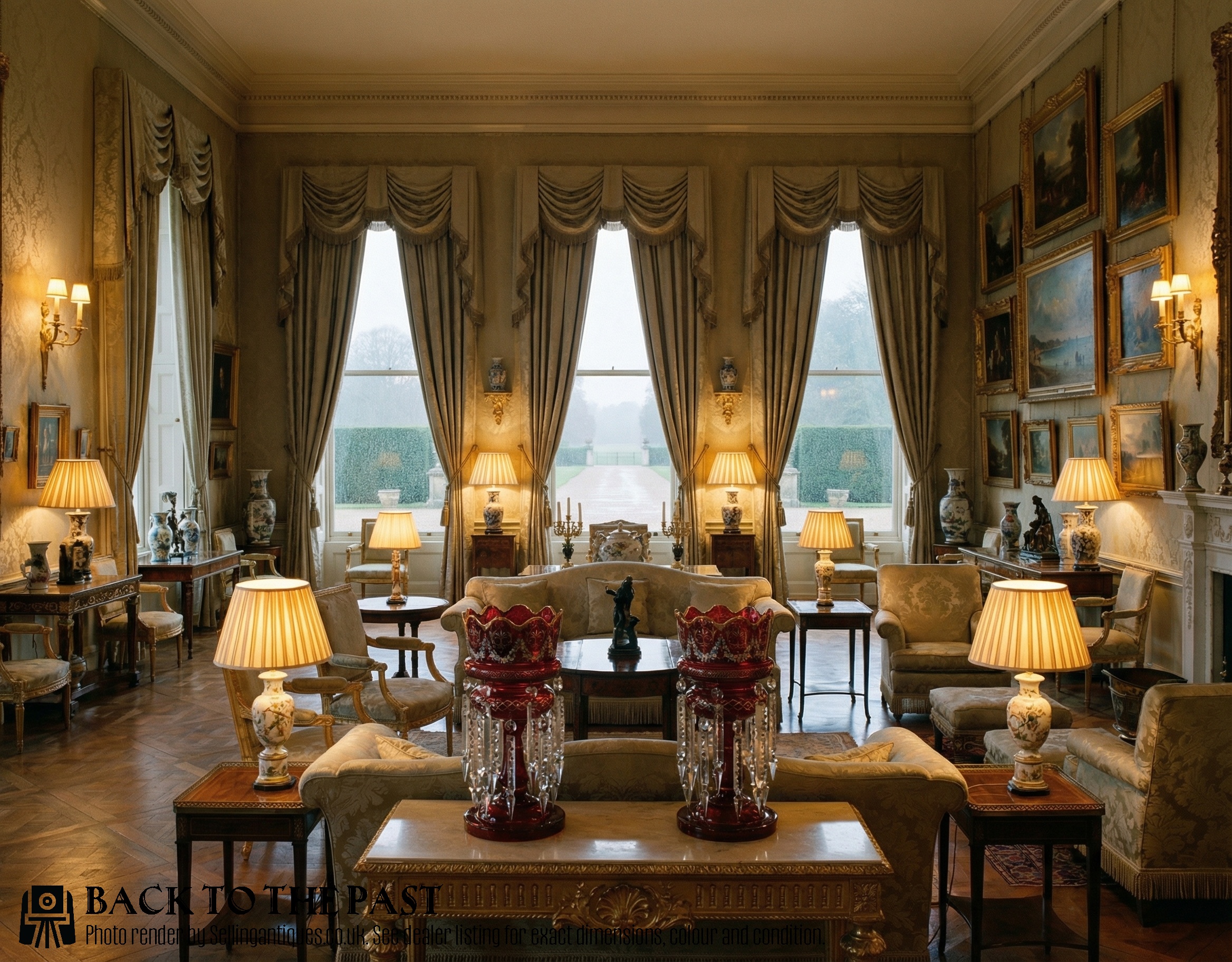
Antique glass lustres bring rich colour and reflective sparkle to a room, catching the candlelight on any mantelpiece.
What antique glass lustres are
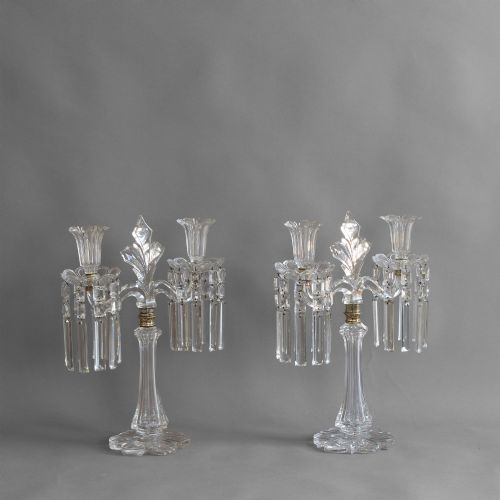
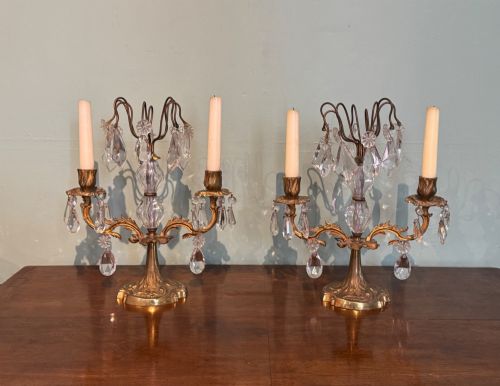
When you search for antique glass lustres, you are looking at decorative candle holders designed to sit on a mantelpiece or table, hung with prismatic glass drops that scatter the light. These pieces date principally from the nineteenth century, encompassing both the Regency period and the later Victorian era.
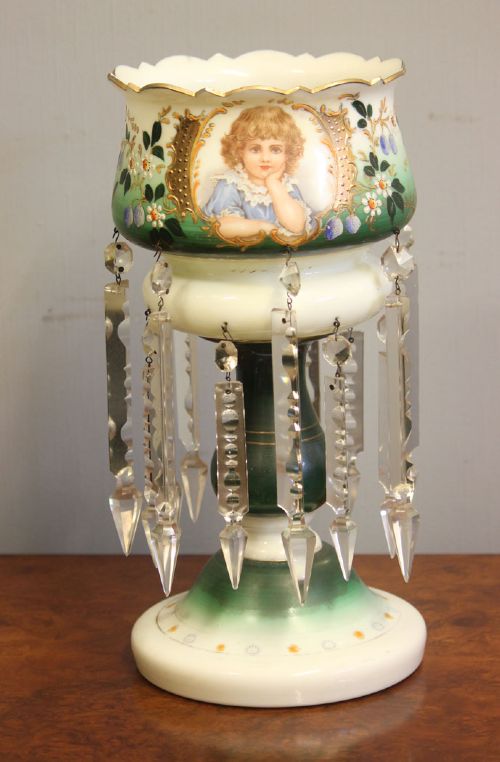
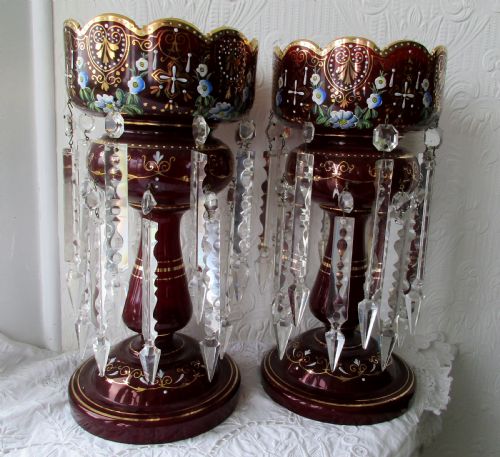
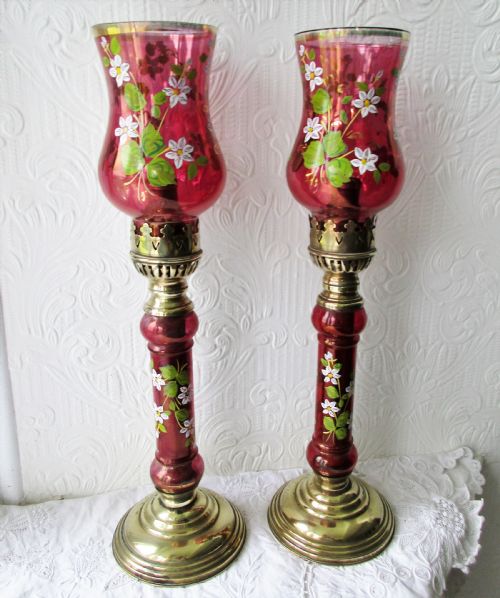
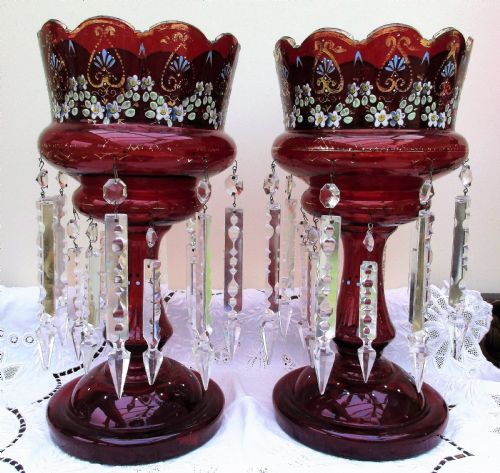
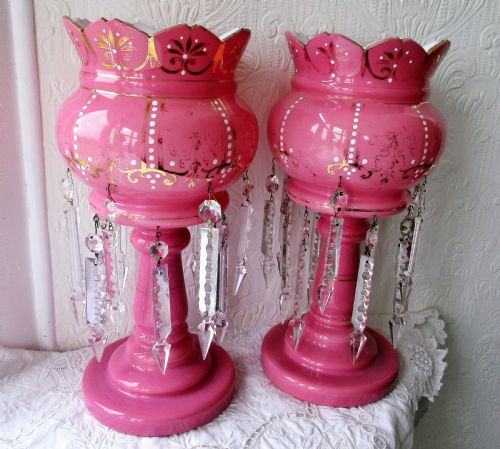
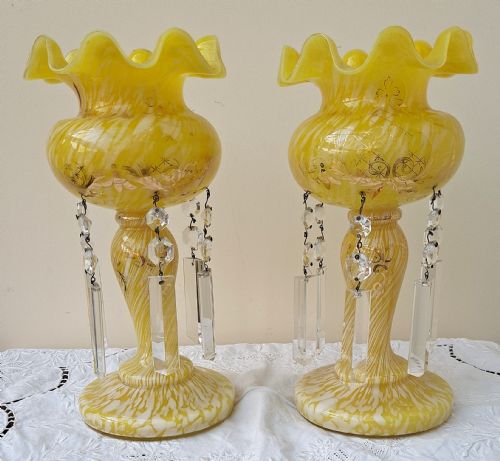
The most common version you will meet on this page is a pair of glass lustres in strong coloured glass, particularly ruby, cranberry, pink, blue, green, and milk glass, frequently embellished with enamel or gilt decoration. They function simultaneously as candlesticks and as ornamental centerpieces.
Forms range from tall, clear cut-glass table lustres of the Regency period to robust mantel lustres of the Victorian era. Nearly all survive as pairs, designed to anchor either end of a fireplace or sideboard with symmetrical brilliance.
How they were made
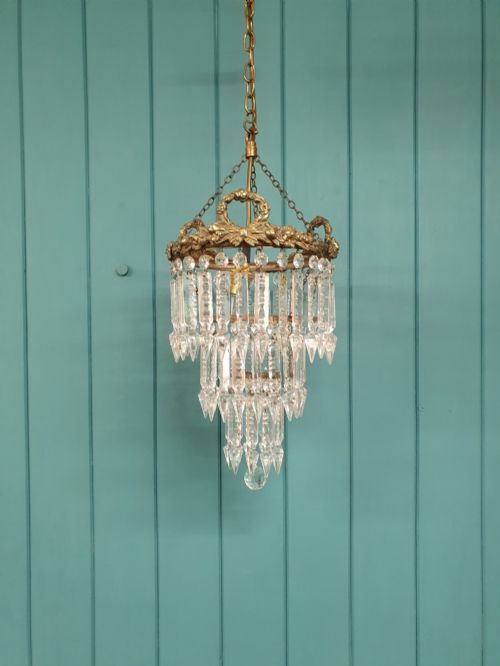
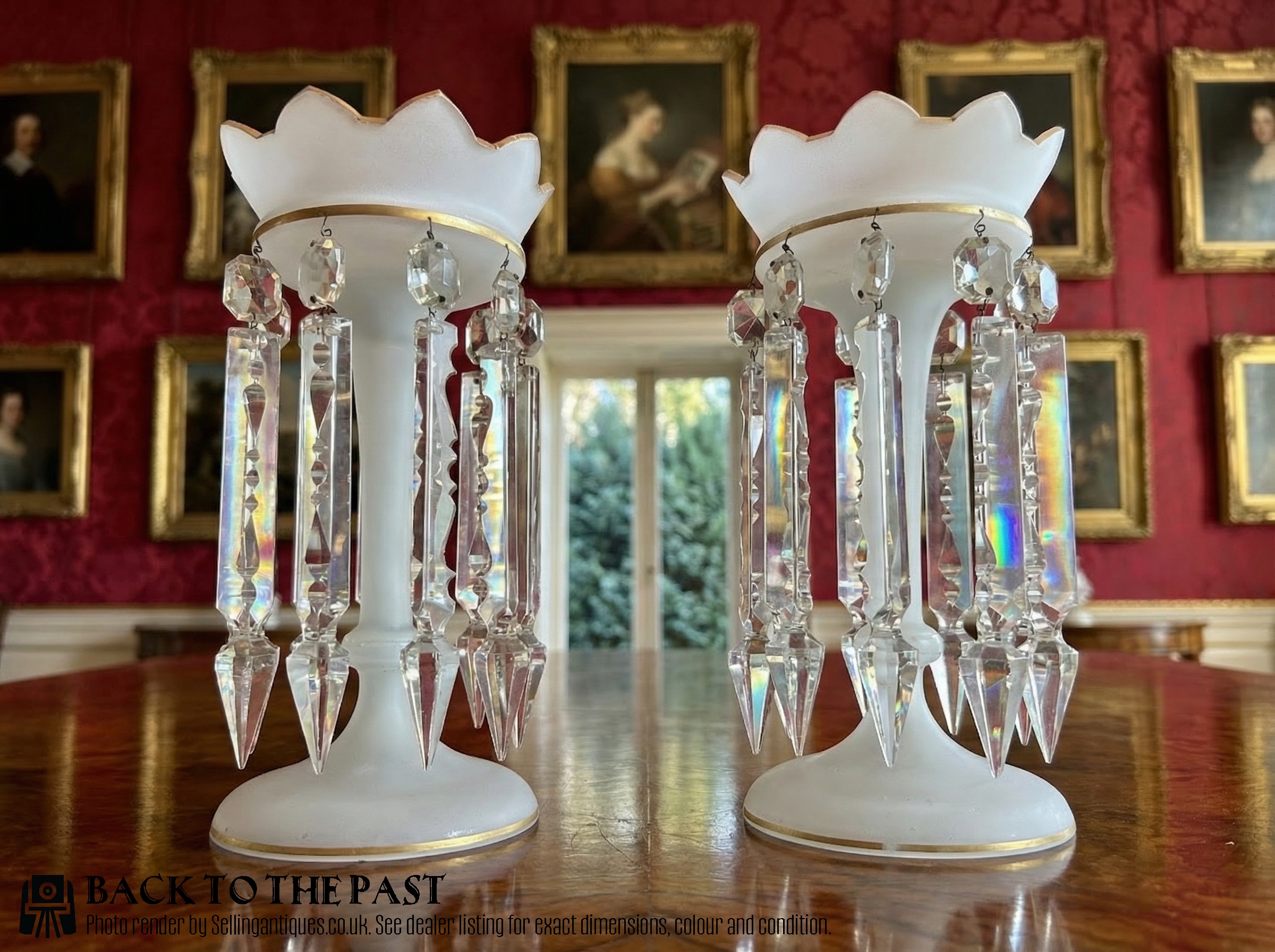
Makers fashioned these pieces from lead crystal, plain glass, or coloured glass, shaping the bodies by blowing or moulding. They added hanging prisms, known as drops, which were faceted and cut to maximise refraction before being suspended from the rim by wire loops.
Surface ornamentation involved hand-painted enamel and applied gold leaf or gilt accents, often featuring floral motifs or gilt banding. The glass itself gained its distinct hues through the addition of metallic oxides during the melting process, creating deep ruby, vibrant green, and opaque milk glass.
Retail Price Guide 2026
Typical UK retail prices for glass lustres, calculated from the Sellingantiques database of over a million retail prices indexed since 2003. This retail price guide relies exclusively on Sellingantiques data; no external sources or auction records are used, so the figures do not describe the wider market.
Uranium glass lustres contain trace minerals that glow a vibrant green under ultraviolet light, surprising guests long after the candles go out.
What varies in quality
The distinction between ordinary and exceptional antique glass lustres lies in the depth of the colour, the clarity of the lead crystal, and the crispness of the cutting. Richly saturated ruby or uranium glass with heavy, polished facets commands attention through its sheer visual weight.
Hand-painted enamel work and gilding also divide the range, with delicate, well-preserved botanical motifs showing superior craftsmanship compared to plain or heavily worn decoration. The completeness and matching nature of the original crystal drops heavily influence the overall integrity of the piece.
The Antique Glass Lustres Glossary
- Mantel lustres
- Decorative glass candle holders intended for display on a fireplace mantelpiece, featuring hanging glass drops. They combine utility with dramatic visual effect.
- Crystal drops
- The faceted glass pendants hung from the rim of a lustre to catch and refract light. These are sometimes called prisms.
- Ruby glass
- Deep red glass created by adding gold chloride or copper to the molten batch. It is a signature material of nineteenth-century decorative pieces.
- Lead crystal
- Glass containing lead oxide, which increases weight, brilliance, and clarity. It allows for sharper facet cutting than standard soda-lime glass.
- Gilt
- A thin layer of gold applied to the surface of the glass for decoration. It often appears as fine leaf or painted accents around the rim or stem.
Frequently Asked Questions
How were glass lustres used?
Antique glass lustres served as decorative lighting on mantelpieces and tables during the nineteenth century. Placed near mirrors or fires, their hanging crystal drops caught and multiplied the flickering candlelight.
Beyond their practical function as candle holders, they acted as prominent ornamental showpieces in Victorian and Regency drawing rooms.
How do I clean antique lustres?
Cleaning requires patience and gentle handling, particularly around delicate enamel and gilding. The crystal drops should be removed individually and washed in lukewarm soapy water.
The main body of the lustre should be wiped carefully with a soft, damp cloth, avoiding any harsh chemical cleaners that might damage the surface gold leaf.
Are lustres always found in pairs?
The vast majority of antique glass lustres survive as matched pairs because they were originally made to sit symmetrically on either end of a mantelpiece. Finding single pieces is uncommon since their primary purpose was balanced domestic display.
When buying, collectors look for pairs where both the glass bodies and the hanging crystal drops match completely in size and colour.
How do I tell Regency from Victorian lustres?
Regency lustres typically feature clear cut-glass with slender, elegant proportions and sophisticated optical properties. They rely on the purity of the lead crystal rather than heavy surface colour.
Victorian lustres, by contrast, frequently embrace bold colours like ruby, green, and blue, often decorated with hand-painted enamel and substantial gilt highlights.