


Hand Painted Ruby Glass
Hand painted ruby glass items bring intense deep colour and delicate enamel work into a room.
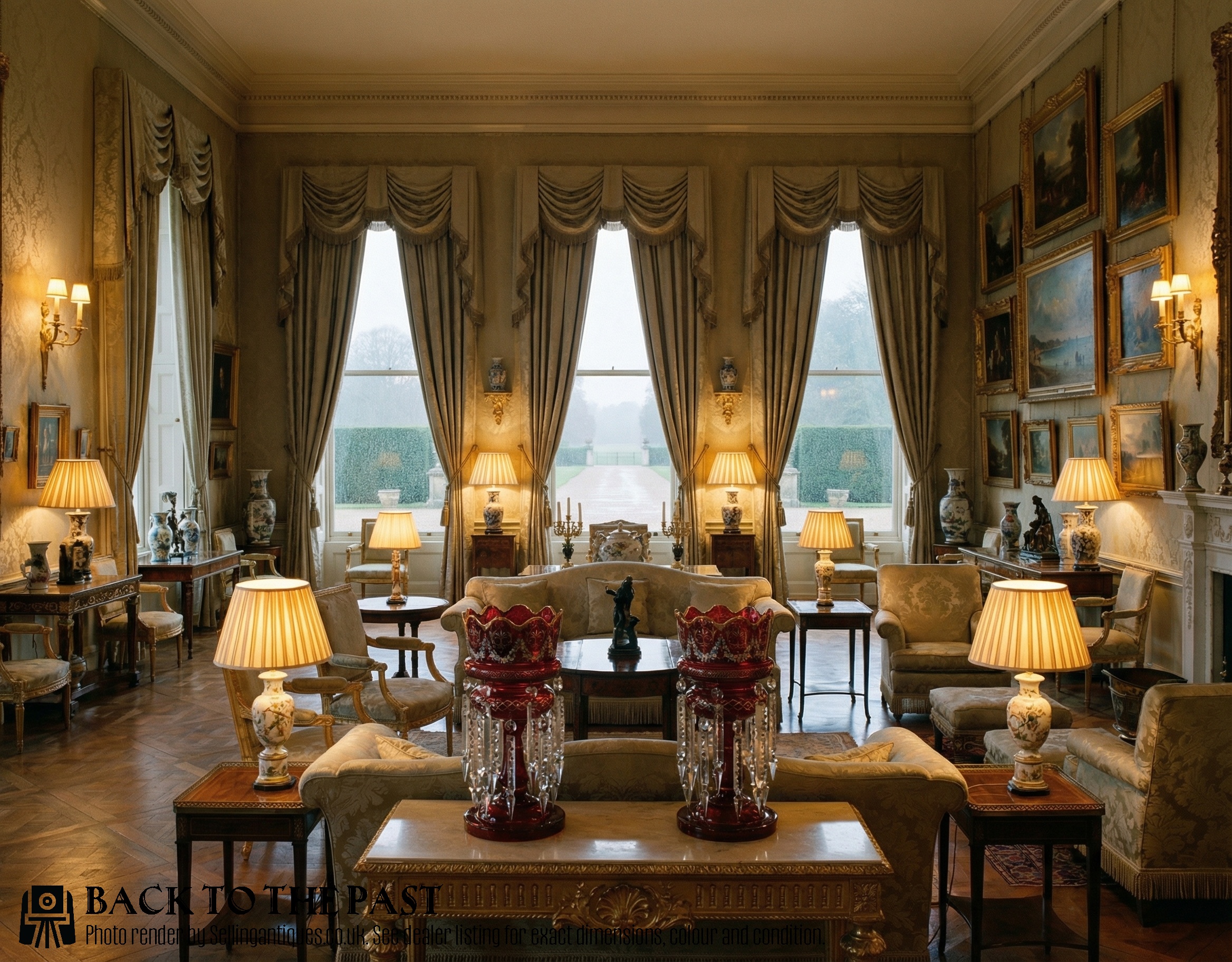
Hand Painted Ruby Glass
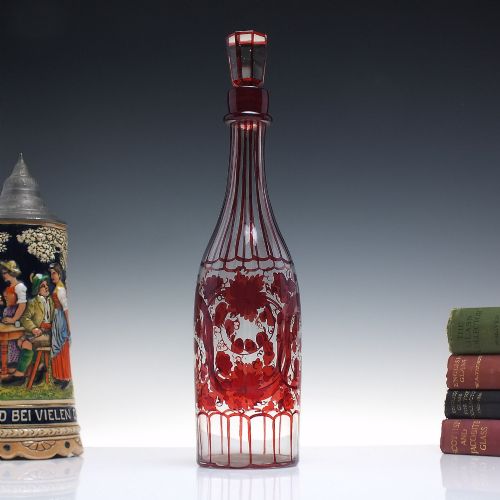
When you search for hand painted ruby glass, you encounter rich decorative wares ranging from mantel lustres and vases to decanters and bells, primarily hailing from the nineteenth century. These objects stem from English and Bohemian traditions, with Victorian examples appearing most frequently across the listings.
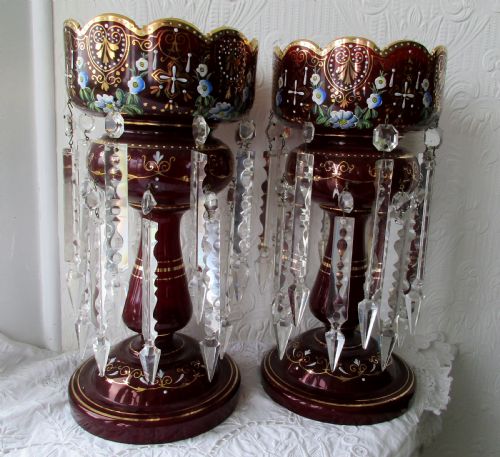
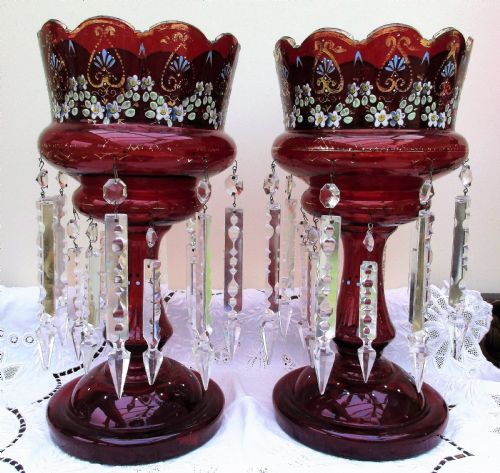
Collectors frequently gravitate towards the mantel lustres and vases, which display the characteristic deep red hue alongside botanical or figural hand painted scenes. These decorative items served as striking mantelpiece centrepieces in Victorian parlours and continue to command attention today.
How they were made
Craftsmen produced ruby glass by adding gold chloride to the molten glass batch during production, achieving the signature rich red coloration before shaping the vessel by hand. Artisans then applied opaque white enamel and gold leaf directly onto the cooled glass surface.
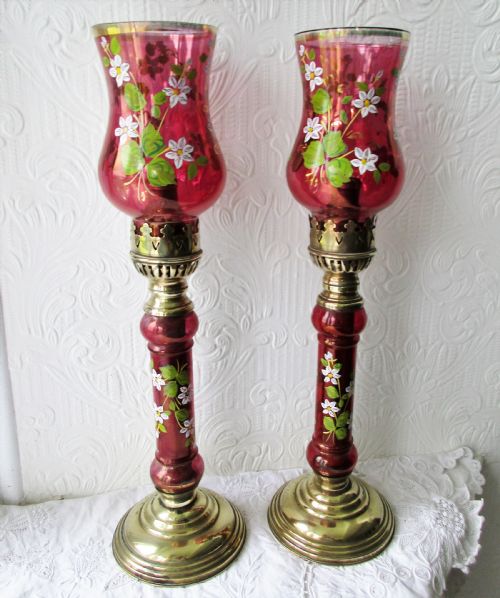
Many of the listed pieces incorporate additional brass mountings, crystal overlay techniques, or hanging prisms suspended from cut glass rims. Firing fixed the hand painted enamel motifs permanently to the ruby glass substrate.
Hand Painted Ruby Glass Retail Price Guide 2026
Typical asking prices for hand painted ruby glass among the pieces listed under this phrase on Sellingantiques today, from the lower quarter to the upper quarter. They describe what is for sale here now, not the wider market.
These glowing red mantel lustres were designed to catch and multiply the dim flicker of gaslight in a proper Victorian parlour.
What varies in quality
Quality in hand painted ruby glass rests upon the depth of the glass colour and the precision of the enamel brushwork. Finer pieces display crisp, detailed figures or floral motifs with intact gilding, whereas simpler examples show heavier, less refined paint application.
The presence of original crystal prisms on mantel lustres and the weight of the underlying glass vessel strongly influence the character of each piece. Superior items maintain sharp cut facets and clean, unblemished enamel surfaces.
The Hand Painted Ruby Glass Glossary
- Ruby glass
- A type of decorative glass coloured deep red through the addition of gold to the molten batch. It forms the base material for many Victorian mantel lustres and vases.
- Mantel lustre
- A decorative two-piece or multi-piece ornament designed for a fireplace mantel, typically featuring hanging crystal prisms and hand painted enamel decoration.
- Mary Gregory glass
- Glassware decorated with white enamel silhouettes of children amidst foliage, popular during the late Victorian era. This style appears frequently on cranberry glass jars and vases.
- Enamel
- An opaque vitreous composition applied to the surface of glass and fired to create raised white or coloured decorative scenes. It provides the distinct hand painted details on these pieces.
- Cranberry glass
- A transparent pinkish-red glass closely related to ruby glass, often utilised in Victorian tableware and decorative items.
Hand Painted Ruby Glass: Frequently Asked Questions
How do I clean antique ruby glass?
Wash the glass gently in lukewarm water using a mild soap, supporting any fragile applied gilding or enamelwork with care. Avoid soaking pieces with brass mounts or paper labels.
Dry the item immediately with a soft lint-free cloth to prevent water spots on the ruby surface.
Are mantel lustres meant to hold candles?
Mantel lustres function primarily as decorative mantel ornaments rather than practical lighting devices. The central socket holds a candle, while the hanging crystal prisms catch and refract the ambient light.
Lighting candles inside antique lustres risks damaging the delicate enamel and glass bodies through heat.
What is the difference between ruby and cranberry glass?
Ruby glass exhibits a deeper, more intense crimson coloration due to a higher concentration of gold or copper additives in the molten batch. Cranberry glass tends toward a lighter, pinker translucent tone.
Both materials share Victorian origins and frequently feature similar hand painted white enamel decoration.
How can I date nineteenth-century glass?
Dating relies on examining the manufacturing marks, pontil scars on the base, and stylistic indicators such as Victorian revival motifs or specific enamel painting styles. The presence of hand-blown irregularities often points to earlier nineteenth-century production.
Comparing the piece to documented examples helps narrow down the decade of manufacture.