



Pair of Lustres
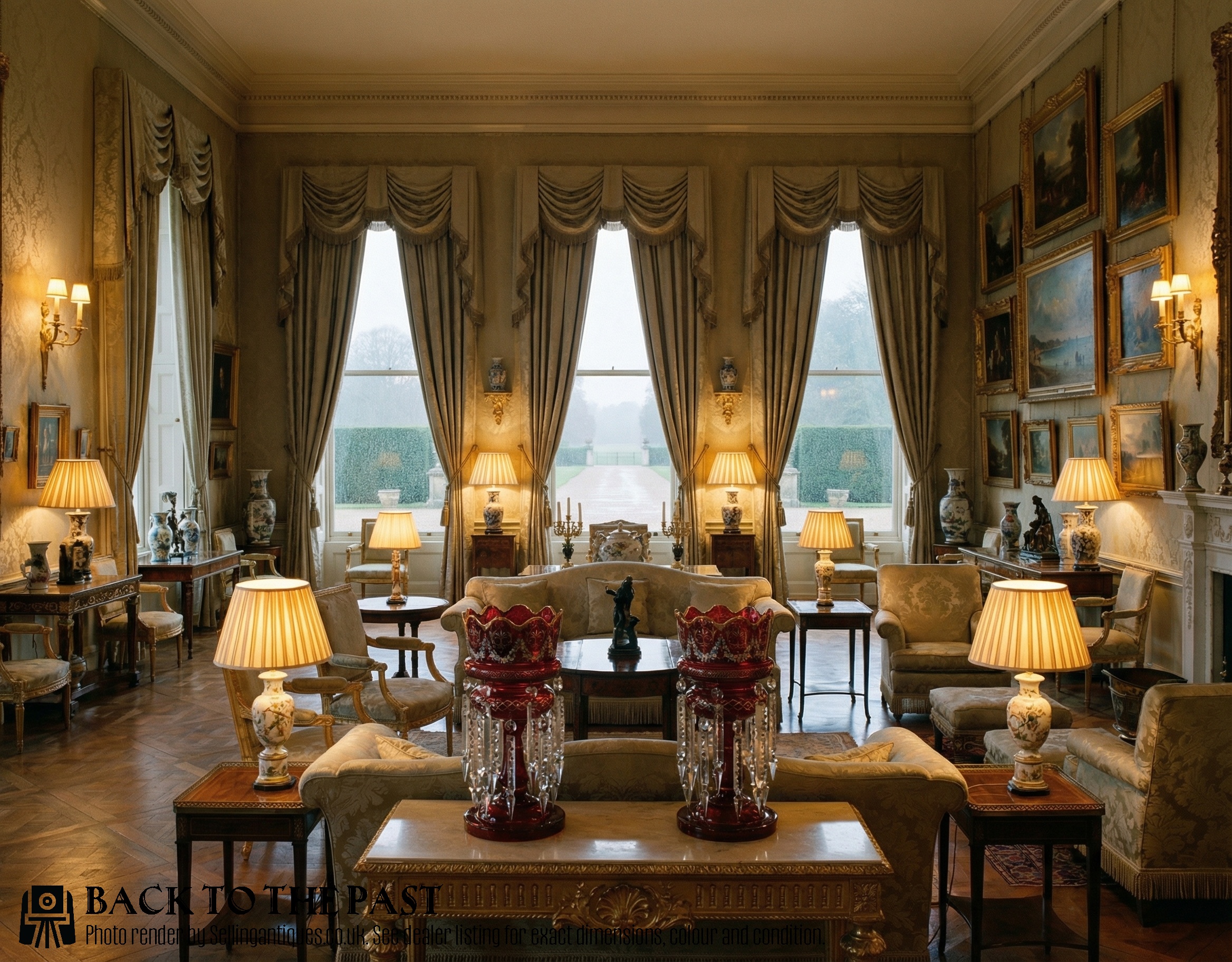
A pair of lustres transforms a mantelpiece or table with reflected light through suspended glass prisms.
Pair of Lustres
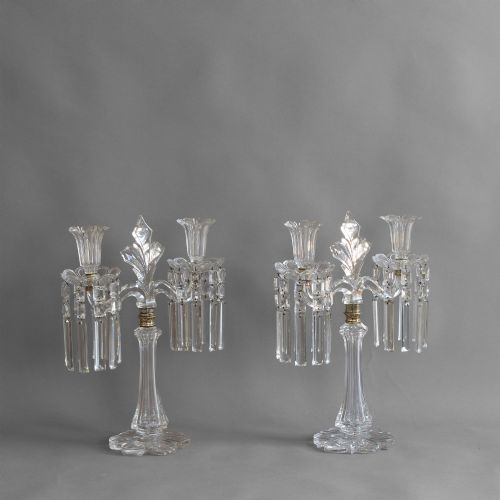
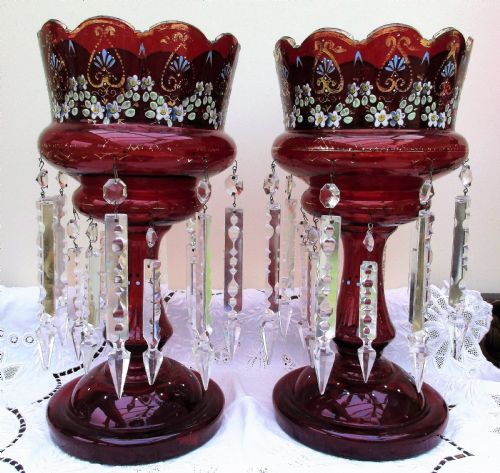
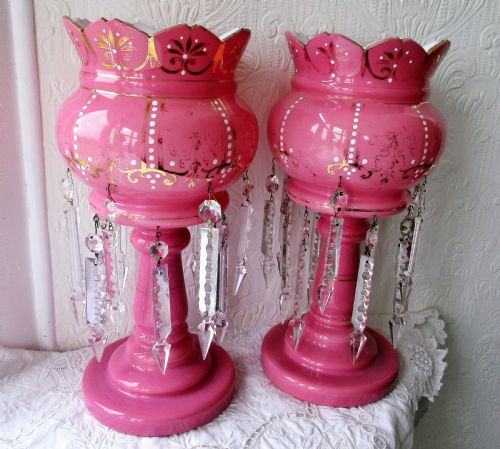
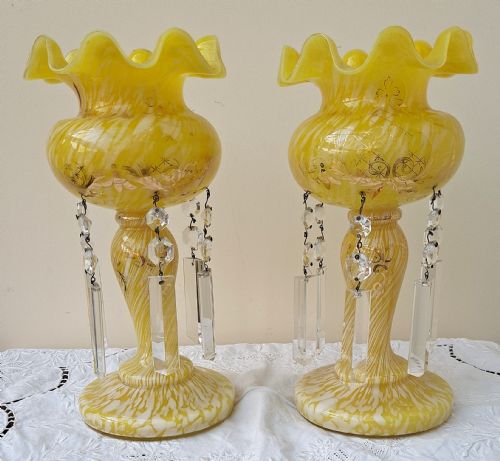
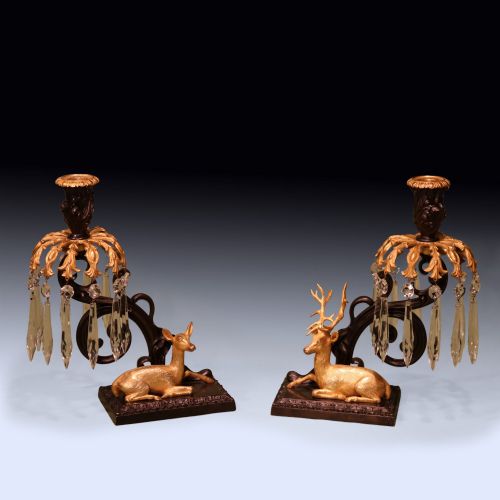
A pair of lustres comprises matching candle-holders decorated with hanging glass pendants, designed to catch and multiply ambient light in a room. These decorative objects date predominantly from the nineteenth century, spanning Regency, Victorian, and later periods.
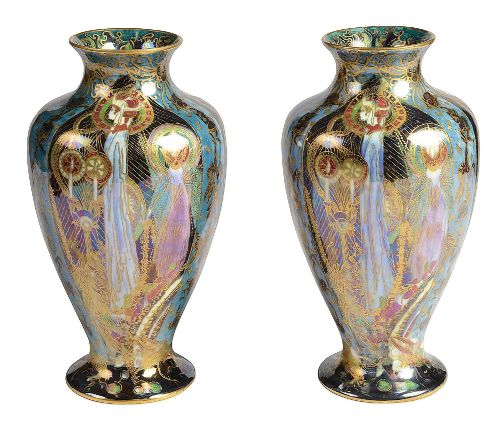
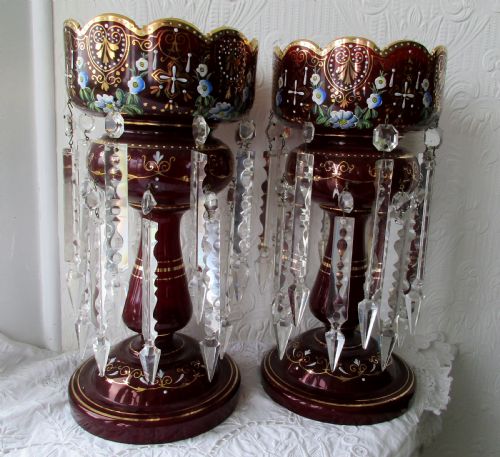
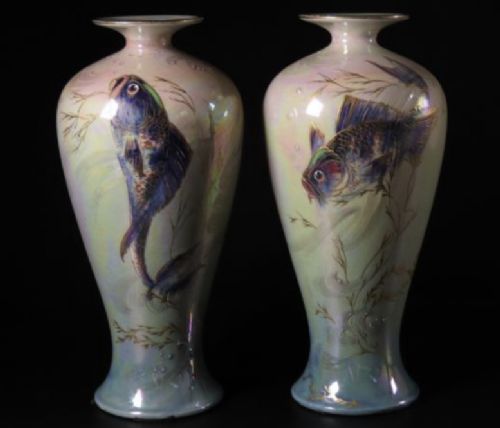
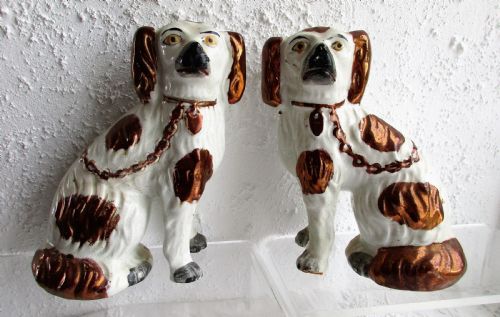
The most common examples encountered here are Victorian glass mantel lustres, often rendered in rich colours like ruby, pink, green, and blue. Alongside traditional glass forms, earthenware and pottery pieces featuring metallic glazes also appear frequently.
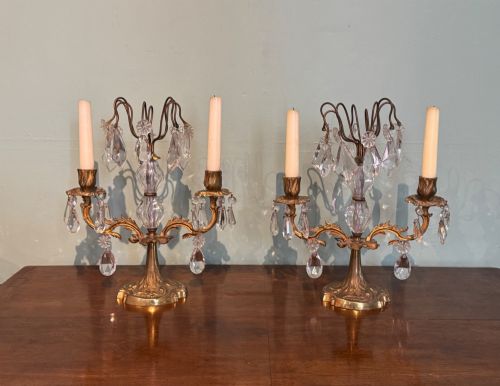
Makers and origins vary widely, incorporating English glassworks, French bronze-founders, and Bohemian overlay techniques. Collectors select them for symmetry and the brilliance of their suspended crystal drops.
How they were made
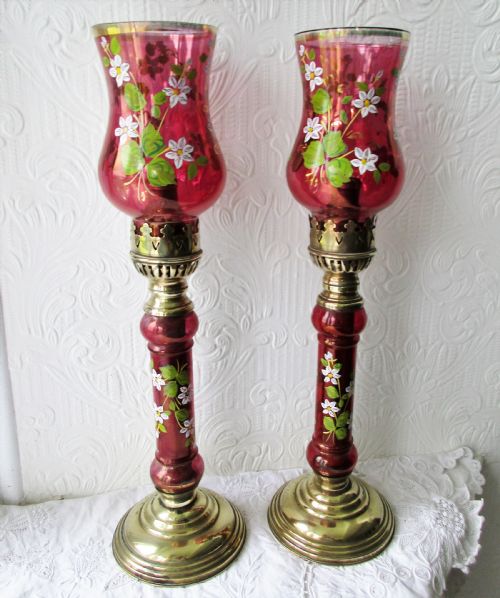
Makers utilised heavy lead crystal and coloured glass, often employing flash-cutting techniques to expose contrasting layers beneath. Brass, ormolu, and gilt bronze provide structural mounts and candle nozzles for heavier pedestals.
Pendants and prisms were hand-cut and faceted to maximise light refraction, then suspended from the rim using wire loops. Earthenware variations incorporate metallic lustre glazes fired to achieve iridescent, coppery surfaces.
Listings feature crystal, brass, earthenware, and cut glass across Victorian and Regency periods.
What varies in quality
Quality rests primarily in the depth of the glass colour, the crispness of the hand-cutting on the prisms, and the weight of the metal mounts. Superior pieces display intricate hand-painted enamel decoration and perfectly matched sets of original crystal drops.
The architectural proportion of the stem to the bowl dictates elegance, distinguishing standard production items from workshop masterpieces.
Daisy Makeig Jones·Walter Slater·Charlotte Rhead
The Pair of Lustres Glossary
- Lustre
- A candlestick or vase fitted with hanging glass drops designed to reflect candlelight.
- Prism
- A faceted glass pendant suspended from the rim to refract light.
- Ormolu
- Gilt bronze mounted on decorative objects, popular in Regency and French pieces.
- Flash glass
- Glass formed of a thin layer of coloured glass over a clear or white base body, cut through to show the underlayer.
- Baluster
- A moulded column shape supporting the main body of the candlestick or vase.
Pair of Lustres: Frequently Asked Questions
How were pair of lustres used originally?
These pieces sat upon mantelpieces, sideboards, and tables to hold candles and illuminate dark rooms by bouncing candlelight off suspended glass pendants.
Their reflective qualities made them central decorative elements in nineteenth-century formal interiors long before electric lighting arrived.
How do I clean a pair of lustres?
Remove the glass drops individually and wash them gently in warm soapy water using a soft cloth, avoiding harsh abrasives on gilt surfaces.
Dry each drop thoroughly before reattaching them to the main body with their original wire fasteners.
Are missing glass drops common?
Prisms frequently suffered accidental damage over decades of use, meaning replacement drops appear regularly on older items.
Matching the exact cut, age, and tint of surviving original drops requires careful attention to detail.
How do I date a pair of lustres?
Dating relies on identifying the manufacturing materials, such as heavy Regency bronze or vibrant Victorian ruby flash glass, alongside stylistic cues.
Maker marks on pottery variants or specific moulding styles help narrow down the production era.