



Ruby Glass Lustres
Ruby glass lustres are striking nineteenth century mantel ornaments that transform a room with deep colour and flashing crystal prisms.
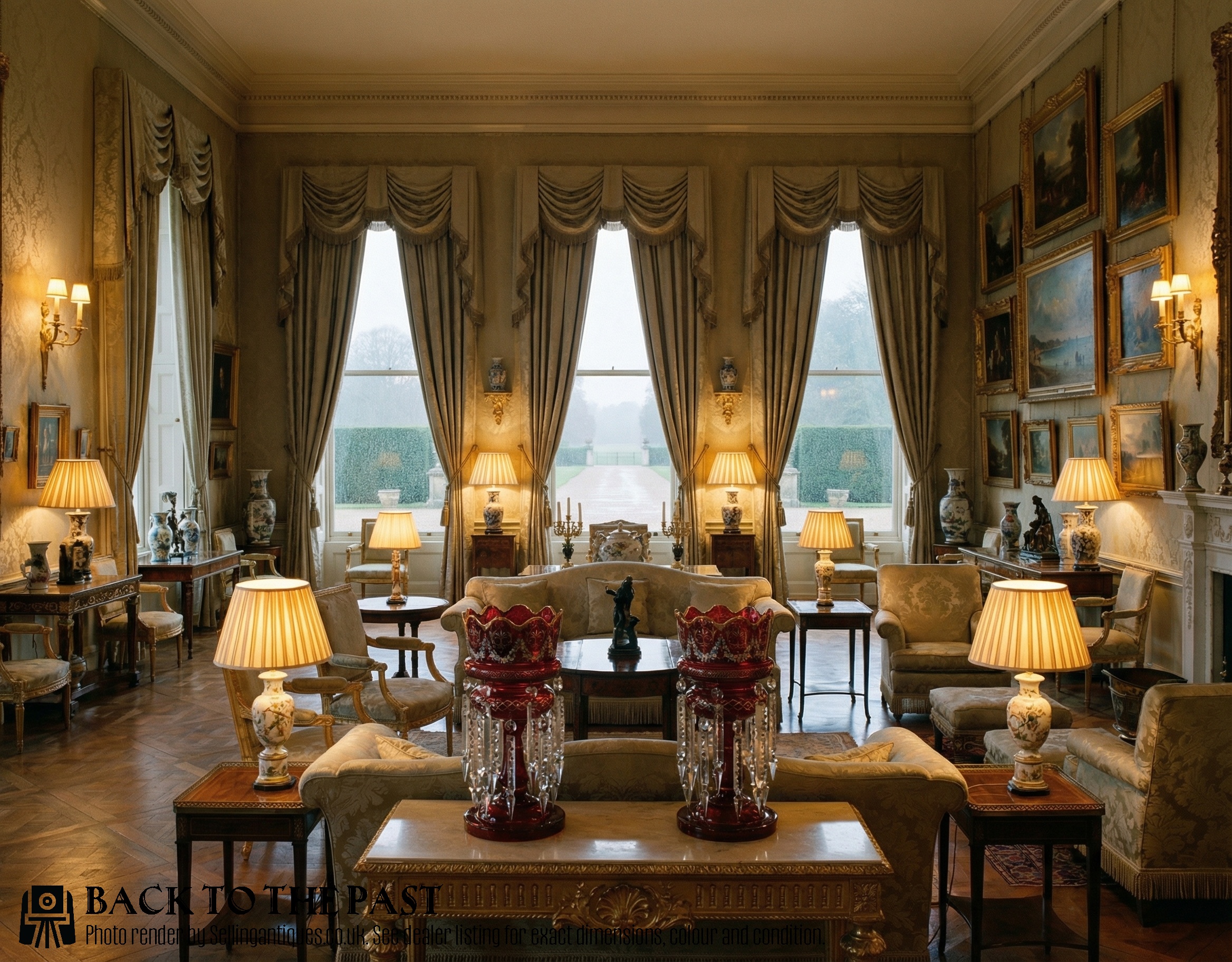
Understanding ruby glass lustres
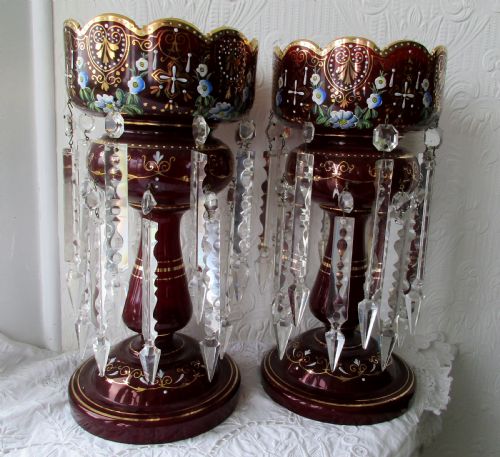
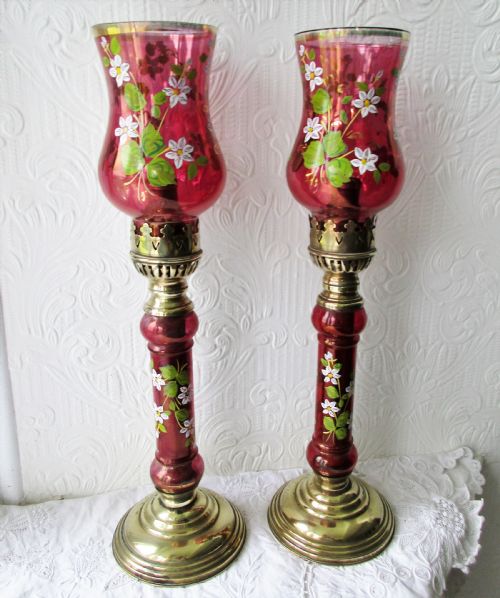
Ruby glass lustres are decorative garnishments designed for the nineteenth century mantelpiece, pairing rich red glass bodies with hanging crystal prisms. Buyers searching for ruby glass lustres encounter Victorian examples originating from English and Bohemian workshops.
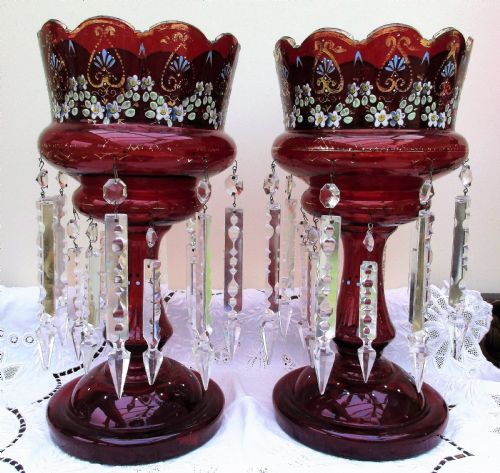
The standard form comprises a trumpet-shaped vase or goblet base fitted with a removable crown of cut crystal pendants. Most pieces survive in matched pairs, intended to flank a central clock or candelabrum.
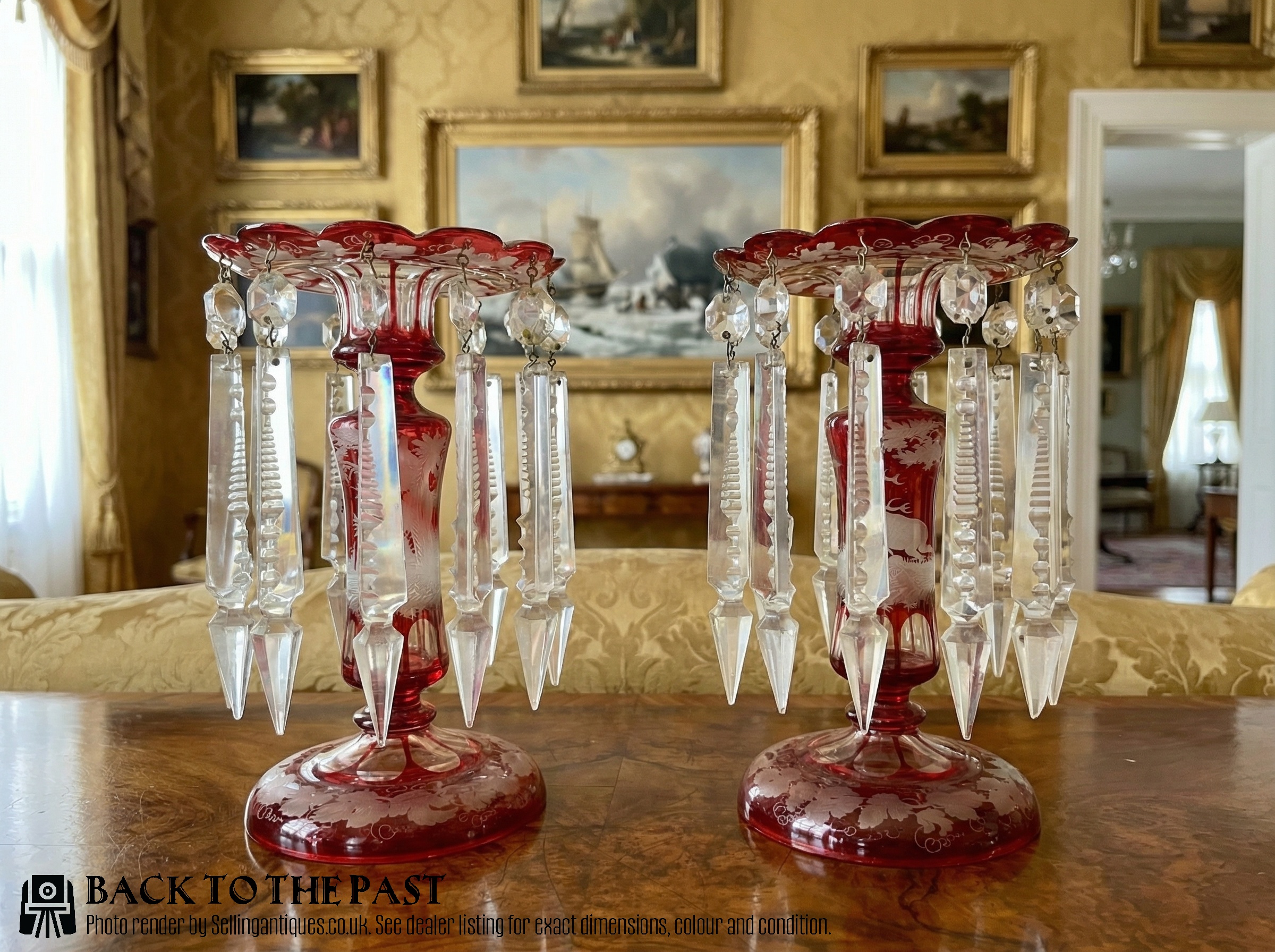
Materials and construction
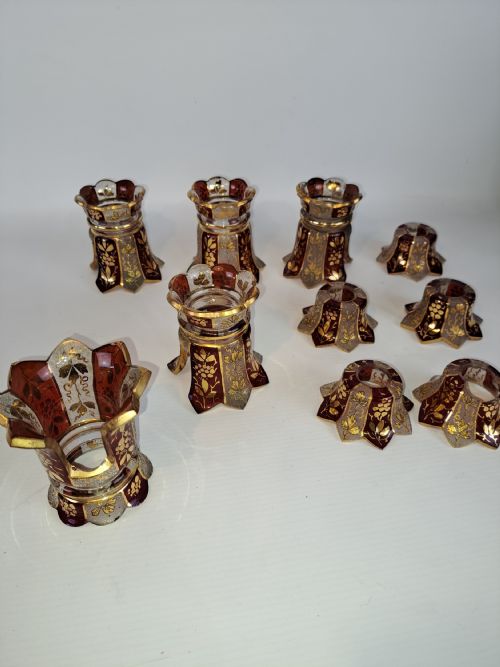
Maker workshops produced these items using lead crystal and flash glass, applying layered techniques where clear glass receives a thin outer coating of ruby red. Artisans then cut through this surface layer to expose the clear glass beneath, creating sharp geometric patterns.
Decoration frequently incorporates gold leaf and enamel painting applied by hand around the rims and bowls. Faceted crystal pendants dangle from notched collars, secured by metal pins or wires.
Retail Price Guide 2026
Typical UK retail prices for ruby glass lustres, calculated from the Sellingantiques database of over a million retail prices indexed since 2003. This retail price guide relies exclusively on Sellingantiques data; no external sources or auction records are used, so the figures do not describe the wider market.
Victorian mantel ornaments doubled as acoustic entertainment when the hanging crystal prisms chimed together in a draught.
Distinctions in quality
Superior examples display deeper saturation in the ruby glass and more intricate wheel-cutting that catches the light cleanly. The crispness of the gilding and the weight of the lead crystal define the upper tier of production.
Complete sets of original prisms rather than matched replacements elevate a pair's standing. Finer cutting along the flutes and sophisticated enamel floral motifs distinguish master workshops from standard commercial output.
The Ruby Glass Lustres Glossary
- Ruby glass
- A deep red glass coloured with gold chloride during production. This rich hue defines the primary aesthetic of the pieces.
- Flash glass
- A vessel formed from a thin layer of coloured glass cased over a body of clear glass. Cutting through the outer layer reveals the contrasting colour beneath.
- Lustre
- A mantel ornament featuring hanging crystal prisms that catch and refract candlelight or daylight. The term refers specifically to the optical play created by the pendants.
- Prism
- A cut crystal pendant suspended from the rim of the vase. These elements move and scatter light across the room.
Frequently Asked Questions
How were ruby glass lustres used?
Victorian households placed ruby glass lustres on mantelpieces to catch the flicker of candles and gaslight. They served as decorative showpieces rather than functional holders for flowers.
During the nineteenth century, symmetrical pairs anchored the visual balance of the fireplace surround. Their bright colour and glittering pendants brought warmth to formal reception rooms.
Are these pieces English or Bohemian?
Both origins appear frequently, reflecting nineteenth century trade and shared design aesthetics. English makers produced substantial lead crystal pieces, whilst Bohemian workshops specialised in flash-cut techniques.
Distinguishing between them relies on examining the weight of the glass and the style of the wheel-cutting. Both traditions utilised rich ruby colours and elaborate gilding.
How do I check for original prisms?
Original prisms show matching age wear around the suspension holes and consistent hand-cut facets. Replacement pendants often appear slightly brighter or feature different cutting patterns.
Matching the exact shape and length of the hanging drops ensures the piece retains its historical integrity. Minor chips on the sharp edges of old crystal are common due to movement.
How do I clean ruby glass lustres?
Dust the glass gently with a soft dry cloth to protect fragile surface gilding. Remove the crystal prisms individually for careful washing in warm soapy water.
Avoid submerging pieces that retain delicate enamel work or gold leaf in water. Allow the crystal pendants to dry completely before rehanging them on the glass body.