


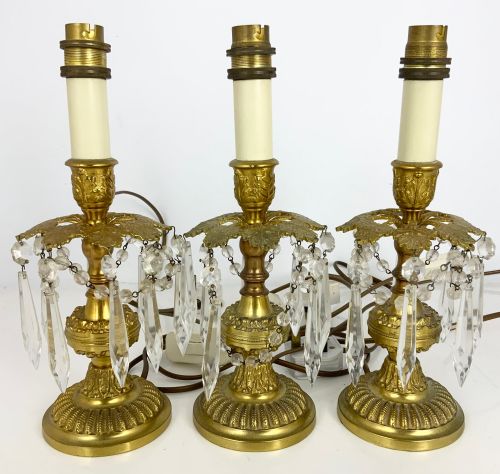


Antique Drop Lustre Candlesticks
Antique drop lustre candlesticks combine functional illumination with dangling glass prisms that catch and refract candlelight across the room.
Antique Drop Lustre Candlesticks
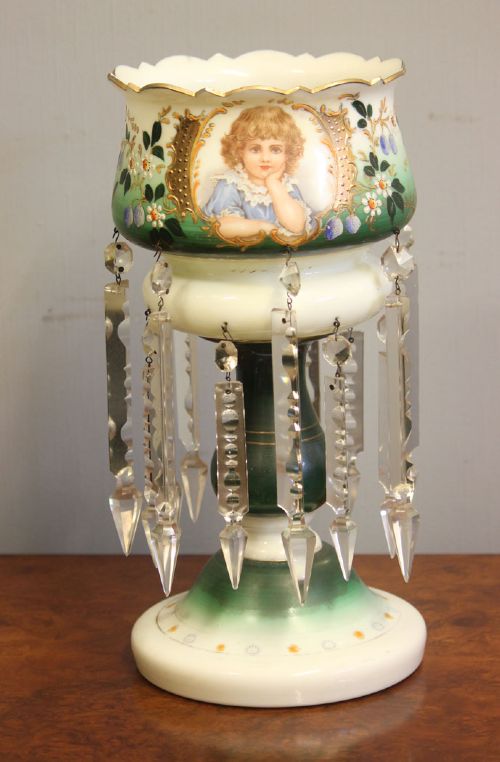
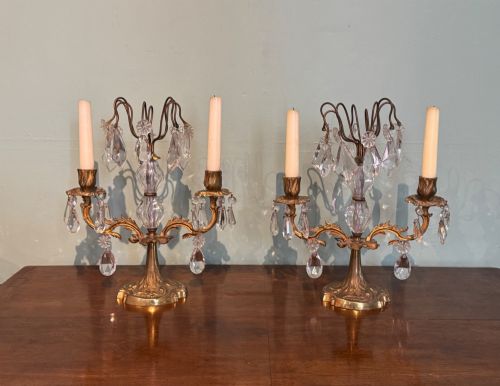
When you search for antique drop lustre candlesticks, you are looking at decorative lighting fixtures designed to sit on mantelpieces, tables, or sideboards. These objects feature central shafts for holding candles, encircled by rings of hanging glass pendants known as lustres.
The versions you are most likely to meet on this page hail primarily from the Victorian and Regency periods, alongside examples from the eighteenth and early twentieth centuries. They appear in forms ranging from single mantel lustres to matched pairs and multi-branched candelabras.
Originating across English and French workshops, these pieces incorporate diverse styles including Rococo Revival, French Chateau, and French Empire. They function both as practical candleholders and as ornamental glass displays.
How they were made
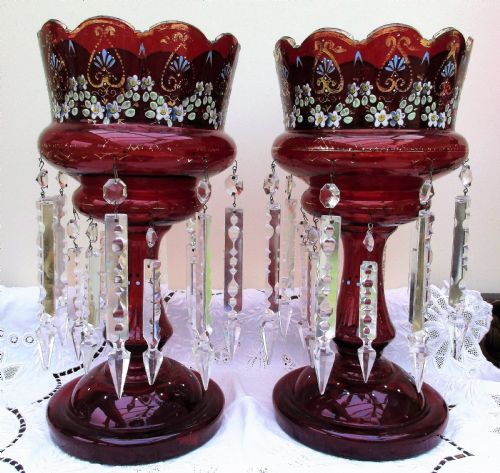
The primary materials recorded in these listings are glass and crystal, shaped through cutting, moulding, and blowing techniques. Makers utilised coloured glass variants such as ruby glass, cranberry glass, and green glass alongside clear crystal to achieve striking visual contrasts.
Metal components provide structural support and decorative detailing, with listings recording gilt bronze, ormolu, brass, and gilt metal. Some pieces integrate applied gold leaf and enamel decorations to enhance the metallic surfaces and glass bodies.
Listings for antique drop lustre candlesticks span the eighteenth century, the Regency period, the Victorian era, and into the early twentieth century around nineteen hundred.
What varies in quality
Quality in these pieces rests upon the crispness of the glass cutting and the clarity of the crystal components. Finely faceted drops and prisms produce sharper refraction of light compared to softer, moulded glass alternatives.
The weight and finish of the metal mounts, whether gilt bronze, ormolu, or brass, distinguish standard production from superior examples. Intricately chased metalwork and secure hanging mechanisms indicate higher standards of period craftsmanship.
The Antique Drop Lustre Candlesticks Glossary
- Lustre
- A glass or crystal pendant hung from the rim of a candlestick or candelabra to reflect candle flames. These drops catch the light and create a sparkling effect.
- Candelabra
- A branched candlestick holding multiple candles on a single base. These fixtures often incorporate hanging glass drops around the central stem.
- Ormolu
- Gilt bronze produced by applying a finely ground high-carat gold-mercury amalgam to a bronze object. This technique imparts a rich golden finish to metal mounts.
- Ruby glass
- Deep red glass created by adding gold chloride to the molten batch during production. It forms a vibrant background for enamelling and cut designs.
- Rococo Revival
- A nineteenth-century design style drawing on asymmetrical eighteenth-century motifs like C-scrolls, shells, and naturalistic floral forms. This aesthetic heavily influences many Victorian and French pieces.
Antique Drop Lustre Candlesticks: Frequently Asked Questions
What are antique drop lustre candlesticks?
These are decorative lighting pieces designed to hold candles while suspending glass or crystal pendants from their rims. The hanging drops amplify the candlelight by refracting it around the room.
They emerged in various forms, including single mantel lustres, paired table fixtures, and multi-branched candelabras created during the eighteenth, nineteenth, and early twentieth centuries.
How were glass lustres used originally?
Owners placed them on mantelpieces, dining tables, and sideboards to illuminate formal rooms before the advent of electricity. The shimmering glass drops added visual brilliance to candlelit interiors.
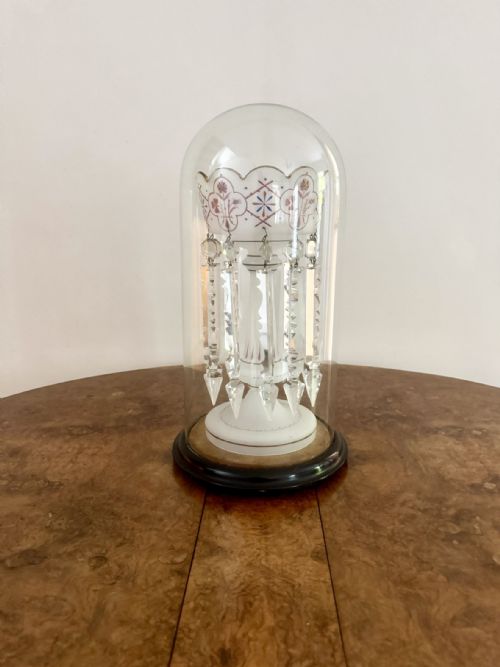
They served as status symbols and decorative showpieces in prosperous homes, particularly when paired with matching mantel garnitures or glass domes.
How do I date an antique lustre?
Dating relies on stylistic clues, manufacturing techniques, and the types of materials used across different periods. Regency examples often show crisp cut crystal and bronze mounts, while Victorian pieces frequently feature ruby, cranberry, or green glass.
Specific design revivals, such as French Rococo Revival or William IV characteristics, further help narrow down the decade of production.
How do I care for glass lustres?
Cleaning requires gentle washing of the glass drops in lukewarm water with mild soap, removing them from the frame first if necessary. Metal components should be dusted carefully to preserve original gilding or patina.
Avoid harsh chemical cleaners on gilt bronze, ormolu, and enamelled glass surfaces to maintain the integrity of the antique materials.