



Ormolu Candle Sticks
These ormolu candle sticks bring together gilded metal and classical form, offering warmth and period character to a room.
Ormolu Candle Sticks
When you search for ormolu candle sticks, you encounter lighting pieces shaped by French and English workshops across the eighteenth and nineteenth centuries. The selection spans single candlesticks, multi-arm candelabras, and specialised candleholders.
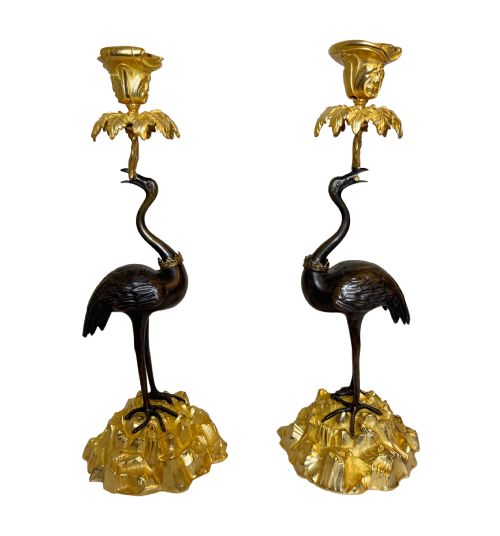
Most examples meet you in nineteenth-century interpretations of earlier styles, notably Louis XVI revival, Rococo, and Regency designs. These pieces often incorporate figural motifs, animals, or classical architectural details alongside the standard socket and stem.
Earlier eighteenth-century specimens and grander pairs from the Empire and Restauration periods also appear. Each version reflects the interior lighting needs of its era, shifting from simple domestic illumination to decorative centrepieces.
Materials and construction
Makers formed these items using cast bronze, brass, or copper as a base metal before applying a gold amalgam layer known as ormolu. This fire-gilding technique produced a deep, luminous surface that distinguishes genuine period work from later electroplated alternatives.
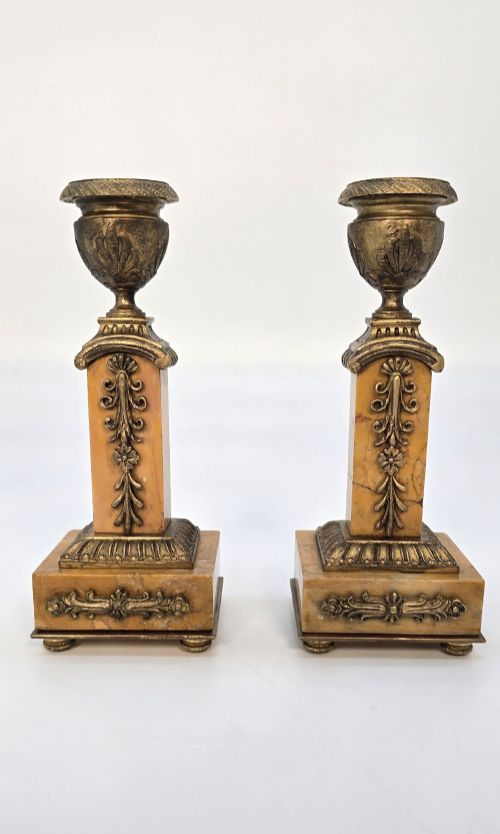
Many designs combine this gilded metal with contrasting elements such as white marble, alabaster, porcelain, or glass lustre drops. Patinated dark bronze frequently pairs with bright ormolu highlights to emphasise the sculptural details of the casting.
Ormolu Candle Sticks Retail Price Guide 2026
Typical asking prices for ormolu candle sticks among the pieces listed under this phrase on Sellingantiques today, from the lower quarter to the upper quarter. They describe what is for sale here now, not the wider market.
Materials appearing across the collection include white marble, alabaster, porcelain, and patinated bronze alongside ormolu.
Assessing quality
The precision of the metal chasing dictates the calibre of an individual piece, separating sharp, hand-finished ornamentation from soft, blurred casting. Superior items retain crisp relief work on acanthus leaves, figures, and scrollwork without evidence of smoothing.
Weight and construction integrity separate robust assemblies from flimsy ones, as better examples rely on solid bronze components fitted together securely. The depth and durability of the original gilding also govern the overall merit of the object.
Henry Dasson·Elkington and Co·William Bateman
The Ormolu Candle Sticks Glossary
- Ormolu
- A gold-mercury amalgam applied to a bronze or brass base through a chemical fire-gilding process. This technique creates a rich, metallic yellow finish characteristic of decorative objects from the eighteenth and nineteenth centuries.
- Candelabra
- A branched lighting fixture designed to hold multiple candles simultaneously. These pieces often share the same decorative vocabulary and gilt metal construction as single candlesticks.
- Regency
- An English design period spanning the early nineteenth century, heavily influenced by classical Greco-Roman motifs. Items from this era frequently combine dark patinated bronze with bright ormolu mounts.
- Rococo
- An ornate, asymmetrical style popular in eighteenth-century France and revived during the Victorian era. It relies on naturalistic motifs like C-scrolls, shells, and foliage.
- Pricket
- A type of candlestick featuring a sharp central spike rather than a socket to secure the candle. These appear primarily on ecclesiastical or altar pieces from the period.
Ormolu Candle Sticks: Frequently Asked Questions
Were these originally for oil or candles?
The majority of these items were built exclusively for wax or tallow candles, as evidenced by the presence of standard drip pans and sockets. Workshops designed them to provide movable illumination for tables, mantelpieces, and reading surfaces.
Some larger multi-arm examples and later adaptations accommodated altered inserts, but the primary function stayed tied to traditional flame lighting.
How can I tell Regency from Rococo pieces?
Regency items lean towards strict classical symmetry, military motifs, and sharp contrasts between dark patinated bronze and bright ormolu. They reflect an aesthetic rooted in ancient Roman and Greek archaeology.
Rococo pieces embrace fluid asymmetry, naturalistic plant forms, and elaborate C-scrolls without straight lines. This style prioritises theatrical curves over architectural restraint.
What is the difference between ormolu and gilt brass?
Ormolu involves a true gold-mercury amalgam fired onto a bronze substrate, resulting in a dense, warm lustre that ages with a distinct golden depth. It represents the standard method for high-end decorative objects before modern electroplating.
Gilt brass or later gilt metal relies on different plating techniques over a base of softer yellow brass. These alternatives often present a brighter, less nuanced surface finish.