





Vintage Lustre Drops
These vintage lustre drops catch and throw the room's light through cut glass and crystal.
Vintage Lustre Drops
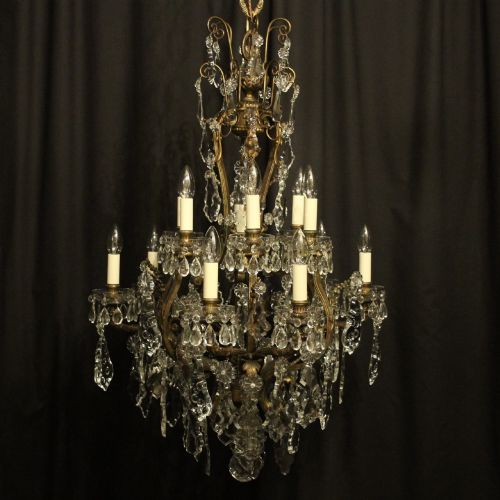
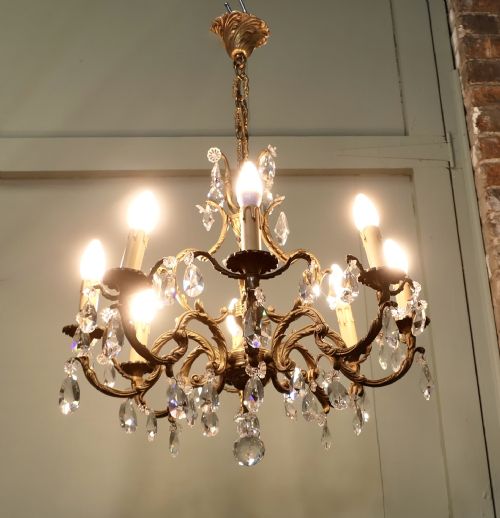
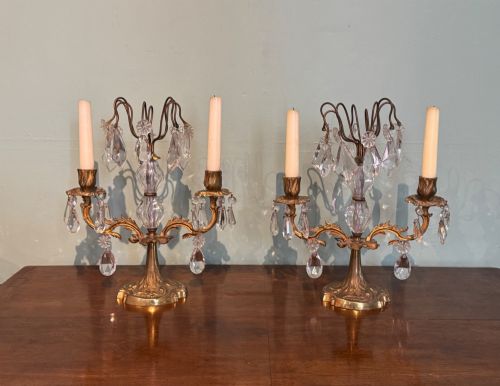
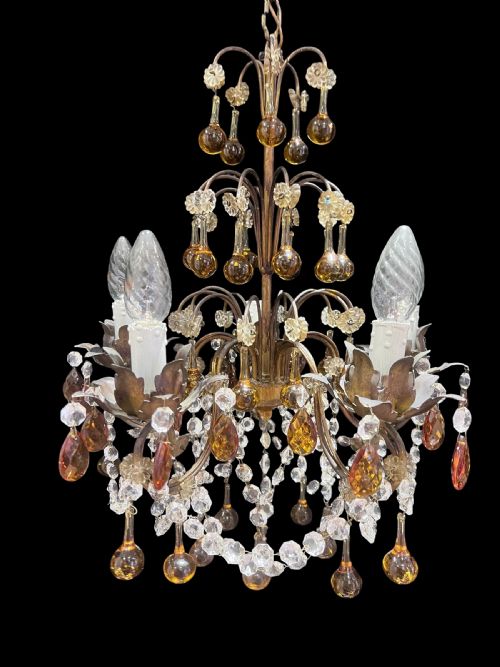
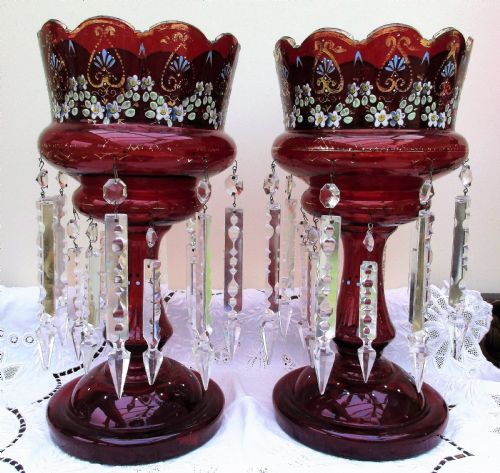
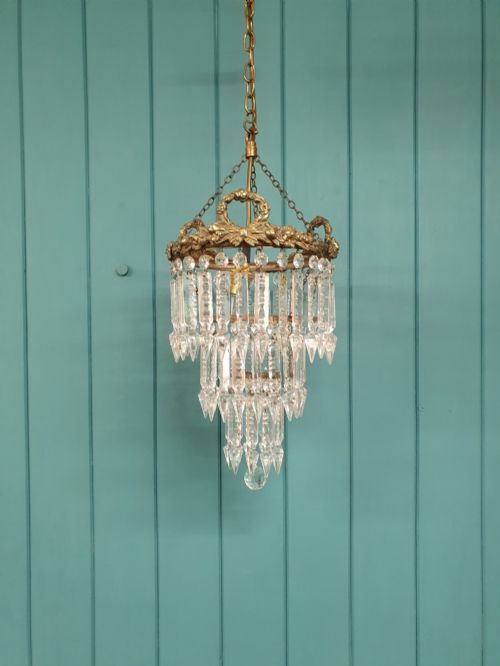
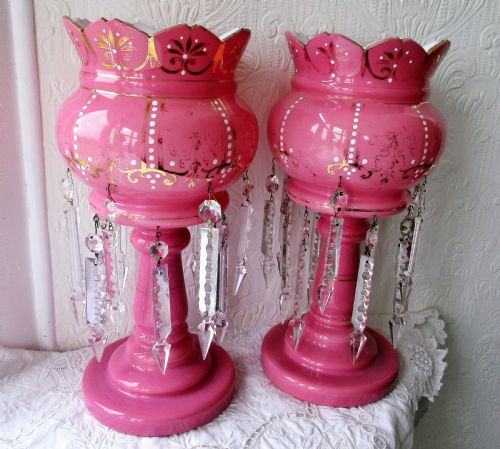
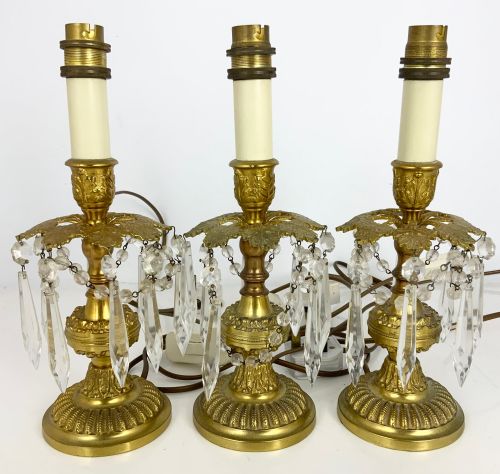
Vintage lustre drops form the dangling glass and crystal pendants that trim chandeliers, mantel lustres, and candelabras across the nineteenth and early twentieth centuries. Buyers searching for vintage lustre drops encounter hanging prisms shaped to refract candlelight and gaslight into sharp spectra across a room. The items on this page span Victorian table lustres, Edwardian small chandeliers, and larger French multi-light fixtures hung with glass drops.
Most examples meet the eye as pairs of mantel lustres in ruby, pink, or green glass, or as cut crystal chandeliers bearing dozens of individual drops. The forms range from simple single candlesticks fitted with pendants to elaborate French rococo revival candelabras and gilt brass fixtures. Victorian and Edwardian periods dominate the selection, alongside pieces dated broadly across the nineteenth century and the nineteen-thirties.
How they were made
Glassmakers shaped these drops from lead crystal, cut glass, and coloured glass, often pairing the pendants with brass, gilt metal, or gilded bronze frames. Craftsmen cut facets into the glass by hand to maximise the refraction of light through each pendant.
Metal components utilise casting and gilding techniques to form the arms and collars from which the glass drops suspend on wire loops or pins. Enamel details and storm shades occasionally accompany the glass bodies on nineteenth-century mantel pieces.
The listings on this page span the Victorian and Edwardian eras, alongside pieces from the 1880s through to the 1930s.
What varies in quality
The precision of the glass cutting and the clarity of the crystal determine the visual impact of the drops when light hits them. Superior pieces show crisp, sharp facets without cloudiness in the glass, and maintain matching sets of pendants without replacements.
The underlying metalwork reveals quality through the weight of the brass or gilded bronze and the finesse of the cast detailing on arms and bases. Complete sets retain their original pendant drops and suspending pins, which preserves the integrity of the design.
The Vintage Lustre Drops Glossary
- Lustre
- A decorative glass or porcelain vase, bowl, or candlestick hung with cut glass pendants designed to reflect light. These pieces often sit on mantelpieces or tables.
- Drop
- An individual pendant of cut glass or crystal suspended from a chandelier, candelabra, or lustre. Drops arrive in various shapes including spears, teardrops, and beads.
- Candelabra
- A branched candlestick holding multiple taper candles, frequently ornamented with crystal drops and glass shades in nineteenth-century interiors.
- Gilt metal
- Base metal treated with a thin layer of gold or gold-coloured wash to simulate solid or heavy-gilt bronze mounts on chandeliers and lamps.
- Cut glass
- Glass decorated by grinding facets into the surface using a wheel, creating sharp edges that scatter light across surrounding walls.
Vintage Lustre Drops: Frequently Asked Questions
What are lustre drops used for?
These glass pendants hang from chandeliers, candelabras, and mantel lustres to multiply the illumination from candles or bulbs by refracting the light.
They serve both a decorative and a functional purpose in period lighting schemes.
How do I clean antique glass drops?
Wash the glass pendants gently in warm soapy water while they remain attached, or remove them individually for careful rinsing and drying with a soft cloth.
Avoid harsh chemical cleaners that can damage vintage glass surfaces or corrode the connecting wire pins.
Are all lustre drops made of crystal?
Makers utilised various grades of glass, ranging from heavy lead crystal to standard pressed glass and coloured glass in ruby, pink, and green.
Cut crystal versions provide the sharpest light refraction, whereas coloured glass focuses on hue and contrast.
How do I date a lustre chandelier?
Dating relies on the style of the metal frame, the method of glass cutting, and the assembly techniques visible in the drops and fixings.
Victorian and Edwardian examples show distinct mounting styles compared to later twentieth-century productions.