


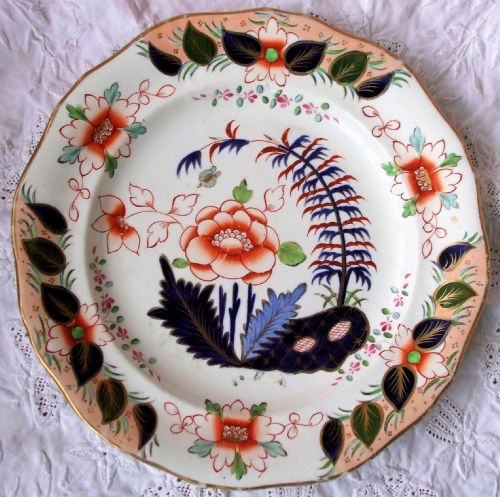
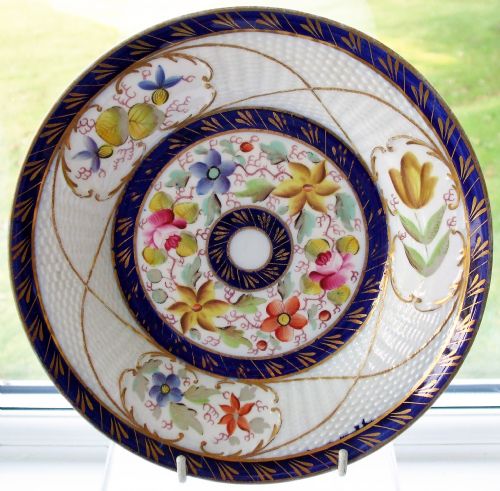


Regency Floral Dish
These pieces known as a regency floral dish bring botanical handpainting and porcelain craftsmanship from the early nineteenth century straight to the table.
Regency Floral Dish
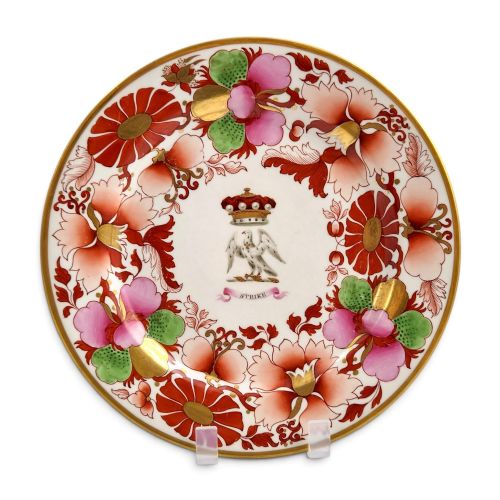
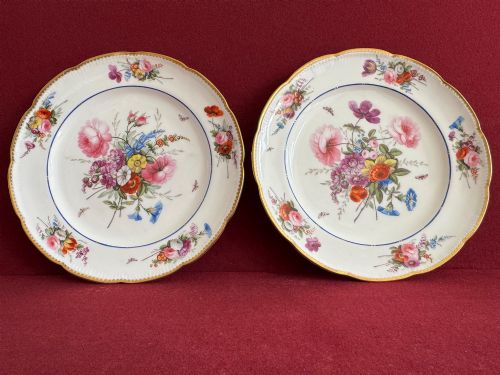
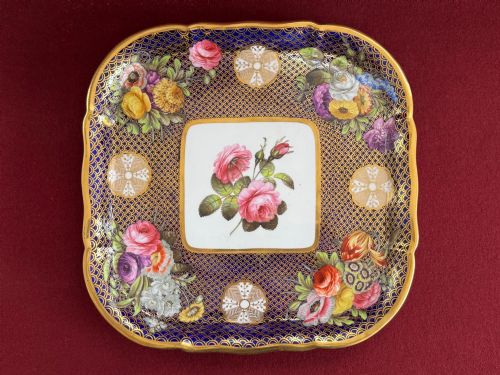
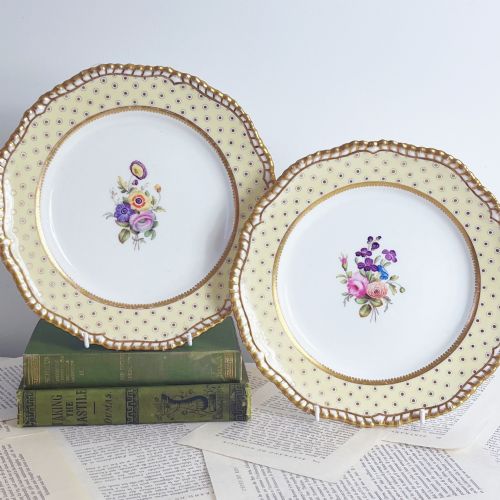
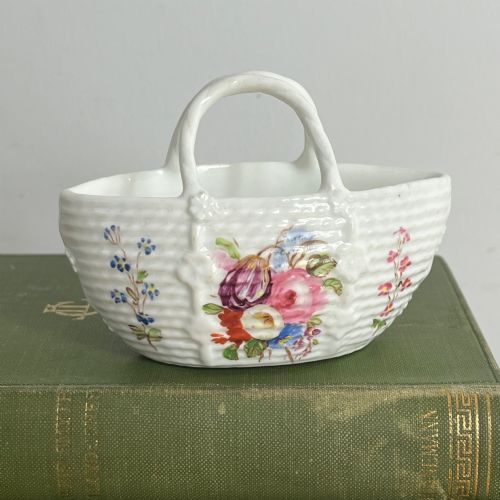
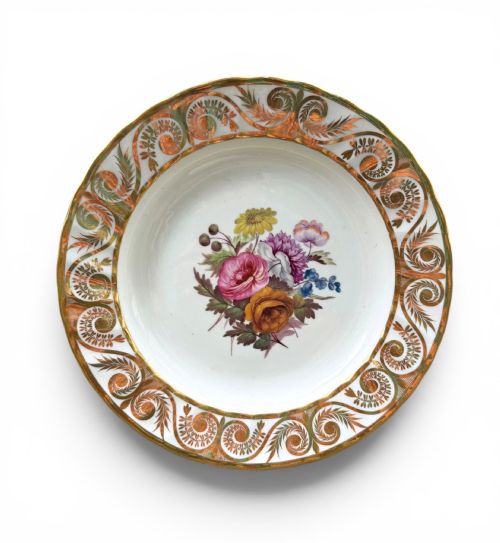
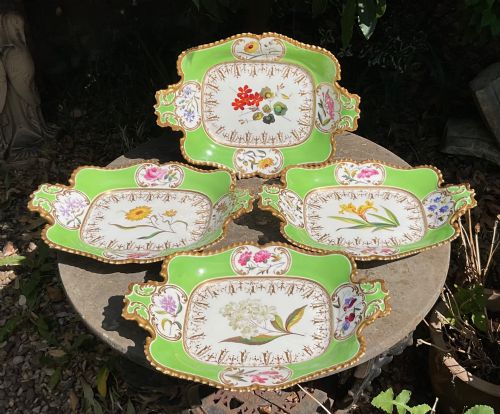
A regency floral dish takes the form of cabinet plates, serving dishes, dessert plates, and decorative bowls created during the nineteenth century, Georgian, and Regency eras. Buyers encounter items ranging from single cabinet plates to matched dessert services and large serving platters.
Many examples originate from notable English factories including Spode, Worcester, Derby, and New Hall. The forms focus heavily on dessert services and display pieces intended for dining rooms of the period.
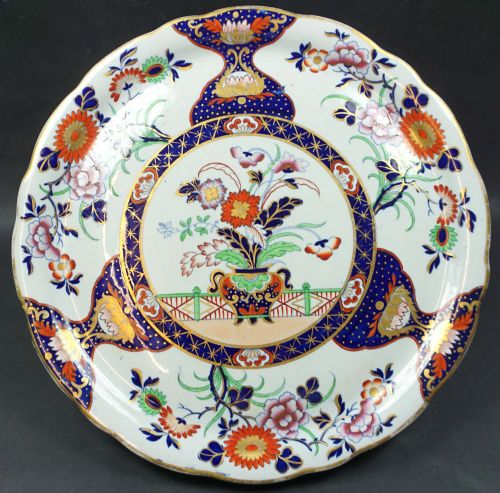
The aesthetic leans towards English Regency and Regency Chinoiserie styles, combining floral motifs with moulded borders and rich glazes.
Materials and production
Potters utilised fine porcelain, ironstone, earthenware, and ceramic as bodies, shaping them into plates, bowls, and baskets. Manufacturers like Mason's relied on robust ironstone for durability, while others used delicate porcelain for cabinet pieces.
Decoration involved handpainted botanical studies, gilding with gold leaf, and enamel work applied directly over or under the glaze. Factories employed skilled painters to execute botanical scenes, fancy birds, and armorial details before final firing.
Regency Floral Dish Retail Price Guide 2026
Typical asking prices for regency floral dish among the pieces listed under this phrase on Sellingantiques today, from the lower quarter to the upper quarter. They describe what is for sale here now, not the wider market.
The listings show items created from porcelain, ironstone, and ceramic, decorated with gold leaf, enamel, and handcoloured glazes across the Regency period.
Judging quality in early ceramic ware
Quality rests upon the precision of the handpainting and the crispness of the porcelain moulding. Superior pieces display finely detailed botanical brushwork by named decorators rather than mass-produced transfer printing.
The application of gold leaf and the smoothness of the enamel glaze separate ordinary factory output from high-end cabinet pieces. Well-preserved gilding and intact porcelain bodies indicate careful handling and superior initial manufacture.
Spode·Flight Barr and Barr·H and R Daniel·Derby·Hicks and Meigh·John Davenport·New Hall·Minton·Coalport·Ridgway·Nantgarw·Mason·Bloor Derby·Chamberlains Worcester
The Regency Floral Dish Glossary
- Cabinet plate
- A decorative plate intended for display in a cabinet rather than for everyday dining use. These items typically feature elaborate handpainted scenes and gilt borders.
- Ironstone
- A heavy, durable type of earthenware patented in the nineteenth century. It resists chipping better than soft-paste porcelain while accepting enamel colours well.
- Gilding
- The application of gold leaf or gold powder to ceramic surfaces for decorative effect. This technique highlights moulded rims and handles on Regency tableware.
- Enamel
- Opaque glass used to add permanent coloured decoration over the glazed surface of pottery. Artisans fired the pieces multiple times to fix the pigments.
- Dessert service
- A matching set of plates, bowls, and serving dishes used for the final course of a formal meal. These collections often share a unified floral pattern.
Regency Floral Dish: Frequently Asked Questions
What is a regency floral dish used for?
These dishes served desserts, fruits, and small sweetmeats during formal nineteenth-century dining occasions. Later owners often display them on walls or within cabinets as decorative art.
Larger versions functioned as serving platters or vegetable tureens for the dinner table. Today, collectors utilise them primarily for display or occasional seasonal dining.
How do I identify a Regency period piece?
Look for characteristic design elements such as apple green grounds, Imari palettes, and moulded botanical borders typical of the early eighteen hundreds. Factory marks on the underside often provide specific clues to the exact manufacturing decade.
Weight and paste composition also help distinguish true Regency porcelain from later Victorian reproductions. Fine translucency and handpainted enamel work point directly to the Georgian era.
Are these dishes safe to use for food?
Most pieces from this era contain lead in their glazes and exhibit wear to the delicate handpainted enamels and gold leaf. Regular use can damage the historic surface and degrade the painted floral motifs.
Collectors generally advise keeping these ceramics as display items rather than putting them into daily service. Handwashing is essential if they ever encounter food.