
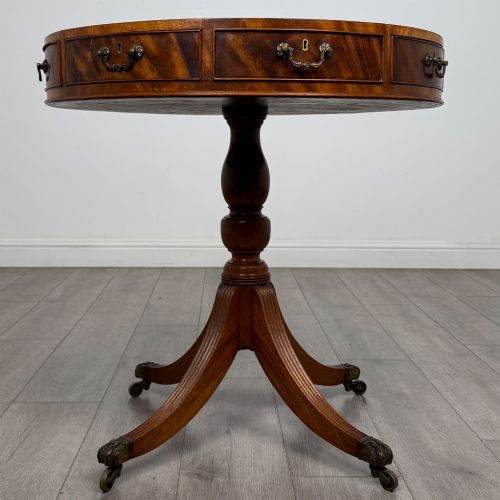
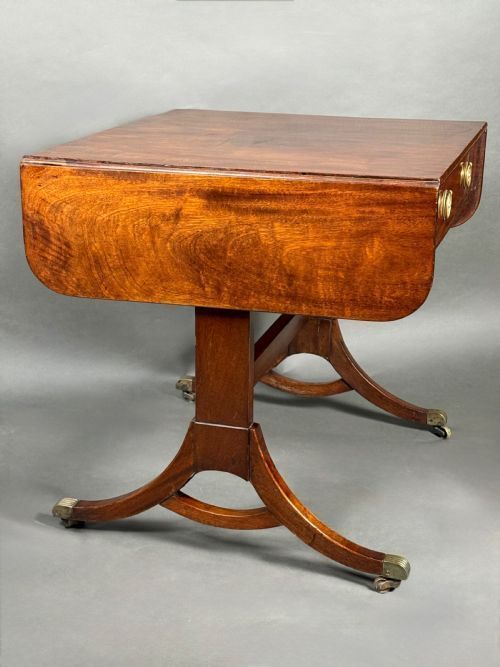
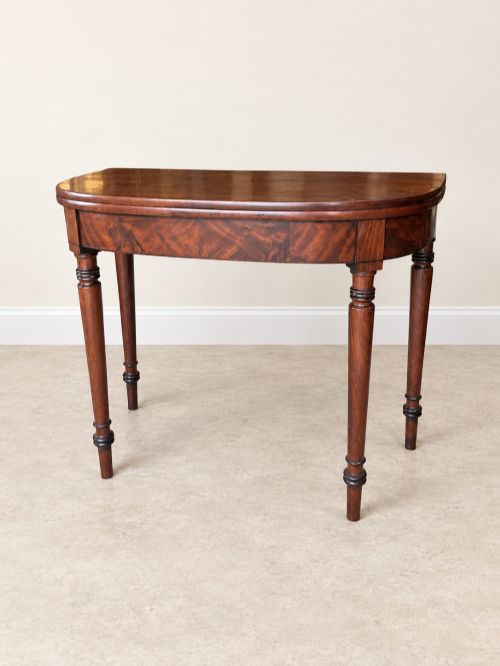
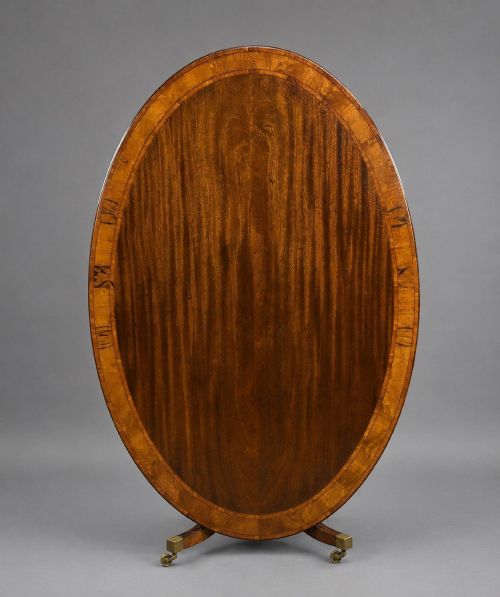
Regency Flame Mahogany Table
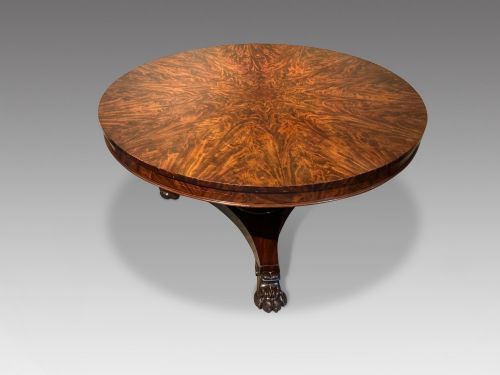
A regency flame mahogany table brings dramatic grain patterns and classical proportions into a room, spanning dining, breakfast, and sofa table forms.
Regency Flame Mahogany Table
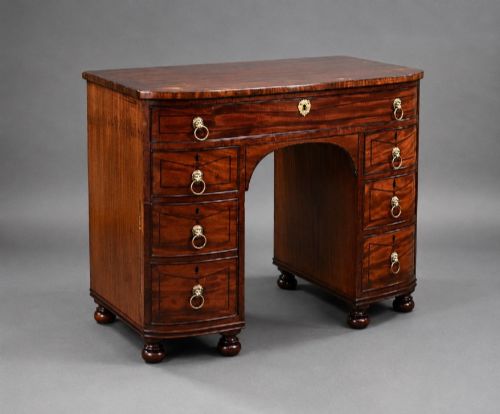
When searching for a regency flame mahogany table, buyers encounter a variety of forms designed for dining, tea, writing, and display. The selection ranges from substantial multi-pillar dining tables to smaller Pembroke, console, and sofa tables.
Most examples originate from the nineteenth century, including the Regency, George III, George IV, and William IV periods, alongside later twentieth-century revivals. Dining tables and circular breakfast tables appear frequently alongside smaller occasional pieces.
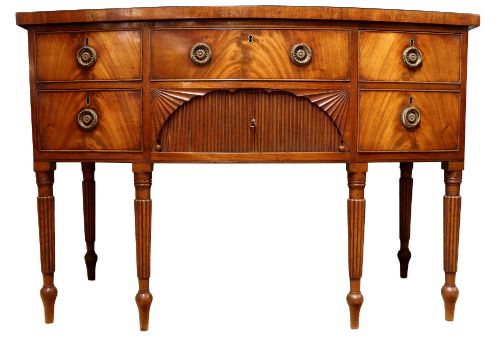
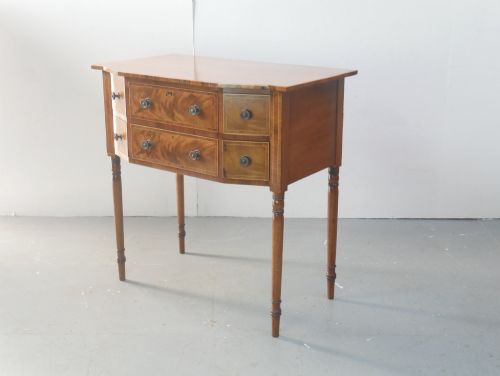
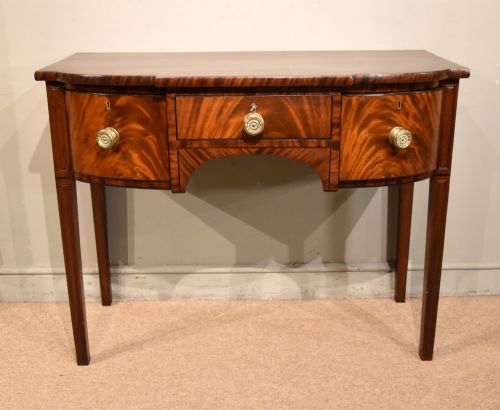
These items served domestic roles in drawing rooms and dining rooms, functioning as folding tea tables, centre tables, and sideboards. Their forms reflect classical architectural influences popular during the early nineteenth century and later revival eras.
Materials and construction
Cabinetmakers utilised timber veneers applied to a secondary wood base to create the distinctive patterned surfaces. Flame mahogany veneer provided the characteristic figured grain, often complemented by solid mahogany frames and structural supports.
Brass inlays, handles, and castors frequently appear on pedestals and legs, adding metallic contrast to the dark timber. Some examples incorporate secondary woods such as maple, alongside leather inserts on writing surfaces and glass components.
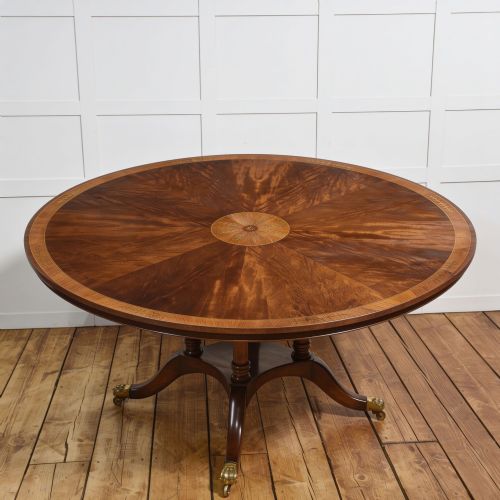
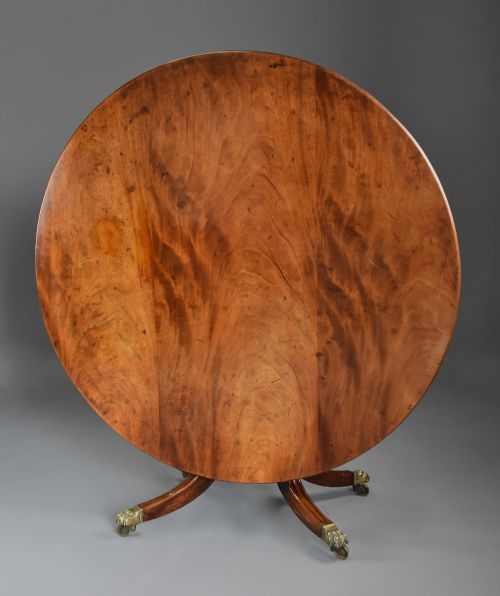
Construction techniques include tilt-top mechanisms for breakfast tables, drop leaves for Pembroke tables, and pillar-and-scroll pedestals for larger dining and centre tables. Crossbanding with contrasting timber borders frames the figured top panels.
Regency Flame Mahogany Table Retail Price Guide 2026
Typical asking prices for regency flame mahogany table among the pieces listed under this phrase on Sellingantiques today, from the lower quarter to the upper quarter. They describe what is for sale here now, not the wider market.
Materials recorded across the inventory include flame mahogany veneer, solid mahogany, brass, leather, maple, and marble.
Assessing craftsmanship
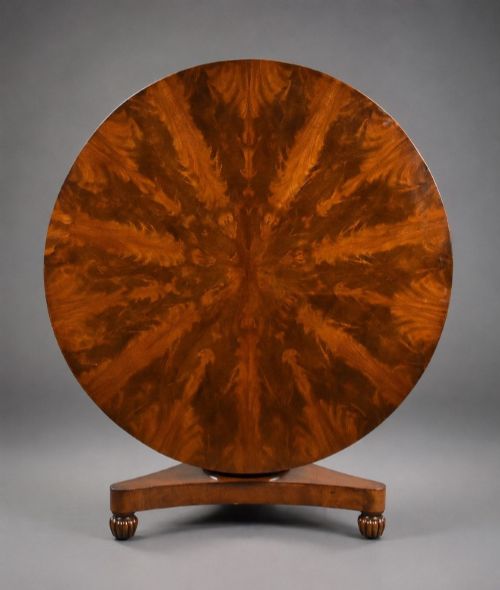
The visual impact of the surface veneer dictates much of the visual appeal, separating standard construction from superior cabinet work. Richly figured flame patterns that match symmetrically across a fold-over top or circular table indicate careful selection by the maker.
The integrity of the timber ground and the precision of brass inlay work reveal the level of workshop skill involved in production. Tables retaining patinated surfaces and original hardware demonstrate better preservation over time.
Structural stability in pedestals, legs, and drop-leaf mechanisms determines daily utility. Pieces with balanced proportions and robust joints command greater regard among collectors and users alike.
Walker-Lancaster·Webster
The Regency Flame Mahogany Table Glossary
- Flame mahogany veneer
- A thin slice of timber cut from the fork of the mahogany tree to produce a dramatic, flame-like grain pattern. This highly figured wood forms the primary decorative surface on top panels.
- Crossbanding
- A border of veneer laid around the edge of a table top with the grain running perpendicular to the central panel. It frames the main flame mahogany surface.
- Pembroke table
- A small rectangular table featuring two hinged drop leaves on opposing sides. It often includes a single drawer and slender legs.
- Tilt-top table
- A table designed with a mechanism allowing the top to pivot vertically when not in use. This feature enabled the furniture to stand flat against a wall to save space.
- Sofa table
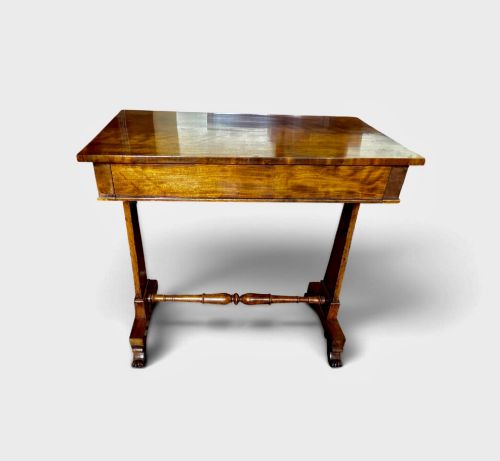
- A rectangular occasional table traditionally placed in front of a sofa, typically fitted with two small drawers. It rests on end supports or pillars connected by a stretcher.
Regency Flame Mahogany Table: Frequently Asked Questions
How do I use a fold over tea table?
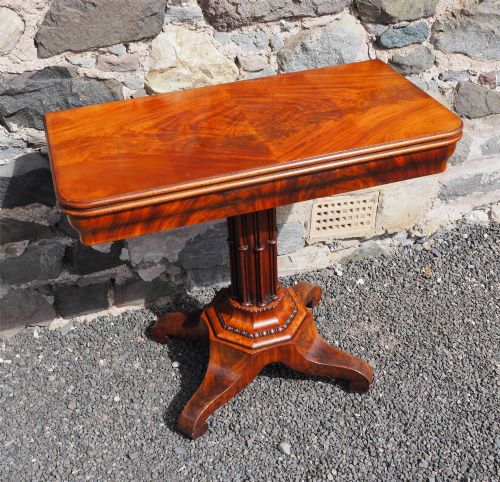
A fold over tea table functions as a compact console or side table against a wall when closed. Opening the hinged top reveals a larger surface originally intended for serving tea.
Supporting the folded leaf requires swinging out the rear leg or rotating the top frame. This design allows flexible use in modern dining and living spaces.
Where should I place a centre table?
A centre table stands freely in the middle of a room rather than against a wall. This placement showcases the figured timber and round or D-shaped forms from all angles.
Placing one in a hallway or drawing room creates a focal point for lamps, books, or decorative objects. Ensure sufficient walking space surrounds the piece for daily movement.
How do I distinguish Regency from revival pieces?
Period pieces from the early nineteenth century exhibit construction methods, timber maturity, and patination typical of Georgian and Regency workshops. Subtle wear patterns and hand-cut joinery indicate original age.
Later Edwardian and twentieth-century revival items often display uniform timber coloration and machine-assisted construction techniques. Examining secondary woods and internal framing helps clarify the date of manufacture.
What is a tilt top breakfast table used for?
A tilt top breakfast table served morning meals in private apartments before being pivoted upright and moved aside. The pivoting mechanism saved valuable floor space in nineteenth-century homes.
Today, these tables function as dining or display surfaces while retaining the historical capability to store flat against a wall.