


William IV Fold Over Table
A william iv fold over table turns from a compact console into a proper gaming or tea surface, bringing sturdy nineteenth-century utility to a sitting room.
William IV Fold Over Table
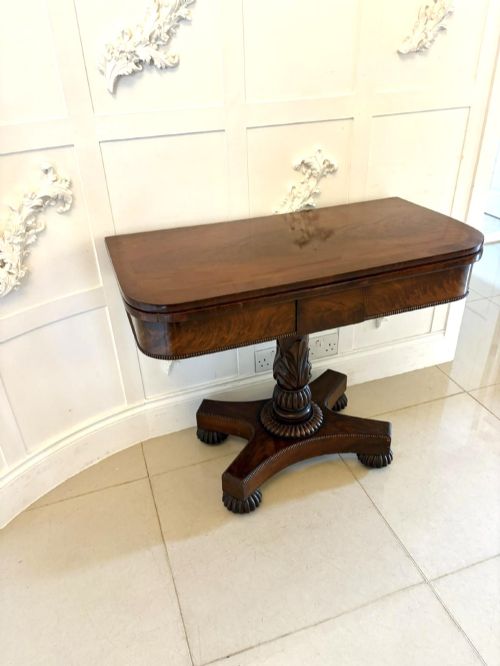
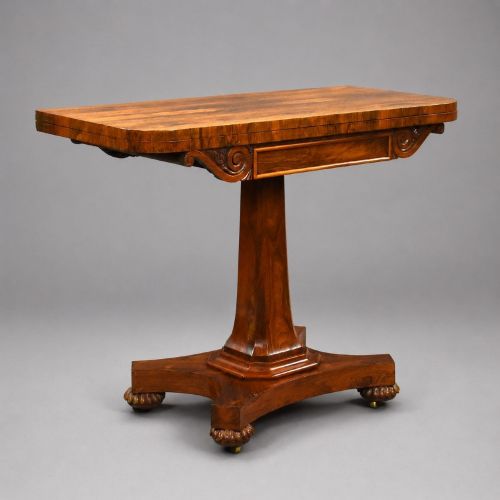
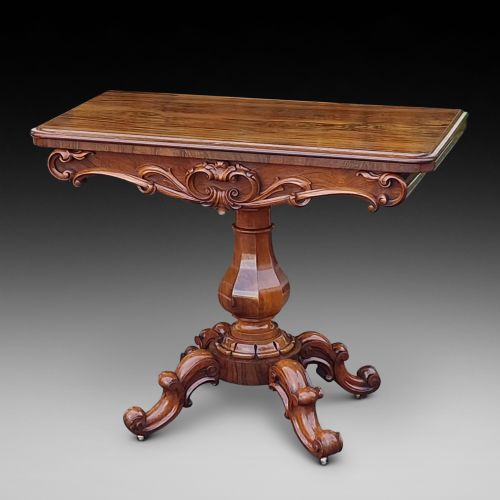
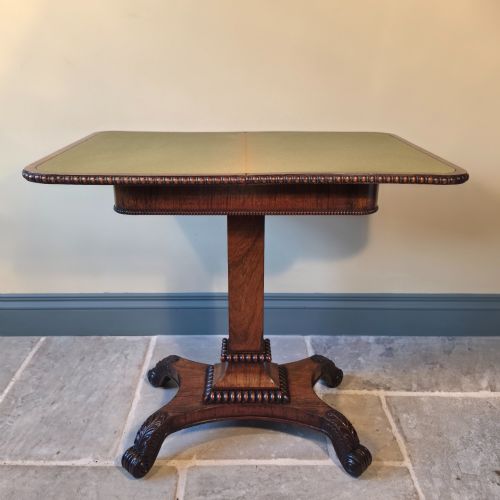
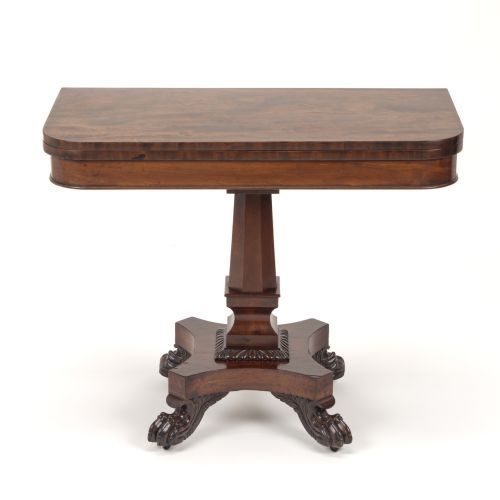
A william iv fold over table functions as a versatile piece of furniture designed to adapt from a modest side console into a larger surface for cards, tea, or supper. The examples seen here belong primarily to the nineteenth century, aligning with the William IV, Regency, and early Victorian periods.
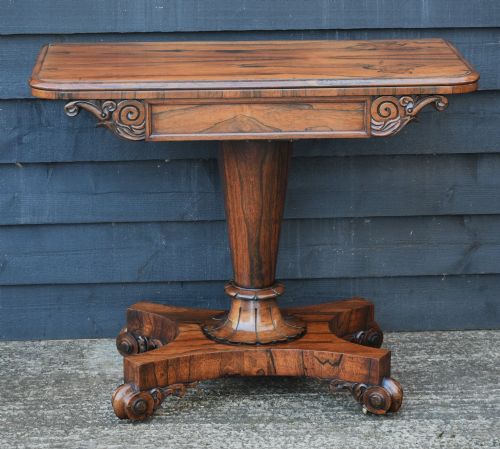
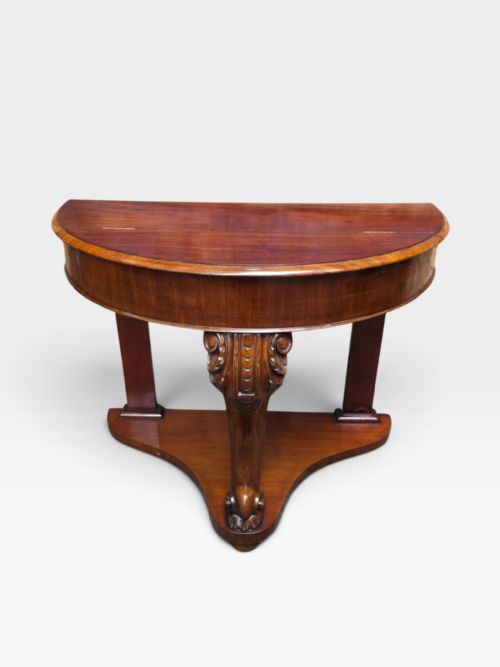
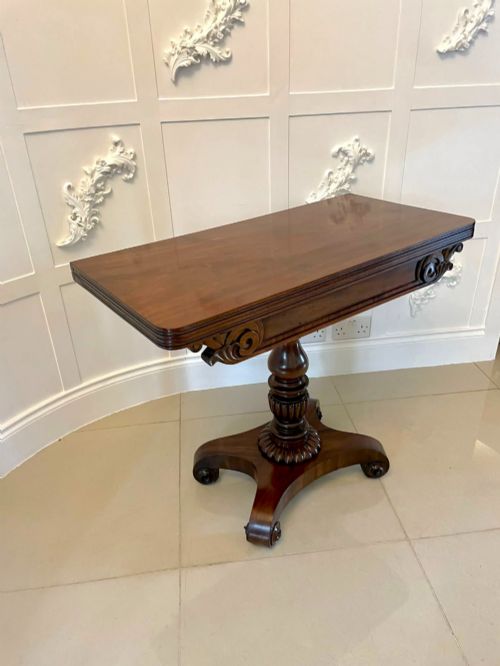
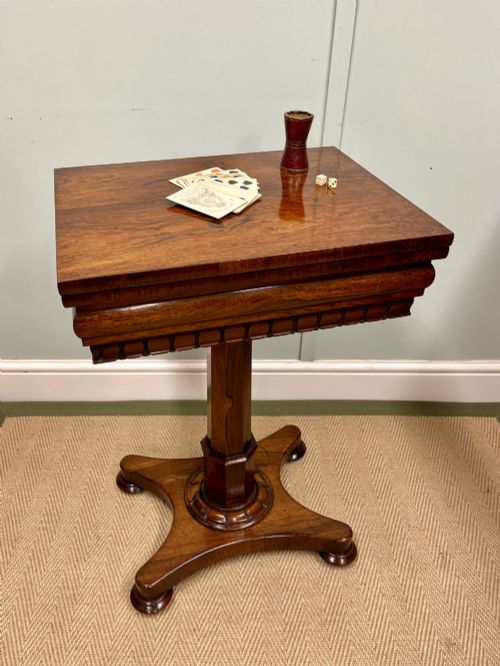
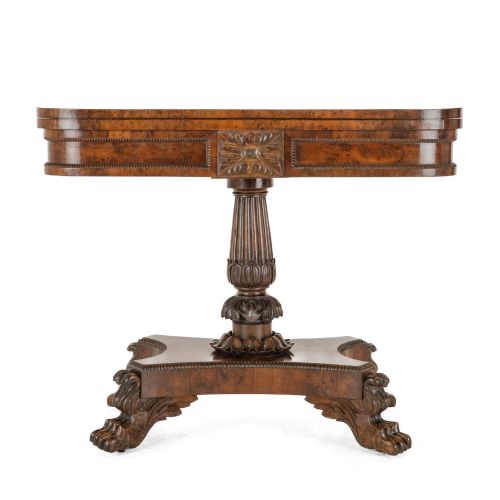
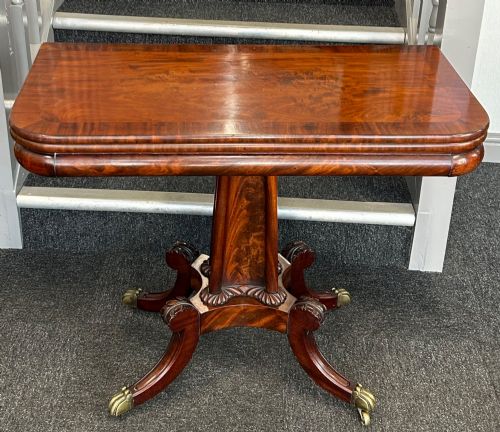
Most pieces encountered on this page function as card tables, tea tables, or games tables, featuring a hinged top that swivels and opens flat. Formats range from D-end consoles to rectangular pedestals supported by robust central columns and carved feet.
Makers of the era utilised rich timber to create striking visual impact in domestic interiors, employing clever mechanisms to conceal storage wells for gaming counters or writing equipment beneath the folding leaf.
Materials and Construction Techniques
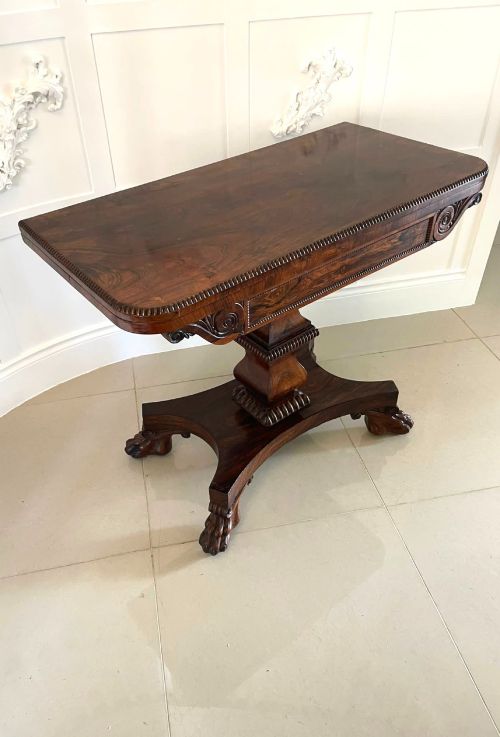
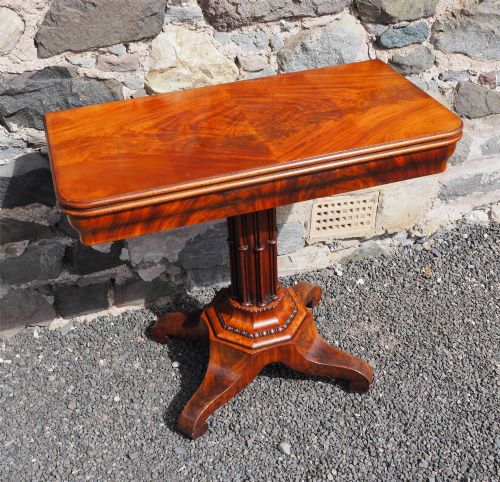
Cabinetmakers constructed these tables using solid woods and elaborate veneers, with mahogany and rosewood dominating the surviving pieces alongside select examples in burr yew and flame mahogany. Timber selection prioritized rich grain patterns and deep natural tones, often highlighted on the rotating top leaf.
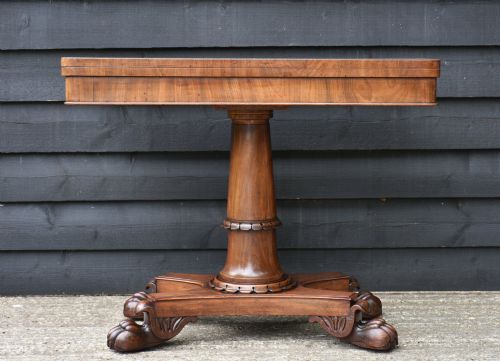
The underlying architecture relies on heavy pedestal bases, sometimes featuring carved paw feet, dolphins, or platform supports to bear the weight of the pivoting top. Interior surfaces of card tables typically feature baize linings intended to cushion dice and cards during play.
Listings feature nineteenth-century furniture predominantly in rosewood and mahogany, encompassing both pedestal and console formats.
Distinctions in Craftsmanship
The distinction between standard production and top-tier work rests on the quality of the timber preparation and the precision of the pivoting hinge mechanism. Superior pieces display carefully matched flame veneers and substantial secondary woods that ensure the leaves meet flush when closed.
Carving detail on the pedestal and feet separates workshops of higher repute from ordinary cabinetmakers, with crisply rendered acanthus leaves or animal motifs indicating greater investment of skilled labour. The stability of the central pillar and the smoothness of the swivel action dictate the enduring utility of the piece.
Gillows·William Trotter
The William IV Fold Over Table Glossary
- Fold-over
- A table top designed with a hinged leaf that doubles the surface area when opened and supported. This mechanism allows a narrow side console to transform into a dining or gaming surface.
- Pedestal
- A central columnar support rising from a platform base rather than traditional four legs. This structure provides stability and allows adequate knee room for seated guests.
- Baize
- A coarse woolen fabric used to line the interior of card and games tables. It provides a durable, tactile playing surface that prevents counters and cards from sliding.
- Flame mahogany
- A veneer cut from the branch junction of the mahogany tree, showing a distinctive flickering flame pattern. Cabinetmakers prized this figure for prominent display on table tops.
- Demi-lune
- A half-moon shape characteristic of certain console and tea tables designed to sit flush against a wall. When opened, the circular top reveals a polished timber surface.
William IV Fold Over Table: Frequently Asked Questions
How do I use a fold over table?
Swing the hinged top leaf upward and rotate it ninety degrees to rest securely over the framework, then lower it flat to reveal a spacious surface.
Interior compartments beneath the folded top serve well for storing small items like playing cards or tea accessories when not in active use.
What is the difference between a tea table and a card table?
Tea tables generally feature polished timber surfaces intended for serving refreshments, whereas card tables usually conceal a baize-lined interior designed for gaming.
Both share the same mechanical principle of a folding top, but their internal construction reflects their specific domestic purpose.
How can I tell a William IV table from a Regency one?
William IV pieces tend to be heavier and more robust in their proportions, often featuring bolder pedestal bases and substantial carved paw feet.
Regency examples frequently display lighter classical restraint, though the two styles overlap closely in the transitional period around eighteen thirty.
Where should I place a console table in my home?
These tables sit comfortably against a hallway or drawing-room wall as a narrow decorative console when closed.
Pulling the piece into the centre of the room allows the top to unfold fully for entertaining or playing games.