
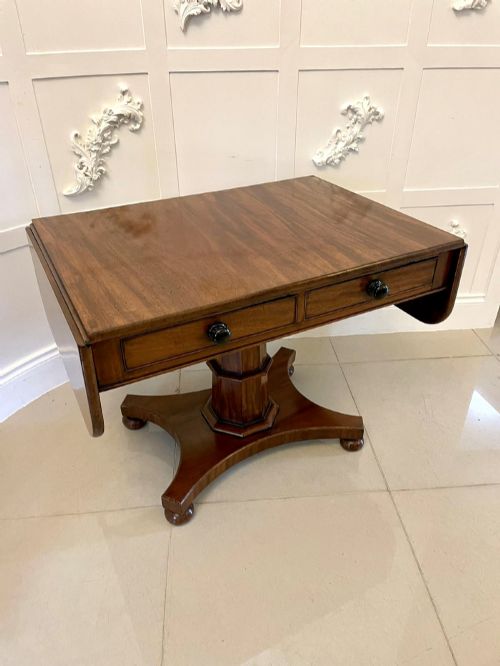
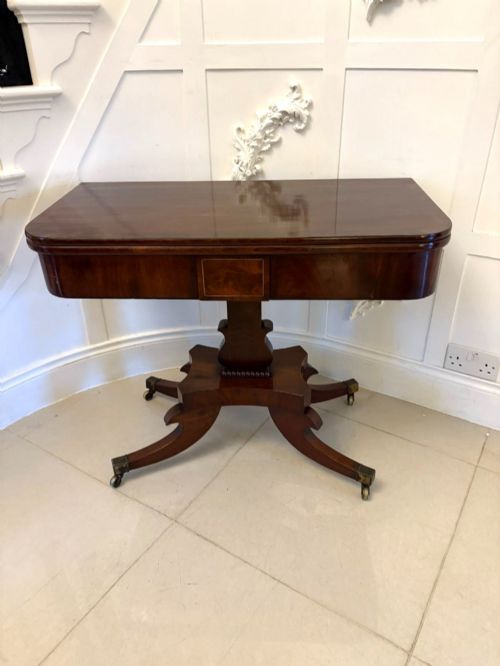
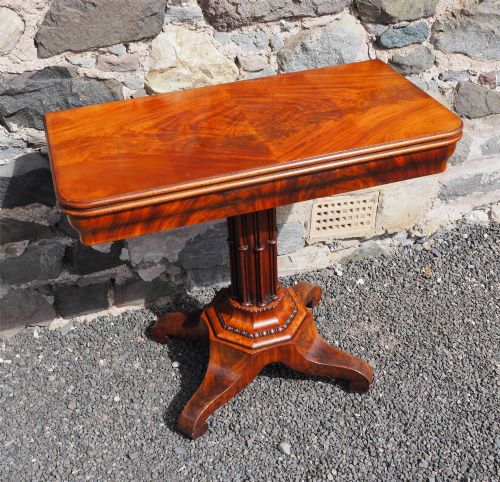
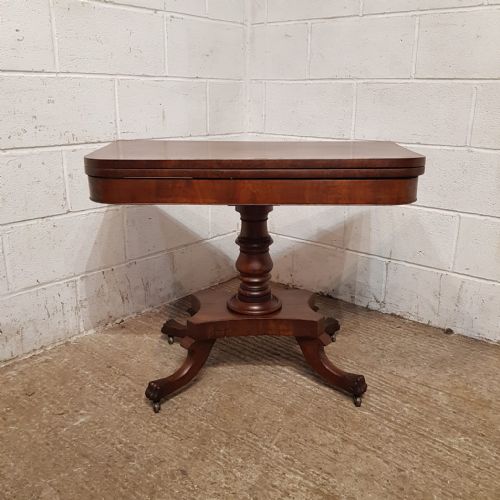





Quadruped Pedestal Console Table
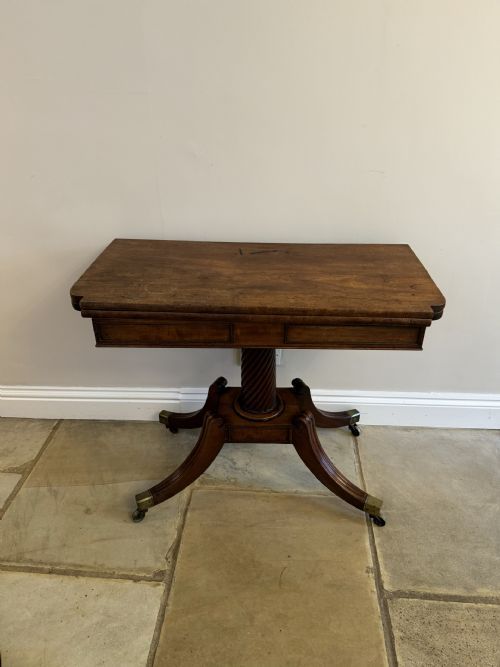
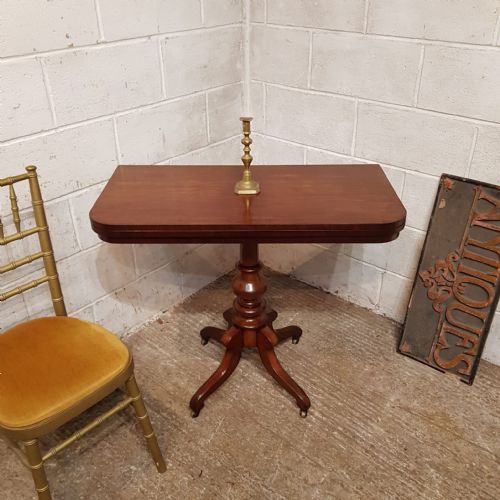
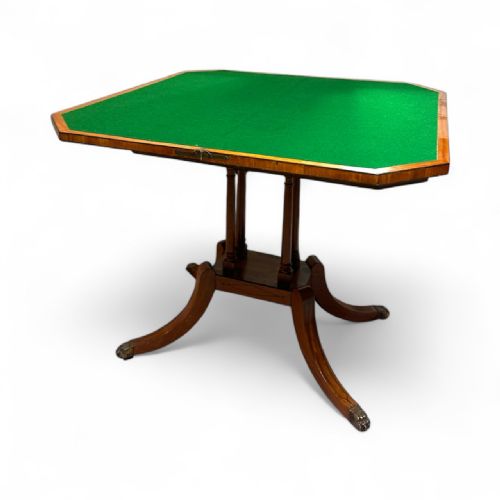
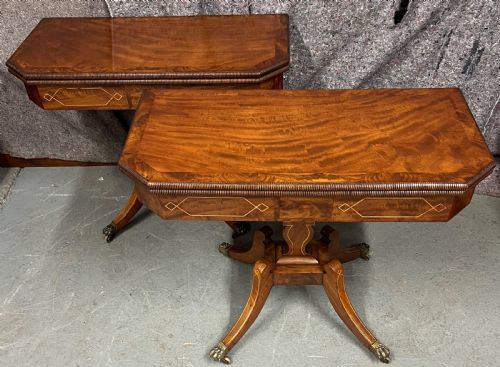
These quadruped pedestal console table pieces combine formal presence with clever folding tops, offering a versatile centrepiece for a period room.
Quadruped Pedestal Console Table
A quadruped pedestal console table usually appears on this page under related forms such as card tables, tea tables, games tables, and sofa tables from the Georgian, Regency, and Victorian eras. These versatile tables span the nineteenth century, including specific dates from eighteen hundred through to eighteen eighty, and originate across Georgian, Regency, William IV, and Victorian stylistic movements.
Buyers are most likely to encounter mahogany and rosewood fold-over designs that transform from compact side pieces into larger surfaces for dining or games. The inventory relies heavily on pedestals supported by four-footed bases, uniting utility with formal nineteenth-century architectural styling.
Materials and construction
Cabinet makers utilised dense timbers such as mahogany, rosewood, burr walnut, and satinwood, often applying flame mahogany veneer over solid secondary woods to create rich surface patterns. Decorative contrast was achieved through intricate brass mounting and fine inlay work, particularly on Regency examples.
The structural stability of a quadruped pedestal console table depends upon a solid central column anchored to a four-way spreading base, which supports the weight of hinged tops designed for folding over.
Listings feature mahogany, rosewood, burr walnut, and satinwood across the nineteenth century.
Judging the execution
The distinction between standard and superior pieces rests on the choice of timber and the precision of the cabinet work, particularly in the selection of figured mahogany or highly grained burr walnut. Finer examples display meticulous attention to brass inlay and gilding, whereas simpler versions rely purely on the natural grain of the wood.
Proportion and the crispness of carved details on the pedestal base also separate workshop tiers, showing how well the timber was selected and matched across the fold-over top.
William Trotter
The Quadruped Pedestal Console Table Glossary
- Quadruped
- Having four feet or supports. In these tables, it refers to the four-way base spreading from the central pedestal.
- Console table
- A table fixed to a wall or designed to stand against one. Many examples on this page function as side or pier tables.
- Flame mahogany veneer
- Thin slices of timber cut to display a flickering, flame-like grain pattern. This technique decorated the tops of tea and card tables.
- Fold-over top
- A hinged table surface that opens to double its area. This mechanism allows a compact side table to serve as a card or tea table.
- Satinwood
- A durable, yellowish timber prized for its smooth sheen. It appears alongside darker woods like rosewood for contrast.
Quadruped Pedestal Console Table: Frequently Asked Questions
What is a quadruped pedestal console table?
It is a sturdy nineteenth-century table supported by a central pillar and four spreading feet, often featuring a fold-over top.
These designs served multiple domestic functions in drawing rooms and halls.
How were these tables used originally?
They functioned as side tables against walls, opening up when needed for tea, card games, or writing.
The hinged leaves allowed households to save space during the day.
How do I care for rosewood and mahogany?
Keep the wood away from direct sunlight and sudden temperature changes to prevent the veneer from drying out.
Regular dusting with a dry cloth maintains the natural finish without building up wax.
How do I tell Regency from Victorian pieces?
Regency tables often incorporate brass inlay, gilding, and rosewood veneers influenced by classical antiquity.
Victorian versions tend to use walnut or heavier mahogany with different proportions and carving styles.