
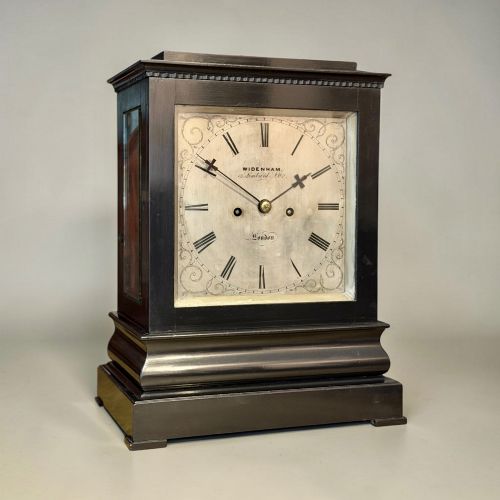
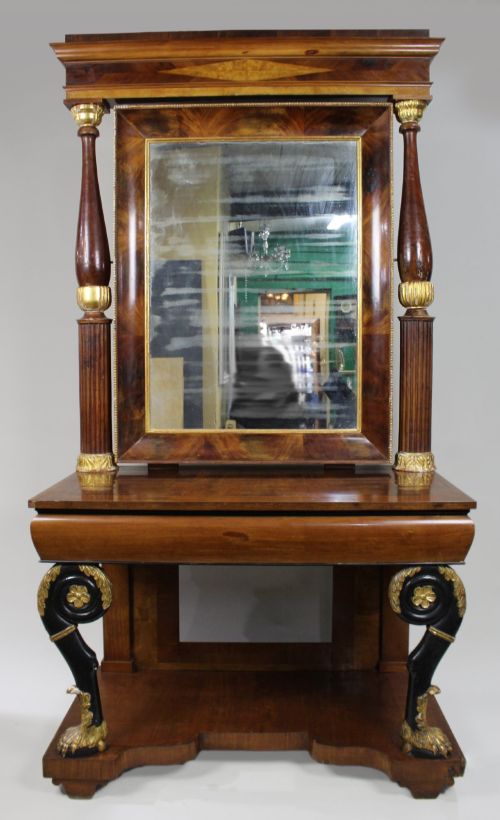
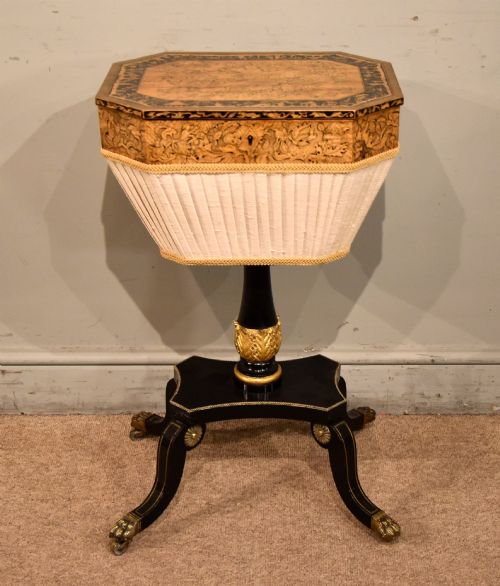
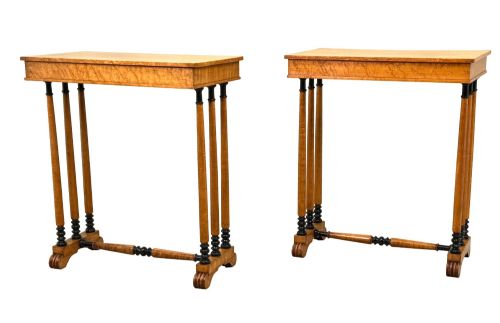
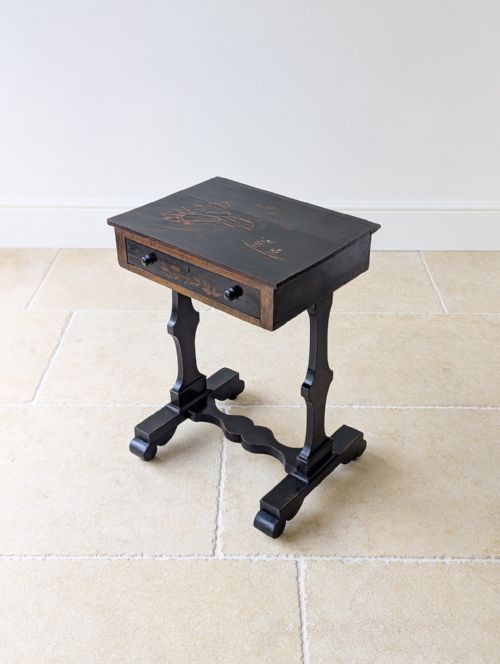
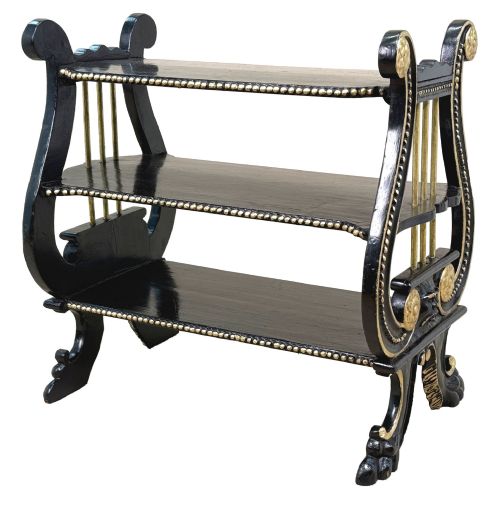
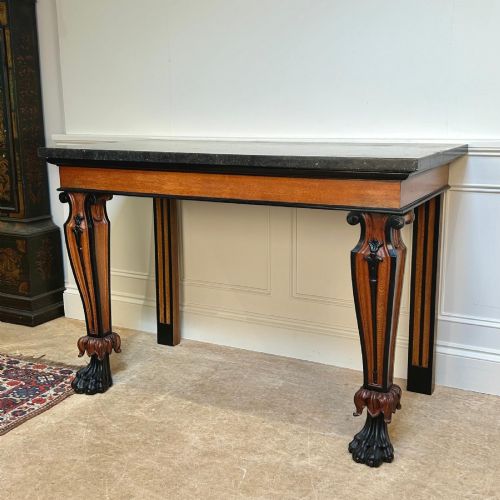
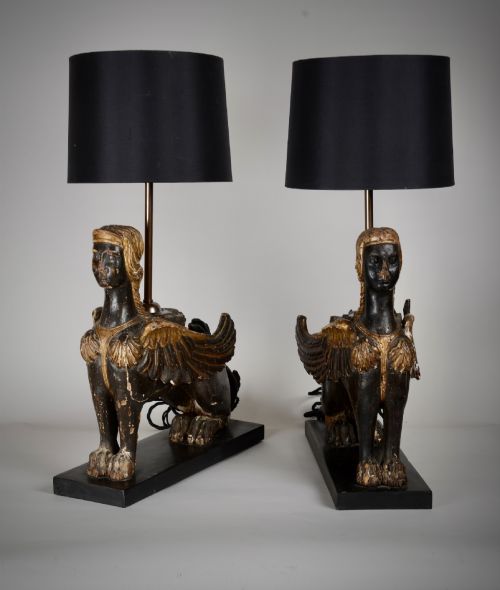



Regency Ebonised Table
Regency ebonised tables bring dark, polished surfaces and neoclassical grace to a room, offering both practical function and striking decorative presence.
Regency Ebonised Table
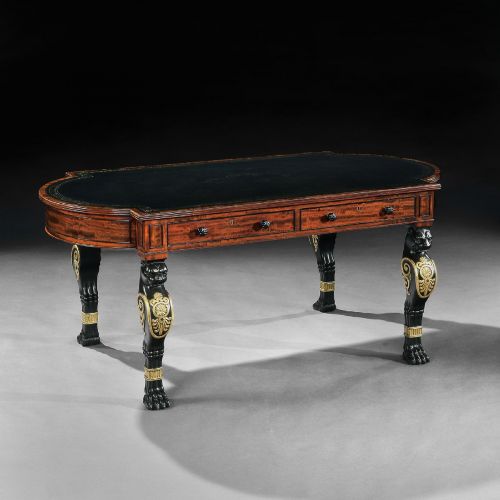
When you search for a regency ebonised table, you encounter diverse forms designed for specific domestic uses within nineteenth-century interiors. The selection spans card tables, console tables, work tables, and larger centre pieces spanning the Regency, Georgian, and Victorian periods.
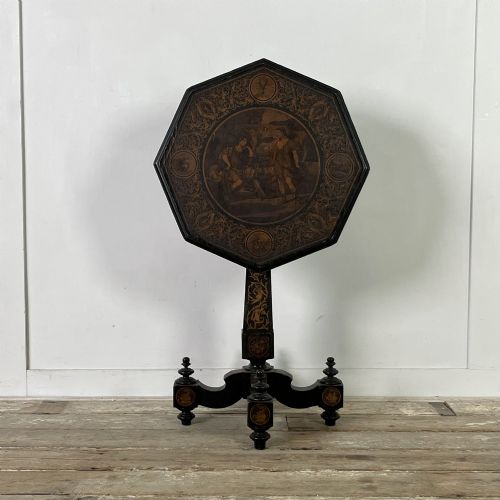
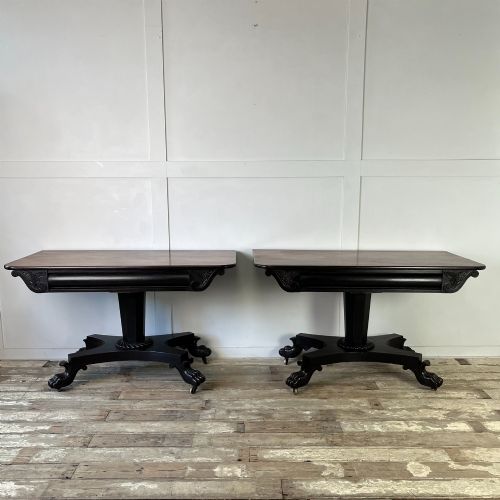
You are most likely to meet ebonised occasional tables, card tables, and console tables featuring dark finishes alongside brass inlay, gilt details, or specimen tops. These surfaces reflect the neoclassical taste for dramatic contrast and classical motifs.
The materials recorded in these listings extend beyond simple blackened wood to encompass mahogany, coromandel, brass, and marble inserts. Makers utilised varied timbers, finishing them to emulate costly ebony while incorporating intricate penwork or lacquer.
What varies in quality
The distinction between standard production and master craftsmanship lies in the precision of the brass inlay, the intricacy of any penwork, and the selection of secondary timbers. Finer examples display meticulous joinery, original gilding, and superior stability in their pedestals and fold-over mechanisms.
Surface preservation heavily influences overall character, as worn finishes, original plates on mirrors, and intact micro-mosaic or marble tops elevate an item. The integration of decorative elements like parcel gilt carving or specialised specimen woods marks the upper tier of the range.
Listings feature ebonised wood alongside mahogany, coromandel, and amboyna across Georgian, Regency, and Victorian periods.
Widenham of London·Desbois and Wheeler·John Bull of Bedford·Des Granges·Grimaldi and Johnson·Berguer·John Leroux
The Regency Ebonised Table Glossary
- Ebonised wood
- Timber treated or finished to resemble solid ebony through staining or black polishing. This technique gained immense popularity during the Regency and Victorian periods for its striking contrast.
- Penwork
- An intricate decorative technique utilising India ink applied with a quill to create fine, etched designs on wood surfaces. It frequently appears on work and games tables from the early nineteenth century.
- Parcel gilt
- Portions of an object highlighted with applied gold leaf or paint against a contrasting ground. This method emphasises carved details and mouldings.
- Console table
- A table designed to stand against a wall, frequently secured with brackets or resting on front legs. These pieces often feature marble or wooden tops.
- Specimen wood
- Timbers selected for their varied natural grains, colours, and origins, arranged in geometric patterns or tabletops. Collectors prize these for their visual diversity and craftsmanship.
Regency Ebonised Table: Frequently Asked Questions
What is a regency ebonised table?
A regency ebonised table is a piece of furniture finished in dark, polished black to mimic ebony, produced during the early nineteenth century or in later revival styles. These items encompass card tables, console tables, and occasional stands.
They reflect the neoclassical taste for dramatic colour contrast, often incorporating brass inlay, gilt highlights, and intricate penwork. Their forms range from small work tables to large centre pieces designed for principal rooms.
How were these tables used originally?
These tables served multiple domestic functions in Regency and Victorian homes, acting as surfaces for card games, needlework, writing, or display. Fold-over tops allowed game and card tables to double as side consoles when not in use.
Centre tables stood prominently in the middle of reception rooms to hold lamps and decorative objects. Work tables provided specialised compartments for sewing paraphernalia and personal correspondence.
How do I style an ebonised table today?
An ebonised table anchors a modern or traditional interior by providing a strong, dark visual accent that contrasts with lighter walls and fabrics. Placing a lamp or ceramic object on top highlights the reflective quality of the polished surface.
Because these pieces feature neutral black tones, they pair easily with diverse wood finishes and colour palettes. They function effectively as bedside tables, lamp stands, or prominent hallway consoles.
How do I tell a Regency period table apart from a Victorian copy?
Distinguishing periods involves examining construction methods, secondary timbers, and the style of brass inlay or carving. Regency pieces typically exhibit lighter proportions and specific neoclassical motifs like sabre legs and refined brass stringing.
Victorian copies and later revivals often display heavier construction, different interior carcase woods, and distinct finishing techniques. Comparing the secondary woods beneath or inside the piece reveals its true age.