


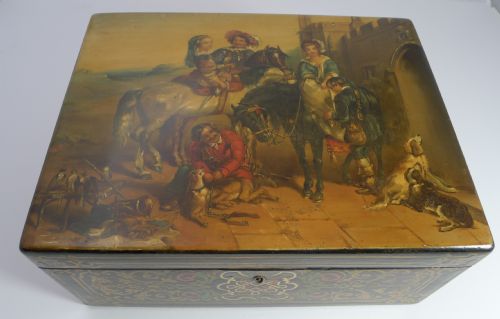
Antique Lacquer Work Table
These antique lacquer work tables are practical sewing pieces and intricate display surfaces, offering compartments for needles and threads wrapped in polished black and gilt finishes.
Antique Lacquer Work Table
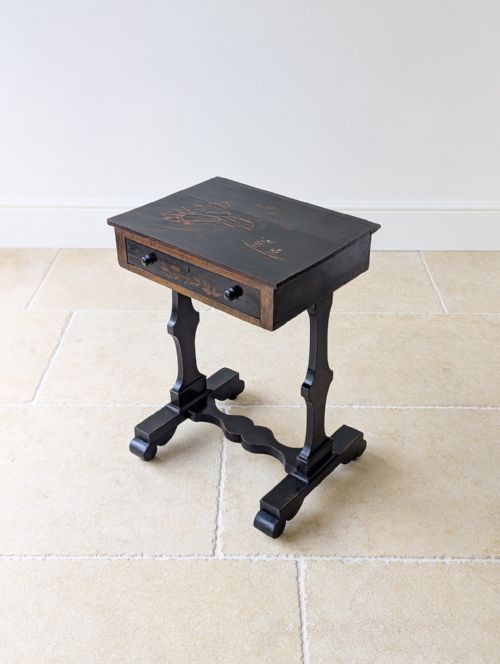
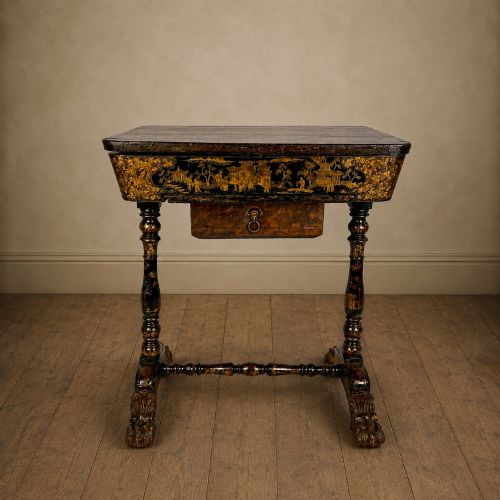
An antique lacquer work table combines the utility of a sewing box with the decorative elegance of an occasional table, featuring fitted interiors designed for needlework and small crafts. Buyers browsing this selection most frequently encounter 19th-century examples, particularly Regency and Victorian pieces showing Chinese Export influence or Chinoiserie decoration.
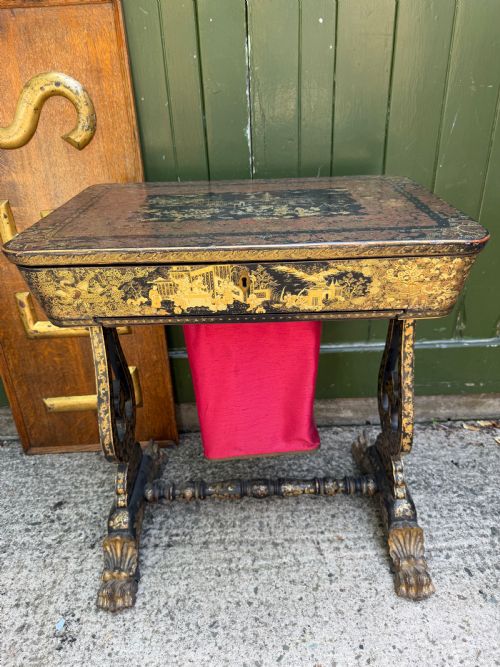
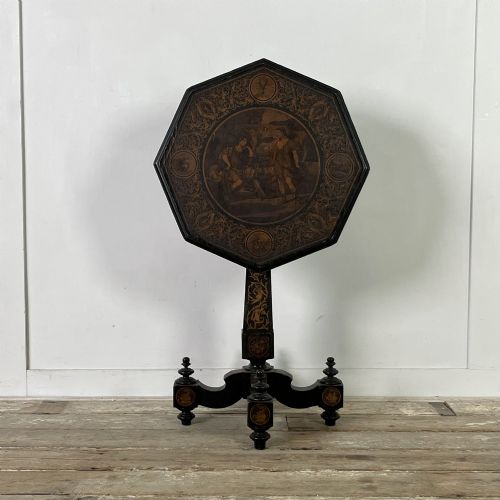
The surface forms range from traditional drop-leaf sewing tables and tilt-top designs to nests of tables and tiered bamboo stands. Many incorporate internal compartments, sliding trays, and silk workbags suspended beneath the main body to hold textiles and sewing tools.
Materials and construction methods
Wood carcasses form the structural foundation, frequently rendered in ebonised timber, papier-mâché, or tiger bamboo depending on the period and regional origin. Artisans applied layers of lacquer to build a hard, smooth ground suitable for subsequent decoration.
Gilding, gold leaf, and hand-painted motifs define the surface ornamentation, often depicting traditional Chinese figures, landscapes, or geometric borders. Brass fittings, hardware, and occasional tortoiseshell boulle-work accents complete the construction of these decorative items.
Some sewing tables hide tiny carved ivory winders beneath their lids, designed to keep delicate silk threads from tangling during a quiet afternoon.
Distinguishing quality across examples
The refinement of the hand-painted gold leaf decoration and the clarity of the lacquer ground separate standard production from superior pieces. Crisp detail in Chinoiserie scenes and intact, stable surfaces indicate higher workshop standards during manufacture.
The complexity and completeness of the internal fittings, such as fitted compartments, carved ivory or bone thread spools, and original operating mechanisms, elevate an example above simpler variants with plain or missing interiors.
Jennens & Bettridge
The Antique Lacquer Work Table Glossary
- Chinoiserie
- European interpretation and imitation of Chinese artistic traditions, particularly popular in furniture decoration. This style employs motifs of pavilions, figures, and exotic flora rendered in gold on dark grounds.
- Japanned
- European lacquerwork imitating Asian exports, produced by applying successive coats of varnish and heat-curing them. The finish appears in black, red, or yellow tones with metallic highlights.
- Papier-mâché
- A composite material made from paper pulp or layers of paper mixed with glue and resin, pressed in moulds and baked. It provides a lightweight, durable base for lacquer and inlay.
- Boulle-work
- Inlay technique utilising brass and tortoiseshell arranged in contrasting patterns across furniture surfaces. It adds a reflective, textural quality to the pieces.
- Tilt-top table
- A table featuring a mechanism that allows the surface top to pivot vertically when not in use. This design saves floor space in smaller rooms.
Antique Lacquer Work Table: Frequently Asked Questions
What is an antique lacquer work table?
An antique lacquer work table is a specialised piece of 19th-century furniture designed for sewing and needlecraft, featuring a decorative lacquered surface and internal storage compartments.
These tables often include compartmentalized trays and hanging fabric bags to keep materials organised while serving as decorative side or occasional tables.
How were work tables used?
Victorians and Regency gentlewomen used these tables to store threads, needles, lace, and ongoing hand-sewing projects in an accessible and tidy manner.
The surface provided a convenient platform for close handwork, letter writing, or displaying small decorative objects in the drawing room.
How do I care for lacquer furniture?
Protect antique lacquer work tables by keeping them away from direct sunlight, excessive heat sources, and high humidity to prevent the wood and finish from cracking.
Dust gently with a dry, soft cloth and avoid chemical polishes, water, or commercial cleaners that can damage the delicate gold leaf and varnish layers.
How can I tell Chinese Export from Victorian pieces?
Chinese Export pieces typically date to the early 19th century and display authentic Asian craftsmanship using traditional black and gold lacquer finishes with specific narrative scenes.
Victorian and later British interpretations often incorporate local materials like papier-mâché or bamboo, alongside domestic cabinetmaking techniques and European furniture shapes.