
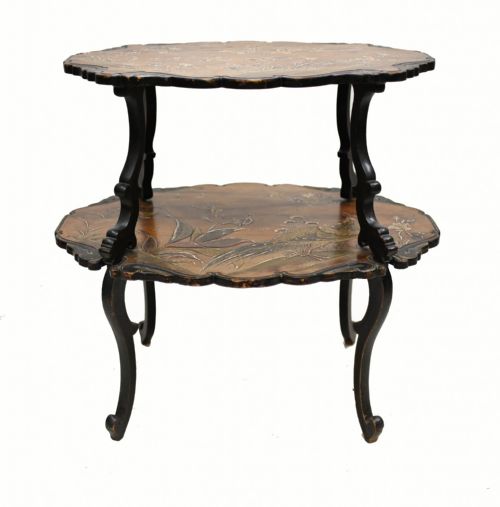


Ebonised Chinoiserie Table
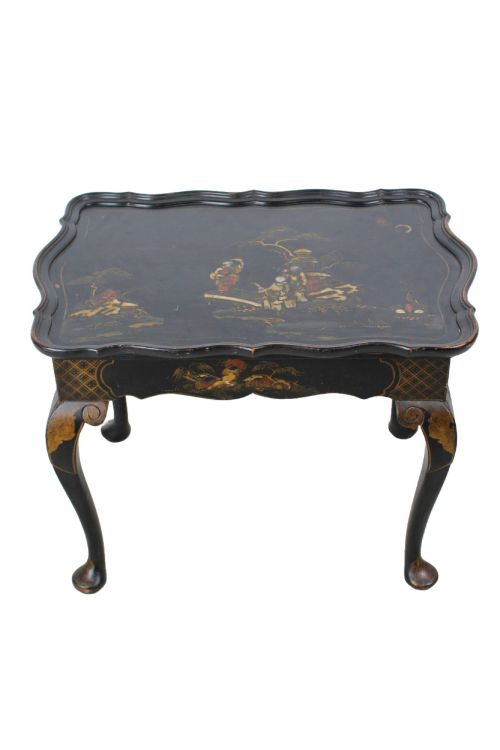
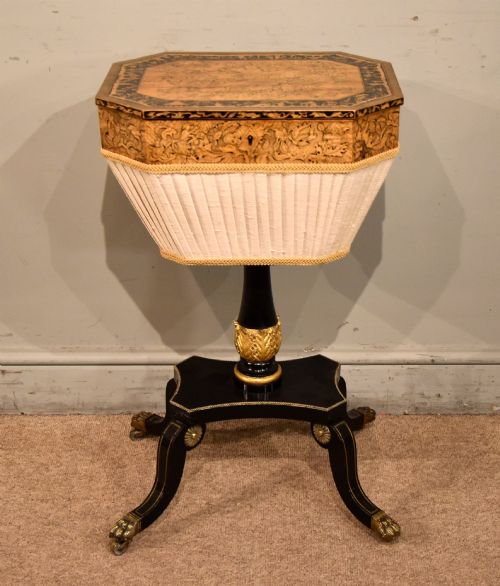
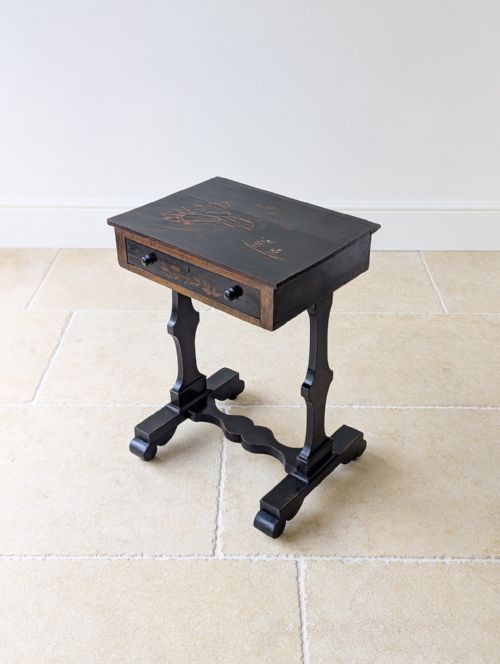
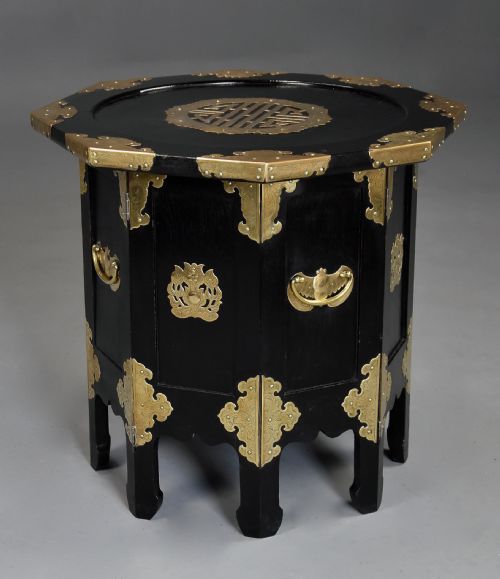
An ebonised chinoiserie table brings dark finished surfaces and hand-painted oriental motifs together for striking contrast in a room.
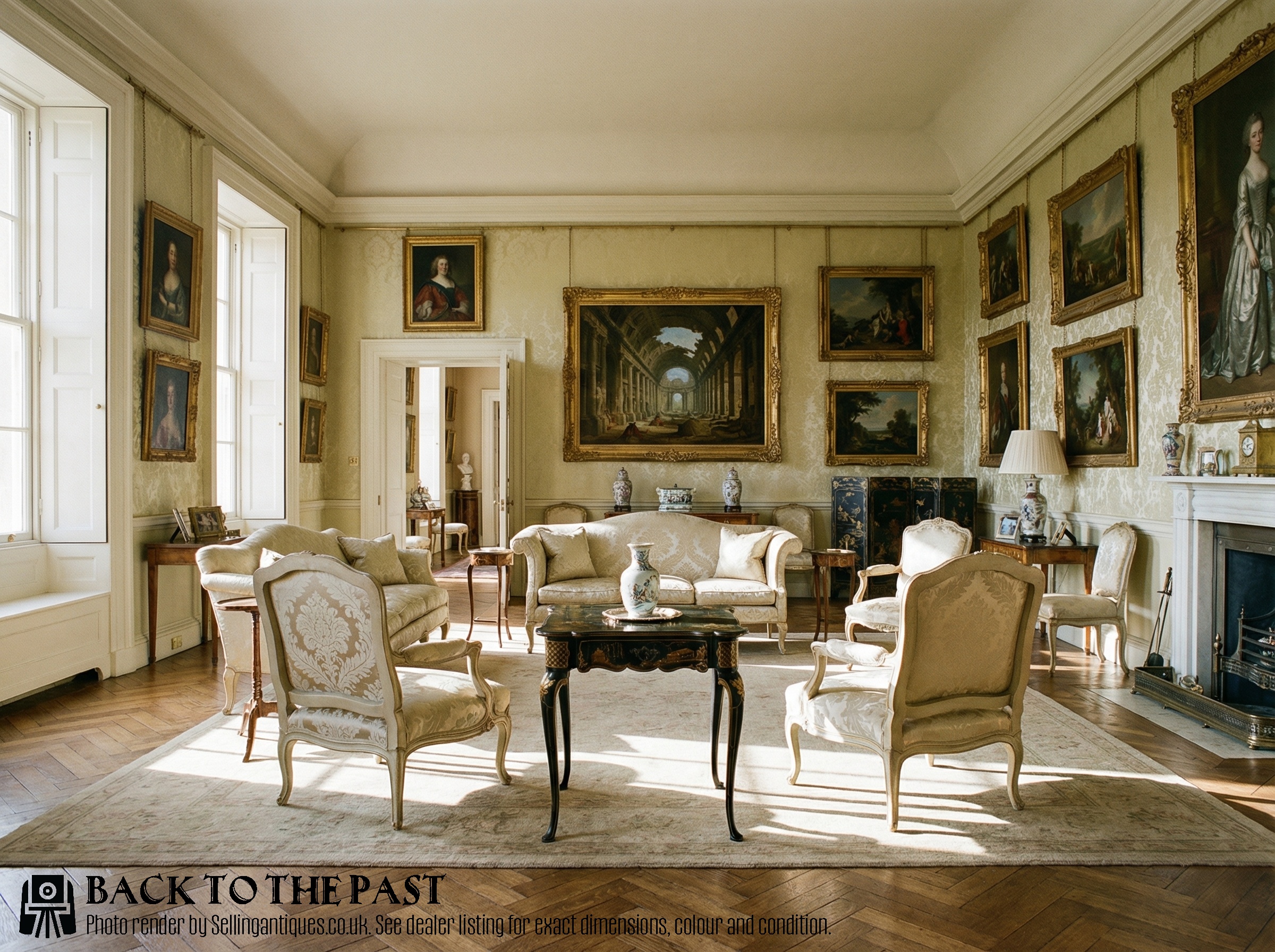
Ebonised Chinoiserie Table
When you search for an ebonised chinoiserie table, you encounter a distinct variety of small furniture pieces designed to catch the eye through dark finishes and decorative oriental motifs. The selection spans several periods, most notably the Regency era, Victorian times, and the Edwardian period, each bringing characteristic forms to the category.
The objects themselves take many shapes, with occasional tables, tray tables on stands, coffee tables, and nests of tables appearing regularly across the inventory. Smaller formats such as wine tables, side tables, and console tables also feature, alongside papier-mâché trays adapted onto folding or fixed stands.
Origin and style intersect through designs labelled as Regency style, Victorian chinoiserie, and Japonisme or Chinoiserie. Buyers most frequently meet pieces utilising ebonised wood or black lacquer, often enhanced by gilt, brass, or gold leaf detailing.
Materials and construction methods
Maker construction relies heavily on ebonised wood, lacquered wood, and papier-mâché as the primary structural and visual substrates. Surfaces receive black lacquer or ebonising treatments to simulate costly ebony, providing a dark ground for decorative work.
Decoration involves intricate penwork, hand-painted motifs, and occasionally boulle-work applied directly to the dark surfaces. Gilding, gold leaf, and brass components are integrated to accentuate the oriental scenery and geometric borders.
Several serving trays converted into tables spend their days holding modern coffee cups instead of Victorian gin.
Distinctions in quality
Quality in these pieces rests primarily on the crispness and depth of the painted or penwork decoration. Fine examples exhibit detailed figural or landscape scenes with careful linework, whereas simpler items rely on sparse or stencilled patterns.
The choice of base material and structural integrity also dictates the tier of the piece. Solid timber frames, stable papier-mâché trays with well-preserved lacquer, and refined brass or gilt mounts separate superior examples from standard utilitarian items.
The Ebonised Chinoiserie Table Glossary
- Ebonised
- Wood treated with stain, dye, or paint to imitate ebony. This finish provides the characteristic dark background typical of the style.
- Chinoiserie
- European artistic interpretation of Chinese and East Asian decorative traditions. It manifests in landscapes, figures, and architectural motifs.
- Papier-mâché
- A composite material made from paper pulp or sheets mixed with glue and pressed. It forms sturdy, smooth tray tops suitable for lacquering.
- Penwork
- Decoration created using fine ink lines on a prepared surface. This technique appears on Regency examples to render intricate oriental designs.
- Japonisme
- The influence of Japanese art on Western makers during the nineteenth century. It often blends with chinoiserie motifs on late period pieces.
Ebonised Chinoiserie Table: Frequently Asked Questions
What is an ebonised chinoiserie table?
These pieces are small decorative tables finished in a dark ebonised wood or black lacquer, decorated with hand-painted oriental scenes.
They function as functional furniture and decorative accents, incorporating styles from the Regency period through to the early twentieth century.
How were tray tables used historically?
Many of these items started life as serving trays made of papier-mâché or wood before being mounted onto folding or fixed stands.
This allowed servants to carry drinks or food and quickly set the tray down on a matching base to serve guests.
How do I care for black lacquer?
Keep these surfaces away from direct sunlight and excessive moisture to protect the delicate lacquer and gilt details.
Dust gently with a dry, soft cloth and avoid chemical polishes that can damage the historical finish.
How can I tell a Regency table from a Victorian one?
Regency pieces often feature precise penwork decoration and classical proportions influenced by the early nineteenth century.
Victorian and later Edwardian examples frequently utilise papier-mâché tray tops or bolder black lacquer with heavier gilt ornamentation.