
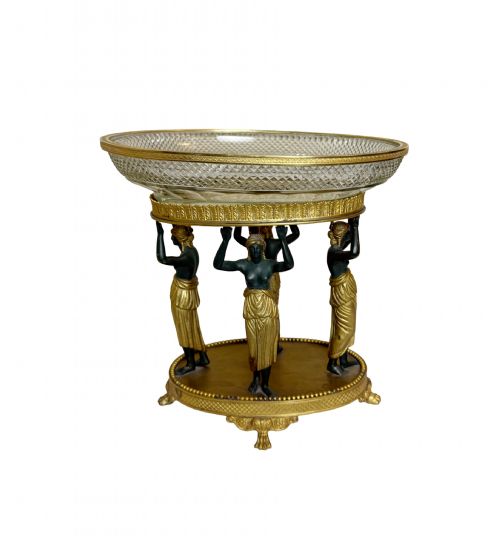

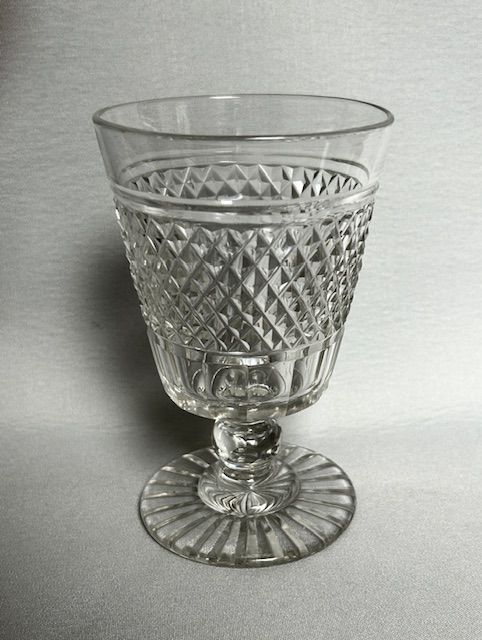
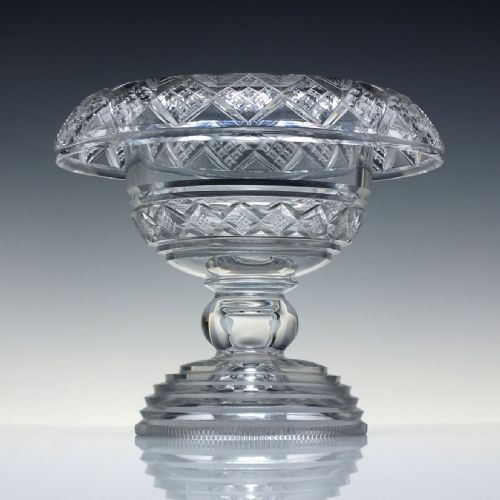


Regency Cut Glass Bowl
A regency cut glass bowl brings brilliant sparkle and heavy lead crystal weight to a table, combining Georgian clarity with precise cutting.
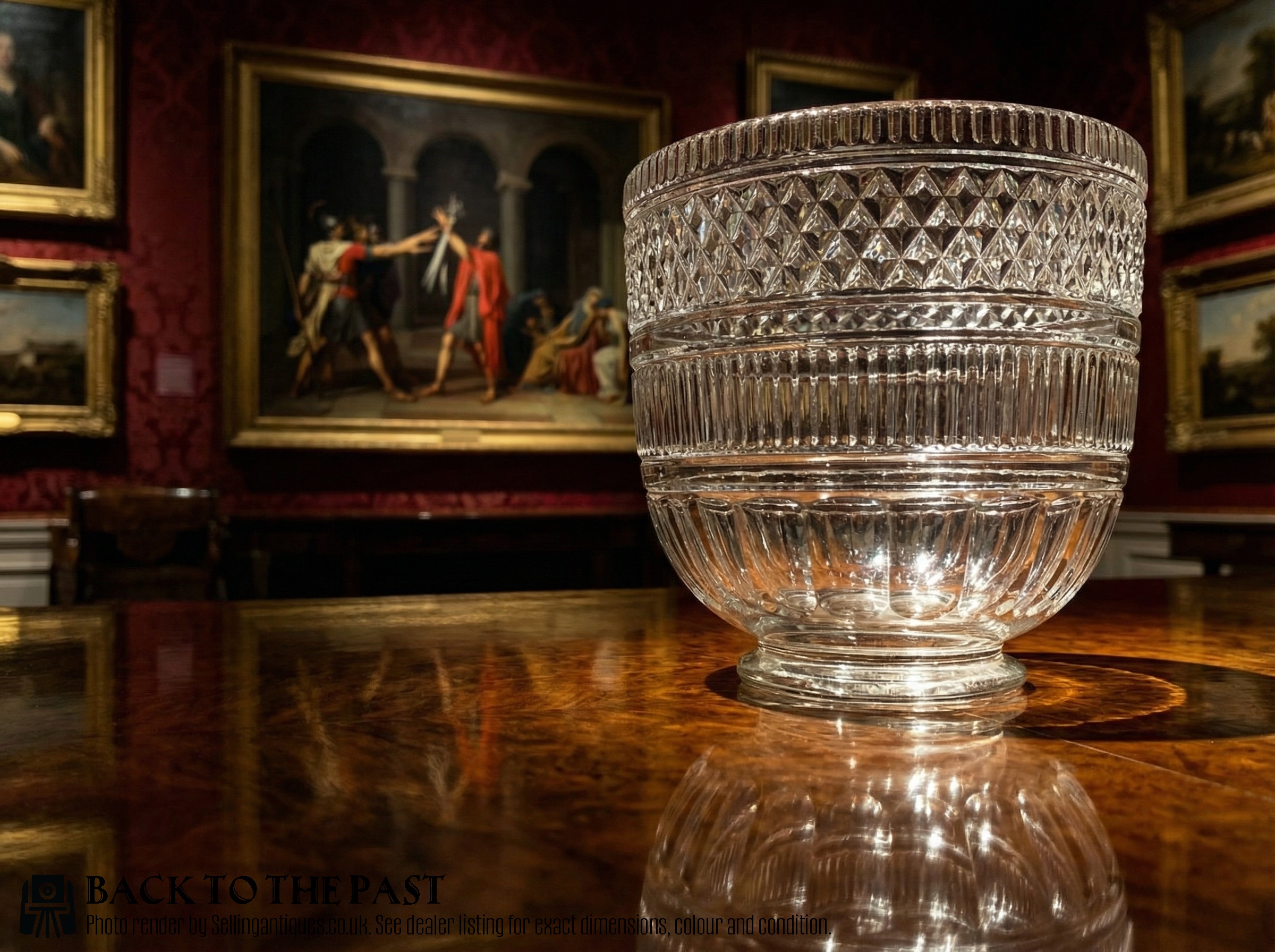
Regency Cut Glass Bowl
When searching for a regency cut glass bowl, buyers encounter heavy lead crystal vessels designed for fruit, tea mixing, or centrepiece display. The pieces on this page span the 19th century, Georgian, and Regency periods, originating from English and Irish workshops.
The most common forms met here include large pedestal bowls, oval fruit bowls, and standing bowls alongside smaller finger bowls. Many examples date from around eighteen hundred to eighteen thirty, displaying deep wheel cutting and facet patterns.
Certain examples incorporate metal mounts such as bronze, gilt bronze, brass, or old Sheffield plate. Tea caddies and epergnes also appear with fitted cut glass bowls, showing the versatile domestic uses of the era.
Factors of quality
The distinction between ordinary and superior pieces rests upon the depth and crispness of the glass cutting. Sharp, clean facets that show minimal wear demonstrate superior skill from the glass cutter.
Metal mounts, where present, reveal quality through the crispness of their bronze or gilt detailing and how securely they integrate with the crystal body. Weight and clarity of the metal content in the lead crystal further separate standard items from exceptional ones.
Some tea caddies secreted glass mixing bowls alongside locked compartments, guarding the household tea leaves from curious servants.
The Regency Cut Glass Bowl Glossary
- Hobnail cut
- A raised, multi-faceted decorative pattern resembling the hobnails used on heavy boots. It creates a deeply textured surface that catches light intensely.
- Lead crystal
- Glass containing lead oxide, which increases the weight, brilliance, and working time for cutting. This material forms the heavy foundation of these pieces.
- Pedestal bowl
- A vessel raised upon a distinct foot or stem above a base. This form elevates fruit or floral arrangements on the dining table.
- Tea mixing bowl
- A large open bowl used during the Regency period for blending different teas before serving. These vessels often sit within mahogany tea caddies or on side tables.
- Old Sheffield plate
- A composite material formed by fusing a thin sheet of silver to a copper base. It appears on epergne frames and stands associated with the glass bowls.
Regency Cut Glass Bowl: Frequently Asked Questions
How were these bowls originally used?
These bowls served functional roles on the dining table for holding fruit, mixing tea, or rinsing fingers between courses. Large centrepieces dominated the middle of the table during formal meals.
Smaller finger bowls appeared at the conclusion of dining for guests to cleanse their hands. Many vessels also formed part of elaborate epergne arrangements or sat inside wooden tea caddies.
How can I tell a Regency bowl from later periods?
Regency and Georgian pieces generally display a greater weight due to high lead content in the crystal. The cutting tends to be deep, sharp, and hand-polished rather than mechanically smoothed.
Base inspections often reveal a polished pontil mark where the blowpipe was detached. The overall proportions and facet styles reflect early nineteenth-century design vocabulary.
Can I use these bowls for serving food?
These antique bowls remain entirely suitable for serving dry foods, fruit, or sweets during gatherings. Modern acidic foods should not be left in contact with the lead crystal for extended periods.
Gentle hand washing after use ensures the glass stays protected for everyday enjoyment or display. The heavy lead crystal is robust enough for careful modern dining use.