


Georgian Cut Crystal Glassware
Georgian cut crystal glassware brings heavy lead handle and brilliant light refraction to any table, offering practical drinking vessels shaped by centuries of craftsmanship.
Georgian Cut Crystal Glassware
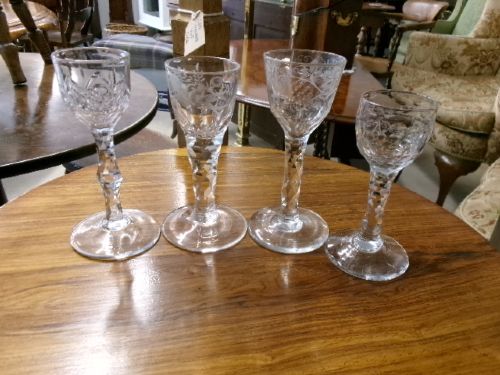
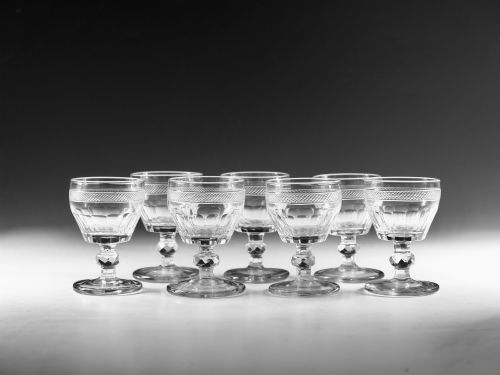
When you search for georgian cut crystal glassware, you encounter functional tableware and serving vessels spanning the eighteenth and nineteenth centuries, including decanters, rummers, wine glasses, celery vases, and water jugs. These pieces originate from English, Irish, and Bohemian workshops, often displaying distinct regional cutting patterns.
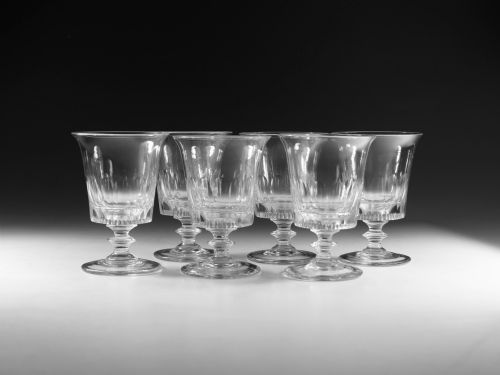
The most common forms on this page include heavy rummers, facet-stemmed wine glasses, and square-footed decanters dating from the late eighteenth century through the Regency and Victorian periods. Collectors also find specialised items such as jelly glasses, finger bowls, tea mixing bowls, and salts.
What varies in quality
Quality rests upon the crispness of the wheel-cut edges, the symmetry of the facets, and the clarity of the metal itself. Superior examples maintain sharp, clean geometric intersections without softening or rounding from over-polishing.
Weight and balance distinguish better pieces, particularly in rummers and decanters where heavy lead crystal provides a solid hand-feel. The presence of skilled engraving, gilding, or unusual colouration further separates standard utility vessels from high-status items.
Celery vases stand ready to redeem your table from dull side dishes, proving that Georgians took their greens with serious architectural ambition.
James Giles
The Georgian Cut Crystal Glassware Glossary
- Rummer
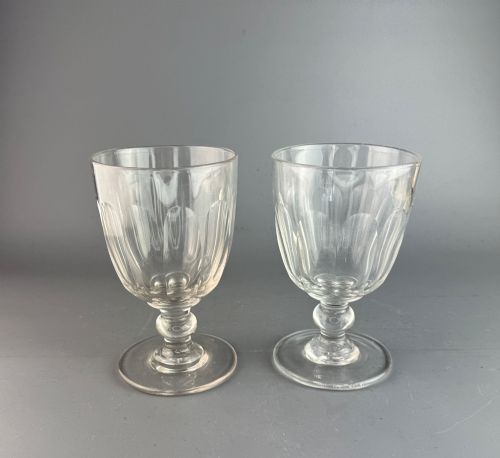
- A large drinking glass used for ale, beer, or wine, typically featuring a short stem and a capacious cut bowl. These heavy vessels form a staple of the glassware available here.
- Hobnail cut
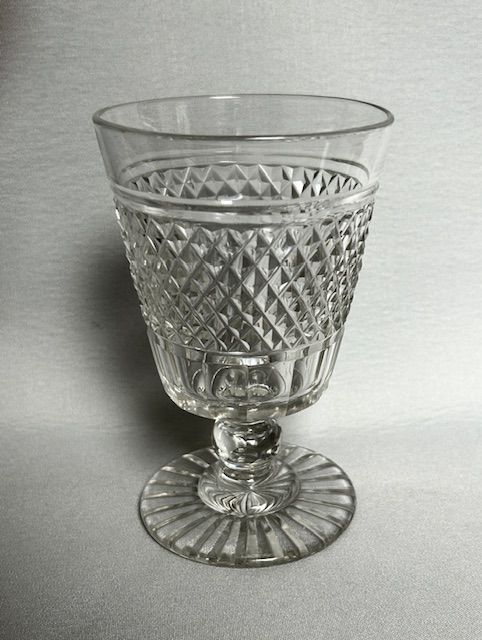
- A decorative surface pattern of small, closely spaced pyramidal facets that resemble the hobnails on stout boots. This texture catches the light brilliantly across bowls and decanters.
- Lemon-squeezer base
- A square, four-sided moulded glass foot with a sharp, concave profile resembling the underside of a kitchen lemon squeezer. It provides robust stability to early decanters and rummers.
- Celery vase
- A tall, footed vessel designed to display and serve crisp stalks of celery at the dining table. They frequently exhibit deep pillar cutting or fluting.
- Facet cut
- A series of flat, polished planes ground into the surface of the glass to refract light. Skilled cutters arranged these geometric planes to enhance the brilliance of the lead crystal.
Georgian Cut Crystal Glassware: Frequently Asked Questions
How do I identify genuine georgian cut crystal glassware?
Examine the piece for hand-cut facets that show slight irregularities and minor wear marks on the base rather than machine-made uniformity. Genuine examples often feature high lead content, giving them a noticeable heft and a resonant ring when tapped gently.
Look closely at the style of cutting and the form of the vessel to match known eighteenth and nineteenth-century production methods. Pontil marks on the bottom of stems and bowls further indicate traditional hand-blown manufacturing.
What is the difference between a rummer and a wine glass?
Rummers are substantially larger, heavier drinking vessels designed with short, sturdy stems and wide bowls intended for ale, porter, or wine. Standard wine glasses feature taller, more slender stems and smaller bowls suited for smaller pours.
Within this selection, rummers often display robust hobnail or pillar cutting to handle heavier daily use, while wine glasses frequently showcase delicate facet cutting or fine engraving.
Can I use antique decanters and glasses for serving drinks?
Most pieces remain entirely functional for serving wine, water, or spirits, provided you handle them with care and avoid sudden temperature changes. Hand washing is essential to protect the surface and prevent clouding.
Avoid soaking decanters with trapped stoppers or using abrasive cleaners on gilded and enamelled surfaces. Regular use adds to the pleasure of owning these historic items.
Why do some glass items glow under certain light?
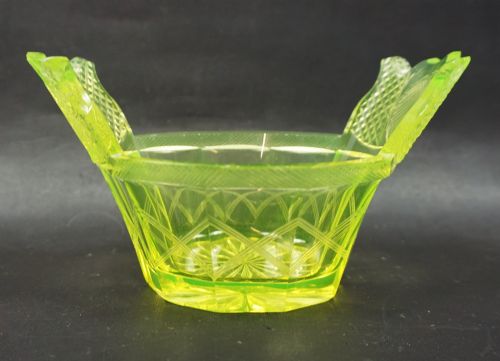
Certain nineteenth-century pieces, particularly from Bohemian workshops, contain small amounts of uranium added to the glass batch as a colourant. This material produces a distinct yellowish-green tint in natural light without requiring ultraviolet illumination.
Such pieces represent specific technological experiments in colour and glass chemistry during the Regency and Victorian eras.