


Antique Glass Dining Accessories
Antique glass dining accessories bring brilliant sparkle to the table, combining heavy cut crystal with sterling silver, silver plate, and fitted stands.
Antique Glass Dining Accessories
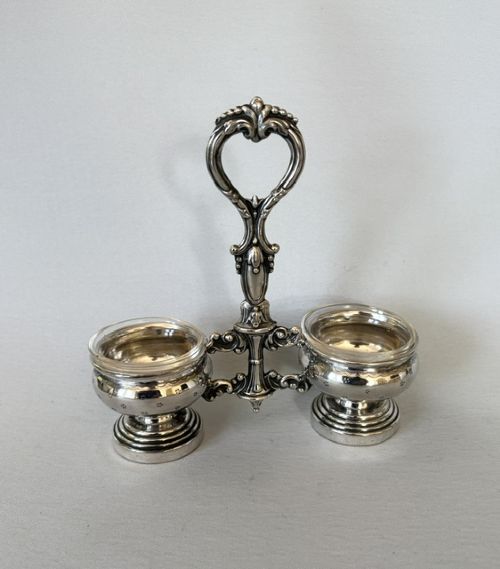
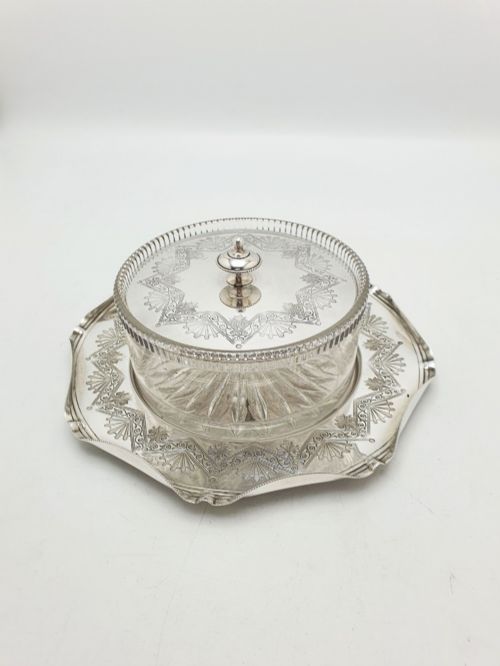
When you search for antique glass dining accessories, you encounter a specialised selection of table ware designed for condiment service, butter presentation, and table organisation during formal meals. The forms span multi-bottle cruet sets, butter dishes with glass liners, mustard pots, pepper mills, knife rests, and finger bowls.
The pieces on this page originate predominantly from the Victorian and Edwardian eras, alongside earlier Georgian items and later Art Deco designs. Cruet sets and knife rests appear most frequently, reflecting the formal dining habits of nineteenth and early twentieth century households where condiments and cutlery management required dedicated table equipment.
How they were made
The manufacture of these dining accessories relies on the combination of heavy pressed or cut glass with metal mounts in sterling silver and silver plate. Craftsmen shaped the glass vessels through cutting and moulding, then fitted them into cast and soldered metal frames, stands, or collars.
Makers utilised supplementary materials such as cobalt glass, velvet linings, steel mechanisms for pepper grinders, and occasionally Bakelite for modernist knife rests. Metal components frequently carry hallmarks or plate marks indicating the silversmith or manufacturer.
Materials documented in the inventory include cut glass, cobalt glass, sterling silver, silver plate, velvet, steel, and Bakelite.
What varies in quality
Quality in these dining pieces rests upon the crispness of the glass cutting and the weight of the metal mounts. Heavier gauge silver plating and substantial sterling silver frames indicate superior production, whereas lighter mounts show less durable construction.
Completeness dictates much of the standing within this category, particularly for cruet sets and fitted cased pairs where matching bottles, original glass liners, and fitted presentation cases remain intact. The clarity of the glass and the precision of silver hallmarks further distinguish finer examples.
Elkington & Co·Wade Wingfield Wilkins·ADIE BROTHERS·Sampson Mordan
The Antique Glass Dining Accessories Glossary
- Cruet set
- A matched collection of glass bottles or cruets held within a metal stand for holding condiments like oil, vinegar, salt, and pepper at the dining table. These sets often comprise between six and eight pieces.
- Finger bowl
- A small bowl filled with water, sometimes cut crystal, placed before diners after a meal to rinse the fingers. They date extensively through the nineteenth century.
- Knife rest
- A small horizontal support, often in cut glass and silver, designed to keep carving knives or dining cutlery elevated above the tablecloth between courses.
- Silver plate
- A base metal, such as copper or Britannia metal, coated with a thin layer of silver through electroplating or old Sheffield plating techniques. This method offered the appearance of solid silver at a lower cost.
- Mustard pot
- A small covered container with a glass liner and spoon, intended for serving prepared mustard during meals. They are frequently fashioned from sterling silver.
Antique Glass Dining Accessories: Frequently Asked Questions
What is a cruet set used for?
A cruet set holds various liquid and dry condiments such as oil, vinegar, mustard, salt, and pepper in individual glass bottles during formal meals. The stand allows the collection to be passed around the dining table.
These sets sat centrally on the table or on sideboards, ready to season food between courses according to individual taste.
How do I clean antique glass dining accessories?
Clean the glass components gently in warm soapy water using a soft cloth, avoiding harsh abrasives that might scratch the surface. Take care with antique silver mounts to prevent immersion liquid from damaging any fitted velvet or cement.
Dry thoroughly after washing to prevent moisture from tarnishing silver or lingering in cut glass crevices.
How do I date a silver and glass condiment set?
Dating relies primarily on the silver hallmarks stamped on the metal mounts, which reveal the assay office, date letter, and maker's mark. Stylistic clues in the glass cutting and the overall frame design also point toward Victorian, Edwardian, or later periods.
Consulting standard silver date charts helps pinpoint the exact year of manufacture for hallmarked pieces.