



Antique Tableware Glass Set
An antique tableware glass set brings matched brilliance to the dining table, combining cut crystal or coloured glass with precious mounts for daily dining or display.
Antique Tableware Glass Set
When you search for an antique tableware glass set, you encounter matched service pieces designed for dining, condiments, and desserts across several centuries of British, European, and Scandinavian manufacture. The selection spans utilitarian vessels and formal dining ensembles, uniting glassware with metal mounts.
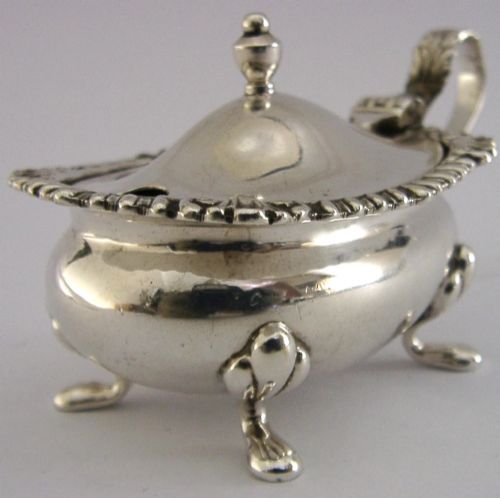
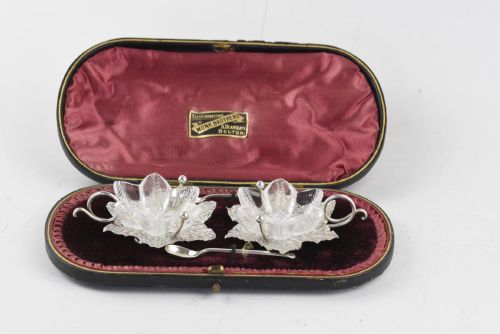
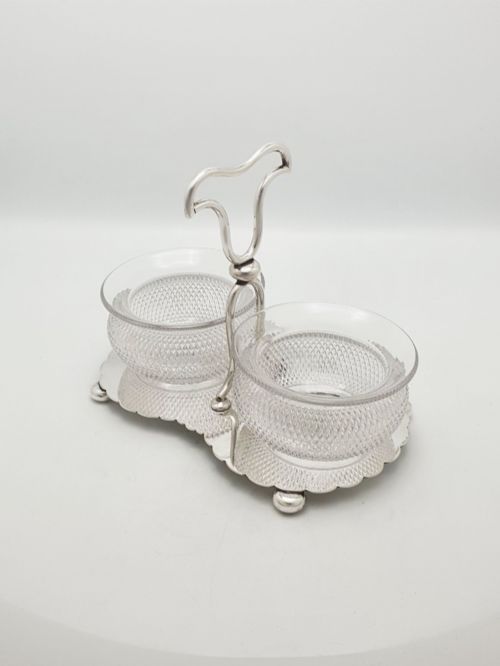
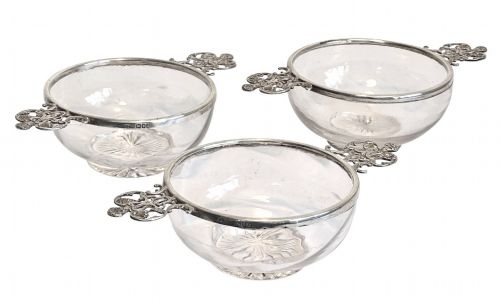
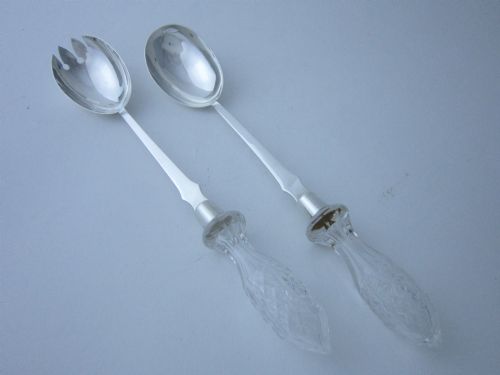
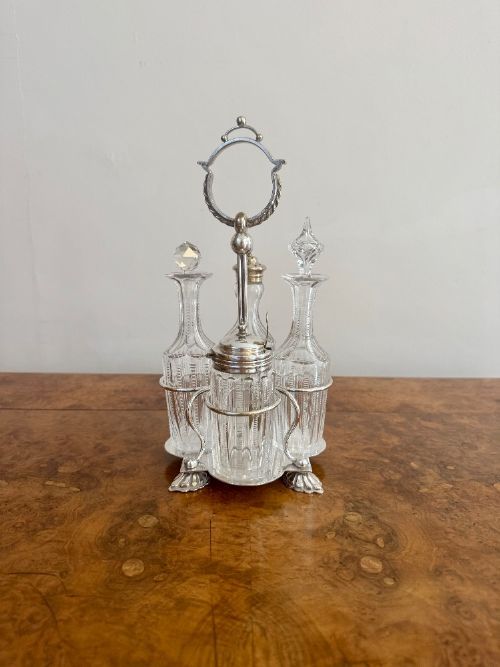
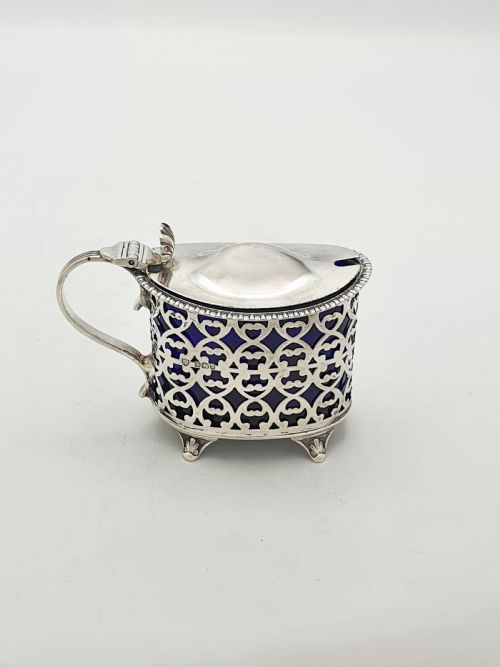
The most frequent iterations on this page are cruet sets, salt cellars, condiment jars, and mustard pots, alongside bowls, ice servers, custard cups, and finger bowls. These sets often pair lead crystal, cut glass, or coloured vessels with sterling silver, silver plate, or silver-mounted frames.
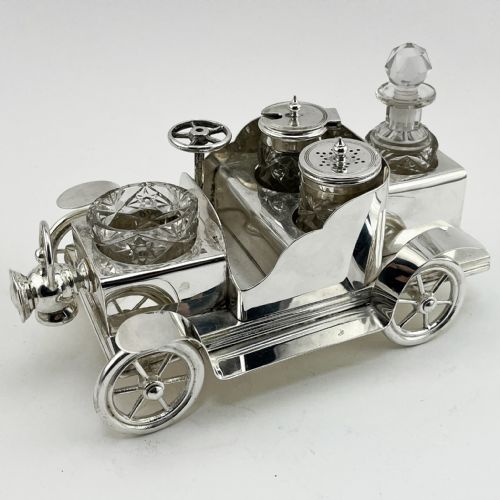
Pieces range from early nineteenth-century Georgian Irish cut glass to Victorian novelty carriage cruets, Edwardian silver-plated stands, and Art Deco designs with cobalt or cranberry glass inserts. They reflect changing dining rituals, moving from multi-bottle tables to compact twentieth-century condiment holders.
Materials and technique
Glass production relies on free-blown shaping, moulding, and wheel-cutting to achieve faceted patterns, engraved Greek keys, or smooth surfaces on clear crystal, Bristol blue, cranberry, and opaline glass. Artisans shaped molten material into custard cups, rinsers, bowls, and liners designed to sit within fitted frames.
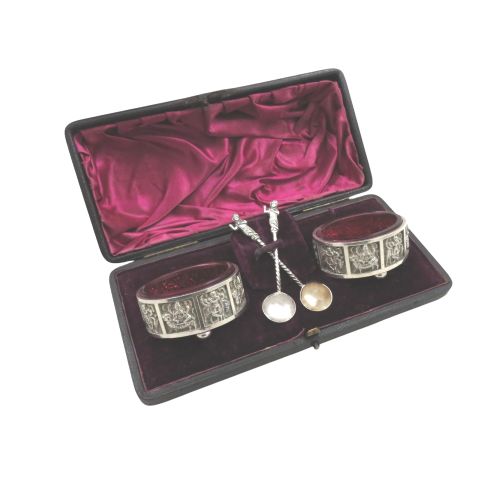
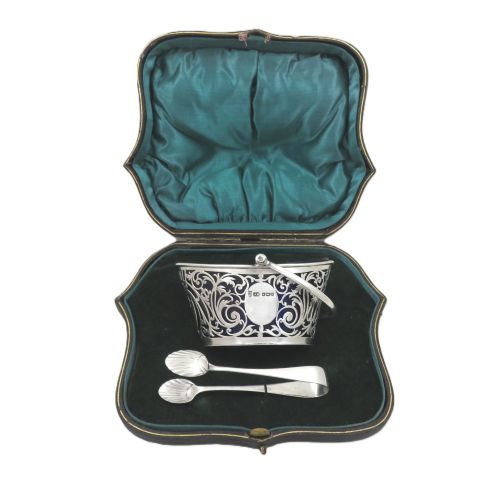
Metal mounts and frames utilise sterling silver and silver plate, often worked with pierced decoration, rat-tail handles, or cast details such as Hindu deities. Makers combined these metals with glass bodies using fitted collars, hinged lids, and dedicated handles to secure delicate vessels in stands.
Listings feature items spanning the Georgian, Victorian, Edwardian, and Art Deco periods, incorporating sterling silver, silver plate, cut glass, cobalt glass, and cranberry glass.
Distinctions in craftsmanship
Quality rests in the crispness of glass cutting and the weight of the metal mount, where heavier sterling silver frames and deeply faceted lead crystal distinguish finer service sets from simpler plated wares. The harmony between the glass liner and its metal holder demonstrates the maker's precision.
Maker attribution and completeness elevate certain sets, particularly those retaining matched spoons, original fitted cases, or multi-bottle stands by established workshops. The clarity of coloured glass and the execution of engraved or etched motifs separate standard table goods from superior examples.
William Comyns·William Neale·Elkington & Co·Wade Wingfield Wilkins
The Antique Tableware Glass Set Glossary
- Cruet set
- A matched collection of condiment bottles or jars mounted in a stand, used for holding oils, vinegars, and sauces at the dining table. These frames frequently include handles and feet for passing between guests.
- Salt cellar
- A small open bowl or vessel used to hold salt for individual or shared dining before the invention of the spring-loaded shaker. They often feature cobalt glass, blue glass, or clear cut glass liners held within silver or plated frames.
- Lead crystal
- Heavy, brilliant glass containing lead oxide, which increases refractive index and workability for deep wheel-cutting. It forms the body of many nineteenth-century condiment jars and ice plates.
- Silver plate
- A base metal, typically copper or white metal, coated with a thin layer of silver using processes such as electroplating. This technique allowed Victorian manufacturers to produce ornate condiment stands at a lower cost than solid sterling silver.
- Finger bowl
- A small bowl filled with water, placed before diners between courses for rinsing fingers. Victorian examples often feature etched motifs or coloured glass.
- Free blown
- Glass shaped by inflating molten metal through a blowpipe without the aid of a full mould. This technique yields organic wall thicknesses and individual character in early crystal ice plates and vessels.
Antique Tableware Glass Set: Frequently Asked Questions
What was a carriage cruet set used for?
A carriage cruet set held essential condiments securely in a framed stand designed for travel or easy movement along a large dining table. The enclosed bottles prevented spills during transit between the pantry and the dining room.
These pieces feature sturdy metal frames, often with locking mechanisms or protective rings, allowing them to withstand the motion of nineteenth-century dining service and travel.
Can I use these sets for modern dining?
Many antique tableware glass sets remain functional for serving salts, jams, condiments, and relishes during modern meals. Their sizing and forms adapt well to contemporary dinner parties and gatherings.
Careful handling is necessary, as vintage glass and silver plate require hand washing and protection from harsh detergents or dishwashers to preserve their finishes.
How do I date a silver and glass condiment set?
Dating relies primarily on the metal components, where sterling silver items carry British hallmarks indicating the assay office and year of manufacture. Stylistic shifts, such as Victorian pierced work versus Art Deco geometric frames, also narrow the production era.
Unmarked silver-plated sets require evaluation through manufacturing techniques, form, and fitted case styles to establish an approximate decade of origin.