


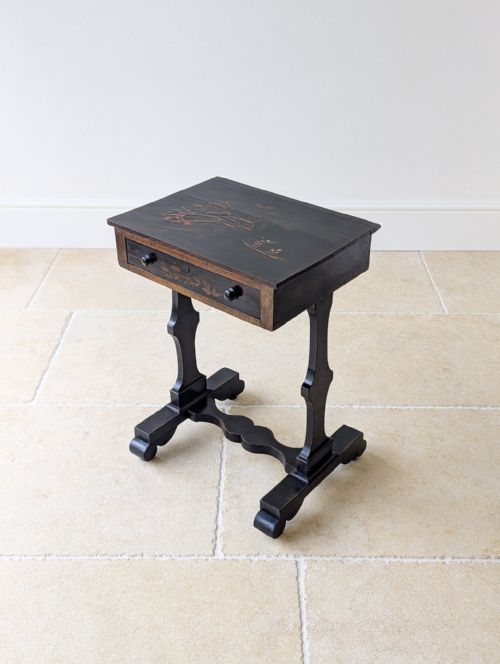
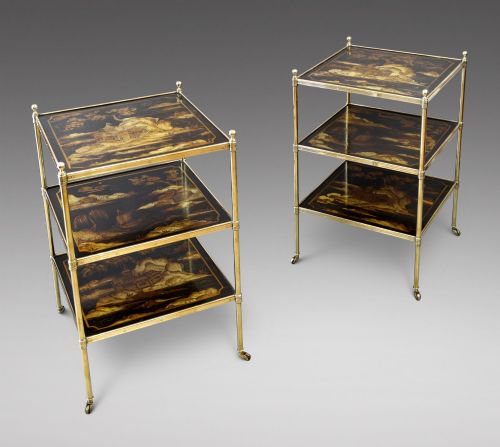
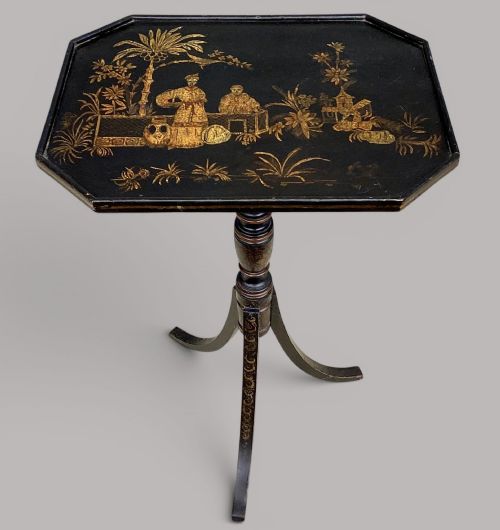


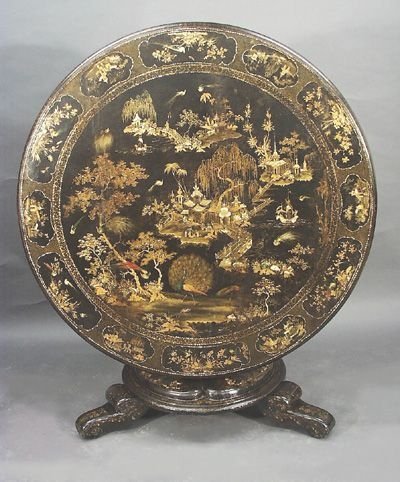


Regency Chinoiserie Side Table
A regency chinoiserie side table brings hand-painted lacquer and gilded oriental motifs into a room with distinctive nineteenth-century elegance.
Regency Chinoiserie Side Table
When you search for a regency chinoiserie side table, you encounter a variety of functional surfaces designed for nineteenth-century interiors. These range from occasional tables and work tables to nest of tables and tray tables supported on stands.
The pieces appearing on this page span the nineteenth century alongside later revivals from the early twentieth century. Work tables, sewing tables, and occasional variants dominate the selection, often featuring painted surfaces or lacquer finishes.
Many examples display the distinct influence of Brighton Pavilion style or Chinese export manufacturing. Buyers frequently find dual-purpose forms like writing tables and chess tables finished with elaborate gilt ornamentation.
Assessing quality in lacquer and design
Quality separates through the crispness of the hand-painted gold detailing and the depth of the lacquer finish. Superior examples display refined brushwork and well-preserved polychrome decoration without heavy modern overpainting.
The integrity of the underlying woodwork and the originality of mounts or stands dictate the standing of a piece. Finer items retain their original painted schemes, such as ochre grounds or parcel gilt highlights, rather than later reditions.
Regency Chinoiserie Side Table Retail Price Guide 2026
Typical asking prices for regency chinoiserie side table among the pieces listed under this phrase on Sellingantiques today, from the lower quarter to the upper quarter. They describe what is for sale here now, not the wider market.
Listings feature items from the nineteenth century alongside twentieth-century revivals, utilising lacquer, papier-mâché, and ebonised wood.
Gillows
The Regency Chinoiserie Side Table Glossary
- Chinoiserie
- European decorative style reflecting Chinese artistic influences through motifs like figures, landscapes, and pagodas. Artisans applied these designs extensively to furniture during the Regency period.
- Lacquer
- Protective and decorative resin finish applied in multiple coats and polished to a smooth gloss. This technique provides the signature dark background for gilt ornamentation.
- Papier-mache
- Composite material made from paper pulp mixed with adhesive, pressed into moulds, and dried to form lightweight tabletops and trays. It serves as a smooth base for painted decoration.
- Faux bamboo
- Wood turned and carved to imitate the segmented stems of natural bamboo. This decorative framing appears frequently on nineteenth-century tables.
- Tripod base
- A support structure comprising three legs radiating from a central column. This configuration balances wine tables and occasional surfaces.
Regency Chinoiserie Side Table: Frequently Asked Questions
How do I clean a lacquered table?
Dust surfaces gently with a soft, dry cloth to protect the delicate lacquer and gilt decoration. Avoid harsh chemical cleaners and excessive moisture.
Keep pieces away from direct sunlight and heat sources to prevent the lacquer from cracking or fading over time.
Where should I place a side table?
Position these decorative surfaces beside seating areas or against hallways where their painted details remain visible. They function effectively as lamp tables or display surfaces.
Ensure the room humidity stays stable to preserve the wooden and papier-mâché structures.
How do I identify a genuine piece?
Examine the hand-painted details and the ageing of the lacquer for signs of period craftsmanship. Genuine nineteenth-century items often show subtle craquelure and wear consistent with age.
Check the construction methods beneath the surface, looking for period fixings and traditional joinery.
What is a nest of tables?
A nest consists of graduating tables that slide neatly underneath one another to save floor space. Nineteenth-century examples often feature four matching lacquered surfaces.
These sets offered practical versatility for entertaining guests in Regency parlours.