





Japanned Pedestal Table
These japanned pedestal table pieces bring together rich lacquer, gilt, and classic forms from Georgian to Victorian times.
Japanned Pedestal Table
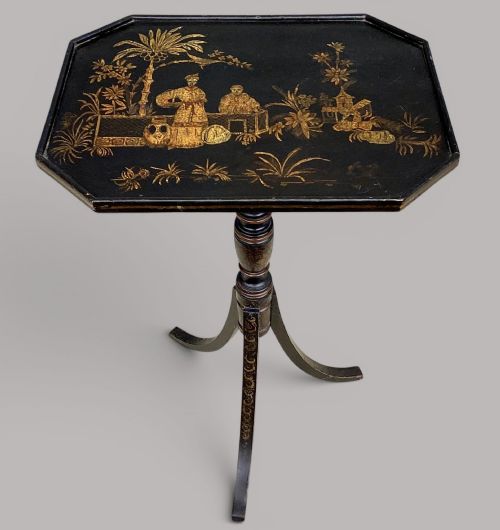
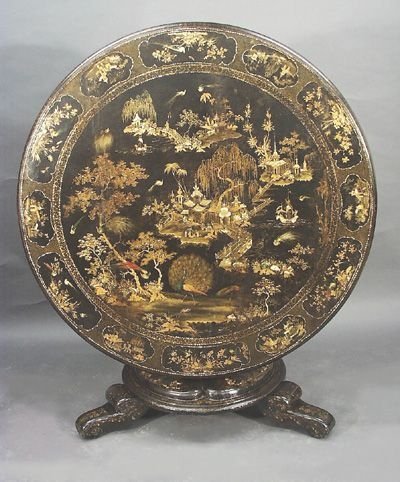
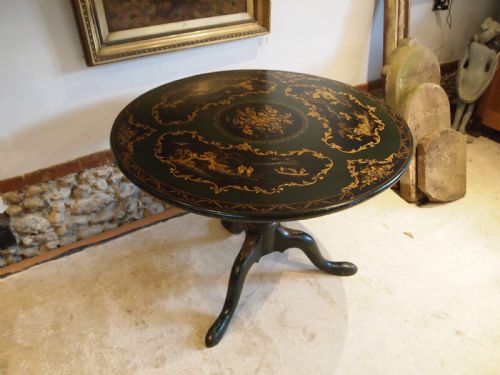
A japanned pedestal table combines European furniture forms with imitation East Asian lacquer work, resting upon a central column and base. When you search for a japanned pedestal table, you encounter diverse formats ranging from wine tables and tilt-top tables to occasional tables and plant stands.
The pieces on this page span the eighteenth, nineteenth, and early twentieth centuries, drawing on Georgian, Regency, Victorian, and Queen Anne revival aesthetics. Wine tables and tilt-top tables appear frequently alongside occasional pieces and torchere stands.
Makers and workshops across these periods employed black lacquer decorated surfaces, hand-painted details, and ebonised tripartite bases to achieve the desired Chinoiserie and Japonisme effect.
Materials and construction
Wood forms the core structure of these pieces, finished with layered lacquer and paint to create the distinct japanned surface. Artisans applied gold leaf and gilt highlights to accentuate the Chinoiserie scenes and decorative motifs.
Brass fittings and supports occasionally complement the timber construction, particularly on pedestal desks and writing tables. Tilt-top mechanisms and tripartite bases required precise carpentry to ensure stability alongside decorative appeal.
Japanned Pedestal Table Retail Price Guide 2026
Typical asking prices for japanned pedestal table among the pieces listed under this phrase on Sellingantiques today, from the lower quarter to the upper quarter. They describe what is for sale here now, not the wider market.
Listings here feature wood, lacquer, paint, gold leaf, and brass across Georgian, Regency, and Victorian periods.
Assessing quality and execution
The distinction between standard and superior examples lies in the depth of the lacquer finish and the intricacy of the hand-painted gold leaf decoration. Finer pieces display crisp Chinoiserie details that retain their clarity across the curves of a tilt-top or the panels of a pedestal desk.
Proportion and structural integrity separate robust tables from weaker counterparts, ensuring the central column and base support the top without wobble. The authenticity of the period surface finish dictates the overall character and integrity of the piece.
Viardot
The Japanned Pedestal Table Glossary
- Japanned
- European wood furniture finished with resinous varnishes and paints in imitation of East Asian lacquer work. This technique gained immense popularity during the Georgian and Victorian periods.
- Chinoiserie
- European artistic style reflecting Chinese and East Asian motifs, prominent in furniture decoration and lacquer work. Artisans utilised this style to create fantastical landscapes and figures in gold leaf.
- Tilt-top table
- A small occasional table featuring a mechanism that allows the wooden top to pivot vertically when not in use. This clever design saved space in period interiors.
- Torchere
- A tall, slender stand or pedestal designed to support a candlestick or lamp. These elevated pieces often feature decorative lacquer or painted finishes.
- Tripartite base
- A furniture support structure dividing into three separate feet or legs from a central column. This configuration provides sturdy balance for small occasional and wine tables.
Japanned Pedestal Table: Frequently Asked Questions
How were these tables used originally?
Period households used these tables for serving wine, holding lamps, or displaying decorative objects in reception rooms. Tilt-top versions allowed owners to store the tables flat against walls to free up floor space.
Larger pedestal formats functioned as writing desks or occasional surfaces in private studies and parlours.
How do I care for a lacquered surface?
Lacquered and japanned wood requires gentle dusting with a soft, dry cloth and protection from direct sunlight and excessive moisture. Avoid using harsh chemical polishes that can degrade the delicate paint and gold leaf layers.
Maintaining a stable room temperature prevents the underlying wood from expanding and cracking the historic finish.
How do I identify the period of the table?
Dating relies on examining the timber construction, the style of the pedestal base, and the characteristics of the lacquer work. Georgian and Regency examples often feature finer proportions, while Victorian and revival pieces showcase bolder Chinoiserie or Japonisme motifs.
Comparing the hardware and secondary woods provides further clues to the manufacturing era.