




Black Gold Tea Table
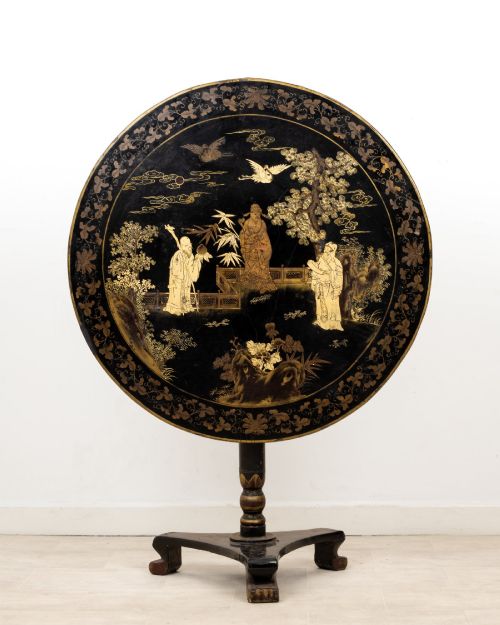
These black gold tea table pieces combine deep lacquer and gilded ornamentation to bring functional surface area and striking Chinoiserie decoration into a room.
Black Gold Tea Table
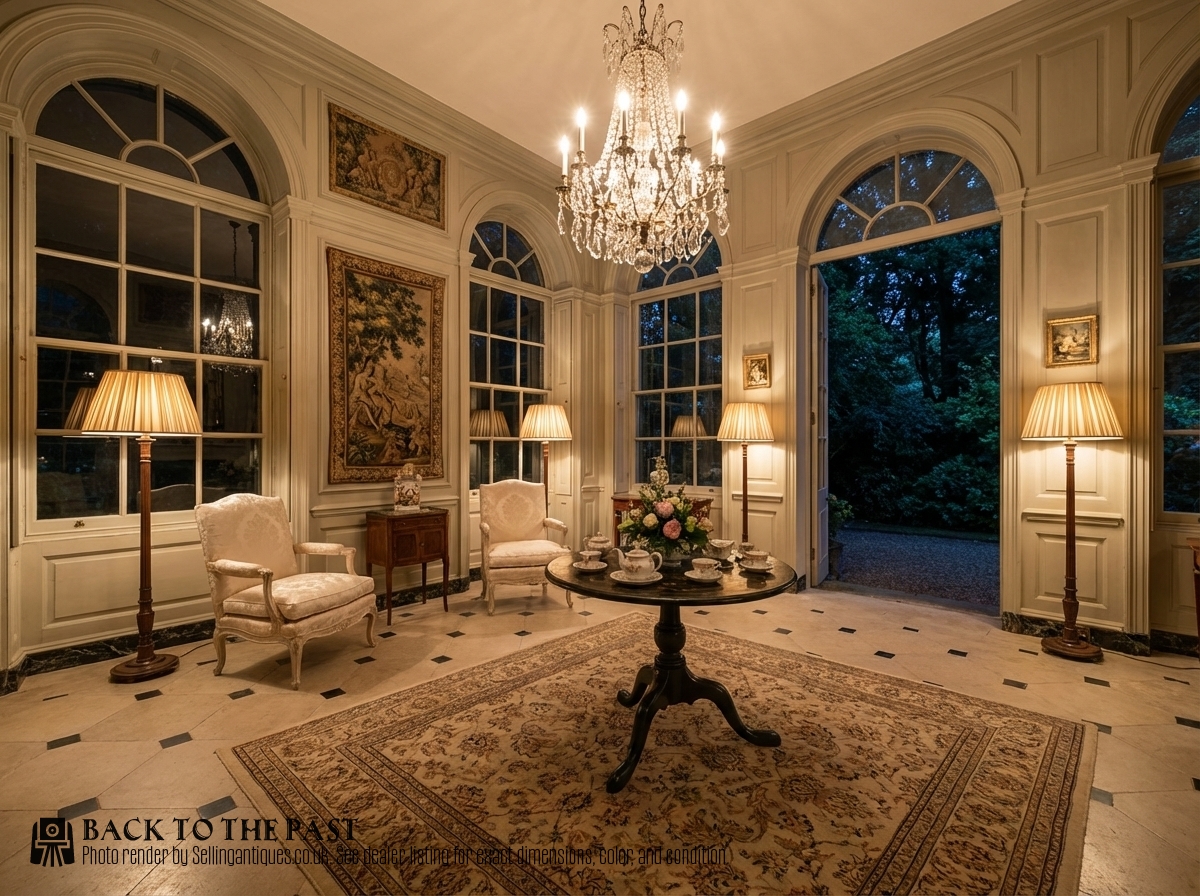
A black gold tea table brings together dark lacquer surfaces and gilded highlights, appearing in forms such as occasional tables, coffee tables, and trays mounted on stands. These items draw on Chinoiserie, Regency, Victorian, and Edwardian design traditions spanning from the Georgian period through to the 1920s.
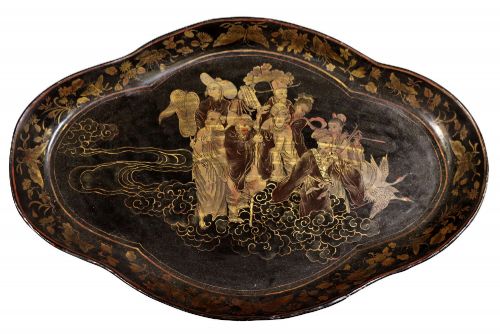
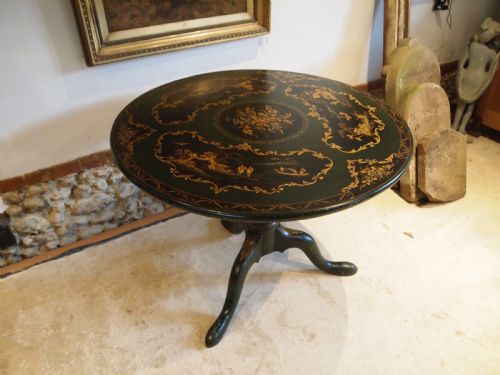
The pieces on this page are most frequently encountered as occasional tables, coffee tables, and tray tables featuring painted or gilded motifs on a dark ground. Many items utilise traditional tray tops paired with either contemporary or period stands, creating versatile low surfaces for domestic use.
Makers and workshops from the nineteenth and early twentieth centuries produced these items using timber, papier-mâché, and lacquer, often incorporating tilt-top mechanisms or folding bases. Their enduring appeal lies in the contrast between the dark field and the bright gold leaf or paintwork.
Materials and construction
Makers constructed these tables from wood, timber, and papier-mâché, applying successive layers of black lacquer to create a smooth, deep ground. This surface received intricate hand-painted details and gold leaf applications, frequently in Chinoiserie or classical styles.
Hardware and structural components often incorporate brass fittings, gilt accents, and occasional secondary woods like amboyna. Tray tables frequently combine a detachable papier-mâché or wooden tray resting securely upon a folding or fixed wooden stand.
Materials recorded across the inventory include gold leaf, brass, amboyna, and tin alongside traditional timber.
Assessing quality and execution
The distinction between standard and superior pieces rests in the depth of the lacquer finish and the precision of the hand-painted gold leaf decoration. Finer examples display crisp, detailed pictorial scenes and robust structural joinery that withstands daily use.
The integration of the surface to the base also marks the distinction, particularly where trays sit upon stands. Maker attribution, such as work by Jennens & Bettridge or Lamb of Manchester, elevates the standing of a piece through documented craftsmanship.
Jennens & Bettridge·Lamb of Manchester
The Black Gold Tea Table Glossary
- Papier-mâché
- A composite material made from paper pulp or sheets mixed with glue and resin, pressed and dried into sturdy forms. It provided a smooth, stable base for lacquering and painting on nineteenth-century trays and small tables.
- Tilt-top table
- A table with a hinged top that pivots to a vertical position when not in use, saving space in domestic interiors. This mechanism was common on Georgian and Victorian occasional tables.
- Parcel gilt
- The practice of gilding only specific portions of an object, such as carved details or painted edges, to highlight particular design elements against a dark wood or lacquer ground.
- Lacquer
- A durable resin-based finish applied in multiple layers and polished to a hard, glossy sheen. It forms the protective and decorative surface characteristic of Asian-inspired European furnishings.
Black Gold Tea Table: Frequently Asked Questions
How do I clean a lacquer surface?
Dust the surface regularly with a soft, dry microfiber cloth to prevent scratching the delicate finish.
Avoid using harsh chemical polishes, abrasive cleaners, or excess water, as moisture can penetrate hairline cracks in old lacquer.
Were these always coffee tables?
Most early examples started life as serving trays, occasional tables, or tilt-top tea tables rather than low coffee tables.
Many nineteenth-century trays were later mounted onto custom stands to adapt them for modern living spaces.
How do I spot papier-mâché?
Papier-mâché feels surprisingly light yet rigid, with a smooth, dense surface that lacks the grain of natural timber.
Examining the underside or edges often reveals the thick, compressed layers characteristic of this moulded material.
Can I use these for serving tea?
While historic pieces served beverages in past centuries, modern use requires caution to protect fragile antique finishes from heat and moisture rings.
Using coasters and placemats helps preserve the delicate gold leaf and painted lacquer from accidental damage.