
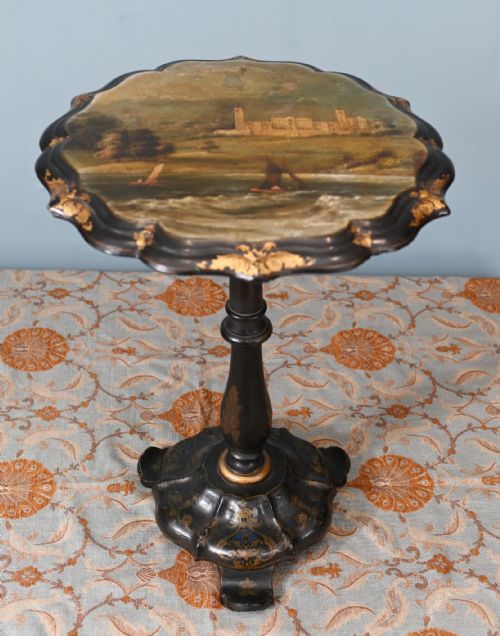
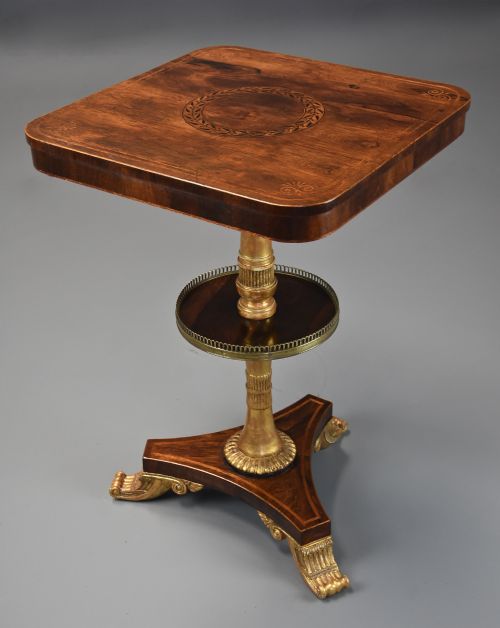
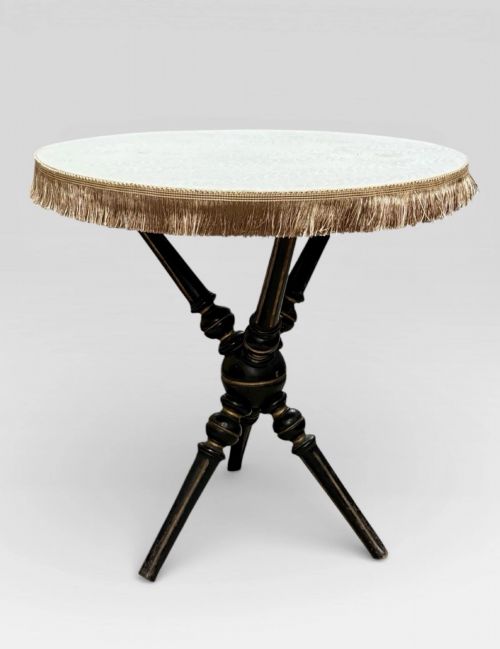


Gilded Tripod Table
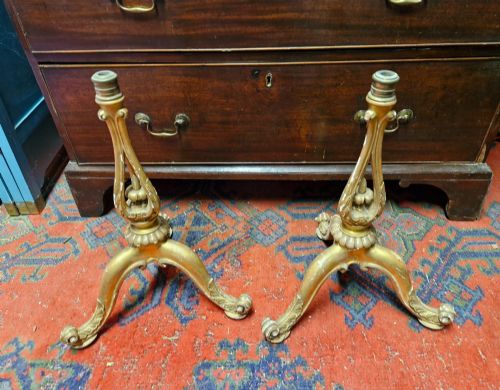
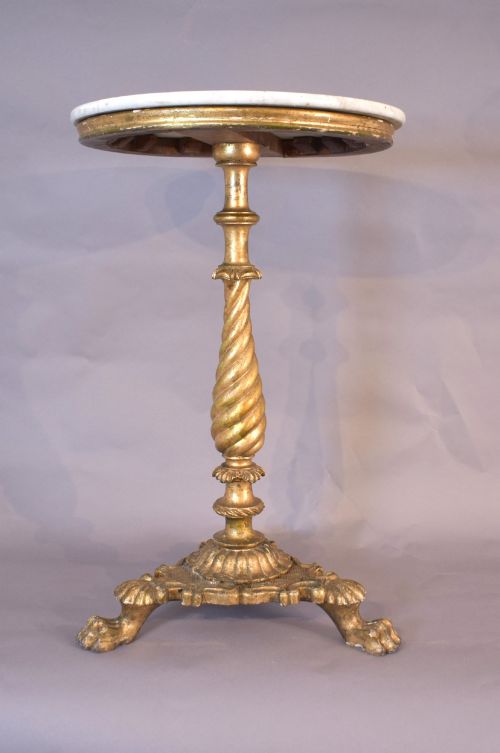
These gilded tripod table pieces bring architectural presence and a reflective surface to a corner, combining a raised top with three supporting legs.
Gilded Tripod Table
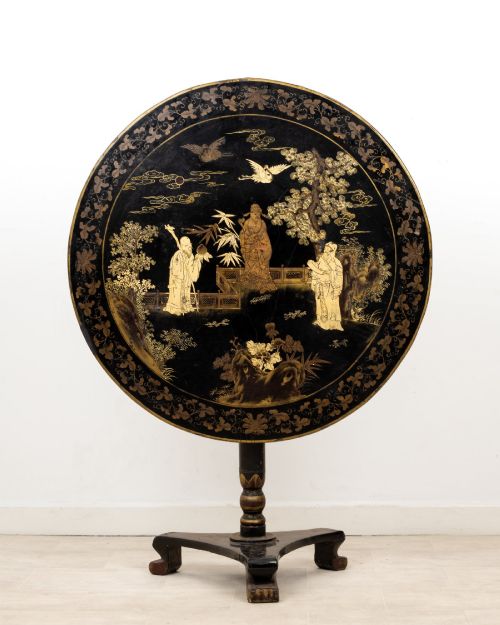
A gilded tripod table unites a central column or three-legged base with a compact upper surface, taking the form of occasional tables, side tables, and tilt top tables across this selection. These pieces serve secondary seating areas and corners, offering a stable footing through three legs while maintaining a light floor footprint.
The materials and styles span nineteenth century Regency and Victorian periods alongside French Chateau, Chinoiserie, and Neoclassical influences. Buyers encounter marble tops, lacquer finishes, and hand-painted wooden surfaces supported by giltwood, brass, and ormolu.
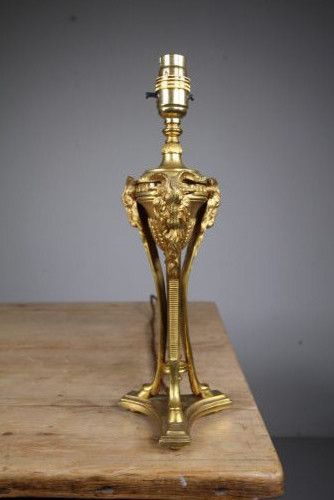
Origins stretch from English workshops to French and Italian makers, incorporating gilt bronze mounts, rams heads, swans, and galleried edges. The selection includes lamp bases and candelabrum stands alongside traditional occasional surfaces.
Materials and Construction Methods
Makers shaped structural timber from wood and walnut, applying gold leaf, giltwood, and ormolu to create reflective surfaces. Brass components and gilt bronze mounts provided decorative accents and structural joints.
Upper surfaces relied on marble, onyx, and lacquered wood, sometimes decorated with hand-painted details and Japanned finishes. Carved elements such as rams heads and swans integrated into the three-legged wooden and brass frames.
Listings feature items spanning the 19th Century, Regency, and Victorian periods, alongside 1900 and 1920 examples.
Distinctions in Execution and Material
Quality rests in the crispness of the carving on the wooden frames and the depth of the gilding applied over the base material. Tables with heavy marble or onyx inserts depend upon secure joinery in the central pillar and leg junction to maintain balance.
Surface decoration ranges from simple painted panels to detailed Chinoiserie lacquer and ormolu mounts with chased definition. The integration of sculptural motifs like swans and rams heads distinguishes standard production from more ambitious workshop output.
The Gilded Tripod Table Glossary
- Tripod table
- A small table supported by three legs radiating from a central pillar. This format provides stability on uneven floors.
- Ormolu
- Gilded bronze used for decorative mounts and decorative hardware. It requires careful cleaning to preserve the warm metallic finish.
- Japanning
- A European imitation of East Asian lacquerwork using dark varnishes and raised metallic designs. This technique appeared frequently on eighteenth and nineteenth century occasional furniture.
- Tilt top table
- A table with a mechanism that allows the surface to pivot to a vertical position when not in use. This design saved space in period interiors.
- Giltwood
- Timber coated with a thin layer of gold leaf or gold paint. It brings reflective brightness to architectural furniture forms.
Gilded Tripod Table: Frequently Asked Questions
What is a gilded tripod table used for?
These pieces function as small occasional surfaces for holding lamps, decorative objects, or drinks beside seating.
Their compact footprint allows them to fit into tight corners and alcoves where larger furniture cannot go.
How do I identify the period of a tripod table?
Dating relies on combining the stylistic details of the legs and base with the materials used for the top.
Neoclassical and Regency pieces show classical motifs, while Victorian and later examples incorporate diverse revival styles like French Rococo or Aesthetic Movement.
Are marble tops original to these tables?
Many nineteenth-century occasional and centre tables were paired with marble or onyx slabs to provide a durable and cool surface.
Checking the fit and edge finish helps determine whether the stone top corresponds to the period of the wooden base.
How should I care for giltwood and ormolu?
Giltwood surfaces need dusting with a soft, dry cloth to prevent damage to the delicate gold leaf layer.
Ormolu mounts should remain untouched by harsh chemical polishes to preserve their original patination and texture.