

Victorian Aesthetic Table
When seeking a victorian aesthetic table, collectors find inventive nineteenth-century designs that combine Anglo-Japanese linearity, ebonised surfaces, and exotic bamboo frames.
Victorian Aesthetic Table
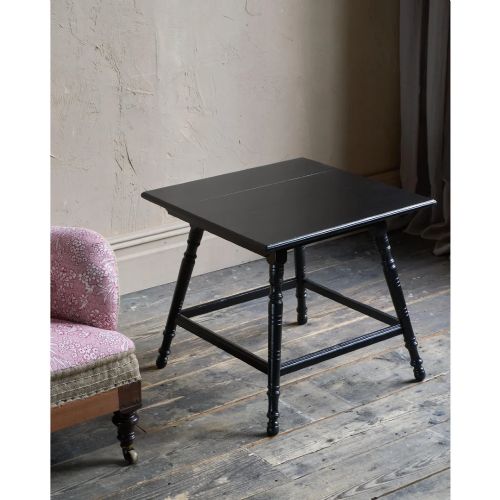
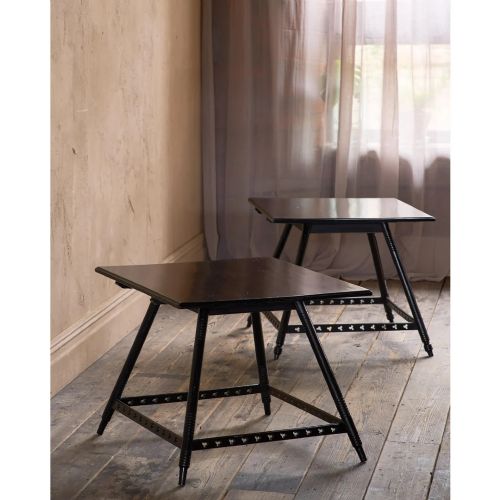
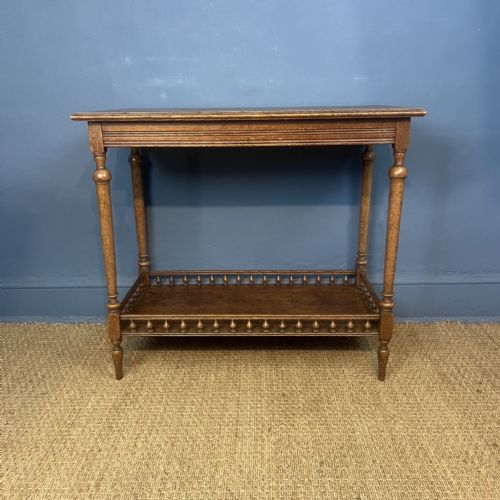
A victorian aesthetic table encompasses side pieces, occasional tables, centre tables, and writing desks produced primarily during the final decades of the nineteenth century. These forms emerge from the wider Aesthetic Movement, drawing inspiration from Japanese prints, Moorish geometry, and simplified classical lines.
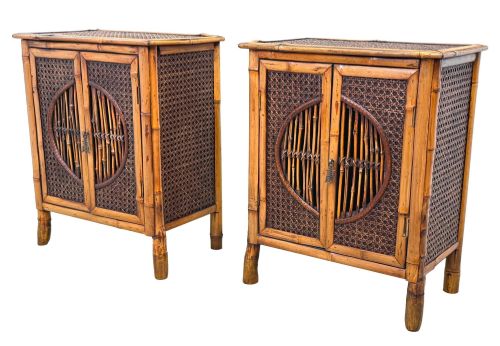
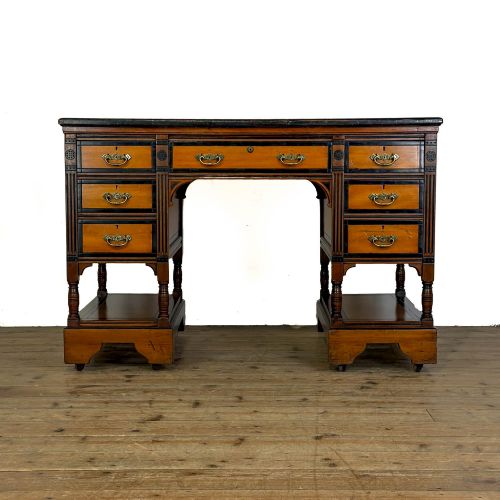
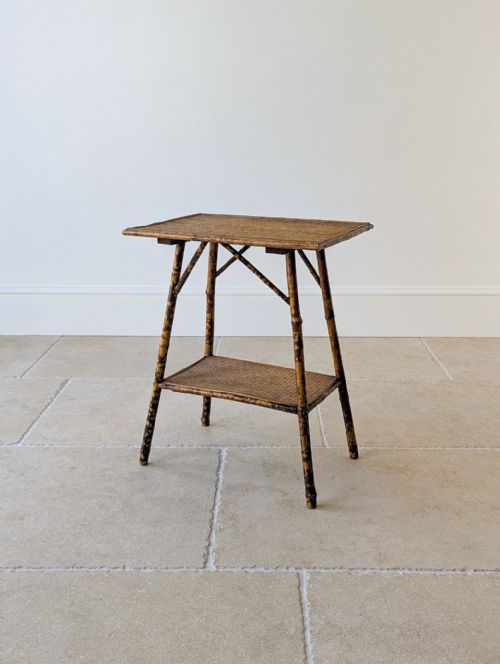
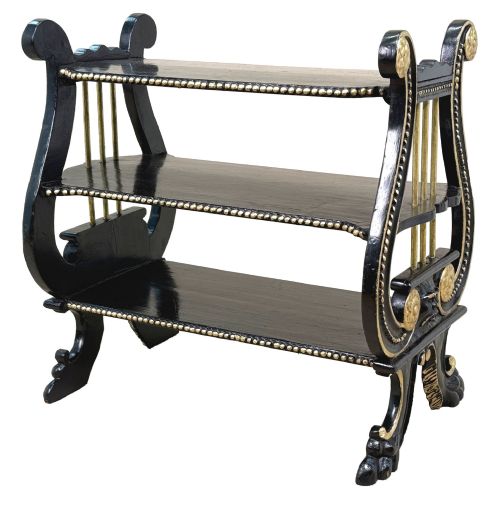
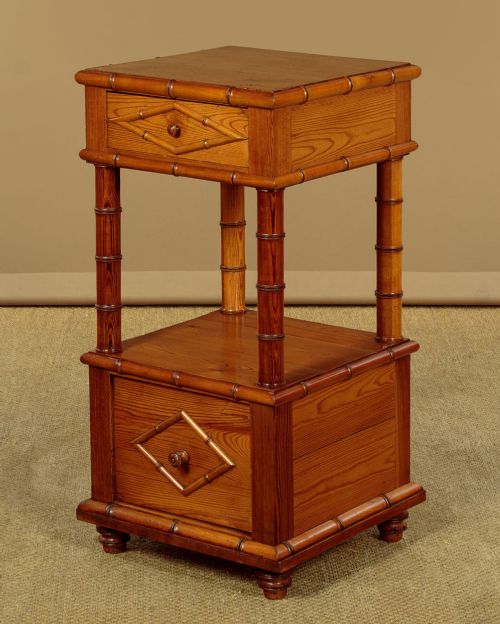
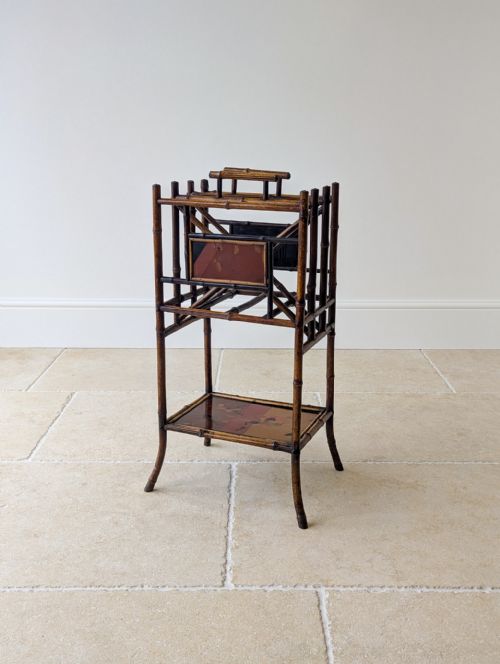
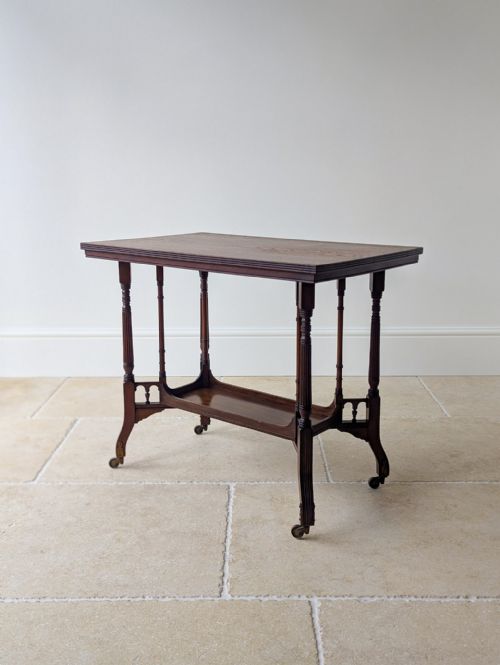
The pieces appearing on this page range from compact bamboo bedside stands and octagonal occasional tables to substantial mahogany library desks. Makers of the period adopt varied formats, including folding gypsy tables draped in textiles, multi-tiered étagères, and corner card tables.
Originating largely in the 1880s and 1890s, these tables reflect a distinct shift away from heavy, over-carved mid-century revivalism towards slender silhouettes and planar surfaces. Walnut, oak, and ebonised hardwood serve as the primary structural foundations for these domestic furnishings.
Materials and Construction
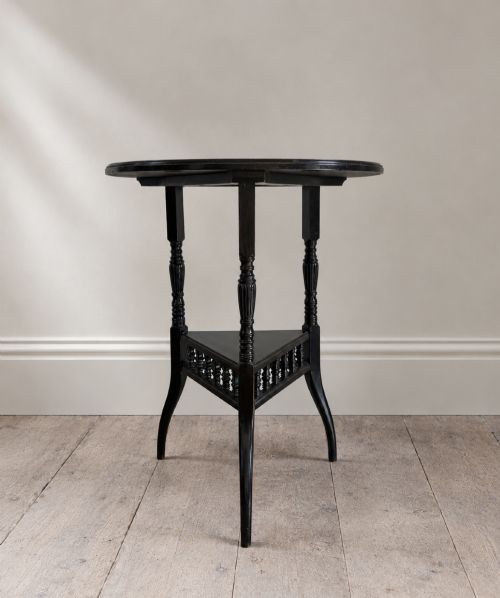
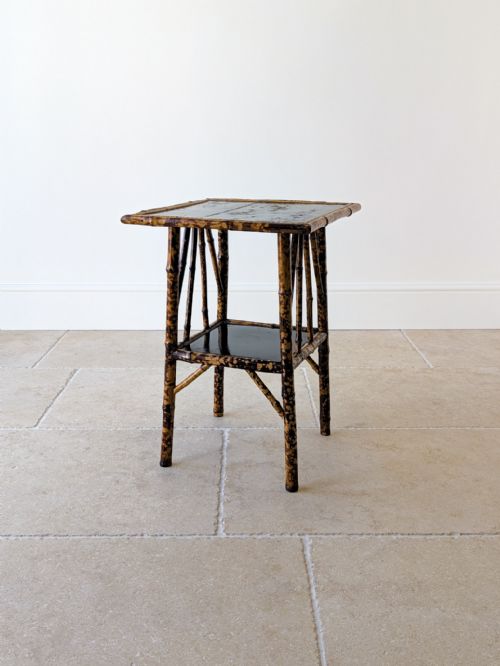
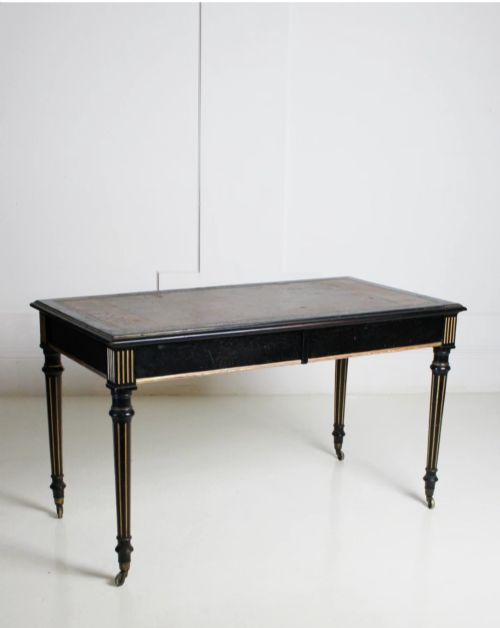
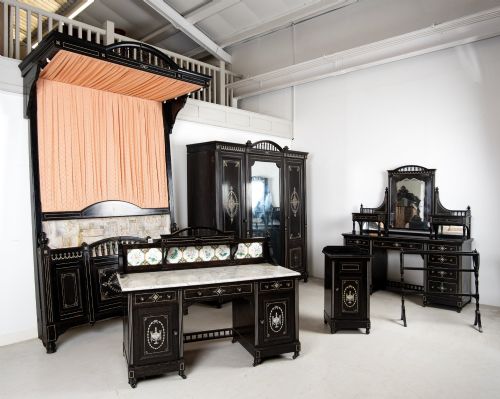
Ebonised wood and bamboo dominate the construction methods, often paired with contrasting parcel gilding or subtle incised linework. Workshops frequently utilise mahogany, walnut, and exotic timbers like amboyna and coromandel for veneering flat table tops and drawer fronts.
Joinery techniques balance lightness with stability, employing slender turned legs, structural stretchers, and pegged joints to support multi-tiered designs. Surface decoration involves hand-painting, lacquer panels, brass mounts, and geometric marquetry inlay.
Victorian households loved folding gypsy tables so much they draped them in heavy velvet just to keep the card games secret.
Evaluating Construction and Design
Quality separates ordinary mass-produced items from works by premier cabinet-makers through the crispness of turned details, the depth of ebonising, and the precision of inlaid wood or brass work. Superior examples exhibit tightly fitted joinery that prevents wobble in slender bamboo or ebonised frames.
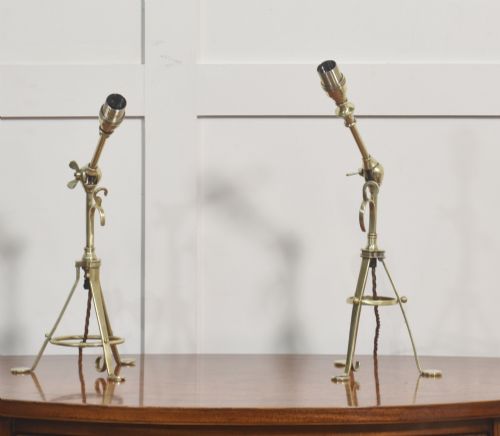
The choice of secondary timbers and the quality of veneers on table tops indicate the tier of production, with finer workshops selecting figured walnut, amboyna, or bird's-eye maple. Original hardware, such as adjustable brass mechanisms and stamped makers' marks, further distinguishes high-ranking pieces.
Gregory & Co·Hindley and Sons·W.A.S. Benson·Liberty & Co·Druce & Co·Blyth & Son·Lamb Manchester·Maple & Co
The Victorian Aesthetic Table Glossary
- Ebonised
- Wood treated to imitate ebony, usually through a process of staining or painting a dense hardwood black. This finish is a hallmark of nineteenth-century design.
- Anglo-Japanese
- A hybrid style combining traditional Japanese artistic motifs with British furniture forms. It appears frequently on ebonised and bamboo framework.
- Gypsy Table
- A small occasional table featuring three spindly wooden legs and a fabric-draped top. These pieces gained widespread popularity during the late Victorian era.
- Étagère
- A set of open shelves for displaying small ornaments, often integrated into side tables or standing cabinets. They showcase multiple tiers supported by slender uprights.
- Marquetry
- The art of applying pieces of veneer to a structure to form decorative patterns. Craftsmen use contrasting woods to create geometric or floral motifs.
Victorian Aesthetic Table: Frequently Asked Questions
How do I identify an authentic aesthetic table?
Authentic pieces rely on nineteenth-century construction methods, utilising solid ebonised hardwoods, bamboo, or veneers over traditional timber cores. Look for period joinery and stylistic markers such as Anglo-Japanese incised detailing rather than modern reproductions.
Examine the underside and interiors for maker stamps, paper labels, or handwritten signatures from workshops active during the 1880s and 1890s. These indicators confirm the timeline and origin of the piece.
Were these tables used for dining?
Most surviving examples serve as occasional, side, or centre tables designed for libraries, drawing rooms, and bedrooms rather than formal dining. Their slender frames and lower tiers suit holding books, lamps, or decorative ornaments.
Larger octagonal centre tables and library tables provide stable surfaces for reading and writing, while smaller bamboo or gypsy variants accommodate light domestic use.
How should I care for ebonised wood?
Protect ebonised surfaces by keeping them away from direct sunlight and maintaining stable indoor humidity to prevent wood movement and finish cracking. Dust gently with a dry, soft cloth rather than using abrasive cleaning agents.
Apply a microcrystalline wax sparingly to preserve the sheen of the black finish without leaving a heavy residue that attracts dust.
What is the difference between bamboo and faux bamboo?
True bamboo tables utilise natural plant stems joined with specialised pins and wrap-around bindings to form lightweight structural frameworks. These pieces are valued for their organic texture and botanical authenticity.
Faux bamboo consists of hardwood, such as beech or birch, carved and painted by hand to mimic the segmented nodes of real cane. Workshops employed this technique to achieve the exotic look while ensuring greater weight-bearing capacity.