



Antique Tripartite Table
An antique tripartite table unites a compact top with a three-way base, offering a stable and balanced surface for your home.
Antique Tripartite Table
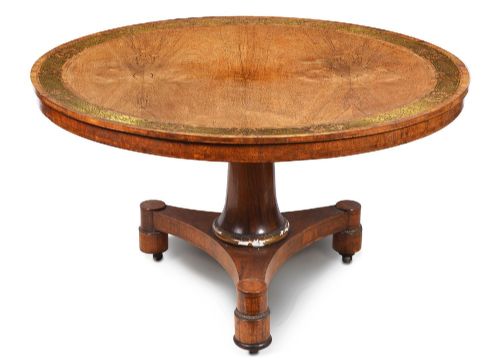
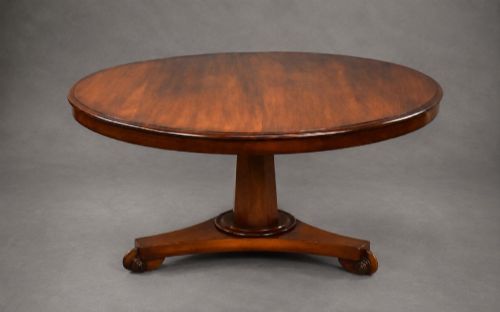
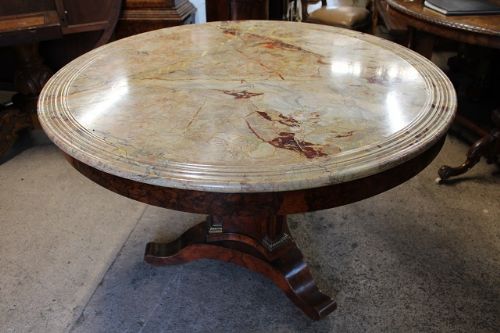
When you search for an antique tripartite table, you are looking at forms defined by a three-way base structure, most frequently seen here as centre tables, wine tables, and torchere stands. These pieces emerge from the nineteenth century, encompassing Regency, Victorian, and George IV periods alongside French Empire styles. The most common versions you will meet on this page are occasional and centre tables featuring circular tops supported by three-part legs.
The selection ranges from mahogany and rosewood centre tables to yew wood torchere stands and ebonised wine tables with chinoiserie decoration. You will also encounter specialised forms like tilt-top breakfast tables and marble-topped occasional pieces. Each item utilises the tripartite footprint to combine decorative presence with practical stability on uneven floors.
How they were made
Cabinet makers constructed these tables using dense timbers such as mahogany, rosewood, yew, and burr walnut, frequently applying marquetry inlay or ebonising for surface contrast. The three-way bases often incorporate cast brass elements and marble inserts to add structural weight and visual detail.
Joinery techniques focus on securing the central column to the three-way foot configuration, whether through sturdy pegging or threaded metal fastenings. Tilt-top mechanisms rely on stable catch plates and pivot blocks that allow the surface to drop flat when in use.
Antique Tripartite Table Retail Price Guide 2026
Typical asking prices for tripartite table among the pieces listed under this phrase on Sellingantiques today, from the lower quarter to the upper quarter. They describe what is for sale here now, not the wider market.
What varies in quality
The selection of timber grain largely dictates the visual merit of each piece, with figured veneers and rich burr walnut sitting above plain secondary woods. Cabinet work precision is visible in the tightness of the joints where the three legs meet the central pillar.
Refinement in cast brass mounts and the crispness of marquetry inlay distinguish standard production from exceptional examples. The proportional balance between the top surface and the spread of the tripartite base determines how harmonious the silhouette appears.
The Antique Tripartite Table Glossary
- Tripartite
- Divided into three parts, describing a base or pedestal that splits into three distinct feet or supports. This arrangement provides a wider footprint for stability.
- Torchere stand
- A tall, slender decorative stand originally designed to hold a candle or torch. These pieces now serve to display vases, sculptures, or small lamps.
- Marquetry inlay
- Decorative patterns formed by fitting small pieces of contrasting veneer into a prepared wooden surface. This technique creates elaborate pictorial or geometric designs.
- Ebonised
- Wood treated with a dark finish to imitate the appearance of ebony. It is frequently utilised in nineteenth-century furnishings to create a stark, formal contrast.
Antique Tripartite Table: Frequently Asked Questions
Where should I place a tripartite table?
These tables suit hallways, drawing rooms, or corners where a circular top and three-way base can be viewed from multiple angles without blocking pathways. Their compact footprints allow them to function effectively as centrepieces or lamp tables.
Ensure the surrounding floor space accommodates the spread of the three feet so the piece remains balanced and prominent within the room.
How do I care for the wood surface?
Maintain the finish by dusting regularly with a soft, dry cloth and avoiding placement near direct heat sources or strong sunlight. Periodic application of appropriate wax polish preserves the sheen on timbers like mahogany and rosewood.
Keep marble inserts clean using a damp cloth and mild soap, ensuring no acidic liquids remain on the stone surface.
What is a tilt-top mechanism?
A tilt-top mechanism allows the table surface to hinge into a vertical position when not in use, saving space in smaller rooms. This design was particularly popular for breakfast tables and occasional pieces in the nineteenth century.
The mechanism uses a simple catch or wooden wedge to lock the top securely in the horizontal position during use.
How do I identify the period?
Dating relies on observing the timber choices, construction methods, and stylistic motifs present in the legs and column. Regency and George IV examples often feature heavier classical proportions, while later Victorian pieces incorporate diverse influences like chinoiserie or French Empire revival.
Examine the underside of the top and the joints of the base for tool marks and timber ageing that align with nineteenth-century manufacturing practices.