







Black Lacquer Tilt Top
A black lacquer tilt top table combines a practical folding mechanism with painted decoration, offering a versatile surface that stores flat against a wall.
Black Lacquer Tilt Top
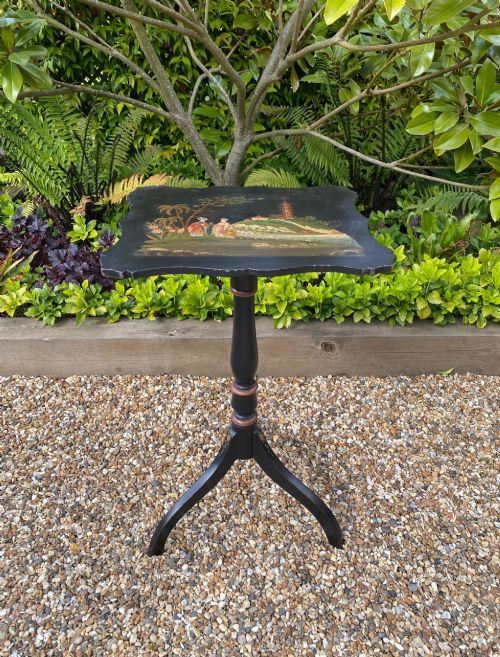
When you search for black lacquer tilt top, you are looking at occasional tables, side tables, and wine tables designed with hinged tops. These versatile pieces appear across the Georgian, Regency, and Victorian periods, alongside items from around nineteen hundred and the Edwardian era.
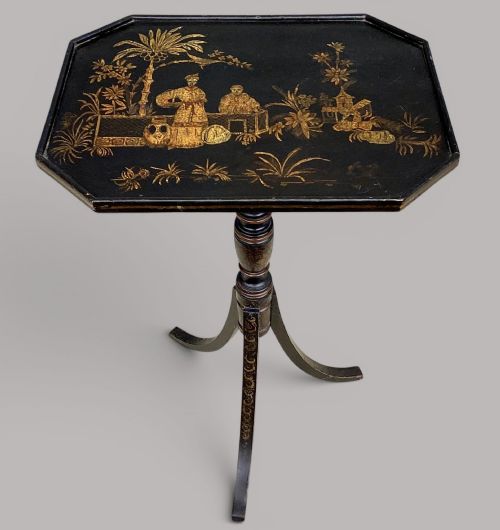
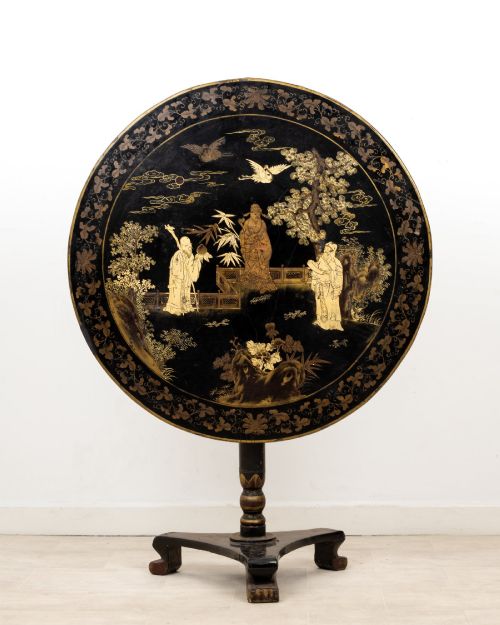
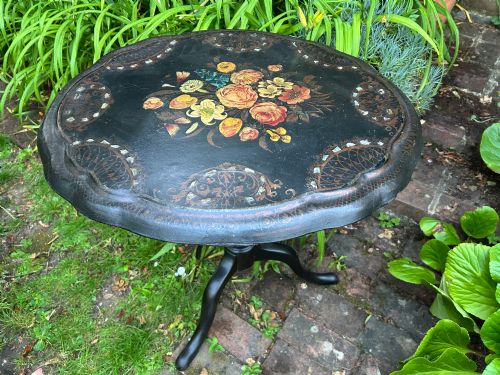
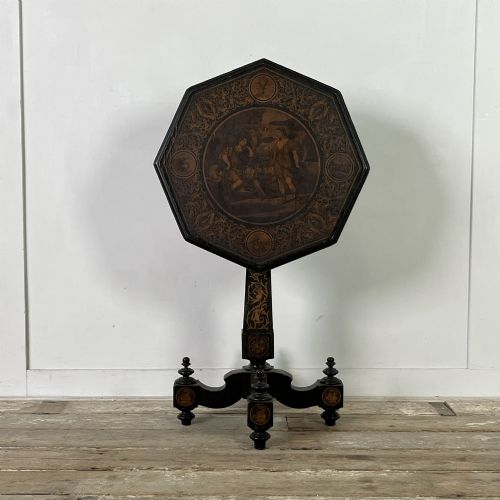
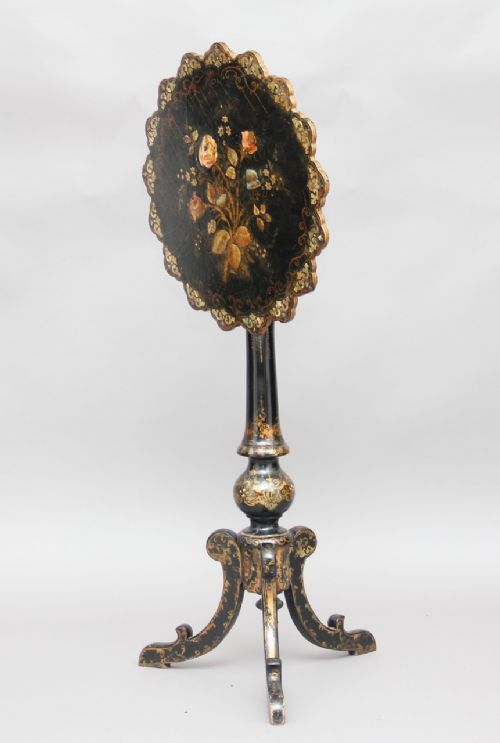
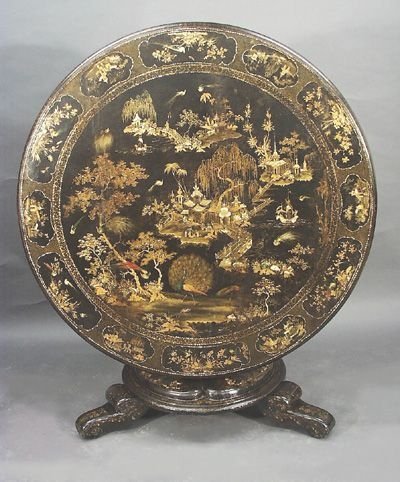
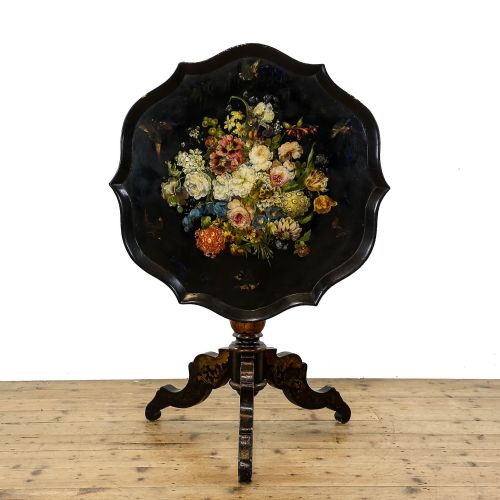
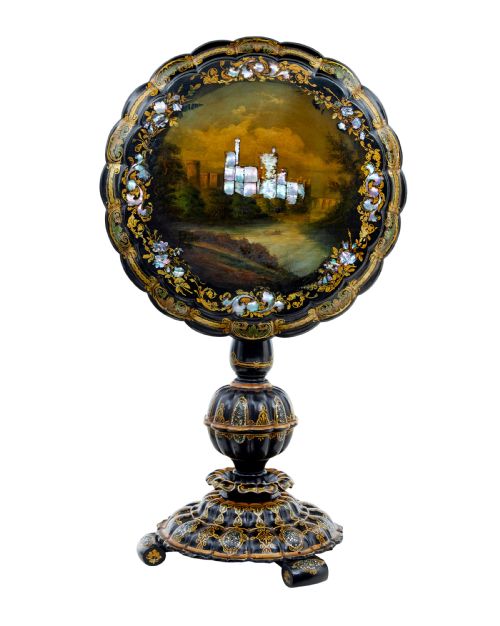
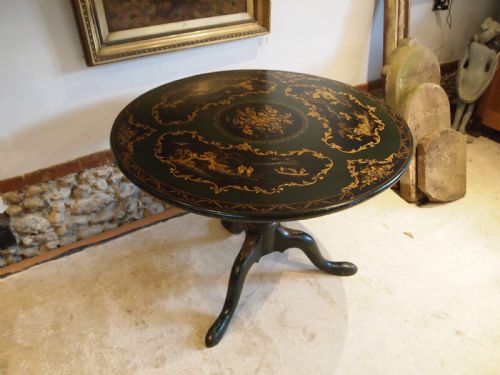
The versions you are most likely to meet on this page feature dark lacquer finishes embellished with Chinoiserie scenes, floral motifs, or ink work. Many examples take the form of tripod tables or tray tables, utilising papier-mâché or wood as a base.
How they were made
Maker's workshops constructed these tables using wood or papier-mâché, applying layers of dark lacquer to form a smooth ground. Artisans then decorated the surfaces by hand using paint, gold leaf, and parcel gilt detailing.
Selected examples incorporate inlaid mother-of-pearl to catch the light and add depth to the pictorial designs. The tilting mechanism relies on a sturdy wooden block and catch attached beneath the top to the central tripod base.
Black Lacquer Tilt Top Retail Price Guide 2026
Typical asking prices for black lacquer tilt top among the pieces listed under this phrase on Sellingantiques today, from the lower quarter to the upper quarter. They describe what is for sale here now, not the wider market.
Listings feature pieces spanning the Georgian, Regency, and Victorian periods, alongside items from the Edwardian era.
What varies in quality
The distinction between standard and superior examples rests upon the precision of the hand painting and the depth of the lacquer finish. Finer pieces display crisp Chinoiserie draughtsmanship and careful application of gold leaf rather than plain stencil work.
Structural integrity also separates the range, visible in the stability of the tilt mechanism and the turning of the tripod supports. Tables that retain their original surfaces without heavy overpainting command greater interest from collectors.
The Black Lacquer Tilt Top Glossary
- Tilt top
- A table mechanism featuring a hinged top that rotates and folds vertically for storage. This clever design allows the furniture to save space when not in use.
- Chinoiserie
- European artistic interpretations of Chinese and East Asian decorative styles. This aesthetic dominated many Regency and Victorian lacquer finishes.
- Japanned
- European imitation of East Asian lacquerwork, created through successive layers of varnish and paint. The technique was widely applied to eighteenth and nineteenth-century furniture.
- Papier-mâché
- A composite material made from paper pulp or layers of paper bound with glue, pressed into moulds. It provided a smooth, durable base for Victorian tray tables.
- Parcel gilt
- Partial gilding applied to specific decorative elements to highlight carved details or painted motifs. It creates a subtle contrast against the black lacquer background.
Black Lacquer Tilt Top: Frequently Asked Questions
What is a tilt top table?
A tilt top table is an occasional or wine table designed with a hinged mechanism beneath the surface. This allows the top to be folded into a vertical position when not in use.
In historic interiors, these tables were stored against walls to free up floor space in smaller rooms. They combine functional utility with decorative painted surfaces.
How do I date a black lacquer table?
Dating relies on examining the construction materials, base design, and painting style. Georgian and Regency pieces often feature timber tripod bases with intricate Chinoiserie.
Victorian examples frequently utilise papier-mâché and incorporate mother-of-pearl inlay. The style of the painted ornament typically reflects the aesthetic tastes of its specific period.
Where were these tables used?
These pieces served primarily as occasional, side, or wine tables in reception rooms and parlours. Their portable nature allowed them to be moved easily beside seating.
The tilting mechanism made them practical for multi-purpose rooms where furniture needed frequent rearrangement throughout the day.
How do I care for lacquer furniture?
Lacquer and painted surfaces require gentle treatment to preserve the delicate gold leaf and pigmented designs. Dusting with a soft, dry cloth prevents the accumulation of abrasive particles.
Keep these tables away from direct sunlight and damp environments to protect the wood and papier-mâché substrates from warping.