





Lacquer Wine Table
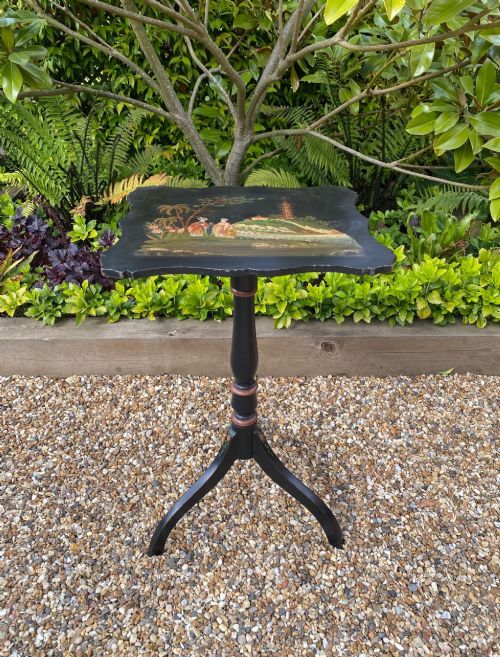
These lacquer wine table pieces are compact surfaces of wood and papier-mâché finished with rich painted decoration, ideal for holding a glass beside a chair.
Lacquer Wine Table
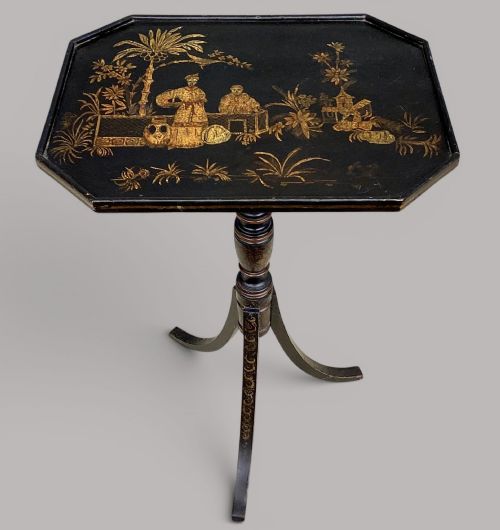
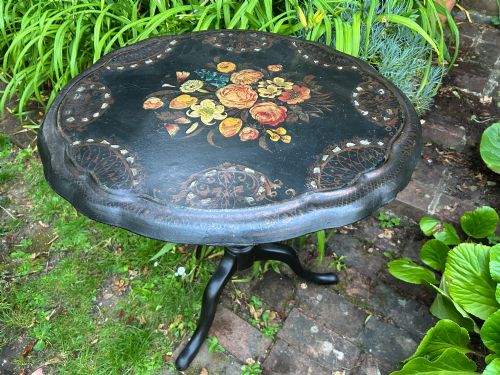
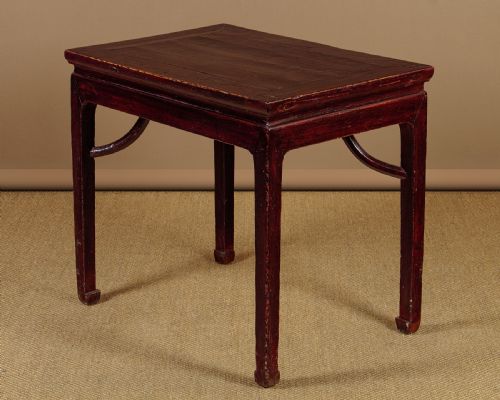
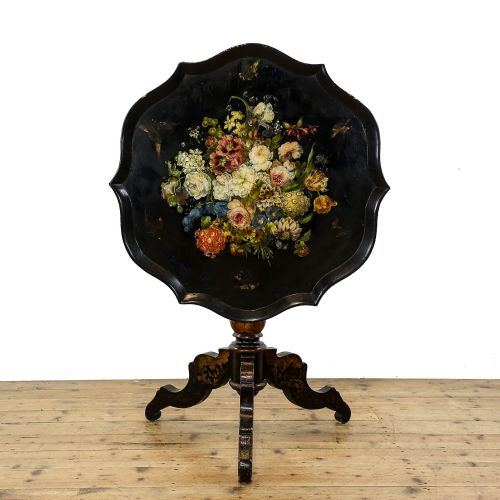
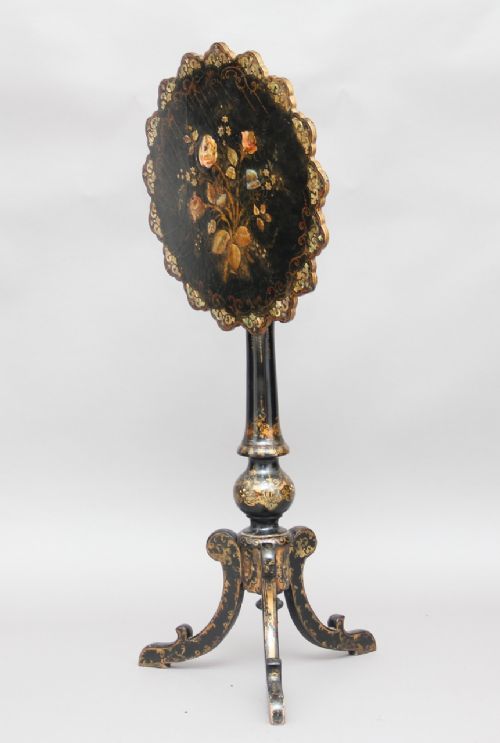
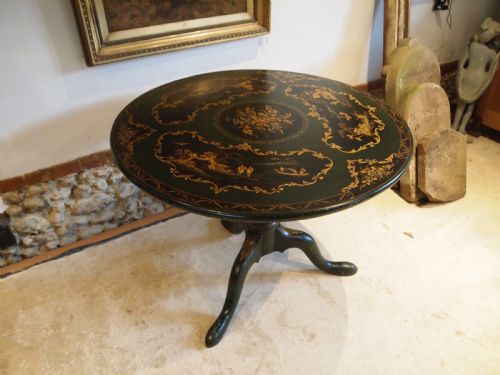
A lacquer wine table is a small portable surface designed for beverages, featuring a raised or flat top supported by a central pillar and tripod base. You encounter these most frequently from the nineteenth century, finished with black or red lacquer and painted ornament.
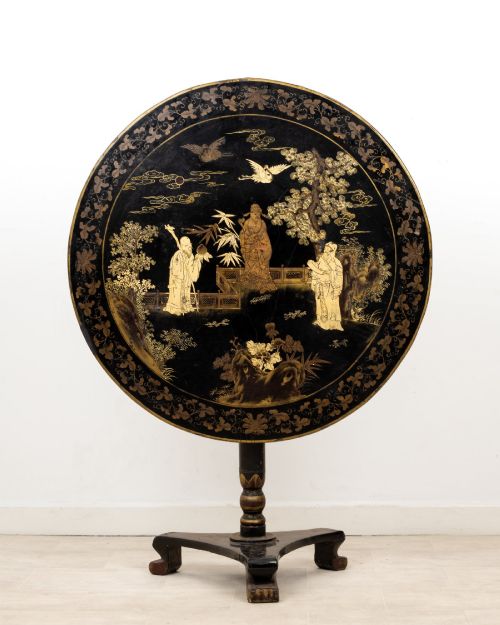
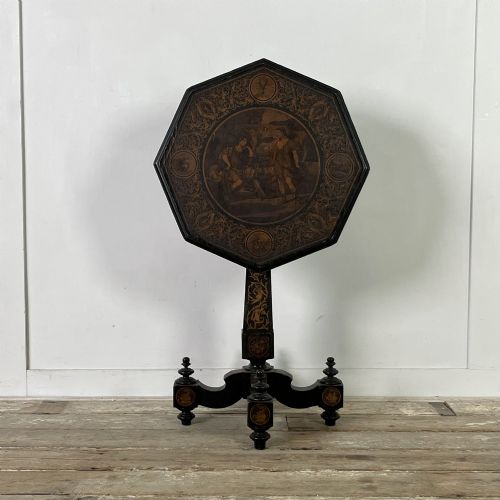
The form crosses several stylistic categories, including Chinoiserie, Regency, and Victorian designs. Makers adapted the tilt-top mechanism so the surface could fold down and stand flat against a wall when not in use.
How they were made
Construction relies on timber or moulded papier-mâché formed into lightweight trays and circular tops. Artisans applied successive layers of lacquer to build a smooth base before adding detail.
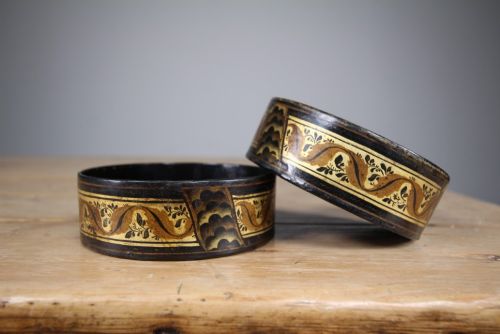
Decoration incorporates hand painting, gold leaf, and gilt highlights, sometimes combined with mother-of-pearl inlay. Japanning techniques mimic Asian finishes using European pigments and varnishes over wood.
Listings feature items built from wood, papier-mâché, and elm across Georgian, Regency, and Victorian periods.
What varies in quality
The refinement of the painted decoration dictates the standard of the piece, ranging from simple monochrome outlines to intricate polychrome Chinoiserie scenes. Superior examples display crisp brushwork and detailed gilding that retain their depth.
The structural integrity of the tilt-top mechanism and the turning of the central column also separate standard items from finer works. A stable tripod base and smooth pivoting action indicate careful carpentry during manufacture.
The Lacquer Wine Table Glossary
- Chinoiserie
- European interpretation of Chinese and East Asian artistic styles, popular in furniture decoration. This aesthetic relies on motifs of figures, pavilions, and landscapes rendered in gold and colour.
- Japanning
- European imitation of East Asian lacquerwork developed in the seventeenth and eighteenth centuries. It involves building layers of varnish and paint, often cured by heat, to achieve a glossy finish.
- Papier-mâché
- A composite material made from paper pulp or layers of paper mixed with glue and resin, pressed into moulds. When dry, it provides a stable, lightweight surface for painting.
- Tilt-top
- A table construction featuring a hinge mechanism beneath the surface. This allows the top to rotate and rest vertically when stored.
- Tripod base
- A three-legged support structure attached to a central column. It ensures stability on uneven floors by keeping all three feet in firm contact with the ground.
Lacquer Wine Table: Frequently Asked Questions
What is a lacquer wine table used for?
These tables served as movable surfaces for holding wine glasses, bottles, or small lamps during evening gatherings.
Today, they function as compact side tables beside seating areas where floor space is limited.
How do I care for lacquer furniture?
Keep these surfaces away from direct sunlight and excessive heat to prevent the lacquer from cracking or fading.
Dust gently with a dry, soft cloth and avoid chemical polishes that can damage the delicate painted finish.
Can the top fold down?
Many examples feature a tilt-top mechanism that lets the surface pivot from horizontal to vertical.
This original design allowed the furniture to be tucked away against a wall when the room was cleared.
How do I identify a papier-mâché top?
Papier-mâché surfaces feel lighter than solid timber and lack natural wood grain underneath the paint layers.
They often present a smooth, dense composition that proved ideal for embedding mother-of-pearl or detailed gold work.