

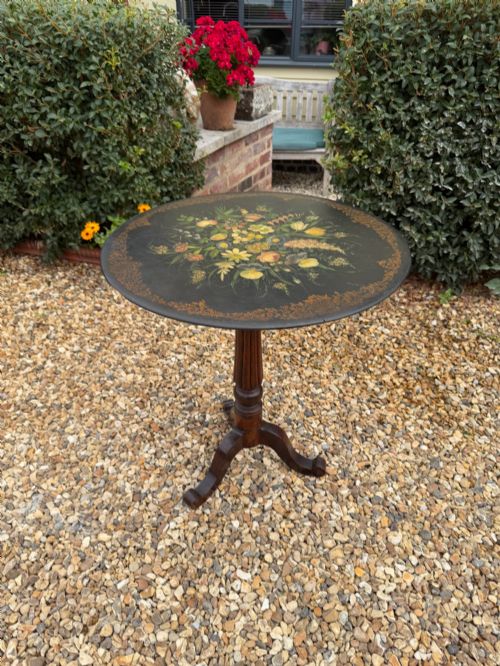
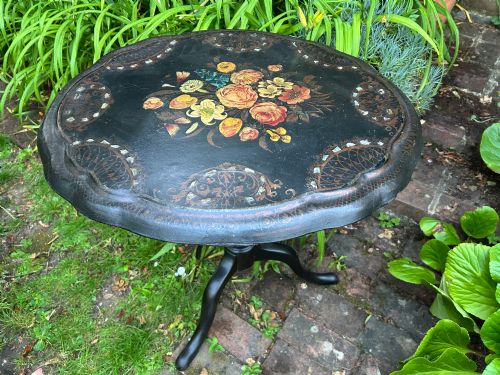

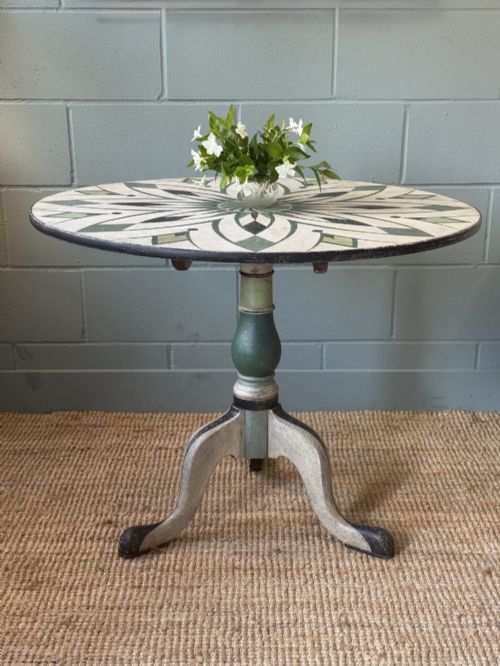


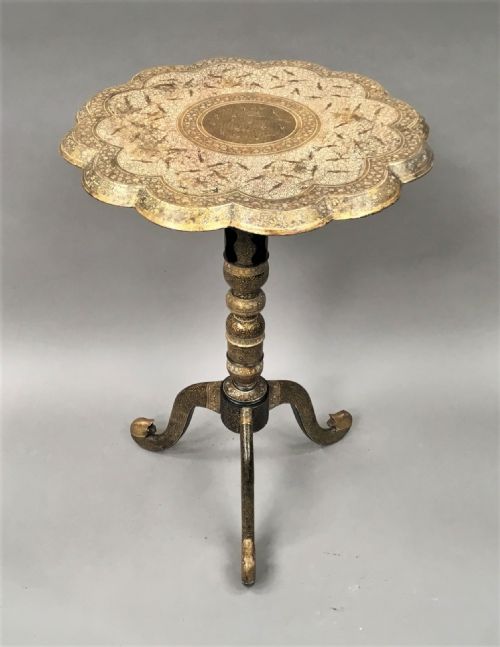

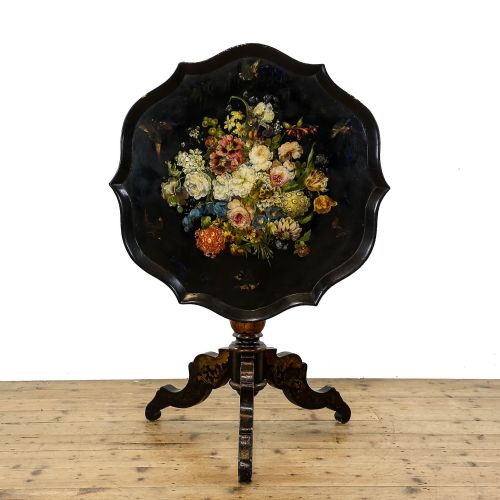


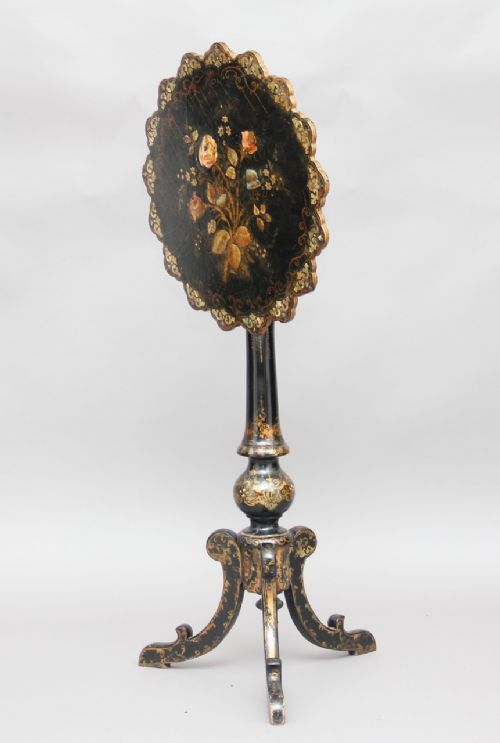
Painted Floral Tripod Table
A painted floral tripod table brings hand-decorated botanical charm and practical surface space to any room.
Painted Floral Tripod Table
A painted floral tripod table combines a central pillar supported by three feet with a decorated surface, most commonly appearing in Victorian forms. These versatile pieces function as occasional tables, wine tables, side tables, and plant stands within domestic interiors.
The selection on this page ranges widely across historical periods from the nineteenth century into the early twentieth century. Examples encompass diverse regional interpretations including Italian Rococo Revival, Regency satinwood, and Victorian folk art styles.
Buyers frequently encounter tilt-top mechanisms designed to allow the table surface to fold vertically when not in use. Formats vary from small circular occasional tables to taller torchere stands and larger dining or hall tables.
How they were made
Cabinetmakers constructed these supports primarily from timber, utilising woods such as satinwood alongside alternative bases that received ebonising or dark lacquer finishes. Papier-mâché also forms the structural body for certain pieces.
Artisans applied hand-decorated paintwork directly to the wooden or lacquered surfaces, frequently incorporating detailed floral motifs. Some examples incorporate mother-of-pearl inlay or gilt embellishments to enhance the decorative scheme.
Painted Floral Tripod Table Retail Price Guide 2026
Typical asking prices for painted floral tripod table among the pieces listed under this phrase on Sellingantiques today, from the lower quarter to the upper quarter. They describe what is for sale here now, not the wider market.
Object forms span occasional tables, side tables, wine tables, dining tables, and plant stands.
What varies in quality
The refinement of the hand-painted floral decoration separates standard utility pieces from exceptional examples. Delicately detailed brushwork executed with precision commands greater appreciation than heavier or later surface additions.
The integrity of the tripod base and the mechanical performance of any tilt-top mechanism dictate structural worth. Timber selection, such as figured satinwood or sound papier-mâché, fundamentally influences the standing of the piece.
The Painted Floral Tripod Table Glossary
- Tripod table
- A small freestanding table supported by a central pillar resting on three feet. This construction provides stable placement on uneven floors.
- Tilt-top table
- A table featuring a hinged top that rotates into a vertical position for storage. This mechanism appeared frequently on nineteenth-century occasional and wine tables.
- Japanned wood
- European furniture finished with a glossy dark lacquer imitating East Asian export wares. Artisans often decorated these surfaces with hand-painted floral or figural scenes.
- Papier-mâché
- A composite material made from paper pulp mixed with adhesive, pressed and dried into rigid forms. It provided a smooth base for lacquer and painted decoration in Victorian times.
- Torchere
- A tall, slender standalone pedestal or stand designed to hold a candle or a plant. These decorative supports frequently feature circular tops and tripod bases.
Painted Floral Tripod Table: Frequently Asked Questions
What is a painted floral tripod table?
A painted floral tripod table is a small occasional table supported by three legs and decorated with hand-painted botanical motifs. These pieces date predominantly from the nineteenth century.
They appear in formats ranging from wine tables and side tables to tall plant stands.
What materials were used for these tables?
Cabinetmakers built the frames from various woods, sometimes ebonising the surface or applying black lacquer. Papier-mâché also served as a durable base for detailed painted decoration.
Finishes frequently incorporated gilt highlights, mother-of-pearl inlay, or fine hand-brushwork.
How do you distinguish Victorian styles here?
Victorian examples span diverse revivals and folk art interpretations, mixing traditional forms with heavy lacquer or Japanned finishes. Later nineteenth-century pieces often embrace Chinoiserie or Queen Anne revival elements.
Looking closely at the paint application helps separate standard decorative pieces from finer artistic works.