





Black Painted Tilt Table
A black painted tilt table brings functional ingenuity and hand-painted artistry together, offering a flexible surface that folds away when not in use.
Black Painted Tilt Table
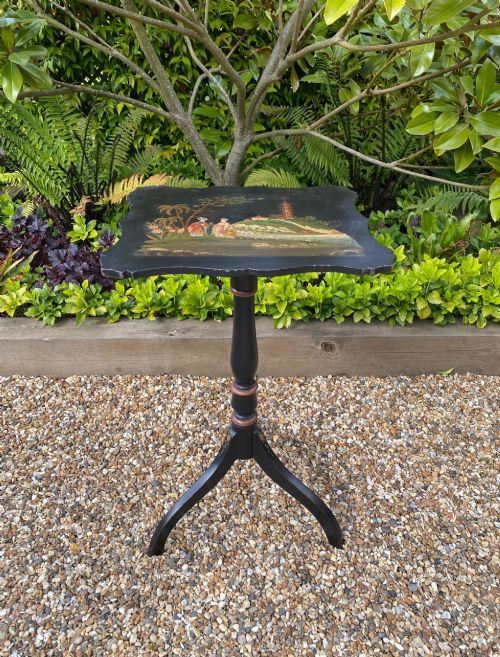
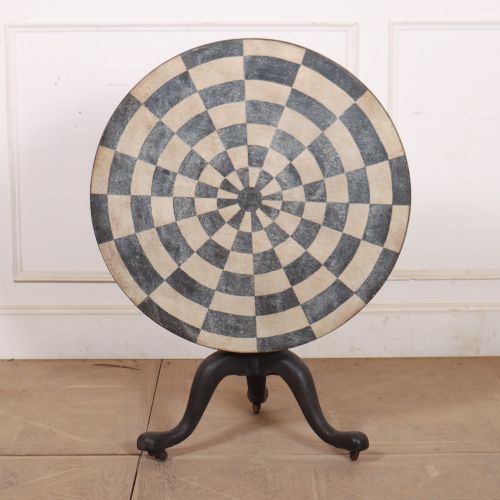
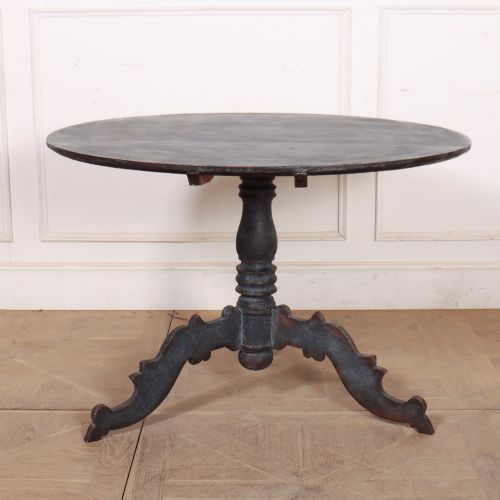
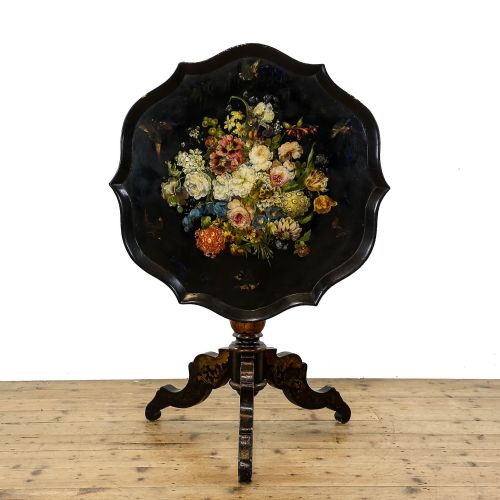
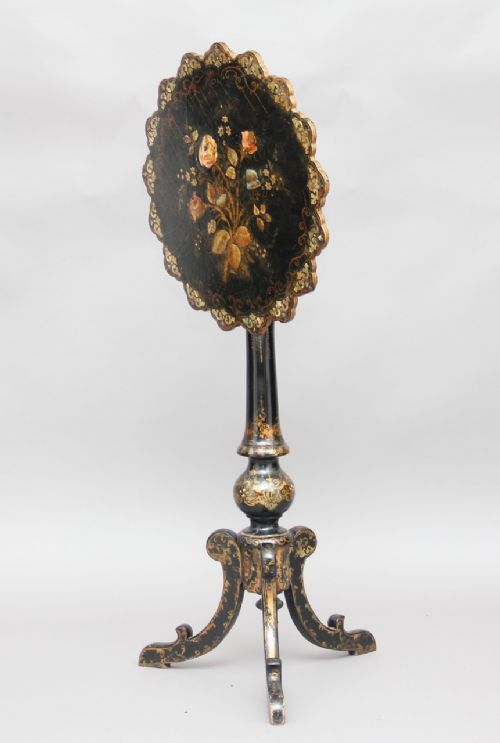
A black painted tilt table combines a pivoting top with a dark finish, appearing across the eighteenth, nineteenth, and early twentieth centuries in forms such as tripod tables, wine tables, and occasional tables. These pieces serve as versatile surfaces for supper, drinks, or display, designed to tilt vertically for compact storage against a wall when not in use.
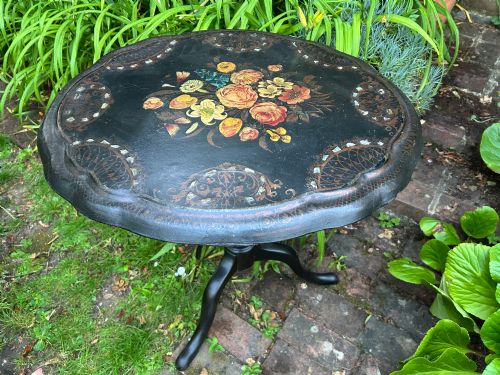
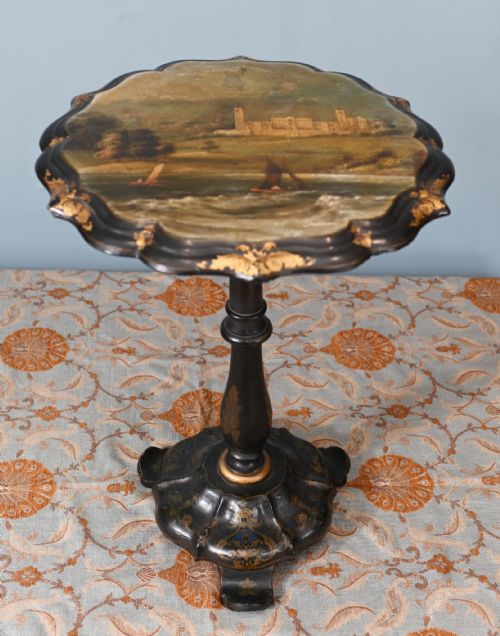
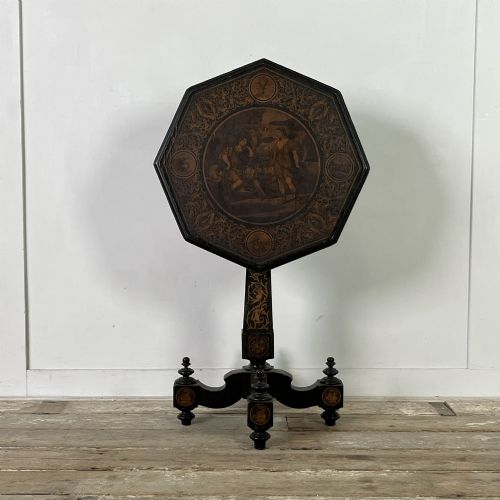
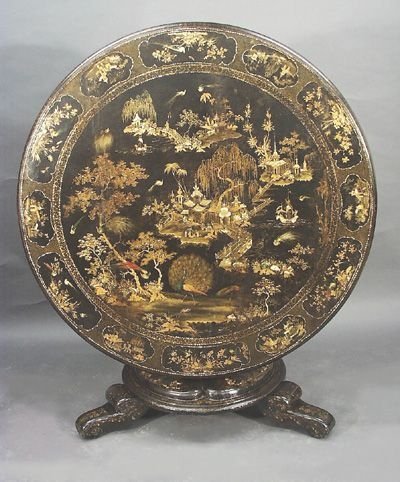
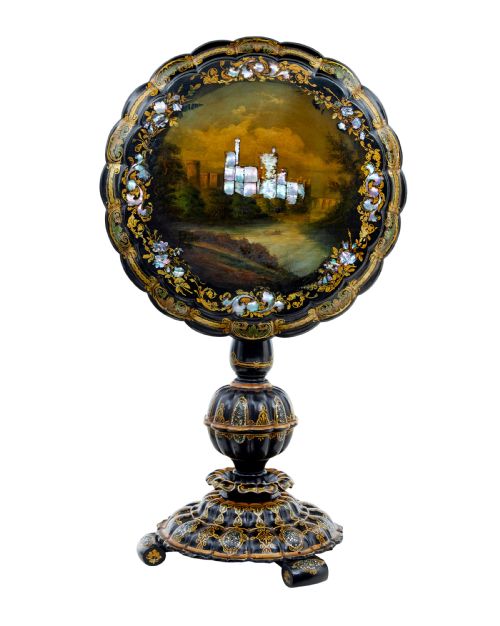
The versions met most frequently on this page span the Victorian era and the nineteenth century, encompassing English, Swedish, and Chinese origins alongside Chinoiserie and Japanned decorative schemes. Examples range from simple painted wood and ebonised timber to elaborate papier-mâché constructions adorned with mother of pearl and gold leaf.
Materials and construction
Construction relies upon traditional cabinet-making timbers and papier-mâché, shaped into tripod bases and tilting mechanisms that allow the tabletop to pivot on a central block. Artisans applied layers of dark paint, lacquer, or ebonised finishes to the wooden and moulded pulp surfaces to create a smooth, deep base.
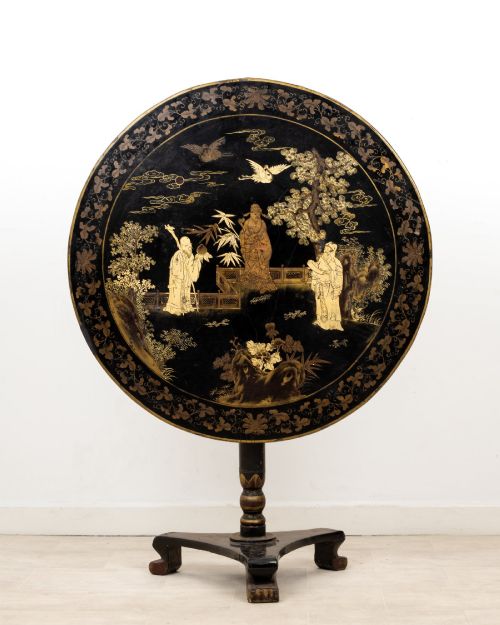
Decoration involves hand painting, ink work, and gilding with gold leaf, often executed in Chinoiserie or Japanned styles depicting oriental motifs and landscapes. Selected pieces incorporate mother of pearl inlay directly into the papier-mâché matrix to catch the light against the dark background.
Black Painted Tilt Table Retail Price Guide 2026
Typical asking prices for black painted tilt table among the pieces listed under this phrase on Sellingantiques today, from the lower quarter to the upper quarter. They describe what is for sale here now, not the wider market.
Some Victorian papier-mâché tables carry royal household provenance, linking an ordinary tea ritual directly to Osbourne House and Queen Victoria.
Judgements of quality
Quality rests upon the crispness of the hand-painted detail and the depth of the lacquer or black finish, where finely executed Chinoiserie scenes and gold leaf work distinguish superior examples from simpler decoration. The stability of the tilt mechanism and the joinery of the tripod base dictate the structural integrity of each piece over centuries of pivoting use.
The choice of primary material also establishes gradation, with moulded papier-mâché inlaid with mother of pearl representing a more specialised manufacturing process than standard painted wood. Preservation of the original surface patination without excessive modern intervention maintains the integrity and character of the antique.
The Black Painted Tilt Table Glossary
- Tilt top table
- A table featuring a hinged mechanism beneath the surface that allows the top to rotate into a vertical position. This design enables the furniture to be tucked away against a wall to save floor space.
- Papier-mâché
- A composite material made from paper pulp or reinforced paper sheets mixed with glue and resin, then pressed and dried. It provides a durable, smooth ground for heavy black lacquer and mother of pearl inlay.
- Japanned
- A European imitation of East Asian lacquerwork achieved through layered varnishes and black painting. It often incorporates raised gold details and oriental motifs.
- Chinoiserie
- A European artistic style reflecting Chinese and East Asian motifs, frequently rendered in hand-painted gold and colours on a black lacquer ground. This style flourished across eighteenth and nineteenth-century furniture.
- Tripod base
- A supporting structure consisting of three curved legs radiating from a central pillar. It provides stable floor contact on uneven historic floorboards.
Black Painted Tilt Table: Frequently Asked Questions
What is a tilt top table?
A tilt top table is a piece of furniture featuring a pivoting mechanism that allows the surface to rotate from horizontal to vertical. This clever engineering enables the table to occupy minimal space when stored against a room's perimeter.
Historically, these tables remained folded away until needed for dining, reading, or serving wine. The mechanism typically involves a wooden catch or block secured beneath the top.
How do I care for papier mache?
Papier-mâché requires gentle handling and protection from excessive moisture and direct heat sources. Dust the surface regularly with a soft, dry cloth to prevent accumulation.
Avoid using liquid polishes or harsh chemical cleaners that can degrade the aged lacquer and paint. Maintaining a stable indoor humidity prevents the composite material from warping or cracking.
What is Japanned furniture?
Japanning is a European technique developed to emulate traditional Asian lacquerwork using varnishes, paints, and metallic powders. Artisans built up multiple layers of dark ground to achieve a glossy, durable finish.
These surfaces often feature gilt or painted chinoiserie scenes depicting figures, pavilions, and landscapes. The method gained popularity during the Georgian and Victorian periods for occasional tables and trays.
How do I date a black painted table?
Dating relies on examining the construction methods, materials, and decorative style visible in the piece. Victorian examples frequently utilise moulded papier-mâché or ebonised wood with mother of pearl inlay, while eighteenth-century items often employ solid timber with hand-painted Japanning.
Hardware details, such as the shape of the tilt mechanism and screw threads, also provide clues to the period of manufacture. Comparing the wear patterns on the base and tabletop helps confirm age.