
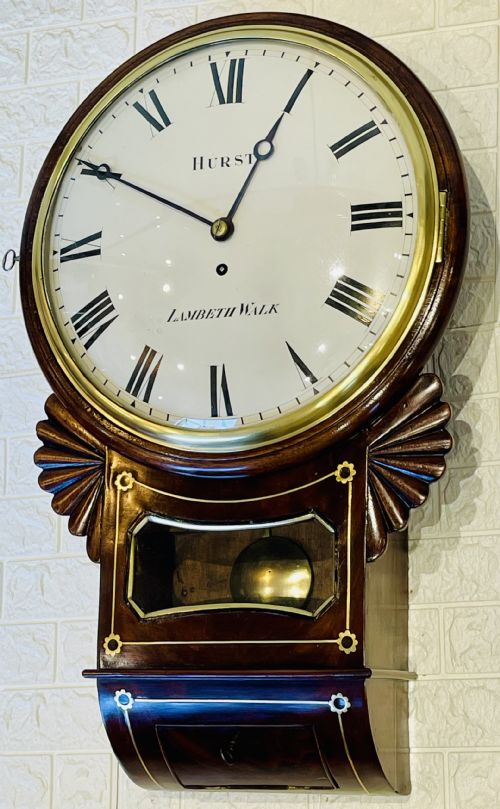


Regency Brass Inlay Clock
A regency brass inlay clock brings precision timekeeping into the room through polished mahogany and rosewood cases mapped in bright brass work.
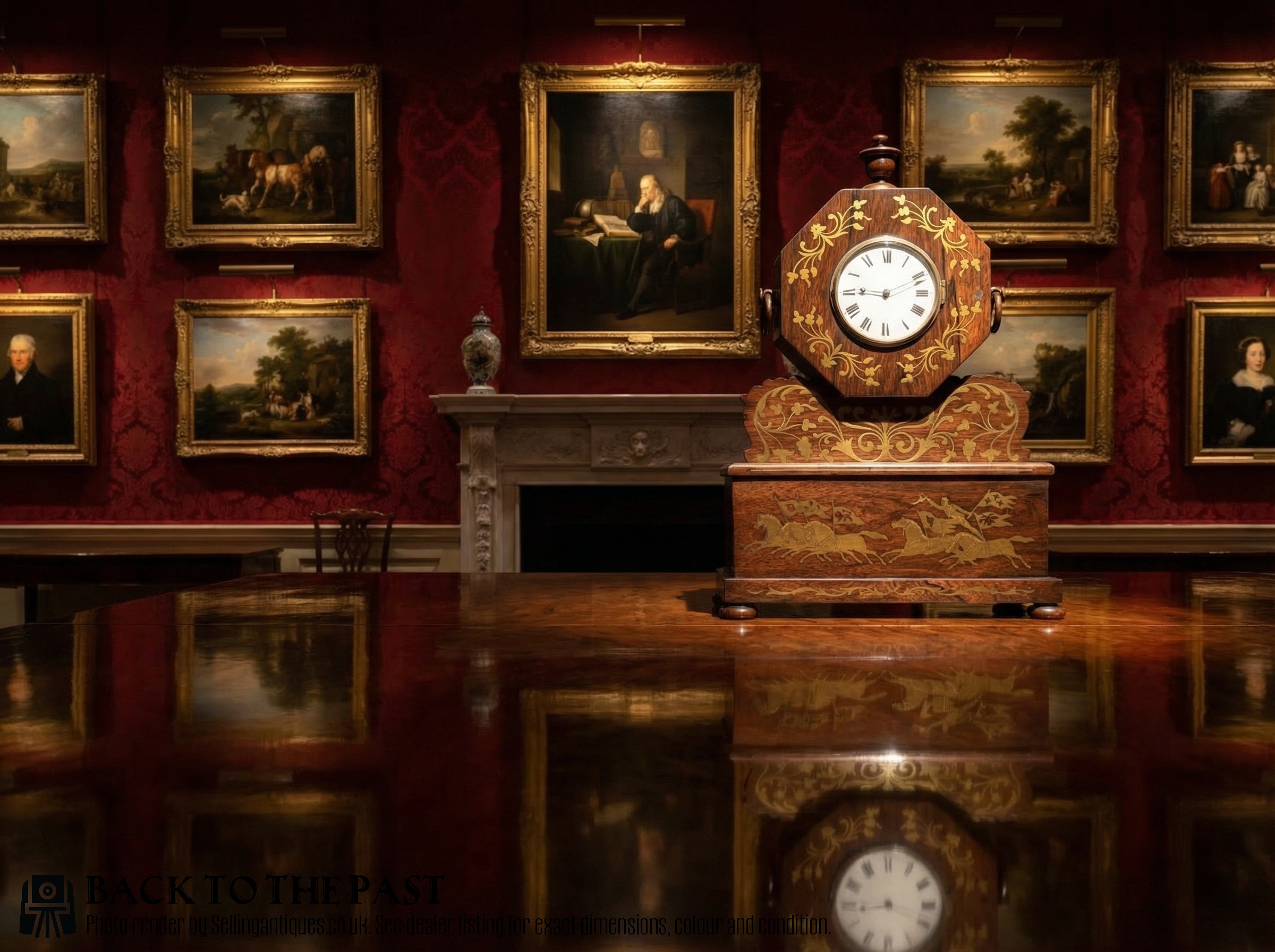
Regency Brass Inlay Clock
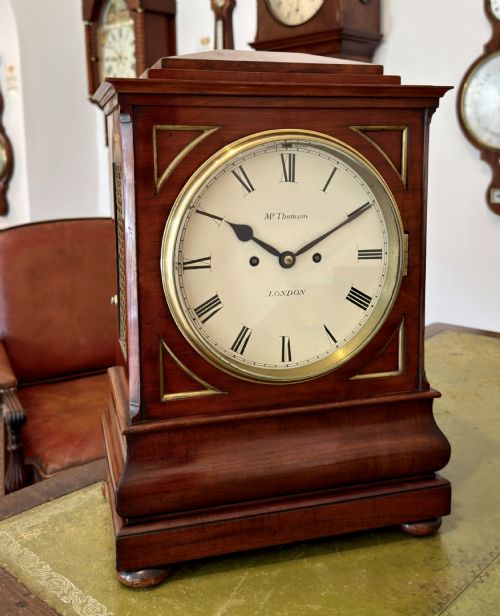
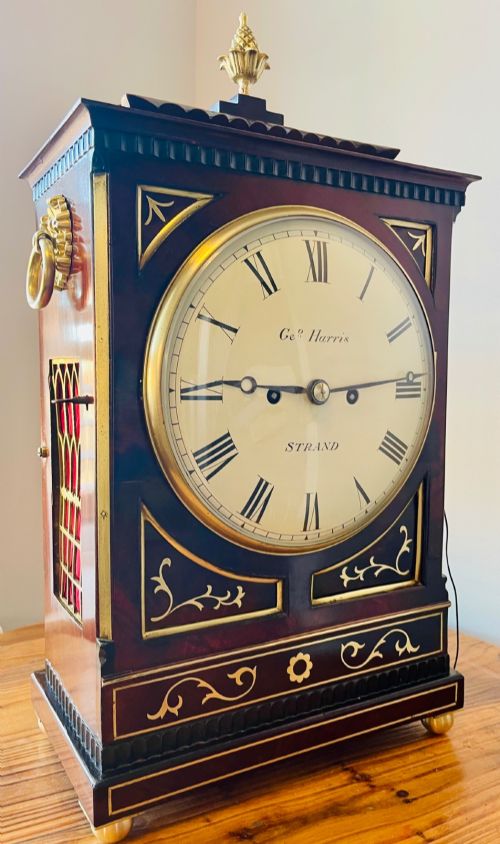
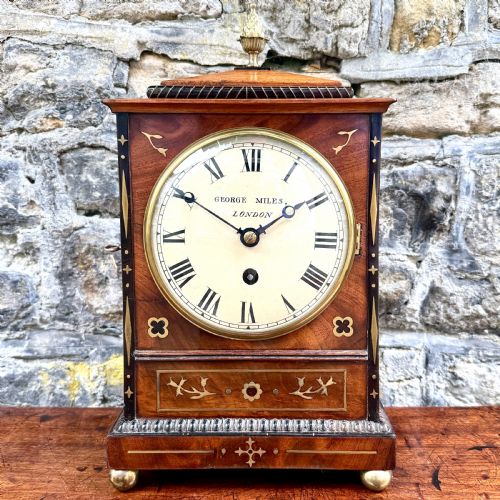
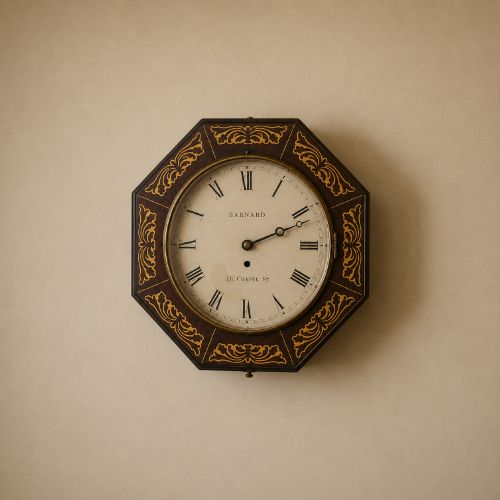
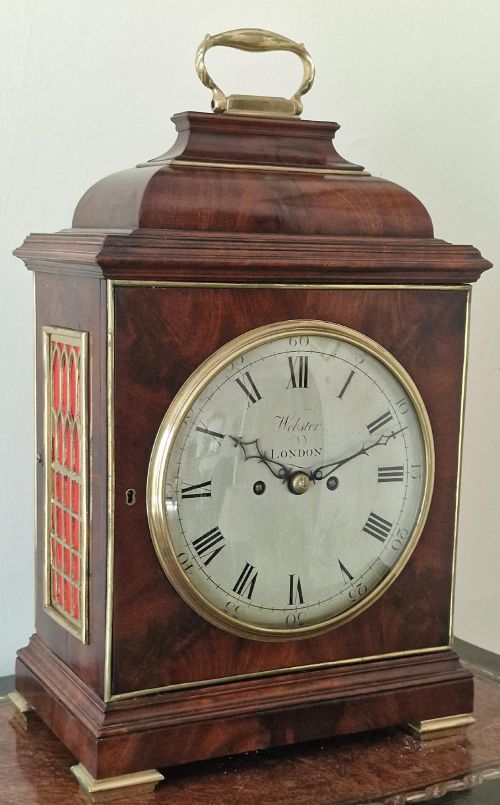
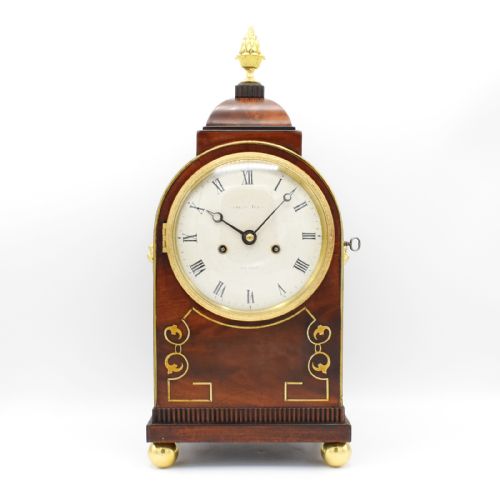
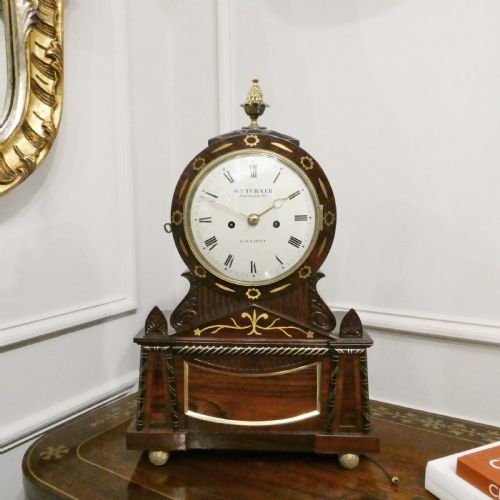
A regency brass inlay clock is typically encountered as a bracket clock, mantel clock, or wall clock housing a mechanical movement inside a dark timber case. These timepieces span the Regency, Georgian, and 19th Century periods, often featuring distinct architectural outlines such as lancet tops, pagoda tops, or octagonal dials.
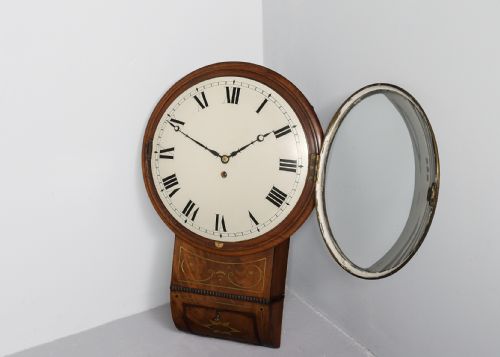
The buyer meets many variations on this page, ranging from library clocks and drop-dial wall clocks to grander longcase clocks. Most examples integrate brass lines and floral motifs directly into mahogany or rosewood surfaces, complemented by enamel or silvered metal dials.
Materials and construction
Cabinet makers constructed these bodies primarily from solid mahogany and rosewood timbers, frequently incorporating secondary woods like ebony for contrast. Artisans cut precise channels into the wood grain to receive thin sheets of brass, creating crisp geometric patterns and foliate scrolls.
Mechanisms rely on fusee movements driven by cords or chains, designed to maintain even tension as the mainspring unwinds. Dials utilise white enamel or engraved silvered metal, protected behind curved or flat glass set within brass bezels.
Listings feature mahogany and rosewood housings decorated with brass inlay across Regency, Georgian, and Victorian periods.
Assessing craftsmanship
Quality separates through the precision of the brass inlay work and the sharpness of the timber carving on the case. Finer examples display tight joints, perfectly flush metalwork where brass meets wood, and substantial secondary woods lining the interior.
The sophistication of the movement dictates the upper tier of the range, particularly when striking trains or repeating mechanisms are present. Maker signatures engraved onto the dial or backplate further elevate a piece, reflecting master London and provincial workshops.
Thomson of London·Barnard·Webster·Charles Pratt London·Turner of London·George Orpwood·Bush of London·L. Vick of Stroud·Seller of Reading·Thomas Moss·S Simpson Southampton·William Moon London·Cording of London·John Bull of Bedford·Wilkinson Leicester·Barrett London·Thomas Connold of Alysham·Hyde of Salisbury·Ganthony of London·David Morice of Auchtermuchty·Taylor of London·Leplastrier of London·Wightman Of London·J. CONDLIFF LIVERPOOL·Kleyser of London
The Regency Brass Inlay Clock Glossary
- Fusee
- A conical pulley used in mechanical clocks to equalise the torque of the mainspring as it runs down. This mechanism ensures steady timekeeping from a fully wound state to the end of the day.
- Bracket clock
- A portable table or mantel clock originally designed to sit upon a wall bracket. They commonly feature carrying handles and glazed side panels to display the movement.
- Drop dial
- A wall clock featuring an extended wooden trunk below the circular dial. This configuration accommodates the pendulum swing while maintaining a compact face profile.
- Silvered metal
- A brass dial plate treated with a silver compound to produce a matte white finish. Numbers and maker signatures are then engraved and blackened for legibility.
- Lancet top
- A pointed, arched case silhouette resembling a gothic window arch. This architectural form is frequently seen on Regency and 19th Century mantel clocks.
Regency Brass Inlay Clock: Frequently Asked Questions
Where should I place a bracket clock?
These clocks sit securely on sturdy mantelpieces, sideboards, or dedicated wall brackets where vibration is minimal. Keeping them away from direct sunlight and drafts preserves the integrity of the timber veneer and the delicate brass inlay.
Because many examples were originally designed for specific rooms in a Georgian or Regency home, they adapt well to studies, drawing rooms, or entrance halls as functional decorative focal points.
How do I wind a mechanical fusee clock?
Wind the clock using the correct matching key inserted into the dial winding hole, turning it slowly until resistance indicates full tension. Care must be taken not to overwind the mainspring, which can cause internal strain.
Most traditional movements require attention every eight days, making weekly winding a reliable routine that keeps the gear train moving smoothly.
What is the difference between a wall clock and a bracket clock?
Bracket clocks are generally heavier, portable table timepieces with finished wooden backs and carrying handles intended for furniture tops. Wall clocks feature flat backs and securing fixings designed to hang directly from structural vertical surfaces.
While both utilise similar brass inlay and fusee movements, wall variants often adopt drop-dial or octagonal faces for optimal visibility from across a room.
How do I identify a Regency period clock?
Regency timepieces display classic architectural restraint, balancing dark mahogany or rosewood surfaces with bright brass stringing and restrained mounts. Dials are typically clean white enamel or engraved silvered metal with spade hands.
Internal movements and backplates often bear the engraved signature of the maker alongside serial numbers, linking the piece directly to early 19th-century workshops.