


Octagonal Rosewood Clock
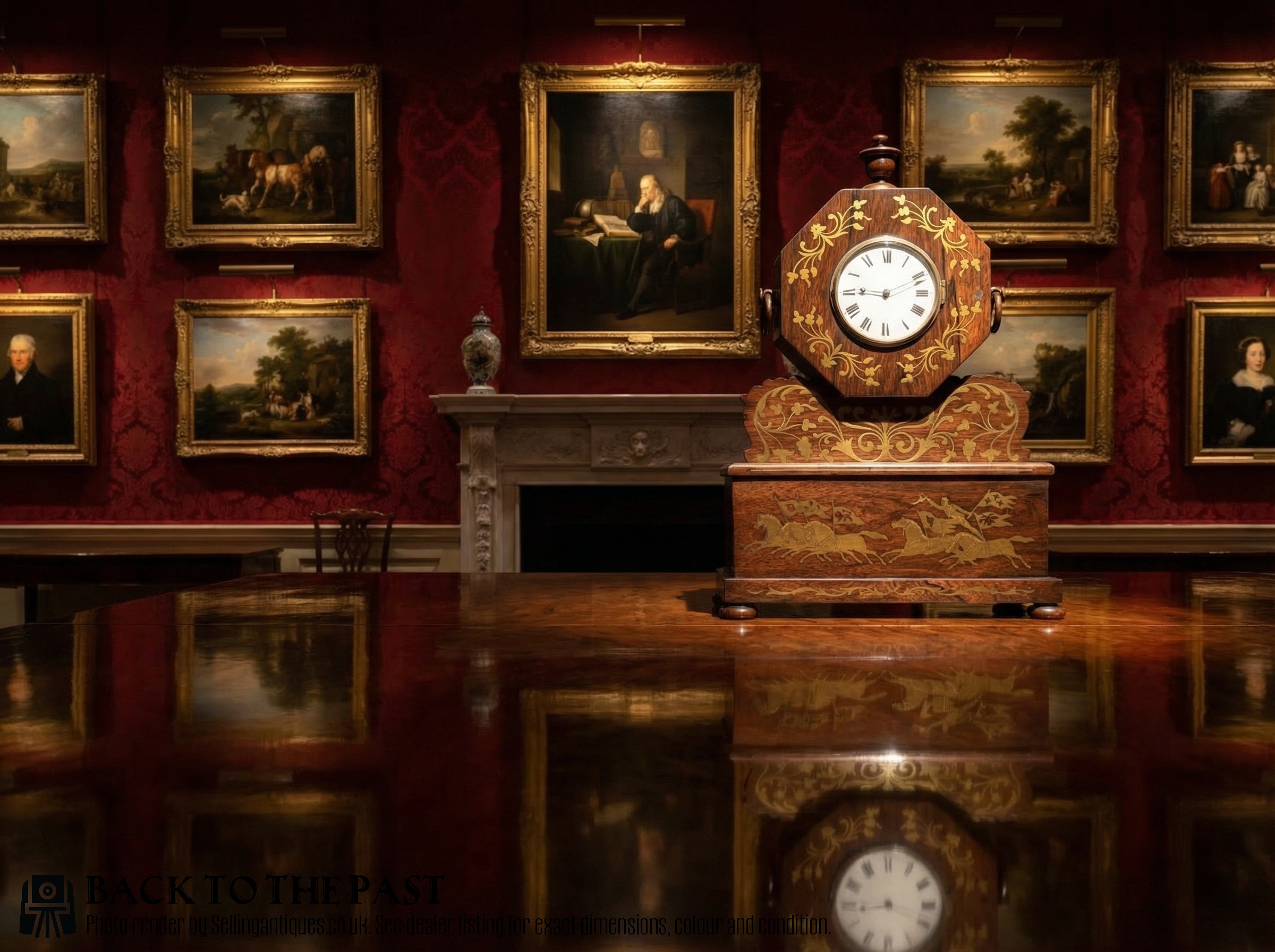
An octagonal rosewood clock brings rich grain and geometric proportion to a room, offering both reliable timekeeping and period character.
Octagonal Rosewood Clock
When you search for an octagonal rosewood clock, you encounter timepieces designed primarily for the wall or the mantelpiece. The pieces seen here span the Georgian, Regency, and Victorian eras, including late Victorian examples and French works from the nineteenth century. Wall clocks frequently adopt the drop-dial form, housing the movement in an upper octagonal case above a lower trunk.
Mantel clocks also appear in this timber, taking smaller proportions suited to a shelf or table. The geometry of the octagonal face provides a distinct architectural frame that contrasts with the softer, organic figures of the rosewood grain. These clocks originate from English and French makers, reflecting domestic and continental horological traditions of the nineteenth century.
Materials and construction methods
The primary timber is rosewood, selected for its dense figure and deep colour, often enhanced with boxwood stringing, brass inlay, or mother-of-pearl accents. Cases enclose precision movements, most notably fusee mechanisms that regulate the pull of the mainspring for consistent timekeeping. Enamel dials, protected by glass within brass bezels, carry the numerals, while iron and brass components form the internal gearing and bell-striking apparatus.
One wall clock arrives complete with an inscribed attribution to a nineteenth-century gentleman named J Fisher Esq.
Distinctions in craftsmanship and finish
The quality of these clocks rests on the precision of the cabinetwork and the refinement of the internal movement. Finer examples display meticulous brass inlay, crisp boxwood stringing, and well-preserved rosewood veneers that retain their natural lustre. The presence of a signed dial or movement by a recognised maker elevates a piece, as does the integration of a complex fusee mechanism with bell striking.
Halliday & Rich Bridgwater·Kleyser of London·Walker and Hall·James Bell Bath
The Octagonal Rosewood Clock Glossary
- Fusee
- A conical pulley used in mechanical clocks to equalize the diminishing power of the mainspring as it unwinds. This mechanism helps the clock maintain a consistent rate throughout its run.
- Drop-dial
- A clock case featuring an upper dial surround connected to a lower trunk or box. The lower section accommodates the pendulum drop and often includes side or front access doors.
- Stringing
- Thin lines of inlay using a contrasting timber such as boxwood. This technique outlines the geometric boundaries of the case.
- Bezel
- The metal ring, hinged in many wall clocks, that holds the glass protecting the dial. It is commonly cast in brass.
- Mantle clock
- A portable clock designed to stand on a shelf or mantelpiece. These pieces rely on balance wheels or short pendulums for operation.
Octagonal Rosewood Clock: Frequently Asked Questions
How do I hang a wall clock safely?
Wall clocks require secure fastening to a solid wall, preferably anchored into a stud or masonry using appropriate fixings. The weight of timber cases and brass movements demands a sturdy support.
Ensure the clock hangs plumb so the pendulum swings freely without catching on the case interior. Adjust the beat until the tick sounds even.
What is a fusee movement?
A fusee is a conical pulley connected to the mainspring by a fine chain or cord. It compensates for the drop in spring tension as the clock runs down.
This system ensures uniform force reaches the escapement throughout the duration of the wind, contributing to accurate timekeeping.
How do I wind these clocks?
Winding involves inserting a key into the dial winding square and turning it gently until resistance indicates the mainspring is fully wound. Care prevents overwinding.
Clocks with bell-striking trains require winding for both time and strike functions through separate holes on the dial face.
Where were these clocks used?
Drop-dial wall clocks served in commercial offices, railway stations, and domestic halls where legibility and reliability mattered. Their clear dials suited public spaces.
Smaller mantel versions occupied drawing rooms and parlours, serving as both timekeepers and decorative objects on furniture surfaces.